
Georgian Ireland: Townhouses, Planned Streets and Country Villas
Georgian Ireland explored through Dublin townhouses, Limerick's Newtown Pery and country villas like Castletown, Emo Court and Belvedere House.
On this page
Georgian Ireland is not a single style or a single house. It is a built landscape dating mainly from the 18th and early 19th centuries: grid-planned streets and terraces built for wealthy families, civic rooms built for societies and corporations, and landed villas set in designed parkland. The most useful way to approach it is place by place and owner by owner, because each survives on different terms today.
What Georgian Ireland Means Beyond a Style Label
The term covers buildings made for display and power as much as for living. Castletown in County Kildare, built around 1722 for the Speaker of the Irish House of Commons, was meant to project political authority and host entertaining at scale, while Dublin townhouses like 14 Henrietta Street separated family rooms, formal reception floors and servants' quarters. For a broader architectural overview, start with irish georgian architecture before choosing which places to visit.
These buildings also carry a later social history. Limerick's Georgian quarter declined as investment moved to the suburbs, and Dublin's Henrietta Street was carved into tenements housing hundreds of people. Reading a Georgian place well means looking at both phases, not only the joinery and plasterwork of its first owners. Our Georgian Quarter Limerick: Walking Newtown Pery guide follows the same street pattern on foot today.
Reading a Townhouse: 14 Henrietta Street, Dublin
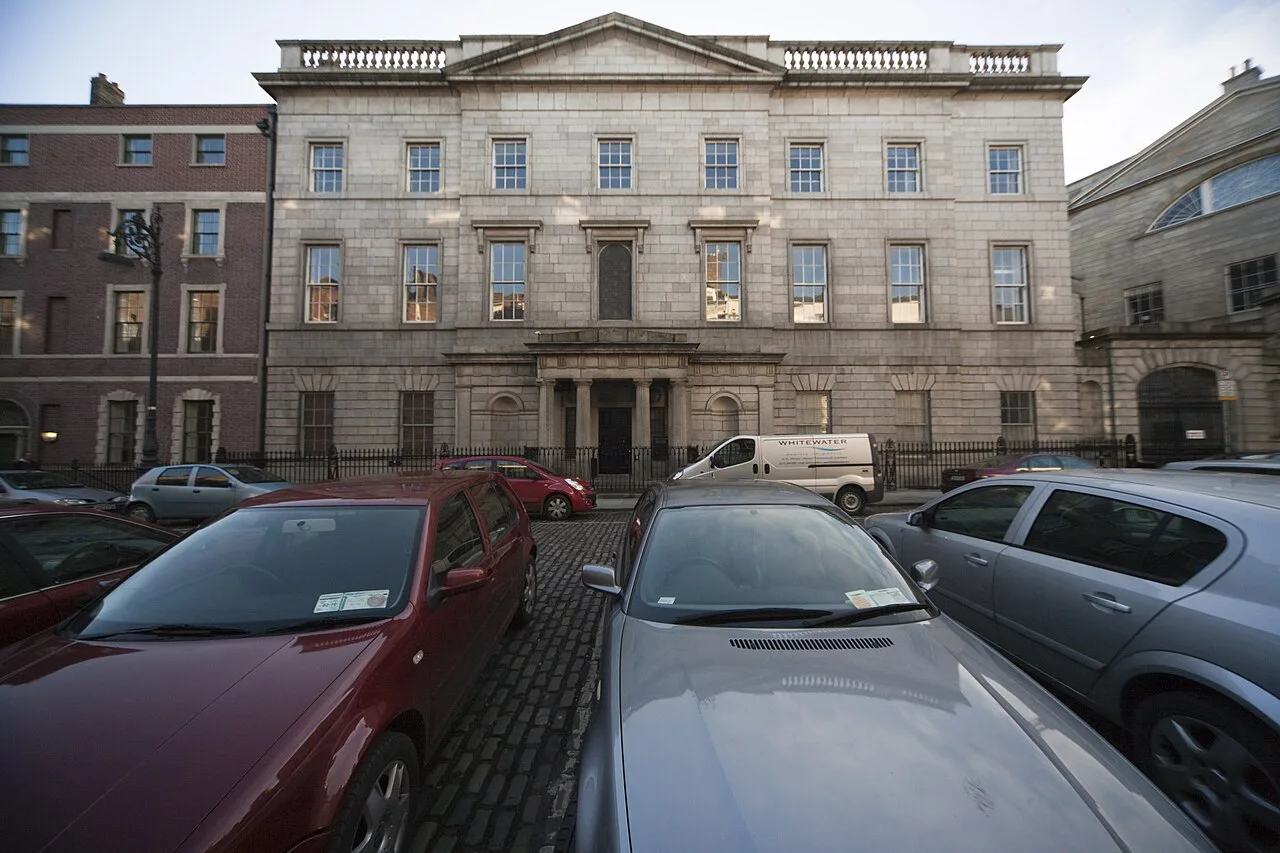
Henrietta Street is described by the 14 Henrietta Street museum as the most intact collection of early to mid-18th century houses in Ireland. The street was laid out from the 1720s for Dublin's wealthiest families, and Number 14, built in the late 1740s by Luke Gardiner, shows how rooms were zoned: family parlours on the ground floor, formal reception rooms on the first floor, bedrooms above and servants in the attic.
That hierarchy collapsed in the 19th century. By 1911 more than 850 people lived on the street, with 100 in Number 14 alone, and room sizes were subdivided around shared taps and lavatories. The last tenement residents left in the late 1970s, and Dublin City Council later bought and conserved the building; it opened to the public in September 2018, so access is a recent arrangement rather than a continuous tradition.
Limerick's Newtown Pery: A Planned Grid Quarter
Limerick's Georgian Quarter, known as Newtown Pery, was built in the late 18th and early 19th centuries to a grid plan of equal rectangular blocks, and Limerick City and County Council credits it with an architectural unity that still shapes the city centre. Economic decline and a drift to suburban living damaged its heritage character, and the council now promotes the area as a neighbourhood in revival, backed by the Living City Initiative and an urban innovation programme.
Treat Newtown Pery as a district to walk rather than a ticketed attraction: there is no single admission point, no published route and no fixed circuit. Its interest lies in the street pattern, surviving facades and the mix of vacant and reoccupied buildings that the regeneration story turns on. Check the council's own material for current guidance before expecting to enter any particular building.
The City Assembly House: A Georgian Art Room
On South William Street, the City Assembly House was built between 1766 and 1771 by the Society of Artists as the first purpose-built public art gallery in Britain and Ireland, and possibly Europe. Its architect is not certain, though the street elevation may be by Oliver Grace; the top-lit octagonal gallery hosted its first exhibition in March 1766. The Irish Georgian Society now cares for the building, and its account of South William Street notes a remarkably intact Georgian street alongside the City Assembly House and Powerscourt Townhouse.
The building's later life is as instructive as its origins. Dublin Corporation held meetings there from 1791, the octagonal room was refitted as a debating chamber, a Court of Conscience sat beneath it, and Daniel O'Connell led a three-day repeal debate in 1843. It later housed the Old Dublin Society's civic museum from 1953 until 2003. Its documented history is secure; current visiting arrangements are not set out in that account, so check with the Society before planning a look inside.
Castletown, County Kildare: The Country House as Theatre
Castletown was built around 1722 for William Conolly to designs by several renowned architects, and its scale was intended for political entertaining. It later flourished under his great-nephew Thomas Conolly and Lady Louisa, who spent much of her life improving the estate. The collection today includes three 18th-century Murano-glass chandeliers and what Heritage Ireland calls the only fully intact 18th-century print room in the country.
Castletown combines well with a town visit. Heritage Ireland publishes a house season of 15 March to 4 November 2026, daily 9:30 to 17:00 with the last tour at 16:00, while parkland gates stay open 07:00 to 20:30 all year. The C4 runs from Dublin City Centre toward Celbridge, and the 120 bus also serves the village; travellers arriving by rail at Hazelhatch can take the W61 bus to Celbridge, where the Castletown gates stand near the stop. Check the Castletown House and Parklands page before relying on any single departure.
Emo Court: A Slow-Built Neo-Classical Mansion
James Gandon began Emo Court in 1790, straight after his Dublin work on the Custom House and Four Courts, but the building was not completed for some 70 years. It was home to the earls of Portarlington until the War of Independence, then served as a Jesuit novitiate, and was restored in the 1960s by Major Cholmeley-Harrison before being given to the State in 1994. Heritage Ireland's guided house tour showcases the restored ground-floor period rooms and gives access to the atmospheric basement, where the stories and working lives of servants are interpreted.
The seasonal contrast with Castletown matters. The house at Emo Court opens 17 March to 4 November 2026, daily 9:00 to 17:00, but the parklands run all year on changing hours, from 08:30 to 16:30 in January out to 08:30 to 21:00 in May to August. Winter weather can close the site, so phone ahead in bad conditions; the parkland paths are uneven, carry a deep-water warning at the lake, and dogs must stay on leads. The estate sits about 7 km from Portarlington station.
Belvedere House, County Westmeath: A Villa in a Designed Parkland
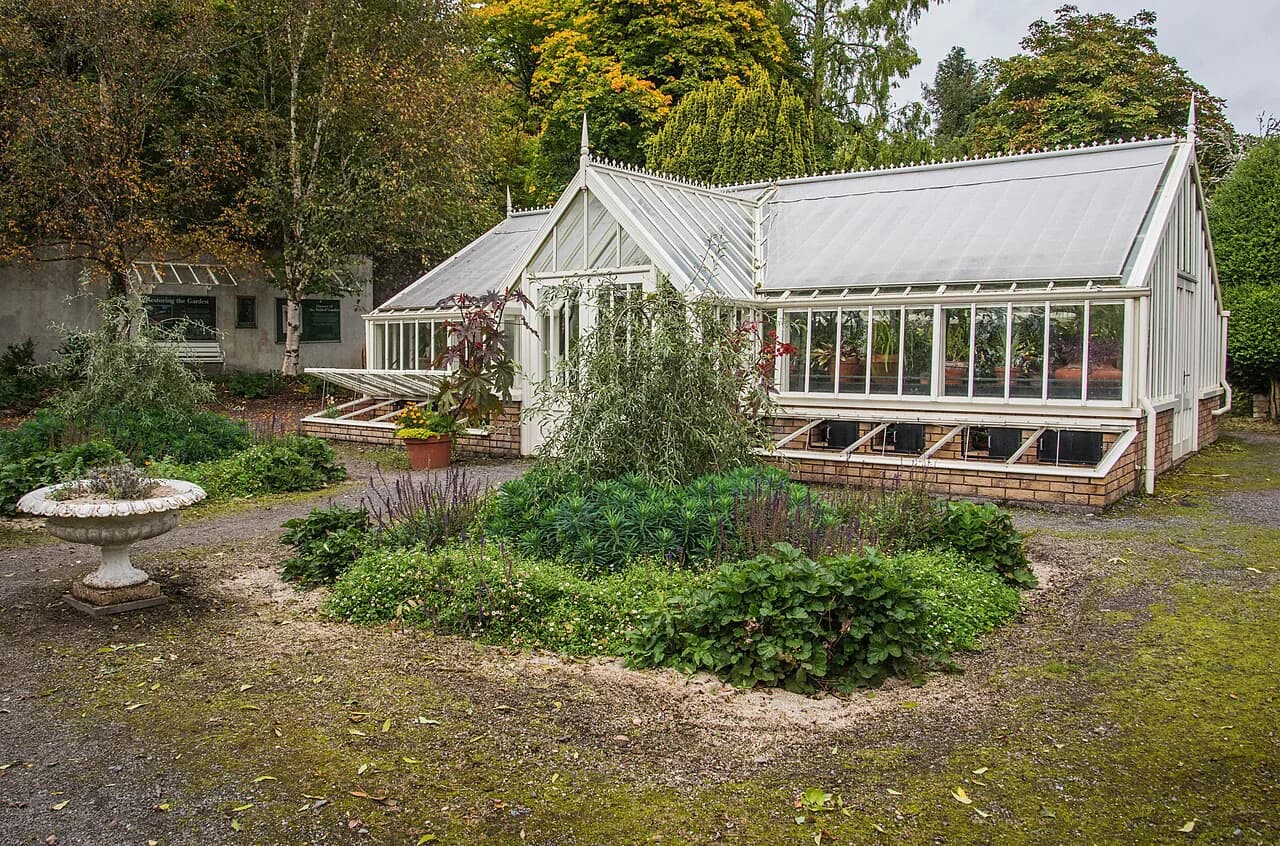
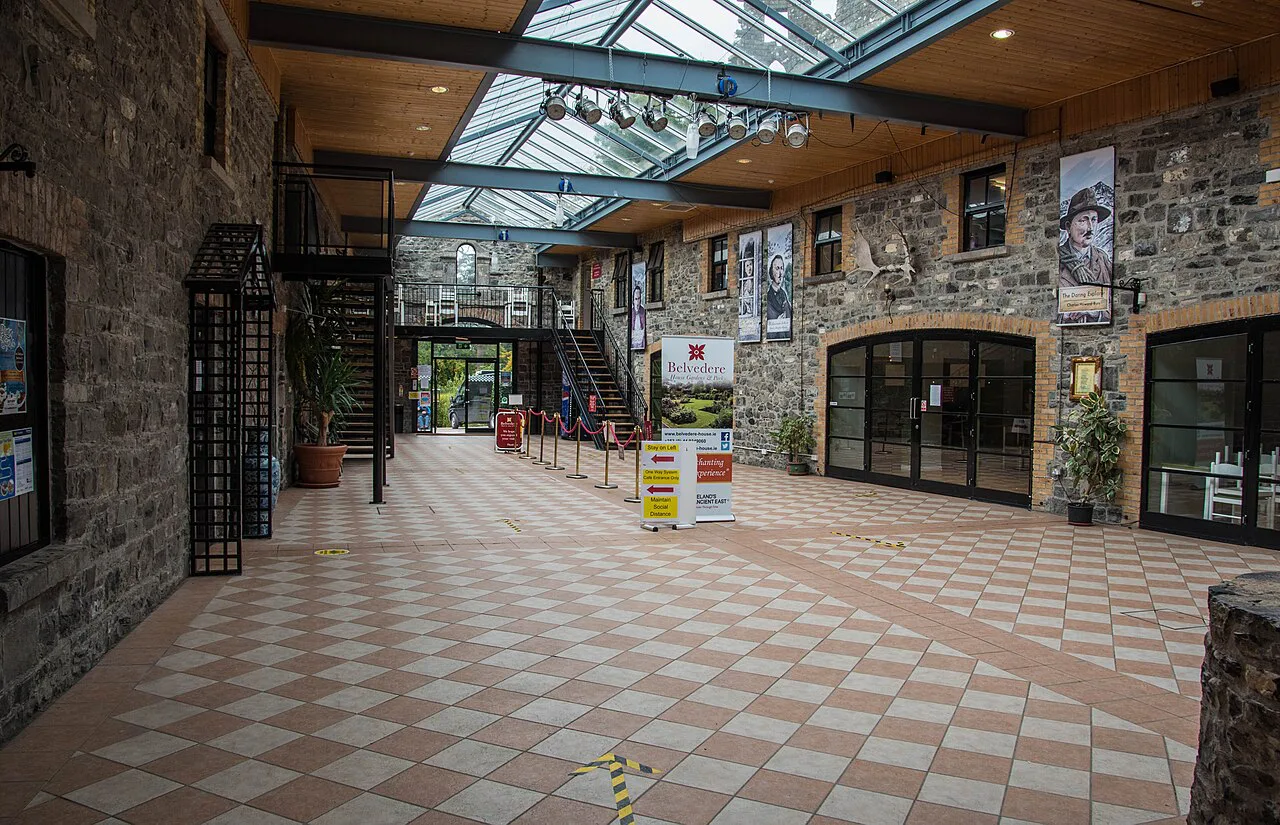
Belvedere House, Gardens and Park stands on the north-east shore of Lough Ennell, a 160-acre lakeside estate with a restored Georgian villa, a Victorian walled garden, 18th-century parkland and follies including the Jealous Wall. The villa began as a hunting lodge, is attributed to Richard Cassels, and is described by its operator as believed to be the first bow-ended house built in Ireland. Its dining room holds rococo plasterwork by the French stucco artist Barthelemij Cramilion, dating from around 1760.
The operator tells the Rochfort family story as its own narrative, including Robert Rochfort, remembered here as the Wicked Earl, who embellished the house after imprisoning his wife at Gaulstown. Later owners added garden layers: Charles Brinsley Marlay in the 1840s, then Charles Kenneth Howard-Bury with plants from his travels. Westmeath County Council bought the estate in 1982, and house, gardens and park opened to the public in 2000; the published account does not set out current hours or tour arrangements, so confirm before travelling.
Choosing Between a Quarter and a House
Broadly, you face a choice between walking a district and touring an interior. Newtown Pery has no single admission point and lets you see the fabric of Georgian Limerick in a working city centre, while No. 14 Henrietta Street is a museum you enter for its layered social history. The City Assembly House is best understood through its documented history until the Irish Georgian Society confirms current access. Neither the district nor a single house shows you the whole picture on its own.
For country houses, plan around the published season rather than the calendar year. Castletown and Emo Court both run house seasons that end on 4 November, with parklands continuing outside those dates, and Emo Court additionally warns of weather closures. If your trip falls in winter, treat the grounds and the exterior as the realistic visit and do not assume interior access.
If you want more houses of this kind in the same idiom, Westport House in County Mayo and Newbridge House, County Dublin are both worth checking separately for their own access arrangements, since each is operated on its own terms rather than as part of a single network.
Plan Your Georgian Ireland Visits
Start with one district and one house rather than a circuit. Newtown Pery and Henrietta Street show how Georgian streets were planned and then remade by later pressures, while Castletown, Emo Court and Belvedere House show the villa as a political and social statement. Booking or checking ahead is only meaningful where an operator publishes arrangements, so rely on the institution that runs each site.
Two checks cover most practical risk: confirm the current house season against the dates each operator publishes, and confirm parkland hours and weather status separately, since grounds and interiors keep different schedules. Remember that guided tours show what the operator interprets, not every room, and that the City Assembly House is best approached through its documented history until current access is confirmed.
Explore more Ireland guides
Frequently Asked Questions
What does Georgian Ireland actually refer to?
It describes a built landscape made mainly between the early 18th and early 19th centuries: planned streets and townhouses, civic and institutional rooms, and country villas in designed parkland. These were built for wealthy and powerful owners, then often remade by later occupants, so a single building can show several distinct periods of life.
Can you walk a Georgian quarter without paying admission?
Yes in Limerick, where Newtown Pery is a working city-centre district with a grid plan rather than a ticketed attraction; there is no admission point or fixed route. You read it through its street pattern and facades, and you should check Limerick City and County Council's own material for current guidance rather than expecting interior access.
Why is 14 Henrietta Street important for understanding Georgian Dublin?
The museum presents the street as the most intact collection of early to mid-18th century houses in Ireland, and Number 14 shows the original room hierarchy of family, reception and servant space. Its later conversion into tenement flats, with 100 residents in one house by 1911, makes the building a record of both elite and crowded city life. It opened to the public in September 2018.
Which Irish country houses show Georgian interiors to visitors?
Castletown and Emo Court both run guided house tours in their published seasons, with period rooms and, at Emo Court, basement interpretation of servants' working lives. Belvedere House, Gardens and Park also preserves a restored Georgian villa interior with 18th-century rococo plasterwork. Confirm current arrangements with each operator, since opening details change.
What is the difference between Castletown and Emo Court as visits?
Castletown pairs a large Palladian house with parkland gates that stay open all year, and it is reachable from Dublin by bus or by rail plus a local bus. Emo Court is a slower-built neo-classical mansion whose parklands run year-round but can close in bad winter weather, and the estate sits about 7 km from Portarlington station, so onward transport needs planning.
When are the house seasons at Castletown and Emo Court?
For 2026, Castletown's house tours are published for 15 March to 4 November, daily 9:30 to 17:00 with the last tour at 16:00. Emo Court's house is published for 17 March to 4 November, daily 9:00 to 17:00. Treat these as dated seasons and recheck each operator's page before travelling.
Sources
You might also like



Continue reading
More guides you'll find useful





