
Garinish Island: A Visitor Guide to Ilnacullin's Gardens
Garinish Island, or Ilnacullin, is a designed island garden in Glengarriff harbour. See what to explore, how the ferry crossing works and what to time.
On this page
Garinish Island, known in Irish heritage listings as Ilnacullin, is a small designed island garden set in the sheltered harbour at Glengarriff in Bantry Bay. The Office of Public Works manages it through Heritage Ireland, and the operator describes it as a garden of rare beauty where horticultural and architectural features sit together. Plan the day around planting, structures and bay views rather than around a house tour, because the garden itself is the main event.
Access shapes everything. Visitors reach the island by small ferry boats and 60-seater waterbuses from Glengarriff, and the boat operators impose a separate charge for the crossing, which is additional to anything you pay for the island visit. That means the journey is a distinct cost to budget for alongside timing, so account for both. Confirm current arrangements with the operator before setting out, since the published pages do not fix garden hours for a given season.
Orientation: A Designed Island Garden, Not a House Visit
Treat Ilnacullin as a twentieth-century designed landscape first. Its identity comes from the combination of walled and Italian gardens, a Martello tower on the high point and a viewing point over the bay, all fitted into a compact island. Visitors who arrive expecting a period mansion tour will misjudge the site; the house is a narrow, separately timed opportunity at best.
The layout rewards a simple loop: gardens on the lower ground, then the climb to the tower and viewpoint, with Bryce House only if a guided tour is running. Because the island is diminutive, the walking distances are modest and the interest lies in looking closely rather than covering ground. Allow your ferry time to determine the outer limit of the visit, not the other way around.
The Bryce–Peto Partnership Behind the Garden
The garden owes its existence to an early twentieth-century creative partnership between Annan and Violet Bryce, the island's owners, and Harold Peto, an architect and garden designer. Heritage Ireland names Annan Bryce and Peto as the visionaries behind the place, which is why their names recur in the garden and house interpretation. Knowing this helps you read the Italian garden as a deliberate composition rather than a random collection of ornament.
Bryce House functions as a memorial to those creators, so its interpretive value is biographical and design-led rather than decorative. If a guided tour coincides with your visit, it adds context to the grounds you have just walked. If it does not, the garden and monuments still carry the story without the interior.
Climate and Planting: Why the Garden Stays Green
Glengarriff's sheltered position gives the island a mild, humid micro-climate, and the operator credits that with spectacular plant life flourishing all year round. For a visitor, this means the garden is not a single-season flower show: structure, foliage and shelter planting carry interest outside high summer. It also explains why the planting looks lush despite the small footprint.
Ireland has several garden traditions worth comparing on a longer trip, from walled estates to woodland collections, and our guide to irish gardens helps place Ilnacullin's coastal, designed character against inland alternatives. The contrast is useful when deciding how much time to give each stop. Ilnacullin's distinctiveness lies in its island setting and its architectural framing of plants.
The Walled Garden: Slow Down Here
The walled garden is where the operator's planting description becomes concrete: the highlights page points visitors to the quality of the planting within the walls. Walls create shelter and a different growing environment from the open island, so this is a place to look at leaves, training and layout rather than hurry through. Give it a proper share of your time before climbing to the tower.
The Italian Garden: Sarcophagus and Casita
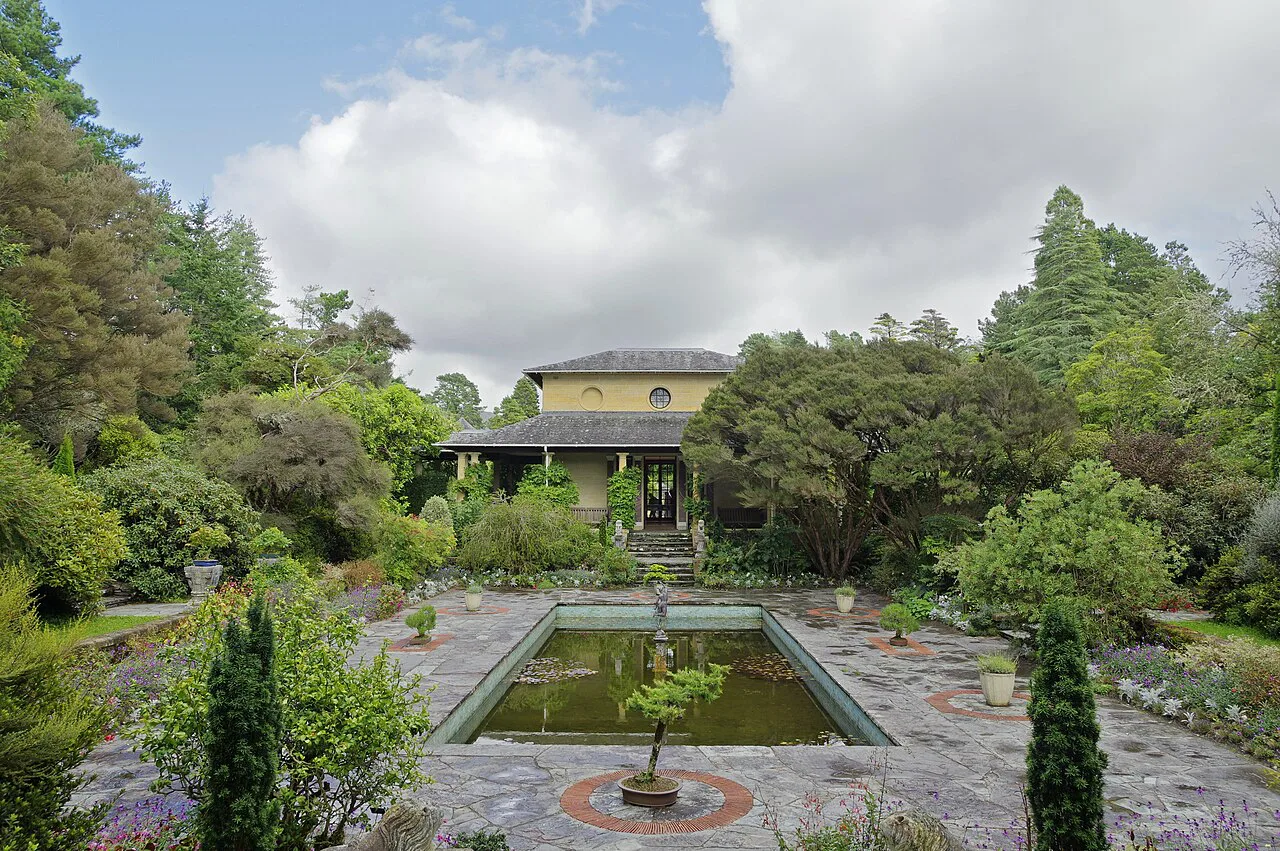
The Italian garden holds two features the operator singles out: a marble sarcophagus of Roman origin and a teahouse or casita built of Bath stone. Both are architectural set pieces within a planted frame, and together they show how the Bryce–Peto scheme mixed classical references with horticulture. Look for them as you move between the garden compartments rather than as separate monuments.
If Italianate garden buildings appeal, lismore castle is a separate Irish example to read up on before planning a longer garden itinerary; it is a different kind of outing from an island visit rather than a substitute for one. The two reward different kinds of attention: one is about a designed island journey, the other about a separate landed setting. Plan them as separate days rather than trying to pair them tightly.
Bryce House: A Limited Shoulder-Season Opportunity
Heritage Ireland states that Bryce House has very limited opening for guided tours in the shoulder season. Do not build a trip around entering the house, and do not assume a full-season tour programme: the sanctioned position is narrow availability. Treat any tour as a bonus that adds detail to the Bryce–Peto story after you have seen the gardens.
Because a tour schedule is not given on the published pages, check with the operator before travelling if the house matters to you. The garden, tower and viewpoint remain the dependable core of a visit. That separation keeps expectations honest and lets you plan the ferry with confidence.
The 1805 Martello Tower and Its Two Histories
The Martello tower was constructed in 1805 at the island's highest point and belongs to the vertical-walled type particular to County Cork. It began as a defence against a feared Napoleonic invasion, which places it within Ireland's wider coastal fortification story. That military origin is the first of its two histories.
The second history is domestic: Annan Bryce later intended the tower as a music room, a plan that never replaced its defensive identity but shows how the island's owner reimagined the structure. Today it is open to visitors and gives fine views over Bantry Bay. Climb it for the outlook as much as for the masonry, and note how the garden sits below.
For travellers interested in fortifications more broadly, castles in county galway covers a different set of Irish defended sites, and the comparison shows how varied the building types are across the country. Ilnacullin's tower is small but unusually layered, since one structure carries both invasion anxiety and a garden owner's ambition.
The Viewpoint and the White-Tailed Eagles
A viewing point on the island gives a panoramic vista of its finest features, and the operator suggests the chance of seeing a white-tailed eagle in flight. The resident pair belongs to a species formerly extinct in Ireland and forms part of a reintroduction scheme, so the eagles are a conservation story rather than a scheduled display. Watch from the high ground and accept that a sighting is an opportunity, not an entitlement.
Getting There: Ferries, Seals and the Separate Boat Charge
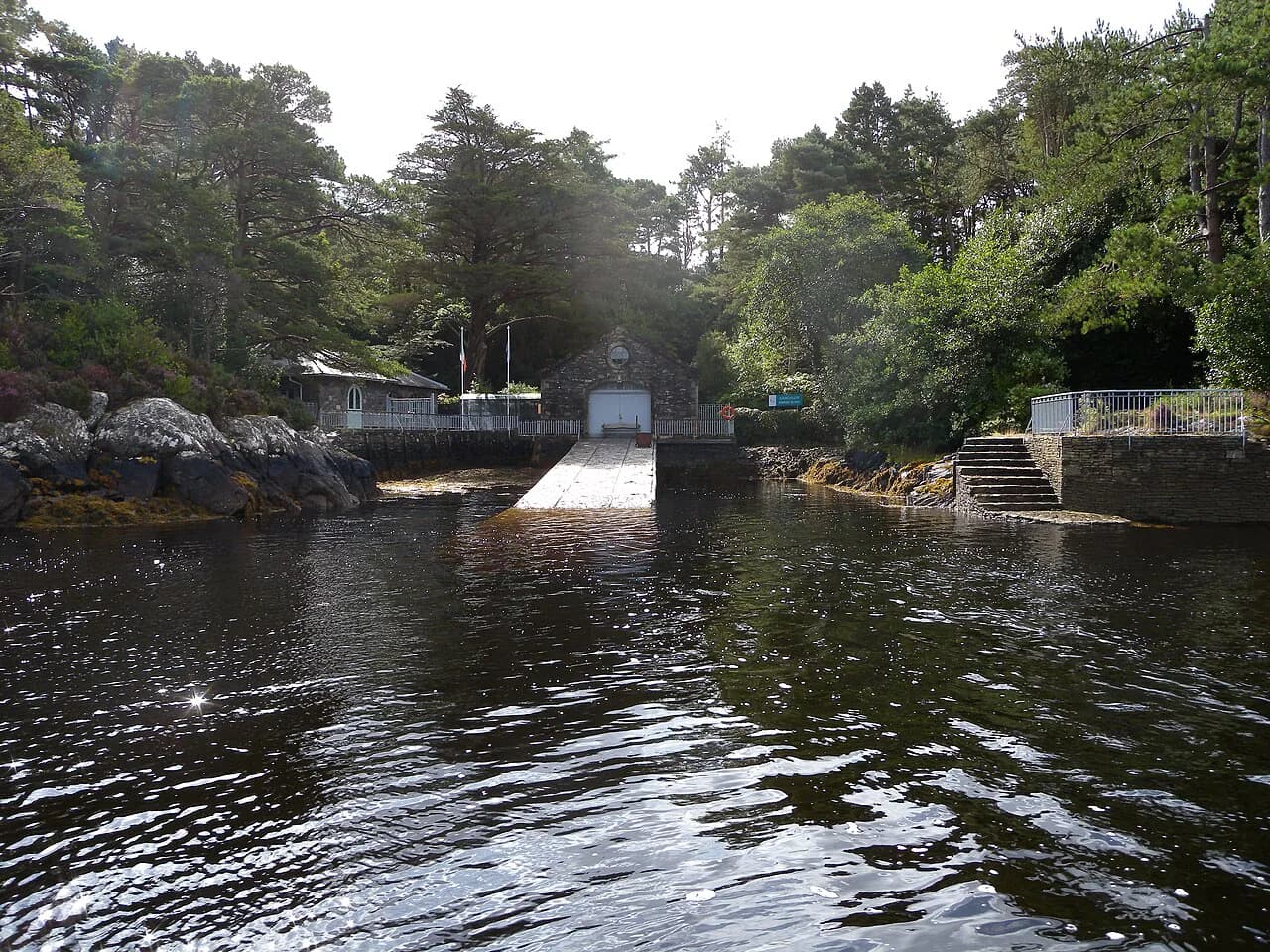
Small ferry boats and 60-seater waterbuses take visitors to Ilnacullin from Glengarriff, and the short crossing usually includes a look at the nearby seal colony with a chance of glimpsing sea eagles. Those wildlife moments are part of the journey and are not guaranteed stops, so keep expectations flexible. The crossing itself is short enough that the boat ride frames rather than dominates the day.
Boat operators impose a separate charge for the journey to and from the island. Ask the operator directly about fares and timings rather than relying on secondhand figures, and confirm the return sailing before you land. That single check prevents the common mistake of treating the boat as an unlimited shuttle.
Sequencing a Visit Around the Ferry
Work backwards from your return boat. Start with the walled and Italian gardens while you are fresh, climb to the 1805 tower and the viewing point next, then use any remaining time for a second pass through planting you liked. Leave Bryce House out of the plan unless a guided tour is confirmed, because its very limited shoulder-season opening cannot be assumed.
This order also suits the island's scale: the gardens are close together, and the tower and viewpoint sit at the high point, so the climb becomes a natural pause between garden sections. Readers comparing Irish garden days might also look at mount congreve gardens for a larger, inland collection, but that is a separate outing rather than an add-on to a Glengarriff ferry day.
What to Confirm Before You Travel
The operator pages describe the garden, access and the limited house tours but do not fix current garden opening hours or seasonal dates. Check Heritage Ireland and the boat operators before travelling, and ask specifically about ferry departure times, the separate boat charge and whether any Bryce House tour is running during your dates. Those three questions cover the practical gaps.
Facilities on the island are not detailed in these pages, so do not assume a café, shop or other services; plan accordingly and ask the operator. A social guide exists for first-time visitors, families and people with developmental and learning disabilities, and it is worth reading before you go if anyone in your group needs preparation.
Plan Your Visit
Garinish Island rewards a visit built around the garden rather than the house. Give the walled and Italian gardens proper time, climb the 1805 Martello tower for the bay view, and watch from the viewpoint for the reintroduced white-tailed eagles without expecting a sighting. The Bryce–Peto partnership explains why these elements belong together.
Before booking, confirm ferry times and the separate boat charge with the operators, and ask whether a Bryce House tour falls in the shoulder season. For more Irish garden context, our guide to irish gardens shows how varied the country's planted landscapes are, while muckross house is a separate County Kerry estate with gardens of its own to compare. Ilnacullin's island setting and compact design remain its own.
For another heritage visit in County Cork, you can also read about Fota House. If you want to cast the net wider across the county, our guide to Museums in Cork: City and County Collections covers indoor collections to pair with an outdoor island day.
Explore more Ireland guides
Frequently Asked Questions
What is there to see on Garinish Island?
The main draws are the walled garden, the Italian garden with its Roman marble sarcophagus and Bath-stone casita, the 1805 Martello tower, and a viewing point over Bantry Bay. Bryce House is a separate, limited opportunity rather than the central stop.
Do you have to take a boat to reach Garinish Island?
Yes. Visitors reach the island by small ferry boats and 60-seater waterbuses from Glengarriff harbour. The short crossing usually includes a look at the nearby seal colony and a chance of seeing sea eagles, but wildlife sightings are not guaranteed.
Is the boat fare included in the island visit?
No. Heritage Ireland states that the boat operators impose a separate charge for the journey to and from the island. Ask the operator for current fares and return sailing times rather than assuming the crossing is included.
Can you go inside Bryce House?
Only on guided tours, and Heritage Ireland describes opening as very limited and confined to the shoulder season. Do not plan a visit around entering the house; check with the operator whether a tour coincides with your dates.
What is the Martello tower on Garinish Island?
It is a vertical-walled Martello tower of a type particular to County Cork, built in 1805 as a defence against a feared Napoleonic invasion. Annan Bryce later intended to use it as a music room, and it is now open to visitors with views over Bantry Bay.
Can you see white-tailed eagles on the crossing to Garinish Island?
The crossing and the island viewpoint offer opportunities to glimpse white-tailed eagles, and the resident pair is part of a reintroduction scheme for a species formerly extinct in Ireland. Sightings are never guaranteed, so treat them as a possibility.
Sources
You might also like



Continue reading
More guides you'll find useful




