
Altamont Gardens: A Visitor Guide to the Slaney Garden
Plan a visit to Altamont Gardens in County Carlow, from the lake and arboretum to the Ice Age Glen and River Slaney, with seasonal hours and weather advice.
On this page
Altamont Gardens is a garden estate of roughly 16 hectares, or 40 acres, on the banks of the River Slaney in County Carlow, held and maintained by the Office of Public Works. Its draw is the variety packed into one walk: formal lawns and a lake near the house, then woodland, a bog garden and a rocky glen that leads down to the river. This guide explains what you will actually see, how the Robinsonian garden style shapes it, and which practical details are worth confirming before a long drive.
Where Altamont Sits and How to Approach It
Altamont lies in the countryside near Ballon in County Carlow, a short detour from the N80 that runs between Carlow town and the Wexford direction. The Carlow Garden Trail gives the standard approach from Dublin or Waterford: leave the M9 at junction 5 for the N80 towards Rosslare, continue through Ballon to the N80/N81 junction, then turn left at the next crossroads where signs point to the gardens. A rural turning signed from the road is easy to overshoot, so watch for the sign rather than relying on the junction alone.
Because the estate is spread over open ground rather than arranged around a town-centre entrance, the visit is essentially a garden walk with a car journey at each end. That makes it a natural half-day stop when travelling between Carlow and Wexford, or a full outing if you combine it with other garden visits in the county. Arriving with a route plan matters more than with a city museum, because the surrounding roads are quiet and the turning is easy to miss.
A Garden in the William Robinson Tradition
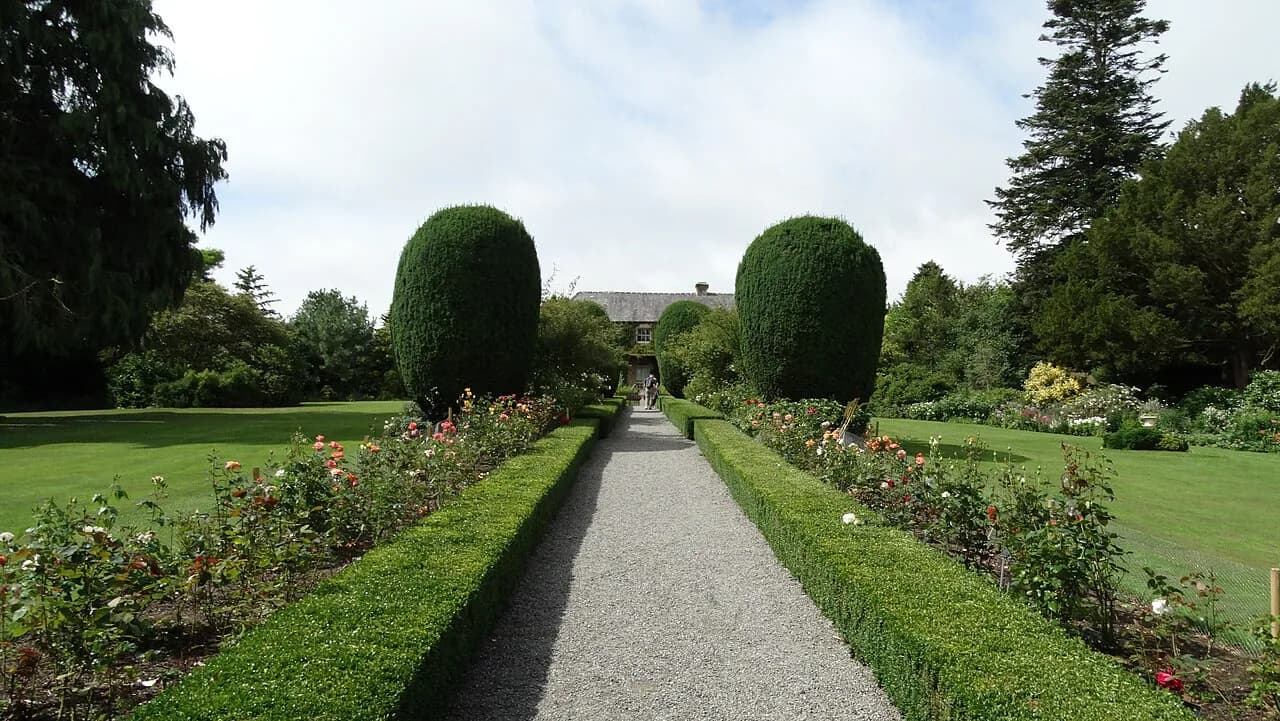
The official description places Altamont in the style of William Robinson, an approach that seeks honest simplicity and sets a strong plant collection within the natural landscape rather than in rigid beds. In practice that means lawns and sculpted yews running down to a lake framed by rare trees and rhododendrons, with formal structure near the house giving way to looser, nature-led planting further out. Knowing this helps you read the garden: the clipped yews are the deliberate counterpoint to the wilder glen, not a contradiction of it.
That balance was shaped by the people who owned the place. The Carlow Garden Trail records that Corona North developed the garden attached to her country house from the years after the Second World War until her death in 1999, building on planting begun by her father, and that she left the estate to the State. The Office of Public Works now cares for it. For a visitor, the useful consequence is a garden that reads as one family's long horticultural project rather than a municipal park.
The Lake, the Lawns and the Woodland Walk
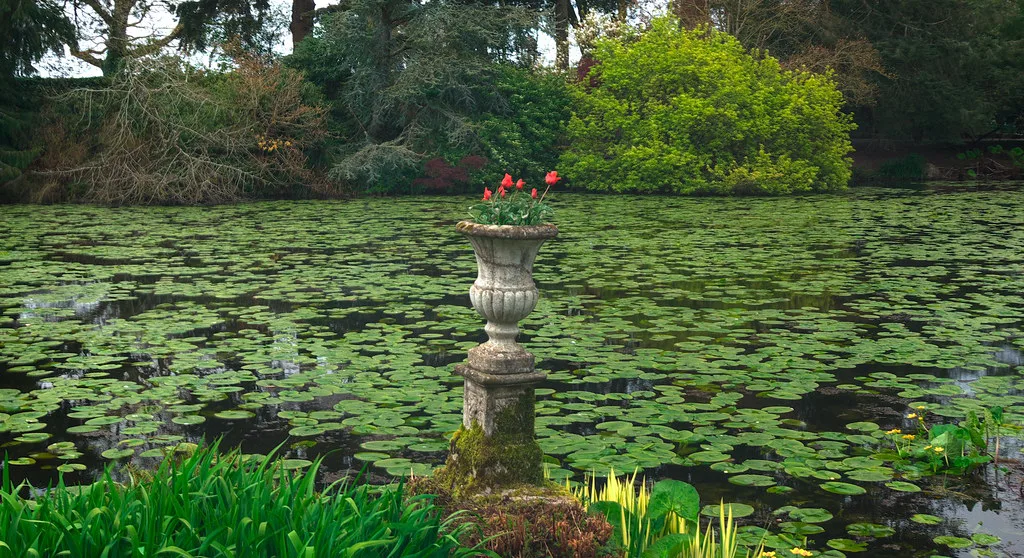
Begin with the gentler ground. Lawns bisected by sculpted yews slope to a lake encircled by uncommon trees and rhododendrons, and this is the part of Altamont that most clearly shows the formal-informal blend the estate is known for. An independent account of an April 2026 visit describes the walk through the walled garden, arboretum and woods to the Slaney as the element that surprised most, precisely because the scenery changes so often within one outing.
If you garden at home, the planting here rewards close looking: specimen shrubs and mature trees line the paths, and the same visitor account stresses how the scenery changes from formal ground to woodland. Allow time for stopping and studying plants rather than treating the route as a circuit to be completed.
The Arboretum, Bog Garden and Ice Age Glen Walk
The signature route leaves the formal ground and passes through the arboretum and bog garden before entering the Ice Age Glen, a rocky channel sheltered by ancient oaks and flanked by large stone outcrops that eventually opens onto the banks of the River Slaney. The official page describes this walk as sheltered by ancient oaks and flanked by huge stone outcrops, leading down to the river rather than as a loop that continues elsewhere.
The river is the walk's natural turning point, not a through-route to somewhere else. The April 2026 visitor describes reaching a grassy towpath by the Slaney and then climbing granite steps back towards the gardens, with bridges and a dolmen along the way. Plan your return before you descend, because the climb back is the tiring part and the glen feels considerably more enclosed than the lake side of the estate.
What Changes Through the Year
Seasonality is a real planning variable here. The Carlow Garden Trail describes a snowdrop collection it regards as among the largest in Ireland, at its best from late January through February, while roses and rhododendrons carry the summer and autumn brings colour in the trees. A winter visit is therefore not an off-season compromise but a different garden: the evergreens, bark and structure of the arboretum come forward when the herbaceous planting has died back.
The official page adds the sensory detail that summer brings the scent of roses and herbaceous plants across the grounds. If you are choosing between dates and have no particular plant interest, late spring and early summer give the widest combination of scent, foliage and length of day. If snowdrops are the goal, accept that weather in late January can cancel the outing entirely.
Corona North's Legacy and the House
Corona North's name comes up constantly in accounts of Altamont because the garden as visitors see it is largely her work. When she died in 1999 the property passed to the State at her request, and restoration and maintenance have continued under the Office of Public Works since. That continuity explains why the garden retains the feel of a private demesne that happens to be publicly cared for, rather than a redesigned visitor attraction.
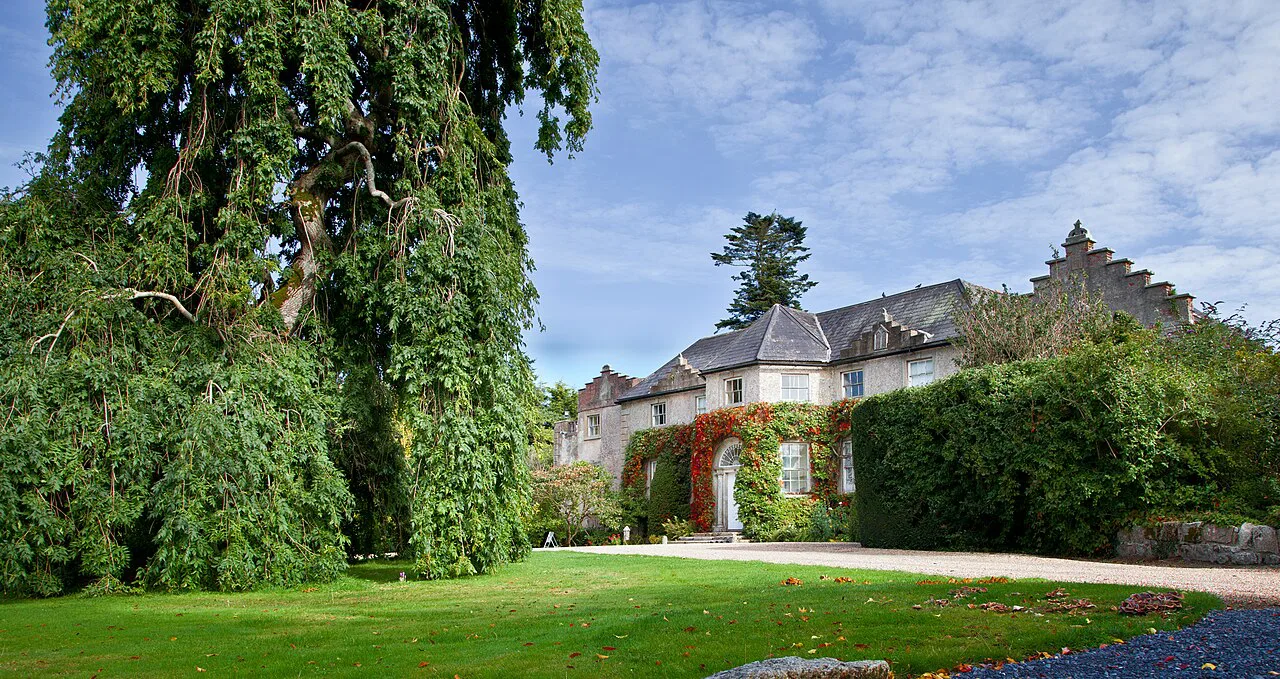
The house itself is a landmark on the estate rather than a museum you can tour. The April 2026 account states plainly that the house is not open to the public, so build your day around the grounds and do not promise children or companions an interior visit. Photograph it from the lawns, then give your time to the lake, the walled ground and the glen.
Seasonal Hours, Last Entry and Weather Closures
Opening times are seasonal rather than fixed year-round, so check the operator's page for the dates of your visit instead of relying on a general figure. The published schedule includes a January slot of 09:00 to 16:00, last entry falls 30 minutes before closing, and the gardens are closed on Christmas Day. In severe weather the gardens can close, and in winter the operator warns that the house and grounds may not open at all in adverse conditions.
The official advice is to telephone +353 59 915 9444 before starting your journey if conditions look bad, which is worth taking literally in an Irish winter. The operator warns that severe weather can close the gardens and that winter openings may not go ahead. If you are travelling any distance, a two-minute call is cheaper than a wasted morning.
Dogs, Ground Rules and the Car Park
Dogs are not permitted inside the gardens, though dogs on leads are allowed in the surroundings at the front of the house and the picnic area. That split matters if you are travelling with a dog and hoping to walk the glen: someone in the party will need to wait with the animal while the others do the river route. Plan who does which walk before you arrive rather than negotiating at the gate.
The Carlow Garden Trail listing mentions a car-park charge per vehicle and weekday guided tours with times to be checked, but this is a secondary source and those details can change. Confirm the current position with the operator before assuming a tour will run or that payment arrangements are as described. The garden's own published notices should always take precedence over a third-party listing.
Combining Altamont With Other Garden Visits
Altamont works well as one stop in a wider garden itinerary, but its character is distinct from the big house-and-demesne gardens elsewhere in Ireland. Muckross House in Killarney, for example, pairs a historic house visit with designed grounds and lake scenery, where Altamont leans on its river glen and Robinsonian planting and keeps its house closed. Choosing two contrasting gardens in a day teaches you more than seeing two similar ones. If you want a wider shortlist, our guide to botanical gardens covers several alternatives. For city-based sightseeing between garden days, our Dublin heritage guide maps the capital's key historic sites.
Elsewhere in Ireland, small gardens rarely share one timetable, so check access and opening arrangements for each place individually rather than assuming a single county schedule. Our guide to Irish gardens sets Altamont alongside several other publicly accessible gardens to compare.
Plan Your Visit
Altamont Gardens suits a traveller who wants one substantial garden walk rather than a tick-box stop: the lake and lawns first, then the arboretum, bog garden and Ice Age Glen down to the Slaney. Build in the return climb, wear shoes that cope with uneven ground, and check seasonal hours and weather before leaving.
Two decisions make the day: confirm current opening and any car-park or tour arrangements with the operator, and choose your season deliberately, whether that is snowdrops in late winter or scent and foliage in early summer. The house stays a backdrop rather than a destination, so give your time to the grounds. For a separate county comparison, read our guide to gardens in Wicklow.
For another heritage property in the care of the Office of Public Works, read about Fota House.
Explore more Ireland guides
Frequently Asked Questions
Is there an admission charge for Altamont Gardens?
Admission arrangements are not settled by the sources used here: the operator's page does not publish an entry price in the material reviewed, and the only charge mentioned elsewhere is a per-vehicle car-park fee in a secondary trail listing. Confirm any entry or parking cost with the Office of Public Works when you check your date, rather than assuming the garden is free.
Can I visit Altamont House?
The house is not open to the public, so plan your visit around the grounds. It remains a landmark on the estate and is best seen from the lawns and approach paths rather than as an interior tour.
How long should I allow for the walk?
Allow more time than the distance suggests. A visitor account describes climbing granite steps back from the River Slaney after the glen, so a half-day gives room for the lake, the arboretum and the return without rushing.
Are dogs allowed?
Dogs are not permitted in the gardens, but dogs on leads are allowed in the surroundings at the front of the house and the picnic area. If you want to walk the glen, arrange for someone to stay with the dog.
What happens if the weather turns bad?
The gardens can close in severe weather and winter openings may not go ahead. Telephone the operator before travelling and check the current notices on the official page.
When are the snowdrops at their best?
The garden trail notes the snowdrop collection from late January through February. Late-winter weather can cancel a visit entirely, so confirm opening before setting out.
Sources
You might also like



Continue reading
More guides you'll find useful




