
Fota House: Regency Mansion, Art Collection and Gardens Guide
Fota House is a Regency mansion on Fota Island, County Cork, with an Irish landscape-painting collection and gardens. Here is what each season lets you see.
On this page
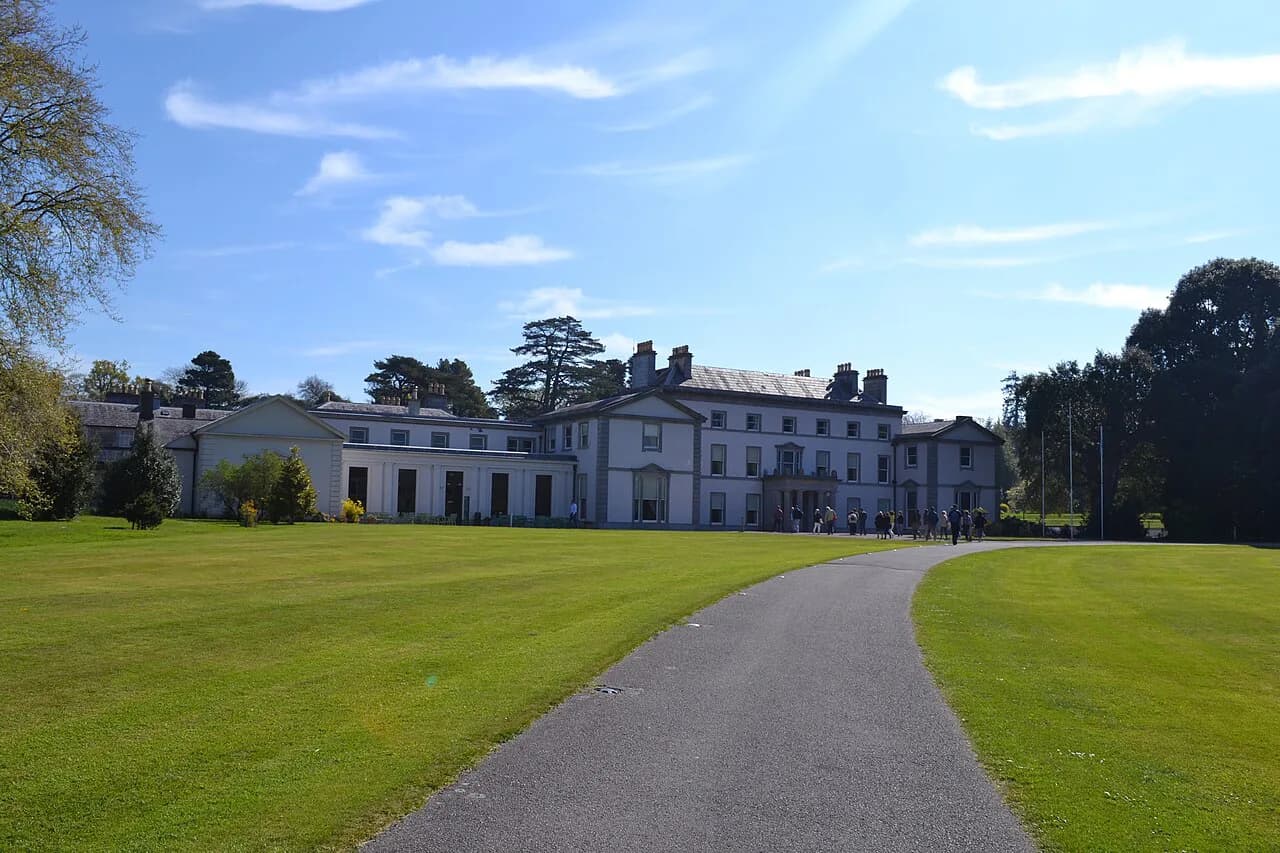
Fota House is a Regency mansion on Fota Island in County Cork, cared for by the Irish Heritage Trust, which describes it as a house of more than 70 rooms with a landscape-painting collection and restored servants' quarters. The operator presents the house, arboretum and gardens as one property, describing staff and volunteers who bring the house, gardens and arboretum to life, and the Trust works with the Office of Public Works and other partners on the property.
The single most useful thing to know before you set out is the seasonal split in access. The Irish Heritage Trust's property listing states that the Regency house and gardens are open March to September, and that from October to March the gardens are open to enjoy. That means an autumn or winter trip should be planned as a grounds walk, not as an interiors visit.
What Fota House Is and Who Runs It
The estate sits on Fota Island in Cork Harbour, in the care of the Irish Heritage Trust, a non-profit organisation that conserves the house and makes it available to visitors. The Trust describes working in close partnership with the Office of Public Works, Fáilte Ireland and other organisations, so the house, arboretum and gardens are managed as a combined heritage property rather than a single private attraction.
As a visitor you are dealing with one operator for the visit as a whole, and that operator's own website is the place where seasonal arrangements, tour availability and any changes are set out. A local tourism page likewise describes the house, arboretum and gardens as cared for by the Trust, which underlines that the experience is presented as a property-wide visit rather than a house alone.
The Seasonal Reality: Interiors or Grounds
The Trust's listing is explicit and worth reading literally: the Regency house and gardens are open March to September, and from October to March the gardens are open to enjoy. If you are travelling in late October, in winter or in early spring, build your day around the arboretum, gardens and working areas and leave the rooms for another trip.
The operator describes guided tours that take in the grandest rooms and the servants' quarters, with guides telling the story of the Smith-Barry family and their staff. Read that as a description of what a house tour covers when the house is open, not as a promise of daily departures or a timetable you can plan a train around.
From Hunting Lodge to Regency Mansion
The house began as a two-storey hunting lodge used as a base for fishing, shooting and exploring Cork Harbour, according to the operator's account, and was remodelled for the Smith-Barry family in the 1820s. Architects Sir Richard Morrison and his son William Vitruvius Morrison drew up plans for the mansion that replaced the lodge's modest scale.
An independent historic-houses blog adds architectural detail best treated as secondary context: the lodge built for Hon. John Smith-Barry, a substantial enlargement around 1820 to Richard Morrison's design, and a later long gallery by William H. Hill. It also notes the estate passed to University College Cork in 1975 and that conservation followed under the Office of Public Works, which helps explain why the house reads as a layered building rather than a single-period set piece.
Local history writing describes the same transformation from lodge to Regency mansion in the 1820s under Richard Morrison and his son, and notes that the house is now in the care of the Irish Heritage Trust and open to the public. That agreement across sources is useful for orientation, though the details of who built what and when are best read as compiled history rather than a primary record.
Inside the House: Rooms and the Upstairs Story
The operator frames the interior around the contrast between the opulent principal rooms and the working life of the house, with the guided tour moving through both. It also highlights a sensitively refurbished nursery, where children's toys and original furniture recreate scenes from a privileged Victorian childhood, giving the upstairs narrative a domestic scale rather than purely ceremonial one.
The entrance hall is among the architectural set pieces, described in secondary accounts as running the length of the front of the original house and divided by screens of paired Ionic columns with yellow scagliola. Look for that scagliola detail when you enter, because it is the kind of finish that shows how the Morrisons used colour and plasterwork to make a comparatively plain exterior feel rich inside.
The Servants' Wing and Life Below Stairs
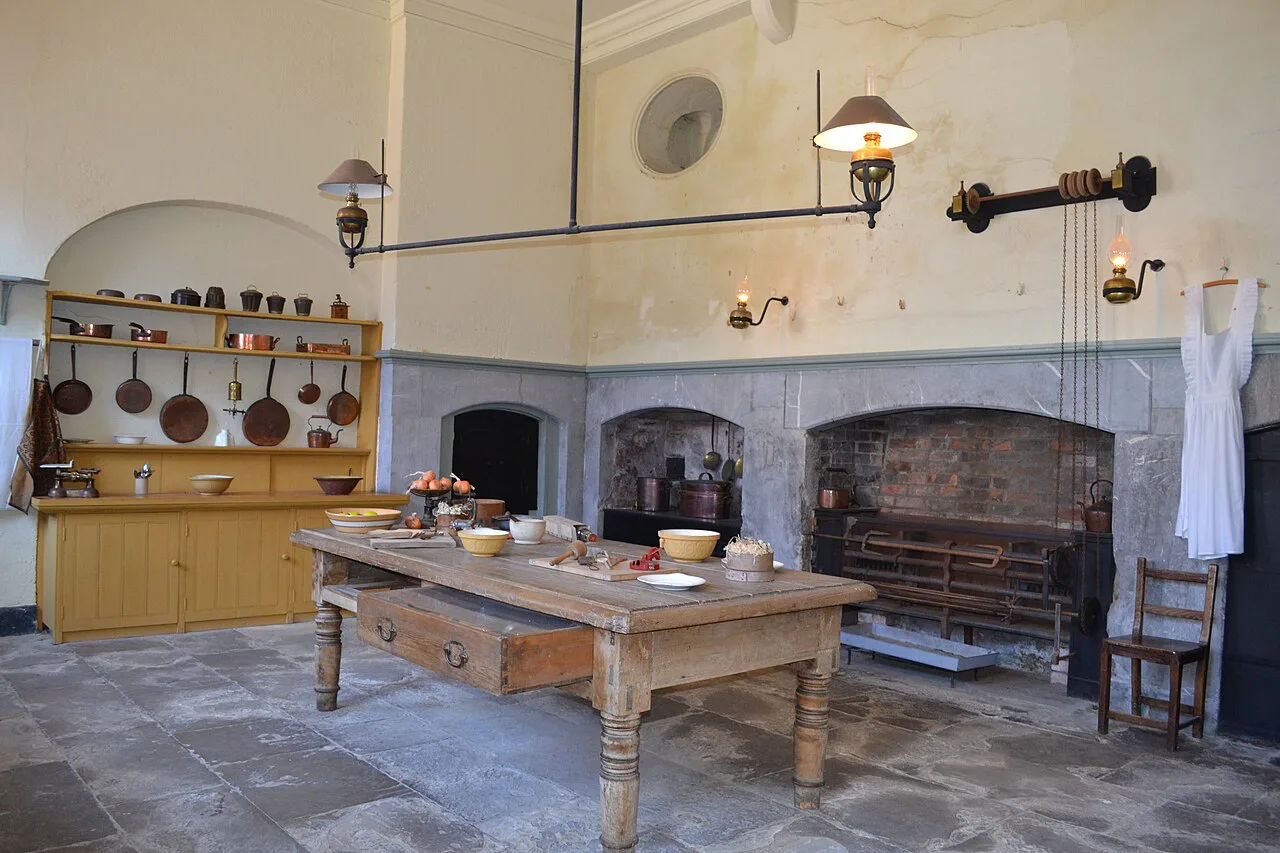
The operator gives the servants' wing its own emphasis, describing a vast service area where visitors learn what life was like for the cooks, butlers, footmen and maids who worked for the Smith-Barry family. The tour is designed to show how servants worked, lived and spent leisure time on the estate, which sets the household's labour alongside the family's rooms.
Independent descriptions of the house single out the preserved service wing and kitchens as part of what makes a visit feel intimate, alongside the state rooms and plasterwork. The detailed interest below stairs is in small objects and working spaces rather than grand gestures, so give the service areas a little time.
The Art Collection and Its Provenance
The operator calls its landscape-painting collection one of the finest of its type outside the National Gallery of Ireland, with works by William Ashford, Robert Carver, Jonathan Fisher and Thomas Roberts among the named artists. The dedicated collections page broadens the picture to 18th- and 19th-century Irish art and furniture, including George Barret, George Mullins and original portraits of the Smith-Barry family.
Provenance matters here. The Trust states that the collection was gathered by Cork businessman and art collector Richard Wood, later purchased by the McCarthy family and donated to the Irish Heritage Trust in 2007 and 2008, after the Trust took ownership of the house in 2007. It would therefore be wrong to assume every canvas was assembled by the Smith-Barrys and has hung in place without interruption.
The collections page also records full museum accreditation from the Heritage Council and a permanent exhibition built around the house's hand-painted wallpapers. Conservation is described by the Trust as repairing and showing original items wherever possible while adding historically accurate pieces to recreate scenes, so expect an honest mix of the surviving and the reconstructed rather than a sealed time capsule.
The Gardens, Arboretum and Working Garden
Outside the house, the operator points visitors to the Victorian Working Garden, brought back into use with an orchard, potting sheds and working glasshouses that once supplied the house with fruit and vegetables. Volunteers propagate and grow produce there now, and the Trust says some of it is sold to support the property's care, which gives the grounds a productive character rather than a purely ornamental one.
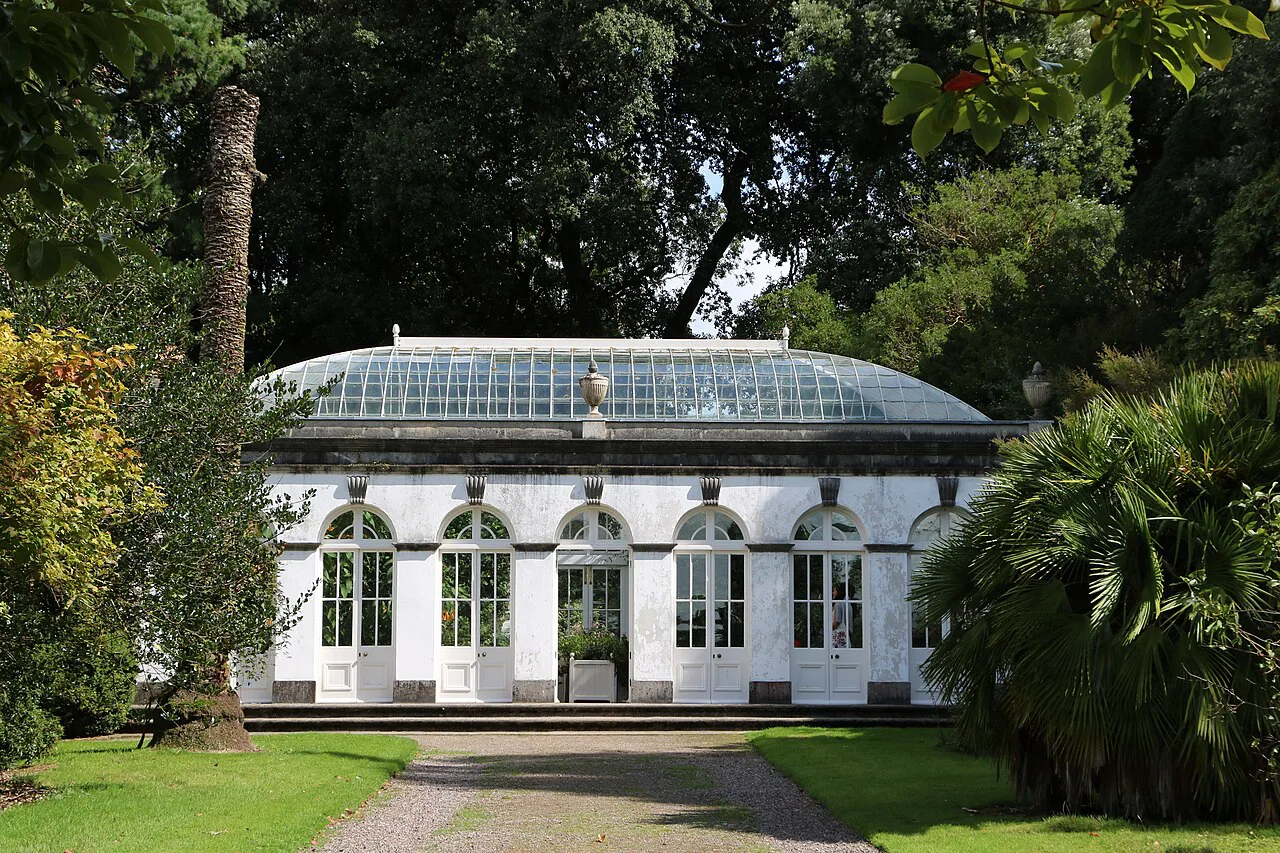
The arboretum is the other long-running project, started in the nineteenth century and planted on over generations in a mild island climate that allows less hardy species to thrive. Compiled historic-house accounts describe formal gardens laid out behind the house in the mid-19th century, with an orangery and a temple among the features, which gives a garden visit a structure to follow.
If your interest is in designed landscapes more broadly, Fota's planting sits within a wider Irish tradition of walled gardens, arboreta and demesne planting; the irish gardens roundup gathers other garden days where the same themes can be followed.
Getting Your Bearings on the Island
Fota Island lies between Carrigtwohill and Great Island in Cork Harbour and is made up of two townlands in different civil parishes. A local-history blog states that the island has its own railway halt, said to have been secured as a condition when the route for the railway to Queenstown was sold in 1860 to 1862, though this is local history rather than an operator statement.
The same island also holds a wildlife park, a hotel and golf resort, which are separate businesses rather than parts of the Fota House visit, and the sources consulted do not indicate that any house ticket covers them. Plan them as neighbours on the map: useful for orientation and for understanding why the island feels busy, but not as add-ons to a house tour.
For visitors weighing up a wider County Cork or Munster itinerary, Fota pairs naturally with other historic houses and gardens, such as the lakeside setting of Muckross House in Killarney National Park, if you are building a route around designed landscapes and estate interiors.
A Useful Half-Day in the Grounds
Between October and March, plan the visit as a walk: enter through the grounds, follow the arboretum paths and loop through the working garden and glasshouses, then finish at the café, which the operator and local tourism pages describe as part of the property. The sources give no café hours or menu, so treat it as a likely stop rather than a guaranteed one.
Allow enough time to read the planting rather than to rush between highlights, because the interest in a grounds-only visit is cumulative: the working garden, the mature trees and the garden buildings each add a layer. If you are choosing between Irish garden days, the walled and woodland gardens at Altamont Gardens in County Carlow make an instructive counterpoint to Fota's milder, more exotic planting.
Matching the House to Your Interests
If your priority is interiors and paintings, save Fota for the March to September window and go expecting a guided tour rather than a free-roaming house. If your priority is plants, the reverse holds: the cooler months offer a quieter grounds visit, though you will see the garden out of its peak season and should set expectations accordingly.
Visitors tracing the wider story of Irish big-house gardens can also look at Ilnacullin – Garinish Island, where a sheltered island setting produced another celebrated planted landscape, as a way of understanding why mild coastal microclimates mattered so much to Irish garden makers.
Before You Travel
Decide first which season you are visiting in, because it determines what you will actually see: the house and gardens from March to September, and the gardens alone from October to March. Then check the operator's own pages for current arrangements, including tour availability and any changes to access, before you commit to a day out.
The house rewards a slow guided visit and the grounds reward a slow walk, so resist trying to do both at speed. Bring an interest in how a household actually ran, above and below stairs, and Fota will read as more than a pretty Regency facade.
Explore more Ireland guides
Frequently Asked Questions
Can you visit inside Fota House in autumn or winter?
Not according to the Irish Heritage Trust's current listing, which says the Regency house and gardens are open March to September and that from October to March the gardens are open to enjoy. Plan an autumn or winter trip as a grounds visit, and check the operator's pages before travelling in case arrangements change.
What is there to see in the Fota House art collection?
The operator describes a collection of 18th- and 19th-century Irish art and furniture, including landscape works by artists such as William Ashford, Robert Carver, Jonathan Fisher, Thomas Roberts and George Barret, plus portraits of the Smith-Barry family. A permanent exhibition also focuses on the house's hand-painted wallpapers.
What does the guided tour of Fota House cover?
The Trust describes tours that move through the grandest principal rooms and the servants' quarters, with guides explaining the Smith-Barry family and the staff who worked for them. A refurbished nursery is among the rooms highlighted. Specific tour times are not published in the sources consulted, so confirm on the operator's site.
Are the arboretum and gardens separate from the house visit?
They are presented as part of the same property, with the arboretum, formal gardens and Victorian Working Garden alongside the house. Access differs by season, though: the gardens are listed as open from October to March even when the house is closed, so the grounds can be visited on their own.
Is Fota House the same as Fota Wildlife Park?
No. Fota House, Arboretum & Gardens is a heritage property managed by the Irish Heritage Trust, while the wildlife park, hotel and golf resort on the same island are separate businesses. They sit near each other, but nothing in the sources suggests one ticket covers both.
Sources
You might also like



Continue reading
More guides you'll find useful





