

Emo Court, County Laois: Gardens, Parkland and House Guide
Plan a visit to Emo Court in County Laois: James Gandon's neo-classical house, the formal gardens, lake and woodland walks, and what to confirm before you go.
On this page
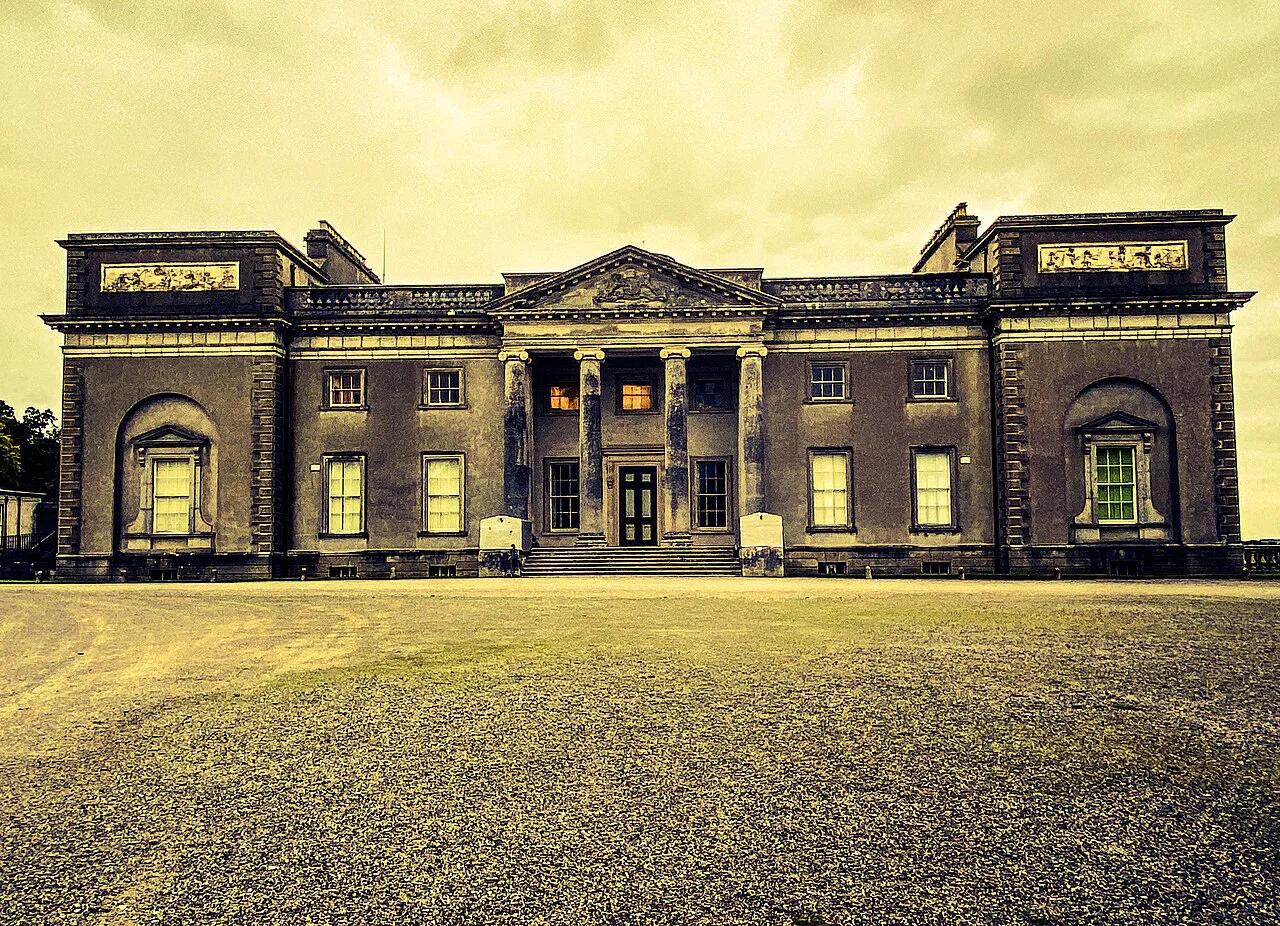
Emo Court and Estate is a neo-classical country house in County Laois, standing about 2.5 km from the village of Emo and accessed from the Kildare–Portlaoise road (N7), roughly 7 km from Portarlington railway station. The house was begun for John Dawson, 1st Earl of Portarlington, by the architect James Gandon in 1790, yet the building as it stands was not finished for some seventy years. For visitors the practical distinction matters: the gardens and parkland are open on a seasonal timetable, while access to the house interior is the part you should confirm before setting out.
The House in Outline: Gandon's 1790 Commission
Heritage Ireland, which manages the estate, records that Gandon took up the Emo commission in 1790, and that the finished house emerged about seventy years later. That long gap explains why the building reads as a single classical composition but carries work from several hands. The 1st Earl died before the house was complete, and later generations of the family carried the project on in stages.
An independent heritage account sets out the sequence in more detail, attributing the garden front and its giant Ionic portico to Lewis Vulliamy in the 1820s and 1830s, and the double-height rotunda with its copper dome to William Caldbeck around 1860. Those attributions come from that account rather than from the operator's page, so treat them as the independent record. What matters on the ground is that the dome and portico you see belong to the completion phase.
From Family Seat to Public Estate
The earls of Portarlington remained at Emo until 1920, when the estate was sold to the Irish Land Commission. The Society of Jesus then acquired a reduced holding around 1930 and ran it as a novitiate for several decades, adapting rooms to religious use before leaving in 1969. Major Cholmeley-Harrison took the house on in the 1960s and carried out a full restoration before presenting the estate to the people of Ireland in 1994, an event the Heritage Ireland page records as the origin of today's public site.
That history shaped the landscape as much as the house. The grounds were first laid out in the eighteenth century, and the gardens and parkland today are the visitable element of the estate. The wider historic property once extended far beyond the areas you can walk, so judge the visit by the gardens and parkland in front of you, not by the old estate's scale.
What to See on the Ground
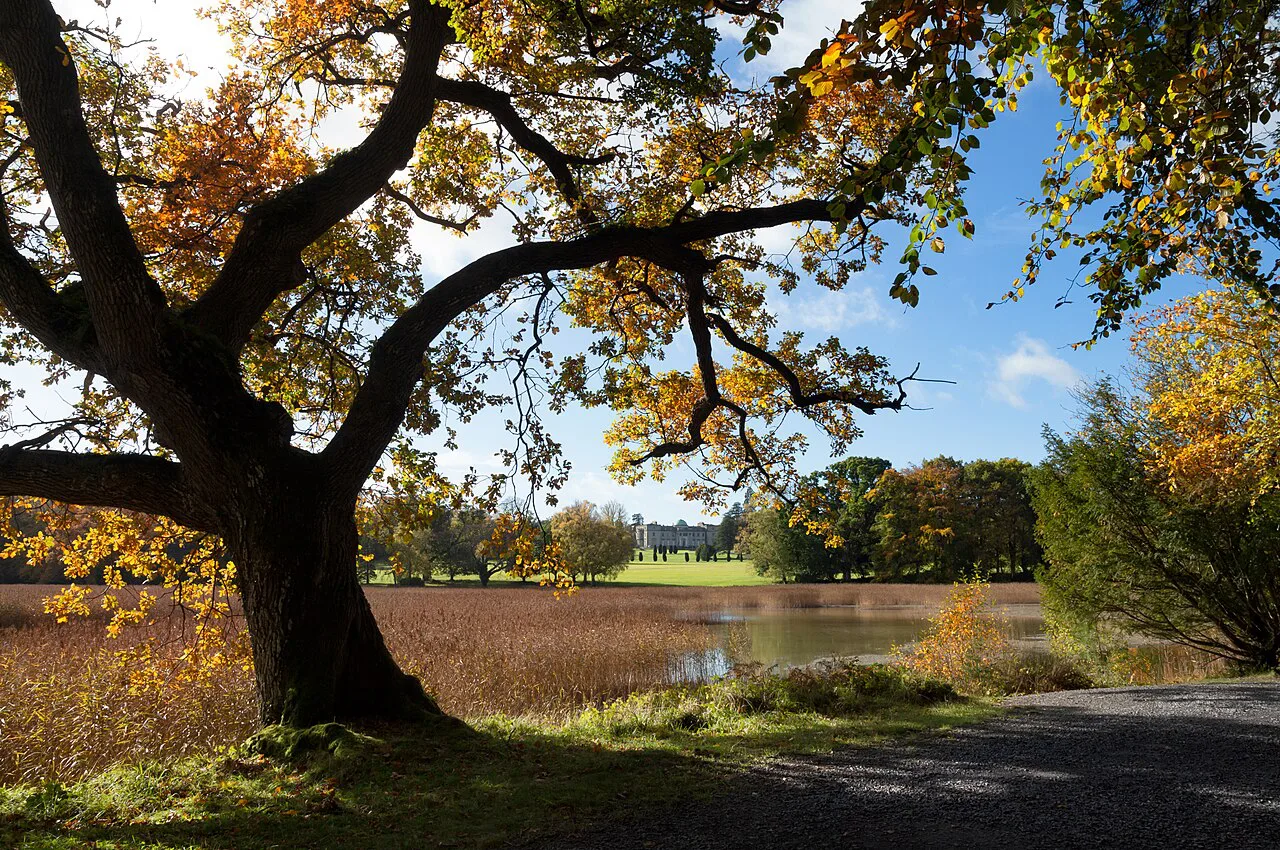
The visitable landscape covers more than 35 hectares, combining formal lawns, woodland paths, statues and a lake of about 20 acres. The regional tourism body describes it as a glorious example of Irish formal gardens within a naturalistic setting, which is a fair guide to how the day unfolds: clipped formal areas near the house give way to looser woodland and water. Allow time for both rather than treating the gardens as a quick circuit before the house.
The lake and woodland walks are the heart of the outdoor visit, with the tearooms named by the operator as a stopping point. The independent heritage account also describes sculptures placed through the grounds, an arboretum and a walled garden, which reward a slower pace for anyone who wants more than a single loop. None of this depends on the house being open, which is why the grounds are the reliable plan.
Seen against other Irish country estates, Emo's appeal is the combination of a Gandon-designed house and a landscape you can actually walk. If you are assembling a comparative picture of the period, Castletown house ireland offers a very different Palladian approach to the same era of building.
Garden Hours by Season
The gardens keep a month-based timetable published by the regional tourism body: 8:30am to 4:30pm in January, February, November and December; 8:30am to 5pm in March and October; 8:30am to 7pm in April and September; and 8:30am to 8:30pm from May through August. Closing times therefore shift considerably across the year, and an autumn afternoon arrival needs a different calculation from a midsummer one. Check the current listing before a long drive, since published times can be adjusted.
The parkland runs on its own seasonal schedule rather than the garden blocks above, and the operator notes that lock-up begins half an hour before the stated closing time. That half hour is easy to forget when planning a late walk, so build it into your timing. Confirm the parkland blocks directly with the operator rather than assuming they match the garden hours.
Weather, Ground Rules and Terrain
In winter the site may not open at all in adverse weather, and the operator asks visitors to phone ahead before travelling when conditions look poor. The number to use is +353 57 862 6573. This is the single most useful precaution for an off-season trip, when a wasted journey is a real possibility.
Dogs are welcome but must stay on leads throughout, and cycling is not permitted on the walkways. Fires, camping and barbecues are all prohibited, which keeps the parkland in reasonable condition for walkers. These rules apply across the grounds, so plan a dog walk or a family outing around them rather than around a bike ride.
The lake carries a deep-water caution and the parkland terrain is uneven, so suitable footwear is advised rather than optional. Supervise children near the shoreline and keep to paths where the ground is rough. The estate is a landscape to walk through, not a manicured park with smooth surfaces throughout.
Getting There and Who Should Phone Ahead
Emo Court sits about 2.5 km from Emo village, reached from the Kildare–Portlaoise road, and about 7 km from Portarlington railway station for anyone arriving by train. The station distance means a taxi or a lift is needed at the far end unless you arrange transport in advance. Drivers have the simpler journey, with the site signposted from the main road corridor.
Visitors who need special assistance, or who have mobility issues, are asked to contact the site in advance on +353 57 862 6573 so arrangements can be discussed. Do that before booking travel rather than on arrival, since the terrain and the house's historic fabric both affect what is practical. The operator does not publish a detailed accessibility statement on the page, so a conversation is the way to get a straight answer.
The House Interior: An Unresolved Question
The operator's own page promotes a guided house tour covering the restored ground-floor period rooms and the basement, where the working lives of servants are interpreted. That is the official description of what a house visit involves, and it is the basis on which most people would plan one. It is not, however, a live confirmation that tours are running on the day you arrive.
An independent heritage account reports the opposite experience: the house closed to the public for renovation for several years, with only a few rooms opened during a Heritage Week, and it says the interior was still not generally open by its later update. That account also records a 2021 visit when the interior was shut. It is a first-hand report rather than an operator statement, so it should not be read as a formal closure notice either.
The honest position is that the two sources conflict, and neither can tell you what is happening on a given date. Phone +353 57 862 6573 before you travel and ask directly whether the house is open and whether a tour is running. Plan the grounds as the confirmed part of the day and treat the interior as a bonus if it is available.
Where Emo Fits a Midlands Itinerary
Emo works best as a half-day outdoor stop for travellers crossing the Midlands between Dublin and the west, or as a garden visit in its own right for anyone interested in Irish Georgian architecture and designed landscapes. The regional tourism body that promotes the gardens frames the area around the Slieve Bloom Mountains, so Emo pairs naturally with a wider Laois day out rather than as a standalone destination requiring a long detour.
Visitors drawn to the estate's combination of house and grounds will find similar territory at Westport house in County Mayo and at Doneraile court in County Cork, both of which set a country house within a landscape you can walk. Emo's distinguishing feature is the Gandon connection and the survival of his classical composition through decades of later work. If Doneraile inspires a wider county trip, our Museums in Cork: City and County Collections guide rounds out the indoor side of a Cork visit.
For a Midlands comparison closer to Emo's scale, belvedere house near Mullingar pairs a substantial estate with lakeside grounds, so the two can be weighed against each other when you are choosing where to spend a walking afternoon. The two differ in character: Emo's draw is Gandon's architecture, while Belvedere's is its water.
Plan Your Visit
Treat Emo Court as a landscape visit first: the formal gardens, woodland paths, lake and statues are open on the seasonal timetable and do not depend on the house. Confirm the parkland blocks and ask about the house interior on +353 57 862 6573 before you travel, especially outside summer and in poor weather. Wear shoes suited to uneven ground, keep dogs on leads, and leave time for the lake shore rather than rushing the lawns.
Explore more Ireland guides
Frequently Asked Questions
Is Emo Court house open to the public?
The operator describes a guided tour of the restored ground-floor rooms and basement, but an independent heritage account reports the house closed for renovation for several years with only limited Heritage Week openings. The two accounts conflict, and neither establishes the position on a particular date. Phone the site on +353 57 862 6573 before travelling and ask whether the house is open and whether a tour is running.
Can you visit the gardens at Emo Court without touring the house?
Yes. The gardens and parkland are managed as a separate outdoor visit with their own seasonal timetable, covering formal lawns, woodland walks, statues and the lake. You do not need a house tour to walk the grounds, and for many visitors the landscape is the main reason to come.
What are the opening hours for Emo Court gardens?
The published garden timetable runs from 8:30am to 4:30pm in January, February, November and December; to 5pm in March and October; to 7pm in April and September; and to 8:30pm from May through August. Check the current listing before a long journey, since published times can change.
How long did it take to build Emo Court, and who designed it?
James Gandon began work for John Dawson, 1st Earl of Portarlington, in 1790, and the house as it stands was not completed until about seventy years later. An independent heritage account attributes the garden front and Ionic portico to Lewis Vulliamy and the copper-domed rotunda to William Caldbeck around 1860.
Are dogs allowed at Emo Court?
Dogs are welcome in the grounds but must be kept on leads at all times. Cycling is not permitted on the walkways, and fires, camping and barbecues are prohibited across the estate.
How do you get to Emo Court without a car?
The estate is about 2.5 km from Emo village and roughly 7 km from Portarlington railway station, so a train journey needs a taxi or pre-arranged lift for the final leg. Drivers reach the site from the Kildare–Portlaoise road corridor, where it is signposted.
Is Emo Court suitable for visitors with mobility issues?
The operator asks visitors who need special assistance or have mobility issues to contact the site in advance on +353 57 862 6573 so arrangements can be discussed. The parkland terrain is uneven and the lake carries a deep-water caution, so a conversation before travel is more useful than arriving to find limits on the day.
Sources
You might also like



Continue reading
More guides you'll find useful




