
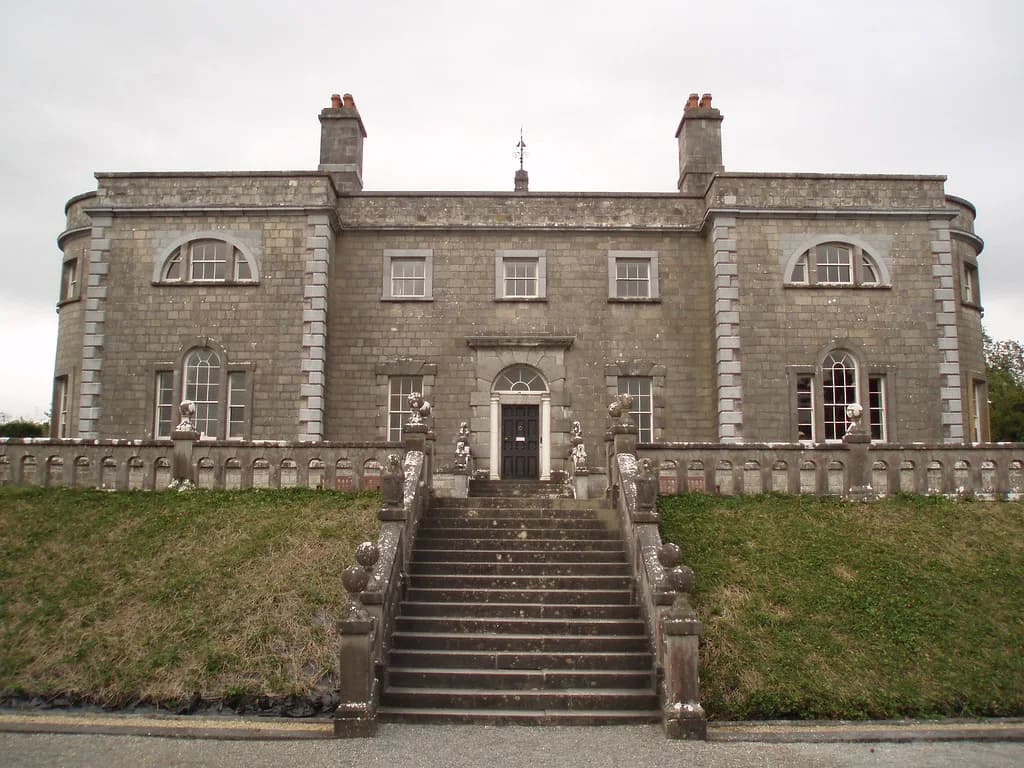
Irish Georgian Architecture: How to Read Ireland's Georgian Houses
Learn to recognise Irish Georgian architecture in Ireland's built landscape, from Palladian symmetry to Dublin's Georgian streets, with named houses to visit.
On this page
Irish Georgian architecture is not a single style you can tick off a list; it is a habit of building that shows up differently in a country mansion, a lakeside villa and a city terrace. The clearest way to learn it is to visit a handful of named houses and compare what you see: how the front is arranged, how the windows sit, where the entrance is placed and what the building is trying to say about its owner. Each house below is dated as its own source presents it, so the examples form a set of observations rather than one tidy national timeline.
Use the houses as teaching specimens rather than a ranking. Castletown gives you the formal Palladian composition, Emo Court shows neo-classicism arriving decades later, Belvedere shows a smaller villa set in a designed landscape, and Newbridge shows what original furnishings can reveal that an empty shell cannot. Dublin then lets you read the same instincts at street scale, where individual houses matter less than the shape of a square or a terrace.
Reading Georgian Town Houses and Country Houses
Kerry County Council’s architecture guide, prepared with the Irish Georgian Society, describes town houses as terraces with restrained brick fronts and classical proportions. Their appearance provides a useful reference before comparing country-house designs. The same checklist should not be treated as proof that every house belongs to one uniform style.
Look at the windows and entrance. The guide explains that timber sash windows slide vertically, with window sizes generally reducing toward upper floors, and identifies the fanlight as a prominent doorway feature. It also describes slate roofs concealed behind brick parapets. These details concern town houses rather than a rule for all country houses.
For each building you visit, record what you can actually see: the position of the entrance, the arrangement of openings and the relationship between the house and its grounds. Compare those observations with the operator’s account of that particular building. A useful comparison starts with individual evidence, not a checklist used as a date stamp.
The Palladian Country House: Castletown as the Benchmark
Castletown House and Parklands, near Celbridge in County Kildare, is the place to begin because it shows the Palladian idea at full scale. Heritage Ireland dates the house to around 1722, built for William Conolly, speaker of the Irish House of Commons, to designs by several architects, and describes it as intending to reflect Conolly's power and to host political entertaining on a grand scale. That pairing of architecture and political display is the key to reading the formal front: the house is arranged to impress before you ever step inside.
The estate later flourished under Conolly's great-nephew Thomas and his wife, Lady Louisa, who devoted much of her life to improving the house, so the building you see is not a single frozen moment but a layered one. Inside, Heritage Ireland notes a significant collection of paintings, furnishings and objets d'art, including three eighteenth-century Murano-glass chandeliers and the only fully intact eighteenth-century print room in the country. Those interiors matter to the architecture lesson because they show how the formal rooms were meant to be used and viewed.
The operator's Palladian description gives a starting point for comparison with Emo Court or Belvedere. Read the building as a whole before concentrating on individual decorative features. Heritage Ireland also calls Castletown the most splendid Palladian-style country house in Ireland; that is the heritage body's own characterisation, not an independent ranking. Comparing one house with another can be more useful than treating any single feature as a reliable date marker.
Neo-classicism Arrives: Emo Court and James Gandon
Emo Court in County Laois shows the next architectural mood. Heritage Ireland records that James Gandon, fresh from work on the Custom House and the Four Courts in Dublin, began Emo Court in 1790, though the building standing today was not completed until some seventy years later. That long gap is a useful visitor insight: a house can carry an architect's original conception while its finished form reflects generations of later work, so do not assume the first date on a page equals the final building.
The estate's story is equally layered. Heritage Ireland explains that it was home to the earls of Portarlington until the War of Independence forced them to abandon Ireland, that the Jesuits later used the mansion as a novitiate, and that a Major Cholmeley-Harrison restored it from the 1960s before presenting the estate to the people of Ireland in 1994. Knowing that sequence helps you interpret the restored interiors: you are seeing a twentieth-century rescue of an earlier house, not an untouched original.
The guided house tour is where Emo Court rewards interior attention, showcasing restored ground-floor period rooms and giving access to the basement, where the working lives of the servants are interpreted. That combination is a stronger architectural lesson than a façade photograph, because it connects the grand neo-classical rooms above to the service spaces below. If you have mobility requirements, Heritage Ireland asks visitors to contact the site directly in advance, and it advises phoning before setting out in winter weather, when the parkland may not open.
A Georgian Villa and Its Designed Landscape: Belvedere
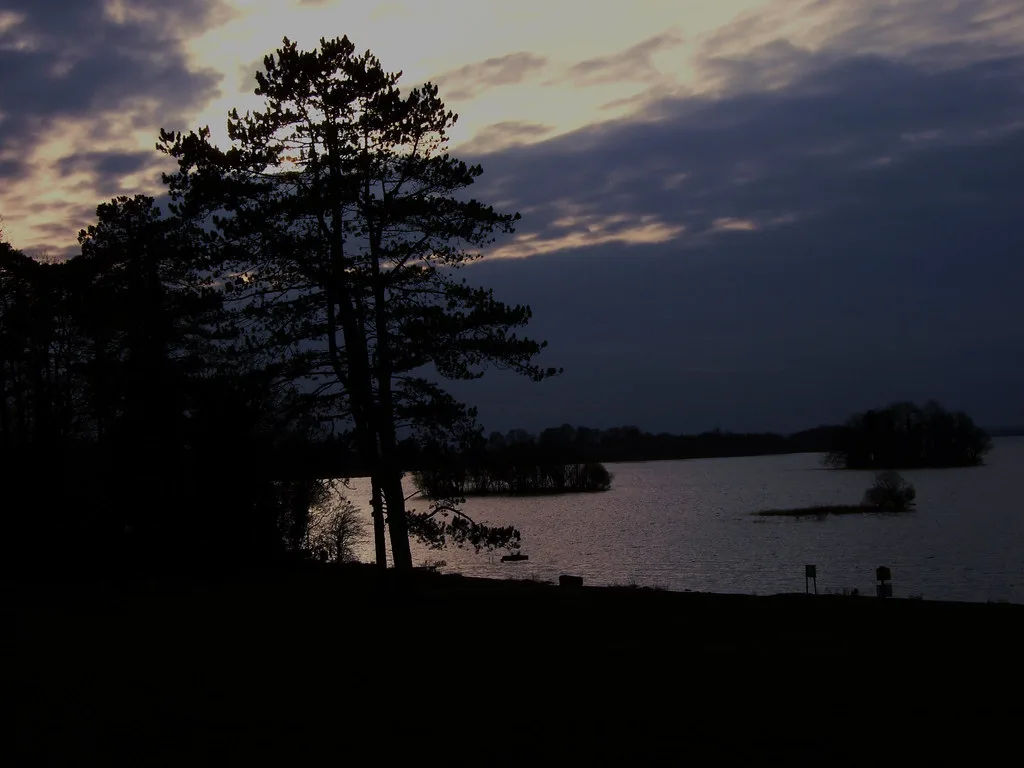
Belvedere House, near Mullingar in County Westmeath, shifts the scale from mansion to villa. The operator describes it as a Georgian country house dating to 1740, designed by Richard Cassells as a Palladian hunting lodge, set within a 160-acre lakeside estate. Visiting it gives you a different reading of Georgian architecture: the building is part of a composition that includes water, parkland, garden and ornamental buildings, so the front of the house is only one element of the design.
The estate also includes a nineteenth-century pleasure garden and glasshouse, described by the operator as rich in rare and unusual plants, and a Gothic folly that the operator presents as Ireland's largest and most spectacular. Keep that superlative attributed to the operator rather than treating it as an independent claim. The folly is worth reading as a deliberate piece of Gothic garden theatre: the operator frames it through the Rochfort family story, and it is a garden building rather than a working medieval structure.
For the visitor, Belvedere is most useful after you have seen a formal Palladian front like Castletown, because the comparison exposes what a villa does differently. The house is smaller, the landscape does more of the impressing, and the pleasure garden adds a layer of nineteenth-century taste to an eighteenth-century building. Allow time to walk the grounds rather than treating the house as the whole visit, and note that the garden and folly are outdoor features, not indoor shelter.
Intact Interiors as Evidence: Newbridge and Doneraile
Newbridge House, at Donabate in County Dublin, is described by its operator as one of Ireland's most intact and best-preserved Georgian mansions, retaining most of its original furnishings and contents and having undergone relatively few major alterations. That makes it valuable evidence of a different kind from a restored shell: furniture, artwork and personal possessions of the families who lived there give a more direct sense of how rooms were actually used. The operator notes that it is about a thirty-minute drive from Dublin city centre, with public transport options available and plenty of free parking on site.
Newbridge also illustrates why you should check a house's status before travelling. The site carries operational notices about Monday closure until spring and a temporary closure for delicate plasterwork, so do not assume the house interior is open simply because the estate and farm are. Confirm the house tour status before making the trip.
Doneraile Court in County Cork offers a contrast in what survives. Heritage Ireland records that the house was built by the St Leger family around 1645 and was refurbished in the mid-eighteenth century into an outstanding example of Georgian architecture, so what you see is an older building remade in Georgian taste rather than a Georgian house built from scratch. The Georgian overlay on an earlier structure is exactly the sort of layering visitors should expect in Irish country houses.
The surrounding estate adds a landscape dimension: Heritage Ireland describes a 160-hectare parkland in the naturalistic style associated with Capability Brown, with water features, a parterre walled garden and graded walks, and notes that red deer, fallow deer, sika deer and Kerry cattle live on the estate. The surrounding parklands are free to visit during opening times. Guided tours of the house run on the hour from 10:00, and the site was closed on Tuesdays and Wednesdays when checked, with parkland gate and toilet closing times applying. Treat those as retrieved details to verify before you go.
The Georgian City: Dublin's Streetscape and Parnell Square
Dublin lets you read Georgian architecture at the scale of streets rather than individual houses. An essay by McCullough Mulvin Architects describes the city between the canals as, despite its depletion, an eighteenth-century Georgian city built quickly and consistently over a few generations. The useful idea for a visitor is that the Georgian city is not a collection of isolated monuments but a single complex artefact of streets, squares and plots. Walk with that in mind and the repetition of house types becomes the point, not an obstacle.
Parnell Square is the essay's example of Georgian urban planning at its most irregular. It describes the square as an evolutionary idea that only became a square over time and even then only a three-sided one, with sides that are not parallel and a surface that falls in all directions, so the houses appear and disappear as you move. That is a genuinely useful observation for a walking visitor: the square's awkward topography is part of its character, not a defect to be corrected.
The same essay discusses No. 11 Parnell Square, a five-bay, five-storey mansion built as one of a pair around 1755 and later adapted as the headquarters of Dublin County Council in 1901, and outlines proposals to turn it into a public space for poetry and the spoken word. Important caution: the essay describes an architectural project and a cultural-quarter concept for the area, so do not read it as evidence that the house is currently open to the public or that the quarter has been delivered. Treat it as an example of how Georgian houses are being reimagined, and check current access separately.
Reused Ground: Westport House and the Layers Beneath
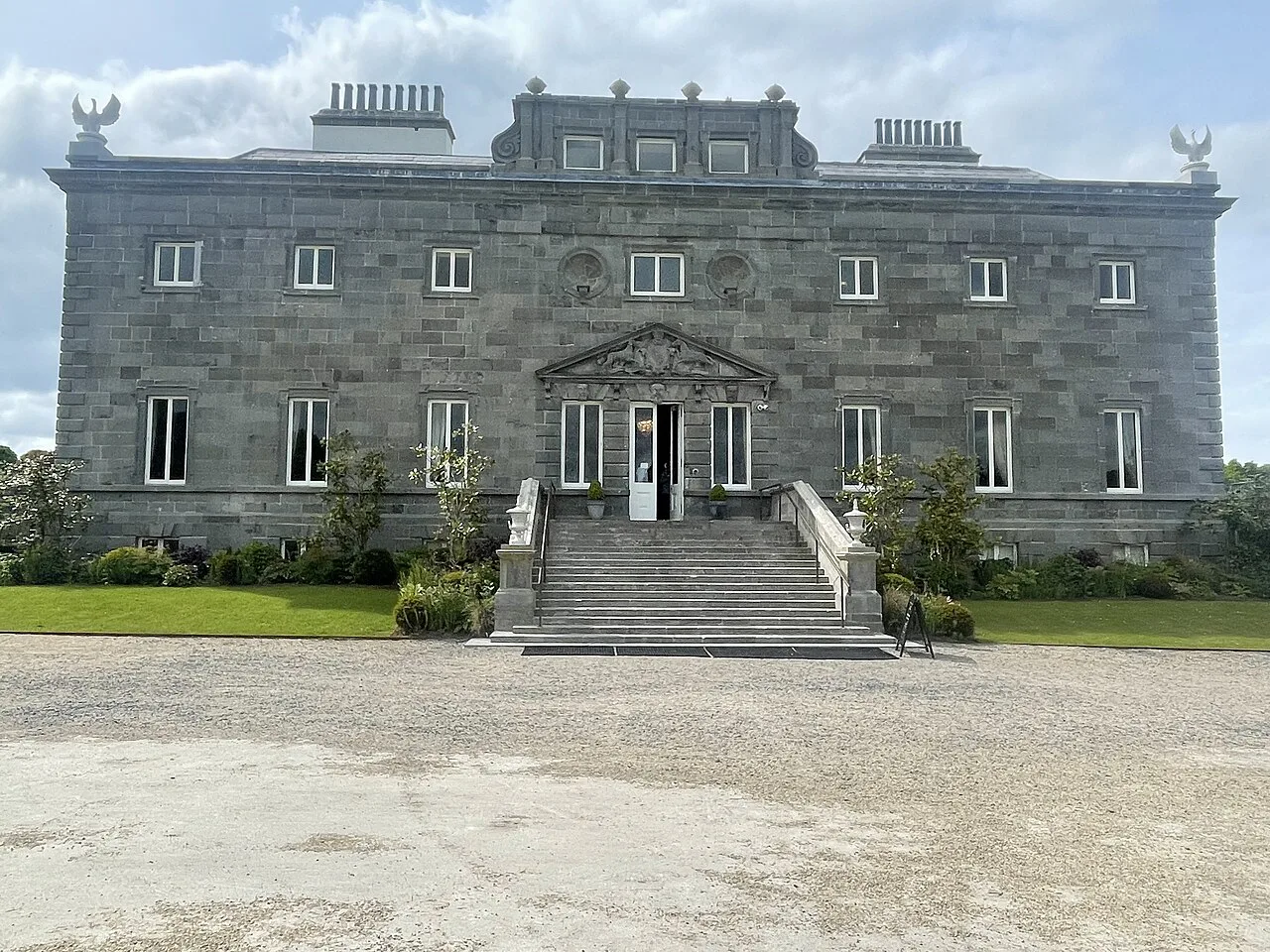
westport house, in County Mayo, shows how a Georgian house can sit on ground with a much older story. Tourism Ireland records that Grace O'Malley, the Pirate Queen of Connacht, was the first owner of the site on which Westport House stands, building a castle there in the 1500s that later became the foundation for the eighteenth-century Palladian mansion visitors see today. Read the house with that in mind: the Georgian building is the visible layer, and the earlier castle is the buried context. For a fuller visitor guide, see Westport House.
The estate also demonstrates how a country house becomes a modern visitor attraction. Tourism Ireland notes that Westport House and its surrounding estate opened to the public in 1960, that a guided tour covers the estate's history including a 3,000-year-old Greek sarcophagus brought here in 1812, and that the grounds include a lake, a hop-on-hop-off train around the estate and accommodation on site. The mix of house, grounds and family activities makes it a different proposition from a purely architectural visit, so decide in advance whether you are going for the rooms, the landscape or both.
Access Notes, Kept Separate from the History
Access at these houses varies by season and by building, so keep the practical notes separate from the architectural story. Castletown's parklands are open all year, with gates from 07:00 to 20:30, while guided tours of the house run within a defined 2026 season from 15 March to 4 November, so a winter walk in the parklands is not the same as a house visit. Heritage Ireland also gives public transport directions, including the C4 and 120 buses from Dublin and the W61 from Hazelhatch rail station, which is useful if you are linking several houses without a car.
Emo Court is about 7km from Portarlington train station by road, and Heritage Ireland warns that the parkland may not open in winter due to adverse weather, asking visitors to phone ahead in bad conditions. Doneraile's parklands are free to visit within opening times, with house tours on the hour from 10:00 and Tuesday and Wednesday closure at the time of checking, while Newbridge's Monday and plasterwork notices mean its current status should be confirmed directly. Heritage Ireland asks visitors with mobility requirements to contact Emo Court in advance. None of these notes should be read as a guarantee of year-round touring at any house.
The sensible approach is to check each site's own page in the week you plan to visit and to phone ahead where a site invites it, especially in winter. Admissions are set by the individual operators and are not listed here; check the relevant site page for current details rather than relying on older guides. That habit of verification is also part of reading Georgian architecture properly: buildings accumulate change, and the most reliable information is the one the operator publishes now.
Plan Your Visit
Reading Irish Georgian architecture is a cumulative skill. Start with a formal Palladian front at Castletown, compare the later neo-classicism of Emo Court, then look at how a villa like Belvedere works within a designed landscape and how intact interiors at Newbridge reveal everyday life. After that, walk a Georgian street or square in Dublin and notice how the same instincts repeat at urban scale; our Dublin heritage guide helps you place those streets and squares in the city's wider past. The order matters less than the habit of comparing one building with the next.
Before travelling, confirm the status of each house rather than assuming it is open: Castletown's house season, Newbridge's closure notices, Doneraile's weekday pattern and Emo's weather caveats all affect whether the interior you came to see is actually available. Give yourself time for the grounds, since several of these houses are best understood as buildings within landscapes. Verify admissions and tour times directly with each operator. For related reading, explore belvedere house. Compare individual country-house visits in our guide to Georgian houses in Ireland.
Explore more Ireland guides
Frequently Asked Questions
What should I look at when comparing Irish Georgian architecture?
Compare entrance placement, window proportions, rooflines and the surrounding grounds. The Kerry architecture guide describes sash windows, fanlights and brick parapets in town houses; use each country house’s own history when interpreting its different design.
What is the difference between Palladian and neo-classical in Irish country houses?
Palladian planning is the earlier, formal manner seen at Castletown, where the house is composed to project power and host grand entertaining. Neo-classicism arrives later, and Emo Court is the clear example here: James Gandon began it in 1790 in a neo-classical vein, though the building was not completed until roughly seventy years afterward. Comparing the fronts of the two houses is the most direct way to see the shift.
Which Irish Georgian houses can you actually go inside?
Guided interior tours are offered at Castletown within its stated season, at Emo Court with ground-floor rooms and basement access, at Newbridge when the house is open, and at Doneraile on the hour from 10:00 when tours are running. Each is subject to its own seasonal or closure arrangements, so confirm before travelling. Westport House also offers a guided tour according to Tourism Ireland.
Is Dublin a good place to see Georgian architecture on foot?
Yes, and it rewards a different kind of looking. An architectural practice essay describes the city between the canals as an eighteenth-century Georgian city built quickly over a few generations, best read as an urban artefact rather than a set of isolated monuments. Parnell Square, with its irregular three-sided plan and falling ground, shows how squares evolved in practice rather than arriving fully formed.
Why do intact furnishings matter when visiting a Georgian house?
They show how rooms were actually furnished and used, which a restored empty shell cannot reveal. Newbridge House retains most of its original contents and has undergone relatively few major alterations according to its operator, making it unusually direct evidence. Doneraile offers a contrast: an older house refurbished in the mid-eighteenth century, where the Georgian character is an overlay on earlier fabric.
When should I check opening details before visiting?
Always, and especially in winter. Castletown's house tours fall within a defined season while its parklands remain open all year, Emo Court may close in adverse weather, Doneraile has weekday closures at the time of checking, and Newbridge carries closure notices for Monday and for plasterwork work. Check each site's own page shortly before travelling and phone where the site invites it.
Sources
- Home - Belvedere House
- Castletown House and Parklands | Heritage Ireland
- Home - Newbridge House & Farm
- Discover County Mayo’s hidden gem: Westport House | Ireland.com
- Doneraile Court and Estate | Heritage Ireland
- Emo Court and Estate | Heritage Ireland
- One House at a Time - Making contemporary Architecture in Georgian Dublin — McCullough Mulvin
- Building a Georgian House — Architecture Kerry2020
You might also like



Continue reading
More guides you'll find useful



