
Irish Gardens: A Visitor Guide to Seven Documented Sites
A practical guide to seven documented Irish gardens, from Glasnevin's glasshouses to Garinish Island, with access, design and collection notes for each site.
On this page
Irish gardens reward travelers who choose by substance rather than by brochure superlatives: a national plant collection, a designed historic landscape, an island reached by boat. The seven places covered here are documented by their public bodies, and each offers a distinct kind of visit rather than a variation on the same walled enclosure.
The selection is deliberately bounded. It includes the two National Botanic Gardens at Glasnevin and Kilmacurragh, the island garden of Ilnacullin at Garinish, Altamont Gardens in County Carlow, the John F. Kennedy Arboretum near New Ross, and two County Wicklow estates, Killruddery and Powerscourt. It is not a complete inventory of Irish gardens and it ranks nothing.
How to Read These Seven Gardens
The sites fall into two useful groups. Glasnevin and Kilmacurragh are plant-collection institutions with defined seasonal hours, as is the JFK Arboretum, while Altamont, Ilnacullin, Killruddery and Powerscourt are designed landscapes where the layout itself is the attraction. Knowing which group you are visiting changes how you plan the day.
Garden admission and house admission are separate questions. At Killruddery, Discover Ireland states that garden admission and house tours are both offered, so a garden ticket does not automatically bring you inside the house. At Powerscourt, Tourism Ireland notes that the shops and cafés in the house can be visited without a garden ticket, which makes a short stop possible for anyone short of time.
Two sites carry charges beyond the garden gate. The boat crossing to Garinish is billed separately by the operators, and Powerscourt Waterfall requires its own ticket distinct from the gardens. Budgeting for these extras prevents an unwelcome surprise at the ticket desk.
Glasnevin: The National Botanic Gardens in Dublin
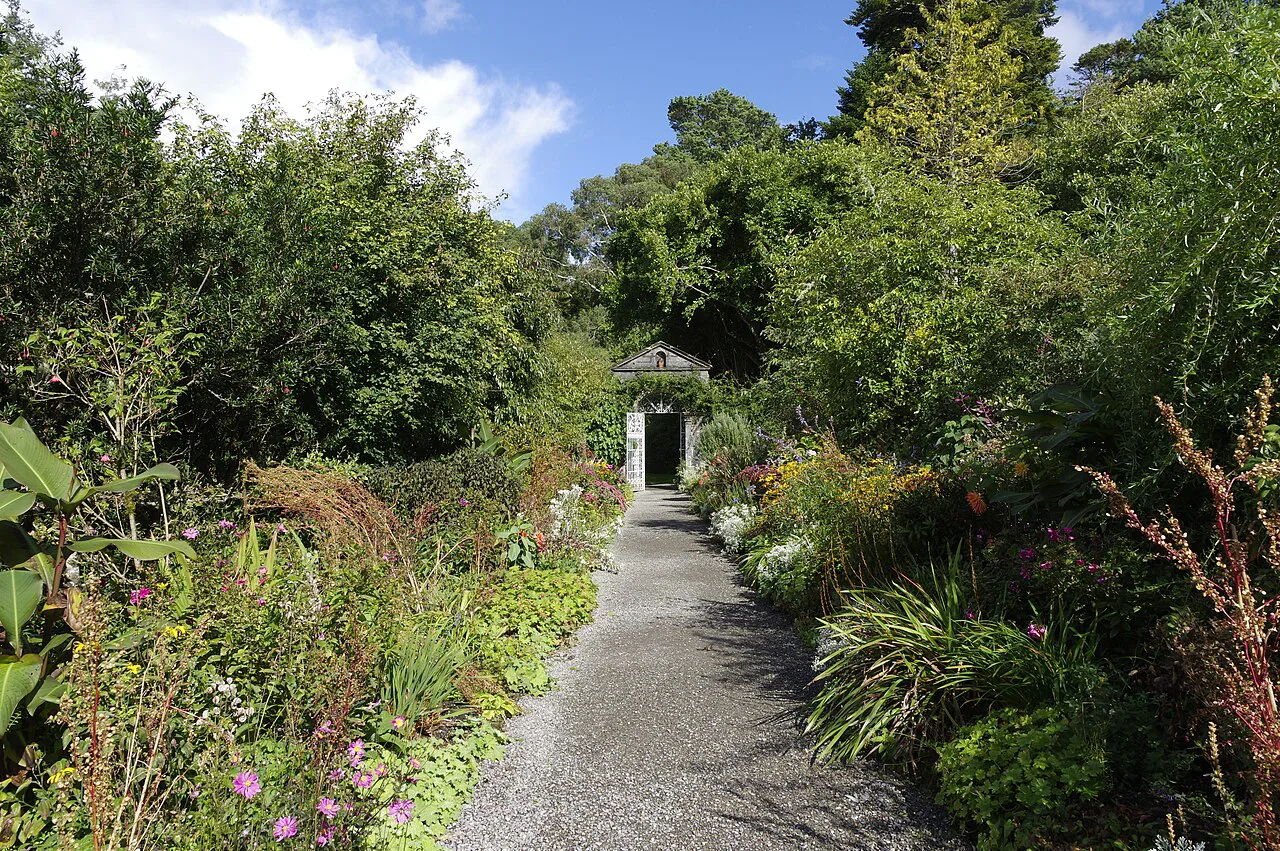
Glasnevin sits about three kilometres from Dublin city centre, which makes it the easiest of these gardens to reach on a city day. The Heritage Ireland page records more than 16,000 plant species and cultivars, drawn from habitats around the world, and singles out the restored historic glasshouses as the collection's centrepiece, including Richard Turner's Curvilinear Range and the Great Palm House. If you want to place the garden within the wider story of the city, our Dublin heritage guide maps the key sites around it.
Conservation gives the collection a second purpose: Glasnevin holds more than 300 endangered plant species, six of which are extinct in the wild. That context is worth carrying into the glasshouses, where the display is a working collection rather than a flower show.
The Heritage Ireland page lists free admission to the gardens, with a paid guided tour available daily and group bookings handled by email. It also publishes separate summer and winter hour blocks and states that the gardens close on Christmas Day, so an evening arrival needs checking against the current season. Visitors can see the rest of the national collection at Kilmacurragh in County Wicklow, where free tours are a practical introduction to that site.
Kilmacurragh: The Wicklow Branch Garden
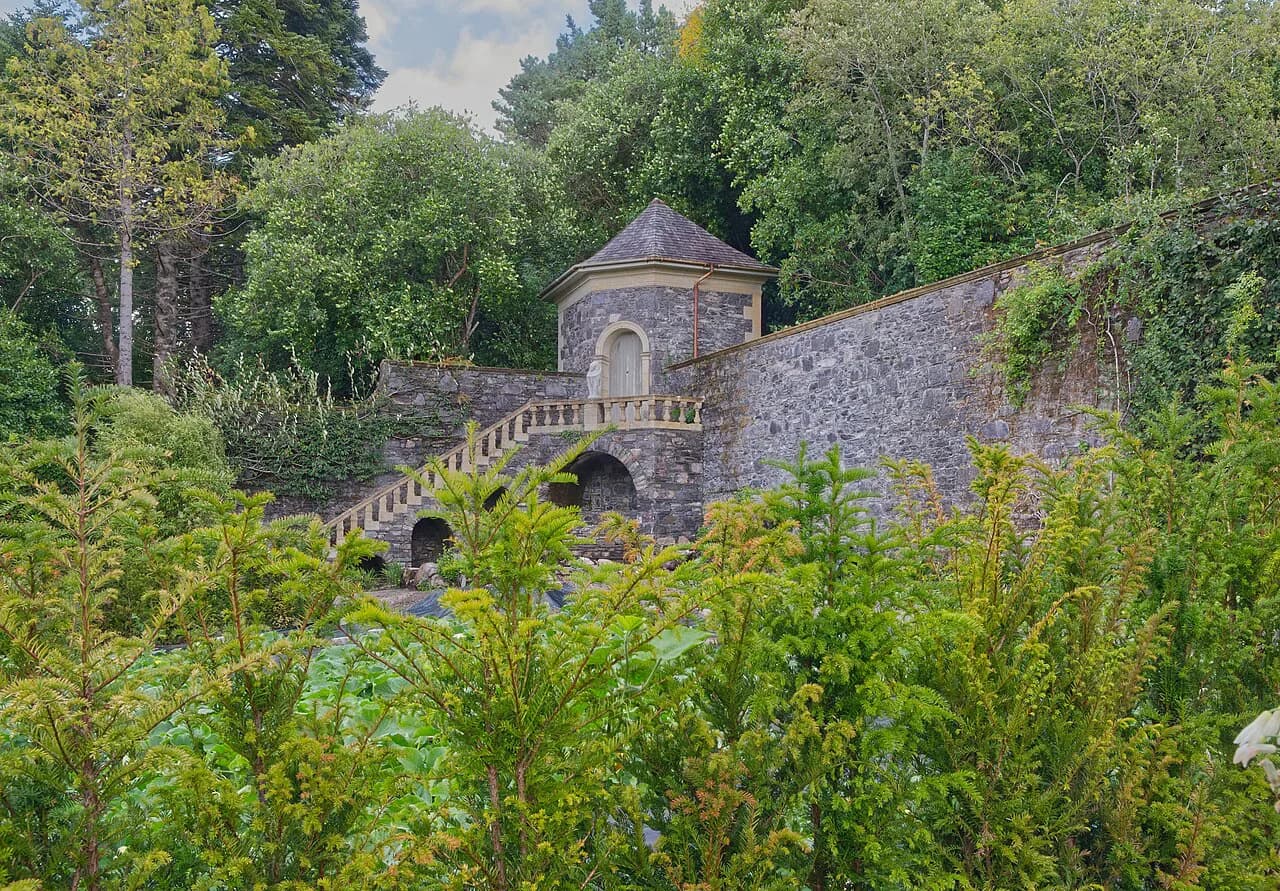
Kilmacurragh has a layered history that the Heritage Ireland page sets out plainly. A monastery stood here in the seventh century and a religious foundation lasted until the dissolution of the monasteries. The land later passed to the Acton family, and by 1854 Thomas Acton had begun building a new garden in collaboration with curators of the National Botanic Gardens. A 21-hectare portion of the old demesne joined the National Botanic Gardens in 1996.
The rhododendron collection is the reason to time a visit carefully. The page records 180 species and more than 420 varieties, and mentions an annual Rhododendron Week in April when the walks are transformed by fallen blossom. Spring is therefore the most rewarding season for this garden, though the grounds are open all year.
Admission is free and guided tours run daily from mid-March to mid-October. The page warns that weekend crowds can force the gates to close when capacity is reached, and that there is no parking outside the garden. Dogs are welcome on a lead, and an on-site café is listed for coffee and lunches.
Ilnacullin: Garinish Island in Bantry Bay
Ilnacullin, on Garinish Island, is the most boat-dependent of these gardens and the most distinctive as a place. It sits in the sheltered harbour at Glengarriff in Bantry Bay, and its existence owes to the early twentieth-century partnership between the island's owners, Annan and Violet Bryce, and the architect and garden designer Harold Peto. The Heritage Ireland page credits the mild, humid micro-climate with the lush plant growth that surrounds the buildings and walks.
Access is by water. Small ferries and 60-seater waterbuses run from the mainland, and the Heritage Ireland page notes that the boat operators impose a separate charge on top of the garden admission. The crossing often includes a detour to a seal colony and a chance of seeing sea eagles, though wildlife sightings cannot be guaranteed.
The published 2026 season runs from 20 March to 1 November, with daily hours that shift through the year and a last entry on 1 November at 15:30. Outside that window there is no island access to plan around. The page also flags limited accessibility for visitors with disabilities and very limited opening of Bryce House for guided tours in the shoulder season, so a house visit should not be assumed.
Garinish is not a substitute for the garden at Killruddery or Powerscourt, nor for the collection gardens in Dublin and Wicklow; it is a weather-dependent boat trip where the harbour setting is part of the experience. Allow for the crossing, the garden walk and the return boat, and treat tide, wind and operator timetables as the deciding factors on the day.
Altamont Gardens and the Walk to the Slaney
Altamont is a 16-hectare estate laid out in the style of William Robinson, whose approach the Heritage Ireland page describes as honest simplicity. The design places an extensive plant collection within the natural landscape, with lawns and sculpted yews sloping down to a lake ringed by rare trees and rhododendrons.
The walk through the arboretum, bog garden and Ice Age Glen, sheltered by ancient oaks and flanked by stone outcrops, leads down to the banks of the River Slaney. That route gives Altamont a wilder character than a formal walled garden, and it is the reason to set aside time beyond a quick circuit of the lake.
The garden is open all year but closes in severe weather, and the Heritage Ireland page advises phoning ahead in winter or bad conditions before setting out. Last entry is 30 minutes before closing, the garden is closed on Christmas Day, and dogs are not permitted inside. A car park, picnic area, toilets and wheelchair-accessible toilet are listed among the facilities.
JFK Arboretum: Trees from Every Temperate Region
The John F. Kennedy Arboretum near New Ross spreads across 252 hectares on the summit and southern slopes of Slieve Coillte. It contains 4,500 types of trees and shrubs from temperate regions worldwide, arranged in 200 forest plots grouped by continent, plus an ericaceous garden with 500 rhododendrons and many azaleas and heathers.
The visitor center holds exhibitions on JFK and on the arboretum, and the lake is a focal point for waterfowl. The summit, at 271 metres, gives panoramic views, but access to the hilltop is weather-dependent: the Heritage Ireland page notes that coastal fog can affect the separate Slievecoillia viewing point across the main road.
Admission is charged here, unlike Glasnevin and Kilmacurragh. The published rates at the time of writing are 5 euro for an adult, 4 euro for a group or senior ticket, 3 euro for a child or student, and 13 euro for a family, and these should be confirmed when booking. The tearoom is listed as closed, so bring provisions, and note that last admission is one hour before closing.
Killruddery House and Gardens, County Wicklow
Killruddery is a working family estate as well as a designed landscape, and Discover Ireland describes an 800-acre property with flowering woodland, formal seventeenth-century gardens, a high hedge sylvan theatre, long ponds and a walled garden. The gardens are counted among the oldest surviving examples of the original seventeenth-century style, with eighteenth- and nineteenth-century additions.
The design history is unusually well documented for a private estate. A French landscape architect named Bonet, a pupil of André Le Nôtre, is known to have been employed by the Earl of Meath in 1682, and the Orangery was designed and built by William Burns in 1852 in a style inspired by the Crystal Palace. The page labels as legend the story that a family tiara was sold to finance the work and that the dome's crenellations echo its design.
Garden admission and guided house tours are both offered, and a farm shop and restaurant occupy the heritage Horse Yard. On Saturdays a farm market runs from 10:00 to 16:00, which makes that morning a busier but livelier time to visit. This information comes from Fáilte Ireland's tourism page rather than the estate's own published material, so details such as tour times and market dates should be checked with Killruddery directly.
Powerscourt: Terraces, Japanese Gardens and the Waterfall
Powerscourt is the grandest of the Wicklow gardens, and its centerpiece is the sequence of terraces designed in the 1860s by the architect Daniel Robertson. The house itself was completed in 1741 and praised at the time for its Italian Renaissance manner; Tourism Ireland notes that the gardens, not the house, are what make the place distinctive. The upper stone terrace opens onto a view toward the Great Sugar Loaf and down to Triton Lake.
Beyond the terraces, the grounds hold Japanese gardens, a tower valley, a walled garden with heritage roses and a pet cemetery. A free estate app offers self-guided audio tours and themed trails, which suits visitors who prefer to move at their own pace without joining a group.
Powerscourt Waterfall, about six kilometres from the gardens and 121 metres high, requires its own admission ticket separate from the garden entry. Tickets for the gardens can be booked online in advance or bought on arrival. Because this practical detail comes from Tourism Ireland rather than the estate, confirm current ticketing and opening arrangements before setting out.
Choosing Between the Gardens
Start with season. Garinish is only accessible within its published season, Kilmacurragh is at its most spectacular in spring when the rhododendrons flower, and Altamont can close in severe weather, so a winter visit should be planned with a phone call. Glasnevin and Kilmacurragh are open all year apart from Christmas Day.
Then consider setting. Glasnevin gives a city-center collection with historic glasshouses, while Altamont and Powerscourt offer landscape walks and formal design. Killruddery and Powerscourt are close enough in County Wicklow to combine over a weekend, whereas Garinish and the JFK Arboretum anchor a separate trip to the south and southeast.
Finally, match the visit to your appetite for planning. Free-admission gardens such as Glasnevin and Kilmacurragh suit a flexible day, while Garinish's boat crossing and Powerscourt's separate waterfall ticket need decisions made in advance. If you are extending a garden trip into a broader heritage tour, nearby houses and castles can fill the rest of the itinerary without competing with the gardens themselves, pairing well with a stop at muckross house or at lismore castle further south.
Before You Travel
Each of these gardens publishes its own visitor rules, and those rules shift with the season. Last entry is typically 30 minutes before closing at Altamont and Kilmacurragh, and an hour before closing at the JFK Arboretum. Altamont's winter weather risk and Kilmacurragh's weekend capacity gates are the two most likely to disrupt a visit, so check the operator's page on the morning you plan to travel. With those checks made, the seven gardens together give a genuinely varied picture of Irish horticulture, from national collections to designed estates and an island reached by boat.
Treat the selection as a starting point. Other gardens across the country, including Mount Congreve and Fota House in the south, extend the same mix of collection and landscape. Booking ahead where a site publishes a ticket window is a simple way to protect a long journey. For a county-focused comparison, use our guide to gardens in Wicklow.
Explore more Ireland guides
Frequently Asked Questions
Which of these Irish gardens are free to enter?
Glasnevin and Kilmacurragh have free garden admission according to Heritage Ireland, with a separate charge only for guided tours at Glasnevin and free tours at Kilmacurragh in season. The JFK Arboretum charges admission, and the Garinish Island boat crossing is billed separately by the ferry operators.
Do you need to book a ferry to Garinish Island?
The Heritage Ireland page says small ferries and 60-seater waterbuses serve the island and that the boat operators impose their own charge. Booking arrangements are set by the operators rather than by the garden, so confirm departure points, times and payment directly with them before relying on a particular crossing.
What is the difference between Glasnevin and Kilmacurragh?
Both are part of the National Botanic Gardens of Ireland, but they serve different purposes. Glasnevin is the Dublin collection with historic glasshouses and over 16,000 plant species and cultivars. Kilmacurragh is the County Wicklow garden, developed by Thomas Acton from 1854 and incorporated in 1996, and it is known for its rhododendron collection and spring display.
When is the best season to see the rhododendrons?
At Kilmacurragh, the annual Rhododendron Week falls in April, when fallen blossom covers the walks. The collection of 180 species and more than 420 varieties makes spring the most rewarding time there, while the grounds remain open all year apart from Christmas Day.
Can I visit Powerscourt and Killruddery in one day?
Both are in County Wicklow and are close enough to combine on a single day, though the gardens are large enough that each rewards a half-day or more. At Powerscourt, the house shops and cafés can be visited without a garden ticket, while at Killruddery the Saturday farm market runs from 10:00 to 16:00. Check each site's own website for current hours.
What should I check before visiting Altamont Gardens in winter?
Altamont may close in severe weather, and the Heritage Ireland page advises phoning ahead in winter or bad conditions before setting out. Last entry is 30 minutes before closing, and dogs are not permitted in the gardens. The telephone number and seasonal hours are published on the Heritage Ireland page.
Sources
- Altamont Gardens | Heritage Ireland
- Ilnacullin – Garinish Island | Heritage Ireland
- National Botanic Garden of Ireland – Glasnevin | Heritage Ireland
- National Botanic Garden of Ireland – Kilmacurragh | Heritage Ireland
- The John F. Kennedy Arboretum | Heritage Ireland
- Visit Killruddery House & Gardens with Discover Ireland
- Powerscourt Estate | Ireland.com
You might also like



Continue reading
More guides you'll find useful





