
Irish Folklore: Inside the Archives and Collections
Irish folklore survives in two distinct collections: an oral-tradition archive at UCD and a folklife museum in Mayo. Here is how each was assembled.
On this page
Irish folklore is preserved in two separate national collections, and confusing them leads to wasted trips. The National Folklore Collection is an archive at University College Dublin, built from fieldwork, manuscripts and recordings, and consultable through a reading room and the Dúchas.ie portal. The Irish Folklife Collection is a museum collection at the National Museum of Ireland's Country Life site in Turlough Park, County Mayo, framed around the skills, crafts and customs of ordinary people between roughly 1850 and 1950. One is a place to read and listen; the other is a place to look at objects and galleries.
What the National Folklore Collection actually is
The National Folklore Collection is a UNESCO-recognised archive of oral tradition and cultural history and one of Europe's larger archives of its kind, administered within UCD Library since 2015. Its material was not assembled in one go: it came through predecessor bodies including the Irish Folklore Institute of 1930 to 1935, the Irish Folklore Commission of 1935 to 1971 and UCD's Department of Irish Folklore from 1972 to 2005. In December 2017 the collection was inscribed on the UNESCO Memory of the World Register.
That institutional lineage explains why the holdings look the way they do. Commission collectors worked in the field with notebooks and recording machines, and their diaries and transcripts entered the archive as working documents rather than polished publications. Knowing that is useful when you search: much of what you find is a collector's record of what an informant said, not a summary written after the fact.
Inside the collections: paper, image and sound
The scale is measured in shelves and hours rather than display cases. The archive holds roughly two million manuscript pages, about half a million index cards, some 12,000 hours of sound recordings, around 80,000 photographs and about 1,000 hours of video. The Main Manuscript Collection alone runs to around 2,400 bound volumes, much of it transcripts taken down from field recordings made on wax cylinder, disc and tape.
The formats tell the story of how tradition was captured. The earliest audio dates from 1897, recorded on wax cylinder at a Belfast feis, and the bulk of recordings dates from the 1940s onward. A mobile recording unit working from acetate discs in the late 1940s and early 1950s recorded singers, storytellers and musicians, and smaller battery-powered recorders reached collectors from 1962 and 1963.
The 1937–1939 schools scheme
The best-known part of the archive is the Schools' Collection, assembled when primary schoolchildren in the Irish Free State collected folklore from parents, grandparents and neighbours during composition time at school. The scheme ran from 1937 and was extended into 1939 in certain cases, involving more than 50,000 children in 5,000 schools and producing around 740,000 pages, now bound in 1,128 volumes. Each school's material opens with a title page naming the school, parish, barony, county and teacher.
Because the collectors were children writing down what adults told them, the material is rich in local detail but uneven in accuracy and coverage. It records oral history, place-name lore, riddles, games, crafts and legends, in Irish and English, as recalled locally rather than as verified fact. For anyone tracing a family place or a district tradition, the parish-level indexing is the practical entry point.
The classification lens: Ó Súilleabháin's Handbook
Archive material here is arranged largely by subject rather than by date, and the reason is a handbook. Seán Ó Súilleabháin, the Irish Folklore Commission's first archivist, adapted a Swedish classification system after training in Uppsala in 1935 and produced A Handbook of Irish Folklore, published by the Folklore of Ireland Society in 1942. Its fourteen main headings, from Settlement and Dwelling through Human Life, Nature, Time and Popular Oral Literature to Sports and Pastimes, still shape how collections are organised and how photographs are categorised today.
This matters when you search, because a query such as a craft or a calendar custom may sit under a subject heading rather than under a county. The photograph collection keeps the same logic, using letter prefixes from A for Settlement to N for Games and Pastimes to mark the tradition category of each image. If a search returns nothing under place, browsing by the relevant subject in the Handbook's framework is often the faster route.
A worked example: Samhain customs in the Schools' Collection
Samhain, the festival behind Halloween, is associated with the harvest's end, and many of the customs recorded around it involve the Otherworld and the dead. In the Schools' Collection, pages record children's accounts of divination games played on the night, such as naming nuts for a boy and a girl and watching whether they jumped from the fire together, or spinning a knife to see who would marry first. These are recollections of what families did, recorded in the 1930s, not evidence that the same customs are practised universally today.
Read them as records of belief and practice held by particular informants, and the collection becomes more useful, not less. Accounts also describe leaving food or drink out for spirits believed to wander that night, and note that some practices had persisted from grandparents' time. Folk beliefs about fairies, the dead and the Otherworld appear in the archive as things people held or recalled, not as events; the same is true of traditions linked to irish fairy trees, where the lore is recorded rather than confirmed.
The Irish Folklife Collection at Turlough Park
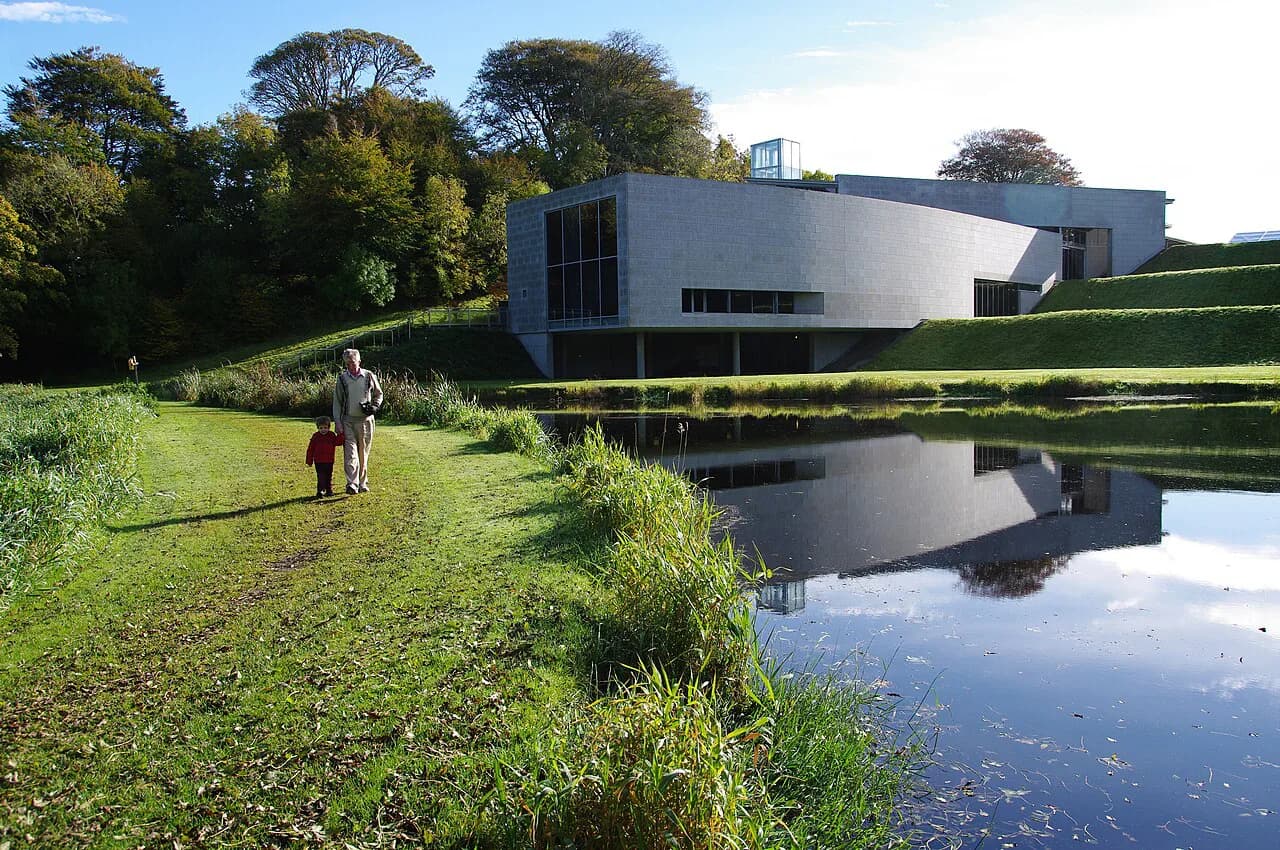
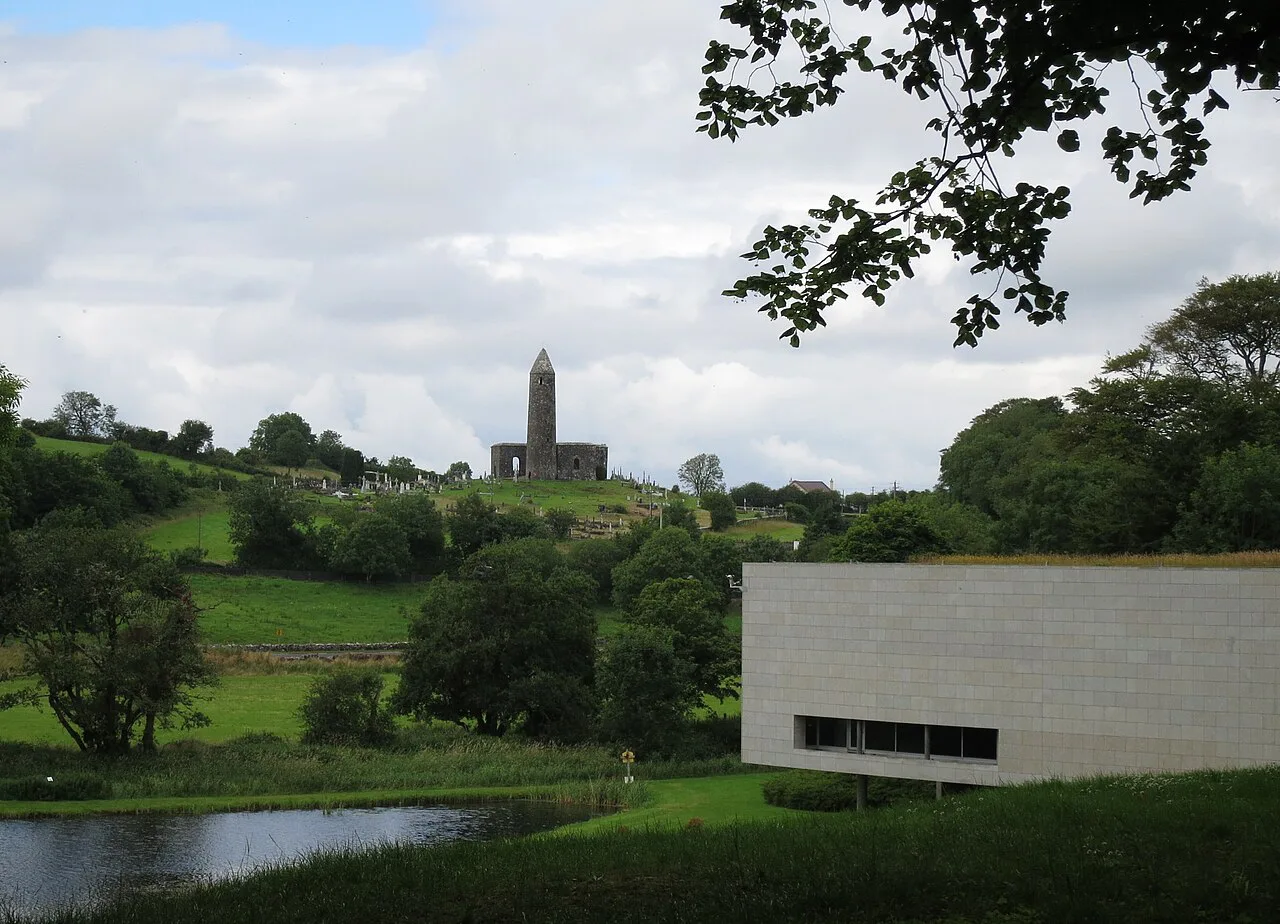
Across the country, the National Museum of Ireland's Country Life site at Turlough Park, Castlebar, County Mayo, holds the National Folklife Collection. It occupies four floors of exhibition galleries exploring the lifestyles, skills, crafts, traditions and customs of ordinary people in Ireland between about 1850 and 1950. That is a different kind of institution from the UCD archive: objects and galleries rather than boxes and reading-room tables.
The museum's research documentation also reaches beyond objects into process. Curators and photographers recorded craft skills as they were performed, such as a currach being built on Inis Oírr over eight days in 1968, a wheelwright making a donkey cart in County Kerry in 1972, and a tinsmith forming a seven-quart lidded can in little more than fifteen minutes in 1965. These records preserve method, not just finished products.
Online exhibitions and what archive footage can and cannot show
The museum publishes a set of online exhibitions drawn from the Irish Folklife Collection, covering themes such as traps and snares, antique veterinary objects and rural electrification under the title Kitchen Power. These are online presentations of collection material and archival imagery, not proof that the same objects or films form part of the current physical display. Treat them as research and orientation tools before a visit, and check with the museum about what is on view.
Footage of a maker at work also shows the limits of the record. A camera captures a chosen set of steps, tools and a single day's work, and cataloguers decide how to describe it; it cannot tell you how typical that maker was or how widely a skill was distributed. Used alongside manuscript accounts of the same trade, the two collections correct each other, and neither on its own justifies a general claim about Irish rural life. Where a topic runs into archaeological or landscape evidence, sites such as ringforts ireland sit outside both collections and need their own sources.
Visiting the museum at Turlough Park
The Country Life museum sits just off the N5 Dublin to Westport road, well signposted, with a large free car park and designated disability spaces. The daily 454 route, run by Mayo Local Link, connects the museum with Castlebar and Ballina, which makes it feasible without a car; from Westport the drive is roughly 20 minutes. On-site facilities include a gift shop, cafe, playground, greenway, restrooms, lifts and picnic areas, and the galleries are fully wheelchair accessible with lifts to all floors.
As of the museum's stated visitor information, opening hours are Tuesday to Saturday from 10am to 5pm and Sunday and Monday from 1pm to 5pm, with a short Christmas Eve opening and closures on Christmas Day, St Stephen's Day and Good Friday. These are the operator's published times, so confirm before travelling around a holiday. Note that none of this applies to the UCD archive, which has separate access terms.
Consulting the archive from the reading room or online
The National Folklore Collection reading room at UCD welcomes members of the public by appointment, Monday to Friday, 10:00 to 16:30, with staff on hand to help locate and contextualise records. This is a research service, not a visitor attraction, and it is in Dublin rather than Mayo; for the city's historic sites around a visit, a Dublin heritage guide pairs well with a reading-room appointment. Confirm appointment arrangements directly with the collection before planning a journey.
Much can be done remotely through Dúchas.ie, the public portal launched in December 2013 as a UCD and Dublin City University digitisation project. You can browse by collection, including the Main Manuscript Collection, Schools' Collection, Photographic Collection and Audio Collection, and search by place or person, with subject search available for some collections. Since 2015, public transcription of manuscript material has improved keyword searching considerably, though not everything is transcribed or freely downloadable.
Archived Folklore versus Displayed Folklife
Plan on two locations, not one. If your interest is what people said, sang, recalled and believed, start with Dúchas.ie and then book a reading-room visit at UCD; if it is how people made and used things, go to Turlough Park and check the day's hours first. Keeping the archive and the museum distinct in your own notes will save confusion later.
Read both collections with the same care. A recorded custom belongs to a named informant in a particular place, and a displayed object belonged to someone whose working life the museum is interpreting; neither speaks for the whole country. For wider context, ancient sites ireland and other landscape-based subjects sit outside these collections and should be read through their own sources. For another heritage guide, read about Irish Fairy Folklore.
Explore more Ireland guides
Frequently Asked Questions
What is the difference between the National Folklore Collection and the Irish Folklife Collection?
The National Folklore Collection is an archive at University College Dublin, holding manuscripts, photographs, sound and video recordings of oral tradition, and is consulted through a reading room and the Dúchas.ie portal. The Irish Folklife Collection is a museum collection at the National Museum of Ireland's Country Life site at Turlough Park in County Mayo, displayed across galleries about ordinary people's skills and customs. They are separate institutions with separate access.
Can I visit the National Folklore Collection in person?
Yes, through its reading room at UCD, which receives members of the public by appointment on weekdays. It is a research service rather than an exhibition, so contact the collection in advance to arrange an appointment. Many digitised items can be examined remotely on Dúchas.ie without travelling.
What is in the Schools' Collection?
It is the material gathered when primary schoolchildren collected folklore from parents, grandparents and neighbours during a scheme that began in 1937 and was extended into 1939 in certain cases. It covers oral history, place-name lore, legends, riddles, games, crafts and calendar customs, with each school's section preceded by a page naming the school, parish, county and teacher.
How do I search Irish folklore material online?
Use Dúchas.ie, which lets you browse by collection and search by place or person, with subject search available for some collections. The archive is arranged by subject rather than date, so a Handbook-based subject heading may be a faster route than a county search. Public transcription has improved keyword results, but not everything is transcribed.
What will I see at the National Museum of Ireland at Turlough Park?
Galleries across four floors explore the lifestyles, skills, crafts and customs of ordinary people in Ireland from about 1850 to 1950, alongside facilities such as a cafe, playground and greenway. The museum also publishes online exhibitions that are separate from the physical display. Check the museum's visitor information for current hours and closures.
Was Halloween an Irish tradition recorded by schoolchildren?
Samhain, the festival behind Halloween, marks the end of the harvest and appears widely in the Schools' Collection, where children described divination games and customs involving the dead and the Otherworld. These are records of what informants recalled in the 1930s, not evidence that any custom is universally practised today; some customs persist and others have faded.
Sources
- National Folklore Collection | dúchas.ie
- The NFC Collections | dúchas.ie
- Folklore Samhain
- Highlight objects from the Irish Folklife Collection | National Museum of Ireland
- Online exhibitions | Country Life | National Museum of Ireland
- Opening Hours, Location and Facilities | Country Life | National Museum of Ireland
You might also like



Continue reading
More guides you'll find useful





