
Irish Fairy Folklore: Trees, May Day and the Recorded Archive
Irish fairy folklore is a documented tradition of stories and customs. See how trees, May Eve and the Schools' Collection record it, and where to encounter it.
On this page
Irish fairy folklore is best understood as a body of recorded tradition rather than one fixed story. It survives in customs tied to particular trees, in seasonal nights such as May Eve and Samhain, and in written testimony gathered from ordinary households. Two named places let a visitor approach it directly: the fairy tree trail in the grounds of the National Museum of Ireland – Country Life at Turlough Park, County Mayo, and the National Folklore Collection, held at University College Dublin and partly digitised online. Neither offers proof that fairies exist; both show how belief was described, collected and interpreted.
Start With a Walk: The Fairy Tree Trail at Turlough Park
The museum's trail is a self-guided interpretive route through the woodlands, waterways and gardens at Turlough Park, near Castlebar. Its map presents fairy settlements as folklore to be discovered rather than as physical facts, and asks visitors to find hiding places while learning about the folklore of the trees. Artworks along the route were created by Wandering Lighthouse Arts, and the map itself suggests photographing it to help with navigation.
Treat the walk as an introduction to interpretation, not as a pilgrimage to an authentic fairy site. Nothing in the museum's material promises that ribbons, offerings or decorations may be left on trees, so keep the visit to looking and reading. The trail is one part of a wider estate that also holds exhibition galleries, a café and gardens, so allow time beyond the tree stops if you want the indoor collections as well.
Trees Named on the Trail
The map lists the species that structure the walk: oak, hazel, ash, sycamore, yew, copper beech, hawthorn and beech. It also notes two traditional associations: that the oak is Ireland's national tree and that the ash carries symbolism of wisdom, kingship and mystical knowledge. These are presented as folklore worth knowing, which is exactly how a visitor should read them.
For readers who want to follow the tree theme beyond County Mayo, the wider subject of irish fairy trees covers the beliefs attached to lone bushes and other species. The point of the trail is comparison: the same tree can carry a practical name, a botanical label and a set of stories.
Hawthorn, Lone Bushes and Household Caution
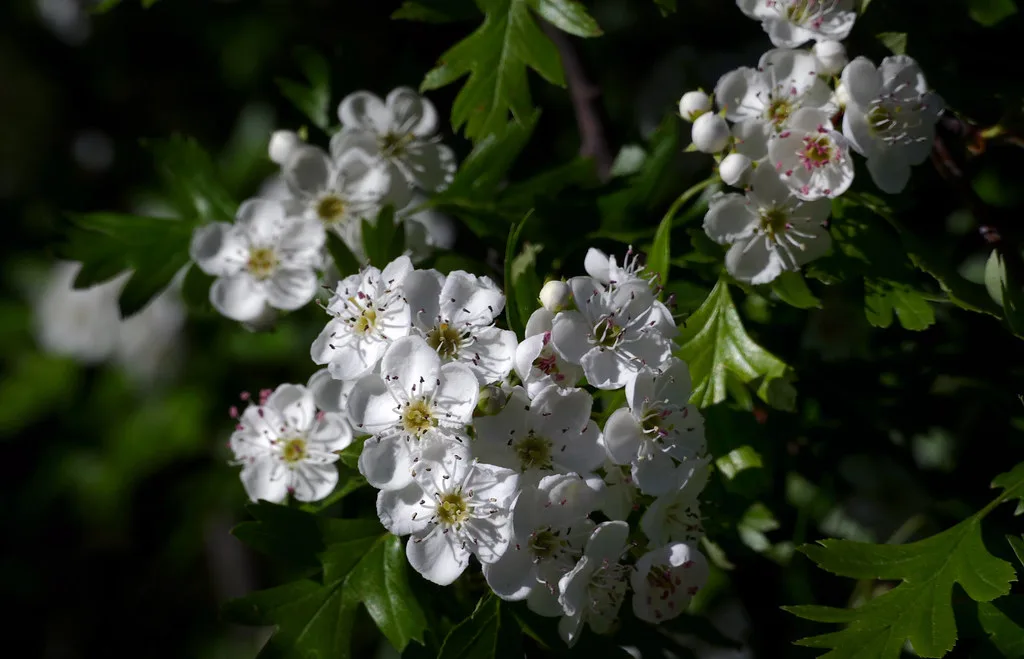
The museum's hawthorn information sheet is the most specific interpretive text attached to the trail, and it records fear as well as respect. Hawthorn, whitethorn or Maybush is described as heralding summer, widely linked to fairy powers, and treated cautiously, especially where a bush stands alone and in the open. Harming such a tree was considered foolish because it risked angering the fairies.
The sheet also preserves localised household rules rather than sweeping claims. Bringing hawthorn blossom indoors was widely held to be unlucky and possibly a portent of death, while in west Cork it was thought wrong to strike someone with a hawthorn stick because the wood carried temper and would bring trouble into a house. Read these as recorded beliefs attached to particular places, not as rules every household in Ireland followed.
This is where the trail rewards a slower pace: the caution is not about a decorative fairy garden but about boundaries between home, landscape and luck. A visitor who understands that distinction will get more from the walk than one hunting for a single enchanted tree.
Dangerous Nights: May Eve and Samhain
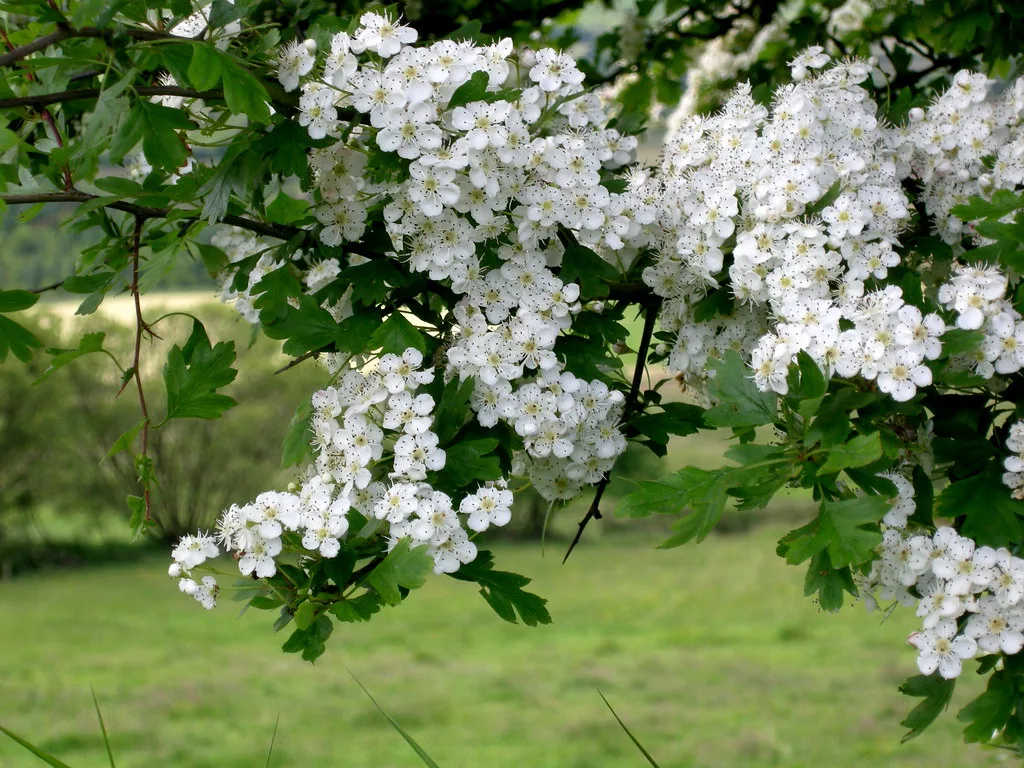
The hawthorn sheet places May Eve alongside Halloween as one of the most dangerous nights of the year, when protection mattered. Decorating the Maybush with ribbons, flowers, eggshells and bright scraps was thought to bring luck to the household and guard it for the night and the year ahead. That combination of celebration and anxiety is the recurring pattern in the record.
Samhain carries a parallel logic. A Maynooth University research article explains that the festival marked the end of the harvest and the start of winter, that it corresponded to an ancient feast of the dead, and that it was understood as a liminal period when the living and the Otherworld were thought to meet. Fairies, ghosts and spirits were said to roam on that night.
For a visitor planning a trip around these themes, the useful conclusion is seasonal rather than spectacular: the folklore is attached to turning points in the farming year. Whether the museum runs any related event on a given date is not something its trail material establishes, so check its current programme before building an itinerary around a specific night.
May Day Customs in Fingal
Fingal County Council's heritage note ties Bealtaine to the belief that the fairies, or Sídhe, were especially active, and links the festival to fire and bonfires. It describes flowers gathered before dusk on May Eve or before dawn on May Day, then scattered at the threshold to protect the house and bring luck.
The note also records a Fingal tradition in which children decorated a May bush or hawthorn tree with flowers and ribbons, danced around it and sang while collecting money, drawing on the National Schools Collection of 1937 to 1939. Present this as a documented local custom from a named area, not as a nationwide practice, and do not assume such gatherings happen today without checking local heritage listings.
The Archive Behind the Stories
The written record has a home. The National Folklore Collection, located at University College Dublin and described through duchas.ie, holds roughly two million manuscript pages, some 500,000 index cards, about 12,000 hours of sound recordings, 80,000 photographs and 1,000 hours of video. Its Main Manuscript Collection is recognised as one of the largest of its kind in Western Europe, covering the 32 counties in Irish and English.
Within that wider irish folklore record, the Schools' Collection is the best known: approximately 740,000 pages compiled by pupils from 5,000 primary schools in the Irish Free State between 1937 and 1939, initiated by the Irish Folklore Commission and dependent on cooperation from the Department of Education and the Irish National Teachers' Organisation. The scheme was planned for 1937 to 1938 and extended to 1939 in specific cases, and it covered the 26 counties, not the whole island.
The Maynooth research article notes that more than 50,000 children took part, recording material from parents, grandparents and neighbours, and stresses the material's continuity with customs still observed today. It also reports that searching the online archive for Halloween returns hundreds of entries from the Schools' Collection, which is a quick way to sample the material's texture before or after a museum visit.
How the Record Is Organised
The collection is not a random pile. Its holdings are divided by subject in ways that help a reader navigate belief material, and the archive lists 14 key areas including Mythological Tradition and Principles and Rules of Popular Belief and Practice. The Main Manuscript Collection preserves transcripts of field recordings, collectors' diaries and responses to questionnaires on topics such as holy wells and funerary custom.
The photographic holdings are arranged thematically following subject headings from Seán Ó Súilleabháin's handbook of Irish folklore, with reference letters covering categories from settlement and livelihood to mythological tradition and games. The archive says low and medium resolution images can be freely downloaded by users, while anyone needing high resolution copies must contact the collection, which states a handling charge for those copies, so confirm the current terms on the site before ordering.
That structure explains why fairy material appears across several headings rather than in one box. A belief about a tree can sit beside a photograph of a farmyard or a questionnaire reply about a festival, so searching by place name is often more productive than searching by the word fairy alone.
Reading the Record Responsibly
Keep three kinds of evidence separate. A museum trail is interpretation written for visitors; a council heritage note is local public history; an archive entry is testimony collected from named people in named places. When these agree, the pattern is stronger, but none of them constitutes evidence that fairies were observed.
Access also differs. The digitised material is available online, but the archive source does not establish conditions for visiting the National Folklore Collection in person, so make any enquiry directly rather than assuming public opening. Likewise, this guide does not describe a physical exhibition of collection items.
That same discipline applies to related archaeological subjects. Ringforts in Ireland are often wrapped in later fairy stories, but their interpretation as monuments depends on archaeological evidence, so keep the two strands distinct when reading about them.
Practical Context for Turlough Park
The museum is at Turlough Park, Castlebar, County Mayo, just off the N5, with a free car park and designated disability spaces. Opening hours are Tuesday to Saturday 10am to 5pm, and Sunday and Monday 1pm to 5pm, with closure on Christmas Day, St Stephen's Day and Good Friday and a short Christmas Eve opening. Confirm details before travelling, as these are the operator's published arrangements rather than permanent guarantees.
Mayo Local Link's route 454 provides a daily bus connection to Castlebar and Ballina. On site there is a café, gift shop, playground, greenway, picnic areas and lifts, and the galleries are described as fully wheelchair accessible. The museum does not publish an admission charge on this page; check the ticket position separately, since the trail material does not establish it.
If your interests extend to other archaeological landscapes, the wider subject of ringforts in Ireland treats these monuments through archaeological evidence rather than later fairy stories.
Plan Your Visit
The most useful way to approach Irish fairy folklore is to pair a short outdoor walk with an hour or two of reading. Start at Turlough Park, where the tree labels and hawthorn sheet show how a museum turns belief into interpretation, then use the digitised Schools' Collection to test how those themes appear in testimony from named schools and townlands. For the broader context of the city where much of that record is held, see this Dublin heritage guide.
Decide in advance which question you want answered: which trees carried cautions, which nights were thought dangerous, or how ordinary households described protection. Checking the museum's current opening arrangements and any events before setting out, and treating every story as a record of belief rather than a fact about the landscape, will make the visit both more honest and more interesting.
Explore more Ireland guides
Frequently Asked Questions
Is Irish fairy folklore a belief system or just a set of stories?
It is documented as a body of tradition: customs, cautions and stories collected from named people in named places, then preserved in archives and interpreted in museums. That does not establish that fairies were observed. Read the material as evidence of what people believed and how they explained luck, illness, the harvest and the landscape.
Can you visit a fairy tree trail in Ireland?
Yes. The National Museum of Ireland – Country Life at Turlough Park, near Castlebar in County Mayo, has a self-guided fairy tree trail through its woodlands, waterways and gardens. The museum presents the fairy settlements as folklore rather than as physical facts, so it is an interpretation walk, not a claim about an enchanted site.
What trees are associated with fairies in Irish tradition?
The Turlough Park trail names oak, hazel, ash, sycamore, yew, copper beech, hawthorn and beech. Hawthorn, also called whitethorn or Maybush, carries the strongest caution in the museum's own text, especially where a bush stands alone and in the open, but treat such associations as recorded belief rather than botanical fact.
Why are May Eve and Halloween linked to fairy traditions?
Both sit at turning points in the farming year, and tradition treated them as times when the Otherworld came close. May Eve customs aimed to protect the household and bring luck for the year ahead, and Samhain was understood as a liminal period when fairies, ghosts and spirits were thought to roam.
What is the Schools' Collection and can you read it online?
It is a body of folklore gathered by pupils from 5,000 primary schools in the Irish Free State between 1937 and 1939, mostly from parents, grandparents and neighbours. It covers the 26 counties, not the whole island. Much of it is digitised on duchas.ie, where you can search by word or place name.
Can you visit the National Folklore Collection in person?
Do not assume so. The published description of the collection sets out its holdings and digitised images but does not establish conditions for visiting in person. If you want to consult material on site, contact the collection at University College Dublin directly and confirm arrangements before planning around it.
Sources
You might also like



Continue reading
More guides you'll find useful



