
Rathcroghan: Visitor Guide to the Royal Site and Tulsk Centre
Rathcroghan is a County Roscommon archaeological landscape of over 240 monuments. Plan a visit around the Tulsk centre, guided tours and Oweynagat.
On this page
Rathcroghan is best understood as two places with one name: a wide archaeological landscape of monuments in open Roscommon pasture, and the Rathcroghan Visitor Centre in the village of Tulsk, where the museum and tour arrangements sit. The centre does not stand on the mounds, so a visit here is partly indoor interpretation and partly time outdoors among the monuments. Knowing which part you are booking, and which is merely context, is the single most useful planning decision.
A landscape rather than a single site
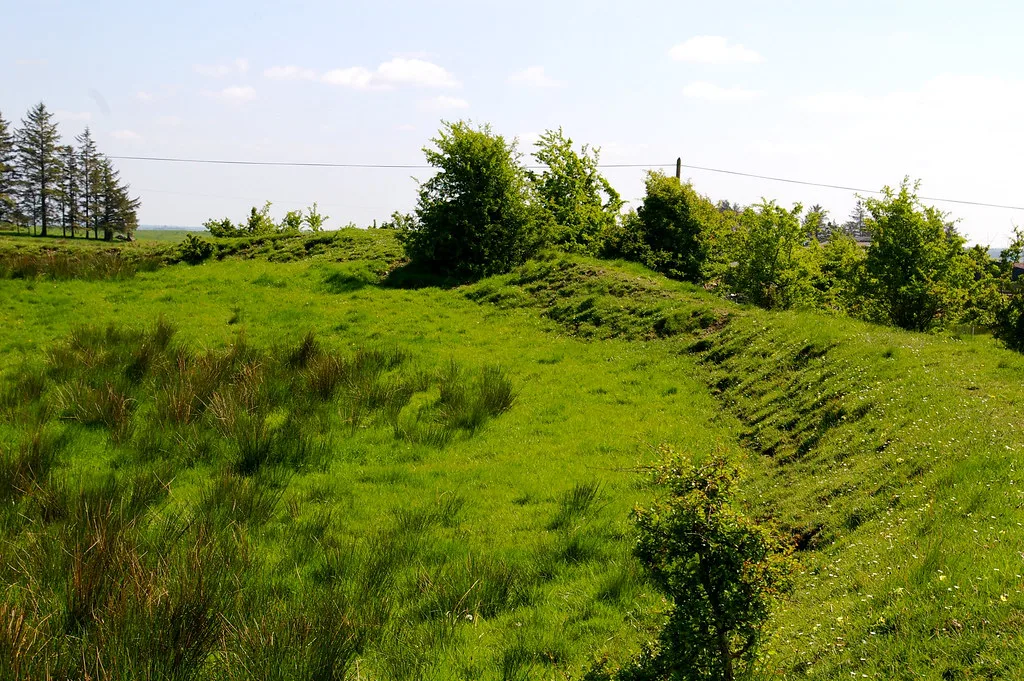
Heritage Ireland describes more than 240 archaeological sites packed into a few square kilometres of the Roscommon landscape, ranging from Stone Age tombs and royal burial mounds to great ringforts and places of ceremonial inauguration. That density is the point: you are not visiting one mound with a car park, but a historic countryside where monuments sit among fields and farms. Ireland.com puts the concentration at about 240 monuments across a 6.5 square kilometre area, and frames the occupation of the place over some 5,500 years.
Because the monuments are dispersed, a sensible visit starts with orientation rather than a drive-by. The Tulsk centre's interpretive rooms and guided tours exist precisely to explain what you are looking at before or after you see it, and Heritage Ireland presents the landscape as a mix of archaeology, mythology and history. If ringforts are the monument type that interests you most, it helps to read about Ringforts in Ireland before arriving, since Heritage Ireland lists great ringforts among the monuments recorded here.
What is recorded in the landscape
The monument types named by Heritage Ireland give a clear sense of the range: Stone Age tombs, royal burial mounds, ringforts and inauguration places. These are different kinds of place with different histories, so treat any single label for Rathcroghan as shorthand. Ireland.com adds standing stones and burial chambers to the list, which reinforces the point that this is a cumulative landscape built and used across a very long span.
Neither the statutory heritage page nor the national tourism board gives a monument-by-monument trail with distances, so plan on the basis of the guided tour rather than improvising a full circuit on foot. The outdoor setting is farmland, and the farmland is not incidental to the archaeology. The centre's own account of the Farming Rathcroghan Project describes a well-preserved prehistoric and medieval archaeological landscape lying in rich agricultural pasture in the heart of County Roscommon.
Medb and the royal tradition
Heritage Ireland presents the warrior queen Medb as ruling all of Connacht from her home at Rathcroghan, and that association is the literary anchor most visitors arrive with. The same page places Medb alongside the site's archaeology and mythology rather than separating them, which is a fair guide to how the story is told on site. Treat her as a figure of tradition and literature tied to this landscape, not as a ruler documented by excavation.
Ireland.com also frames Medb as Rathcroghan's most famous former resident and uses the phrase ancient capital of Connacht, but these are the tourism board's characterisations rather than archaeological findings. Read them as an introduction to the tradition, then let the museum's displays do the explaining. Rathcroghan's stories sit within the wider body of irish folklore, which is a useful frame for understanding how a place becomes attached to a legendary ruler over centuries.
The visitor centre in Tulsk
The Rathcroghan Visitor Centre, home of the museum, is in the medieval village of Tulsk, County Roscommon, and Heritage Ireland describes it as a community involvement initiative project supported by the Office of Public Works. That status explains the centre's dual role: it is both a museum of the landscape and a local project rooted in the village. Allow time indoors before heading out to the monuments.
Inside, Ireland.com reports interactive exhibitions and audio-visual presentations alongside 35 artefacts illustrating domestic, ritual and everyday life in the area, including its Neolithic settlers and Medb. The museum is the place to learn how to read a mound or a ringfort before you stand in front of one. Ireland.com also states the centre offers parking, a café and a gift shop, and that full wheelchair and disability access is available to the centre. That access statement covers the building, not the outdoor monuments or the cave, which should be assumed different until confirmed.
Rathcroghan Mound and Oweynagat
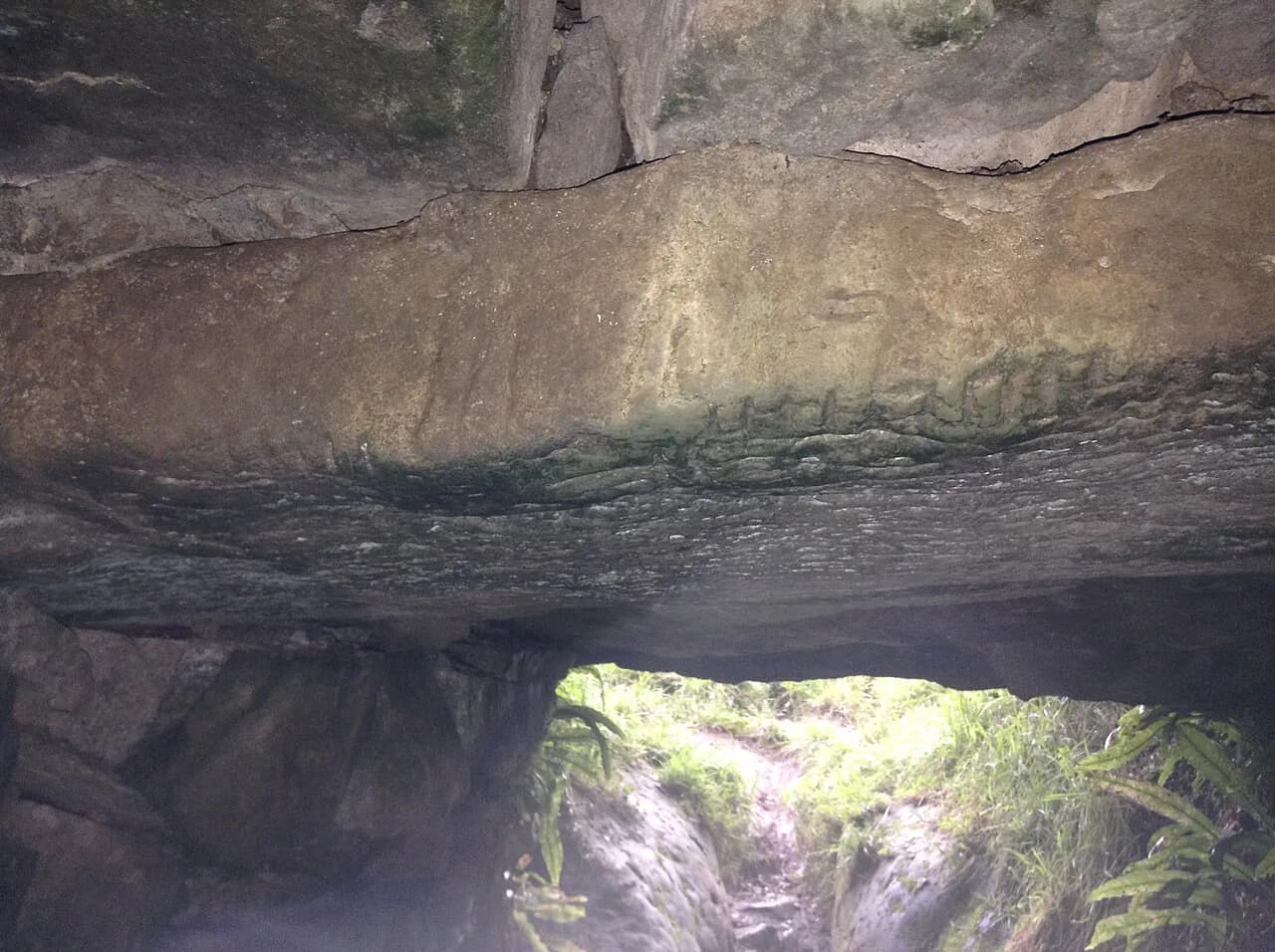
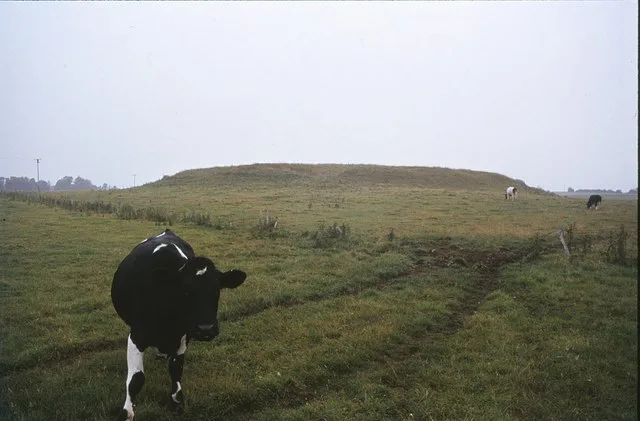
The guided tour is where the landscape comes together. Ireland.com describes a 2.5-hour guided tour taking in top monuments including the large Rathcroghan Mound and Oweynagat, the Cave of the Cats. Oweynagat involves descending past an ogham stone-lined entrance into a limestone cavern, according to the same source. Those two stops give the tour its shape: an open ceremonial mound above ground and a low cave below it.
The cave carries a strong literary reputation. Ireland.com notes that Christian scribes called Oweynagat Ireland's Gate to Hell, a designation that belongs to medieval writing about the place rather than a description of what a visitor encounters. Keeping that distinction in mind makes the cave more interesting, not less: you are standing where a tradition was recorded.
Samhain: label the legend as legend
Rathcroghan is widely tied to Samhain, the harvest festival behind modern Halloween, and Ireland.com says Samhain is thought to have originated at the site. The same page repeats the claim that Rathcroghan is the oldest and largest unexcavated royal site in Europe, presented as an assertion rather than a settled finding. Read the Samhain connection as tradition attached to Oweynagat and the wider landscape, and let the guided tour explain how the story is told.
A personal travel blog on the site restates the Samhain folklore and describes monsters emerging from the cave at nightfall on 31 October, while its author openly admits unfamiliarity with Irish mythology. That is useful as an illustration of how the legend circulates, not as evidence of what happened. If you want the story told with sources, the museum displays and the guide are the better starting point.
Guided or self-guided
The clearest published practical detail is Heritage Ireland's notice for the guided sites tour: departures at 12:00 and 14:00 from 1 May to 31 August, with Saturday tours by appointment only, and an average visit of 2.5 hours. Treat that as a seasonal schedule rather than year-round availability, and do not assume an October departure follows it. Ireland.com separately says self-guided and guided options are available and that museum admission, the guided archaeological tour and the Samhain and Oweynagat cave tour can be booked; book through the centre rather than relying on arrival.
Ireland.com gives centre hours of 9am to 5pm, Monday to Saturday, all year, with last museum admission at 4:30pm, but those hours are the tourism board's statement and should be checked against the centre's own current information before you travel. The seasonal tour notice and the general opening hours come from different sources and cover different things, so confirm both separately. One booking query to the centre resolves most of the uncertainty.
What to wear and what to expect outdoors
Heritage Ireland advises visitors on the guided sites tour to wear weather-protective clothing and shoes suitable for walking over uneven terrain. That is the most concrete expectation-setting available, and it makes sense given that the monuments sit in open farmed countryside rather than on paved paths. Ireland.com repeats that appropriate outdoor clothing is required, though it says less about the ground itself.
The distinction between indoor and outdoor access matters here. The centre's wheelchair and disability access, as stated by Ireland.com, applies to the building; conditions at the mounds and at Oweynagat are separate and are not described by the sources in detail. If mobility or the cave descent is a concern, ask the centre directly before booking rather than assuming the outdoor components match the building.
A working farmed landscape
Rathcroghan survives partly because it has been farmed, not despite it. The centre's page on farming describes the landscape as lying in rich agricultural pasture and explains that the Farming Rathcroghan Project aims to support farming while protecting the cultural landscape, archaeological condition, biodiversity and water quality. Conservation here is about keeping farming viable alongside the monuments, which is why the fields are not simply set aside.
For a visitor, that has a practical consequence: the monuments are features within working pasture rather than a fenced park, so plan your visit around the guided tour arrangements the centre provides. Confirm the current access guidance with the centre before you set out, rather than improvising your own route through the fields.
UNESCO tentative list: what it means
Rathcroghan is on the Department of Culture, Heritage and the Gaeltacht's tentative list for UNESCO World Heritage status, under the Royal Sites of Ireland, according to the centre's own website. Being on a tentative list is a nomination step, not an inscription. It signals that the state regards the landscape as nationally and internationally significant and intends to pursue recognition.
That status does not change what you can see or do, and it does not mean World Heritage designation has been granted. Approach any claim that Rathcroghan is already a World Heritage Site with caution, and check the current position through the centre or the relevant heritage body if it matters to your visit.
Practical checks before travelling
Two details are worth confirming with the centre directly: whether a guided tour is running on your date, and whether the museum and cave tour are available when you plan to come. The published seasonal tour schedule and the general opening hours from different sources cover different things, so ask about both rather than assuming one answers the other. Heritage Ireland's page also notes nearby sites to visit, which can fill a day if your preferred tour slot is unavailable.
If your trip ranges across the wider region, Rathcroghan pairs naturally with other monument landscapes and historic buildings, though each has its own access arrangements to check. Places such as castles in county galway belong to a different visit entirely, and it is worth reading ancient sites ireland for context on how Rathcroghan fits into the broader record before you set an itinerary. If your route heads west into the city instead, our Museums in Galway City: Two Places Worth Your Time covers the indoor side of a heritage day.
Plan Your Visit
Rathcroghan rewards the visitor who arrives knowing that the museum in Tulsk and the monuments in the fields are two different experiences. Start indoors for orientation and the artefacts, book a guided tour if you want the mound and cave explained in context, and dress for uneven, weather-exposed ground. Confirm current hours and tour availability with the centre before you travel, since the published sources describe seasonal and general information rather than a fixed October schedule.
Explore more Ireland guides
Frequently Asked Questions
Is Rathcroghan the same place as the visitor centre in Tulsk?
No. Rathcroghan is a spread-out archaeological landscape in County Roscommon with more than 240 recorded monuments, while the Rathcroghan Visitor Centre sits in the village of Tulsk and houses the museum and tour arrangements. The centre does not stand on the mounds, so plan on moving between the village and the surrounding countryside.
How long does the guided tour of Rathcroghan take?
Heritage Ireland lists an average visit of 2.5 hours for the guided sites tour, and Ireland.com also describes a 2.5-hour guided tour covering the Rathcroghan Mound and Oweynagat. The published departures are seasonal, so check the current schedule with the centre before you book.
Can you visit Oweynagat independently?
Ireland.com says the Samhain and Oweynagat cave tour can be booked, and it describes the descent past an ogham stone-lined entrance into a limestone cavern. The sources do not describe an unsupervised route into the cave, so ask the centre about how the cave is accessed before relying on a self-guided visit.
Why is Rathcroghan associated with Samhain and Halloween?
Ireland.com says Samhain is thought to have originated at Rathcroghan, and links the tradition to Oweynagat, the Cave of the Cats. This is a tradition rather than a settled archaeological finding, so read it as legend attached to the landscape and let the museum and guide explain how the story is told.
Is Rathcroghan a UNESCO World Heritage Site?
Rathcroghan is on the Department of Culture, Heritage and the Gaeltacht's tentative list for UNESCO World Heritage status under the Royal Sites of Ireland, according to the centre's own website. Being on a tentative list is a nomination step, not an inscription, so do not assume World Heritage designation has been granted.
What should you wear for the Rathcroghan sites tour?
Heritage Ireland advises weather-protective clothing and shoes suitable for walking over uneven terrain on the guided sites tour. The monuments are in open, farmed countryside rather than on a paved site, so dress for the weather on the day rather than for a museum visit.
Is the visitor centre wheelchair accessible?
Ireland.com states that full wheelchair and disability access is available to the visitor centre, which covers the building rather than the outdoor monuments or Oweynagat. If mobility affects your plans, ask the centre directly about conditions at the mounds and the cave descent before booking.
Sources
You might also like



Continue reading
More guides you'll find useful




