
Ireland's UNESCO Sites: Brú na Bóinne and Sceilg Mhichíl
Ireland has two inscribed UNESCO World Heritage sites: Brú na Bóinne and Sceilg Mhichíl. Here is what makes each distinctive and how visits work.
On this page
Ireland has exactly two inscribed UNESCO World Heritage properties, and both are cultural sites: Brú na Bóinne, the archaeological ensemble in the bend of the Boyne in County Meath, and Sceilg Mhichíl, the early monastic settlement on a rock in the Atlantic off County Kerry. The UNESCO State Party record lists them as the country's full World Heritage holdings, inscribed in 1993 and 1996 respectively, so a trip built around "Ireland's UNESCO sites" means these two places rather than a longer national circuit.
The two could hardly be more different in practice. Brú na Bóinne is reached through a staffed visitor centre with shuttle transfers and guided tours, while Sceilg Mhichíl depends on a short landing season, permitted boat operators and forgiving weather. Neither is a casual roadside stop, and planning which one suits your trip matters more than ticking both off a list.
Why Ireland Has Only Two World Heritage Sites
Ireland ratified the World Heritage Convention in September 1991, and inscription followed for Brú na Bóinne in 1993 and for Sceilg Mhichíl in 1996. Inscription is registered on the World Heritage List with dated entries, which is why the count stays small even where a country holds many important monuments.
The same UNESCO record separates inscribed properties from Ireland's Tentative List, an inventory of places the state intends to consider for future nomination. Being on that list signals ambition, not status. Readers who see the Royal Sites, the Sligo passage tombs or the historic observatories described as "UNESCO sites" should treat that wording loosely until an inscription is confirmed.
For a visitor, the practical consequence is simple: these two properties are the ones Ireland currently has inscribed, and each has its own access rules managed by the Office of Public Works. The guided Newgrange and Knowth visits start at the visitor centre, while Knowth's chambers stay closed to the public; at Sceilg Mhichíl only a seasonal, weather-dependent landing is possible. Understanding that management structure explains why booking and timing behave so differently at the two sites, and it is a useful frame for anyone tracing irish culture through its monuments rather than through its literature or music.
Brú na Bóinne: Location and Setting
The three main prehistoric sites of the Brú na Bóinne complex—Newgrange, Knowth and Dowth—sit on the north bank of the River Boyne roughly 50 kilometres north of Dublin, in County Meath. The property covers a wide archaeological landscape rather than a single monument, and most of it remains in private ownership, with State-held ground concentrated around Newgrange and Knowth.
That scattered ownership is worth knowing before you arrive, because it rules out wandering freely between mounds. Visitor movement is channelled through the Brú na Bóinne Visitor Centre, which opened in 1997 specifically to manage the flow of people to the tombs.
The place names themselves reward a little curiosity. Brú na Bóinne and the individual site names reappear across Irish maps, signboards and local speech, and a little background on how Irish place names work can make the labels on site more meaningful. Reading up beforehand adds context that bare signage rarely provides.
What the Passage Tombs Contain
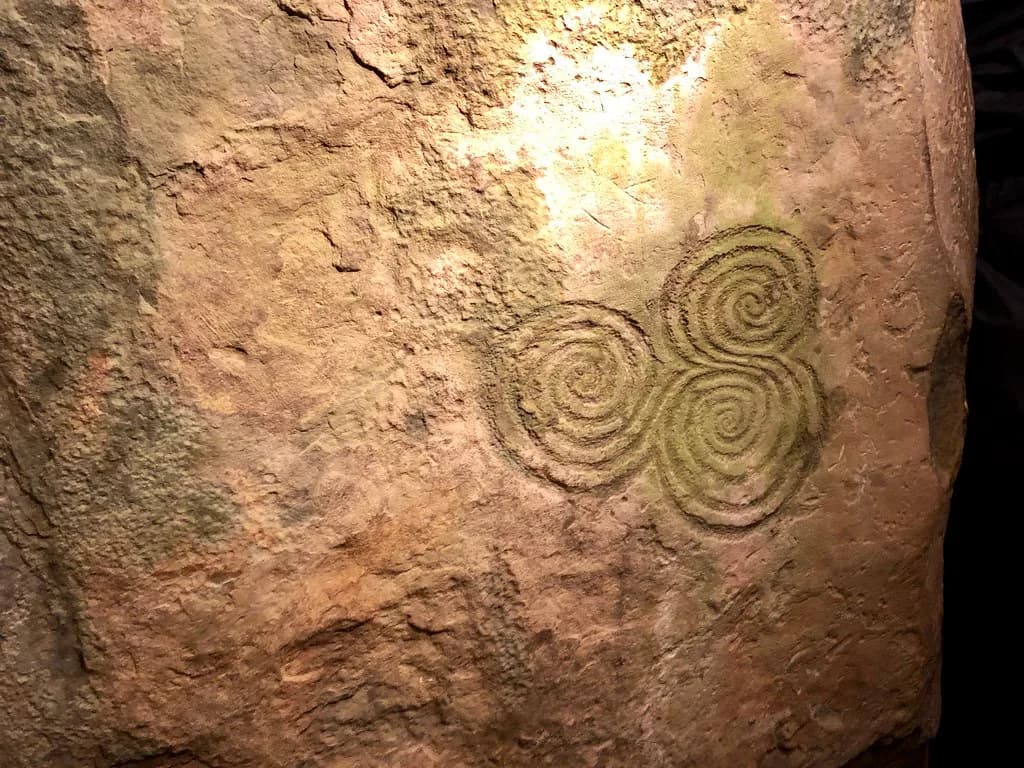
The passage tombs here were built around 3200 BC according to the Office of Public Works, the state body that manages the site. UNESCO describes the complex as Europe's largest and most important concentration of prehistoric megalithic art, and notes that the monuments served social, economic, religious and funerary purposes rather than a single function.
Carved stones and structural remains at Newgrange and Knowth have been excavated and published, which is why guides can talk concretely about what was found and how the tombs were used. The archaeology places these monuments within a wider Irish tradition of megalithic building; if you want to compare them with other surviving structures, an overview of ancient sites in Ireland helps set expectations for scale and survival.
How a Brú na Bóinne Visit Works
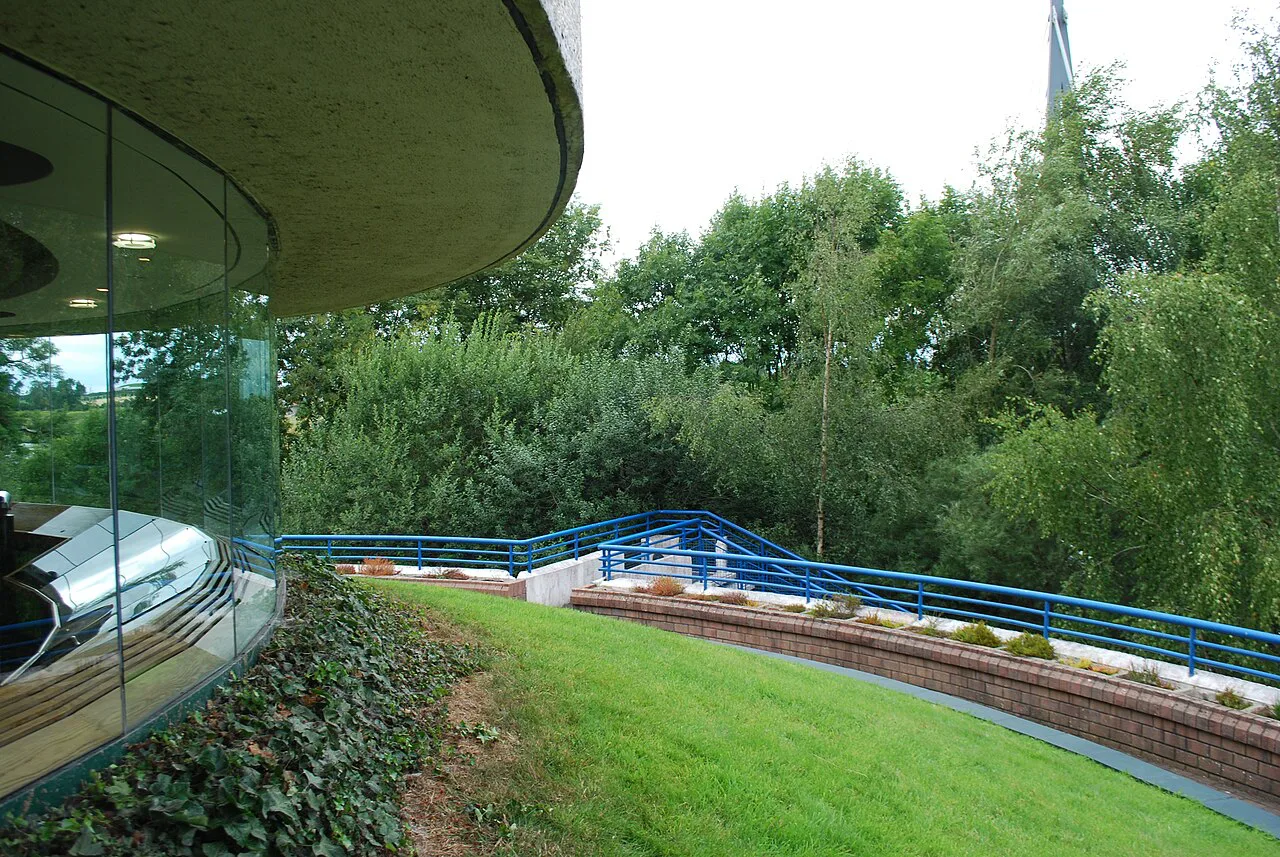
Public visits to Newgrange and Knowth begin at Brú na Bóinne Visitor Centre, where an exhibition interprets the Neolithic landscape and culture. From there, shuttle transfer and guided access take you to the monuments, and pre-booking monument tickets is essential because daily numbers are capped to protect the archaeology. Tickets bought on arrival may not be available, so reserve before you travel.
Access is by guided tour only, and the visitor centre's own exhibition is a separate indoor element rather than a substitute for a booked monument visit. If a site's opening pattern is central to your plans, confirm the Office of Public Works' current arrangements before booking.
Trade-offs and Limits at Brú na Bóinne
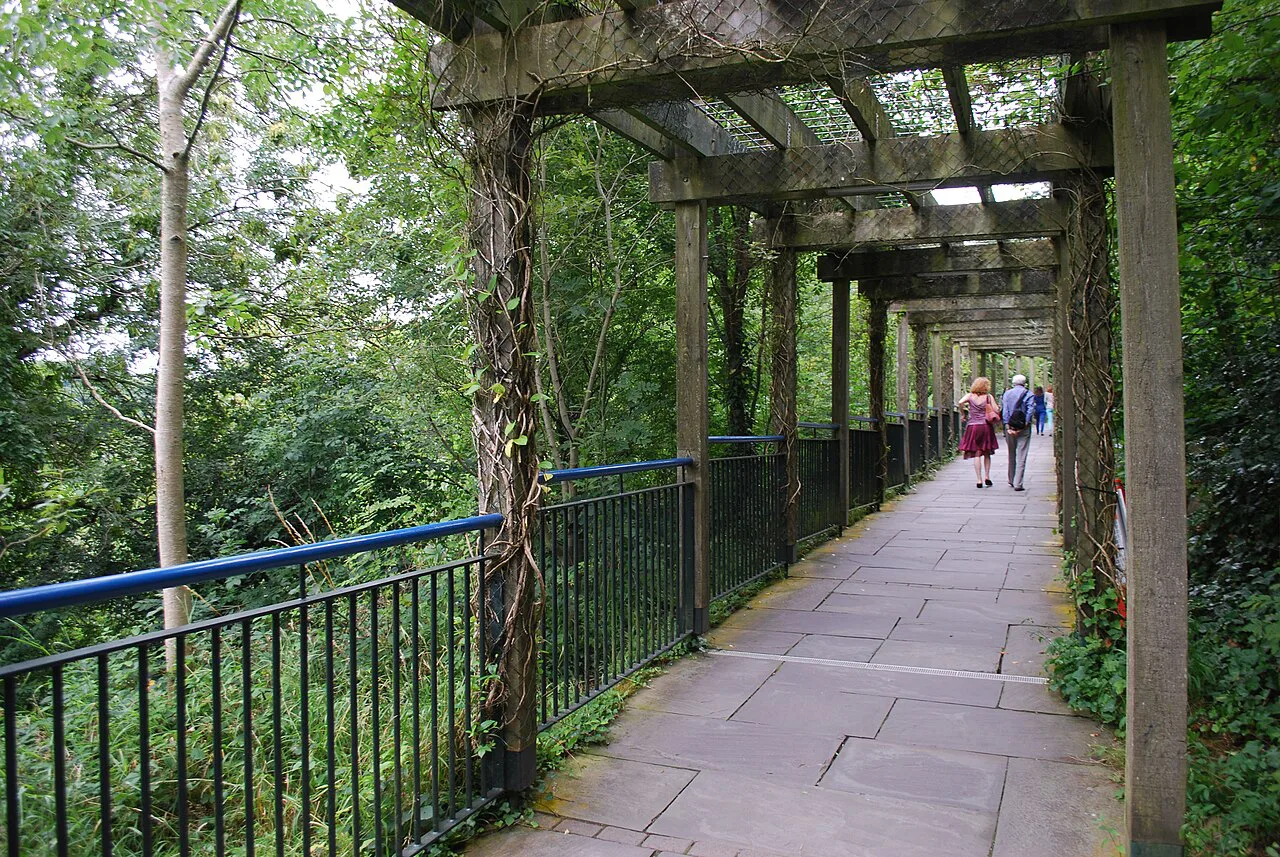
Two limitations catch visitors out. There is no public access to the chambers at Knowth, so the visit there is about the mound exterior and its setting rather than an interior experience. At Newgrange the passage is low and narrow per the operator, which matters for anyone with mobility restrictions or claustrophobia and is worth checking before booking.
The tombs are also exposed outdoor sites. Rain and wind are part of the experience at the monuments themselves, and the indoor exhibition does not compensate for a missed tour. Build flexibility into the day rather than treating the visitor centre as shelter you can retreat to mid-visit.
Conservation: What You Are Actually Looking At
Newgrange has been extensively conserved. Kerbstones and the revetment wall were re-erected, the passage roof was dismantled so the upright stones could be reset vertically, and a cowl was built over the chamber area, as described on UNESCO's property page. Recognising this helps explain why some surfaces look sharper than you might expect from a prehistoric monument.
At Knowth, structures from many periods are conserved, with modern supports sometimes visible and deliberately distinguished from original fabric. The guiding principle, in both cases, is retention of original material in place. The result is a site that reads as part archaeology and part careful modern intervention, which is itself part of the story.
Sceilg Mhichíl: A Monastery on an Ocean Rock
Sceilg Mhichíl, also called Skellig Michael, is an early medieval monastic settlement deliberately placed on a pyramidal rock in the Atlantic off County Kerry. UNESCO treats it as an outstanding example of early religious settlement in an extreme environment, and much of its character comes from the isolation that protected it from later alteration.
The monastery buildings, stepped terraces and paved areas survive in unusually complete form, with changes during nineteenth-century lighthouse occupation documented rather than hidden. The island is also one of Ireland's most important breeding seabird sites, notable for both species diversity and colony size.
How Access to Sceilg Mhichíl Works
Landings happen only inside a season defined annually by the Office of Public Works, which also issues permits to the boatmen and boatwomen who carry visitors. A guide service operates on the island during that period. Outside it, access is not permitted, and UNESCO notes the island is frequently inaccessible, particularly from October to May, so no specific month can be promised in advance.
Private craft are discouraged, which means the realistic route is a permitted operator whose sailing still depends on sea conditions on the day. Even within the season, landings can be cancelled. Read any operator's cancellation terms before paying, and treat the trip as weather-contingent rather than guaranteed.
Ireland's Tentative List: Candidates, Not Inscriptions
Four properties currently appear on Ireland's Tentative List: the Royal Sites of Ireland, the Transatlantic Cable Ensemble, the Passage Tomb Landscape of County Sligo and the Historic Astronomical Observatories of Ireland. Each is a candidate for future nomination. None is an inscribed World Heritage property, and describing them as UNESCO sites overstates their status.
That does not make them uninteresting. Several are genuinely rewarding to visit on their own terms, including the Sligo passage tomb landscape, which shares the megalithic tradition seen at Brú na Bóinne. Travellers drawn to that tradition can follow it through a broader overview of Ireland's ancient sites without needing a World Heritage label to justify the detour.
The distinction matters most when you are choosing where to spend limited days. Inscribed status means managed, documented World Heritage properties with defined protection; tentative status only means a place is proposed for future consideration, and its visitor arrangements are not implied by the listing. Check the specific site rather than assuming UNESCO-style facilities or entry.
Choosing Between the Two Properties
Brú na Bóinne suits travellers who want structured interpretation and a reliable half-day plan: book ahead, arrive at the visitor centre, and let the shuttle and guide handle the rest. Sceilg Mhichíl suits those prepared to accept uncertainty, since the season and the sea decide whether you land at all. Neither is a substitute for the other, and fitting both into one short trip is unrealistic. If you are weighing a city base against these rural monuments, a Dublin history guide can help you decide how much time to spend in the capital.
If your interests lean toward storytelling, language or place-name history rather than monumental archaeology, Ireland's cultural traditions are covered separately and pair naturally with either visit.
Plan Your Visit
Treat Ireland's UNESCO sites as two distinct trips rather than one category. For Brú na Bóinne, pre-book monument tickets, start at the visitor centre, and expect outdoor conditions at the tombs. For Sceilg Mhichíl, confirm the current OPW-defined season and use a permitted boat operator before committing to travel dates.
For another heritage guide, read about Irish Heritage Card.
Explore more Ireland guides
Frequently Asked Questions
How many UNESCO World Heritage sites are in Ireland?
Ireland has two inscribed World Heritage properties, both cultural: Brú na Bóinne, inscribed in 1993, and Sceilg Mhichíl, inscribed in 1996. Other places named in Irish heritage discussions may sit on the national Tentative List, which is a set of candidates for future nomination rather than a roll of inscribed sites.
Can you go inside the chambers at Knowth?
No. There is no public access to the chambers at Knowth, so a visit there focuses on the mound exterior and its archaeological setting. Newgrange is the monument where an interior passage visit is part of the guided experience, and that passage is low and narrow.
Do you need to book Brú na Bóinne tickets in advance?
Yes. Public visits to Newgrange and Knowth begin at the visitor centre with shuttle transfer and guided access, and pre-booking monument tickets is essential because daily numbers are limited. The visitor centre exhibition is separate from a booked monument tour and does not replace it.
Can you visit Skellig Michael outside the summer season?
Access is allowed only within the season defined each year by the Office of Public Works, when a guide service operates and permitted boat operators may land visitors. Outside that period access is not permitted, and the island is frequently inaccessible, particularly from October to May. Always confirm the current season with the operator.
Are the Royal Sites or the Sligo passage tombs UNESCO World Heritage sites?
No. The Royal Sites of Ireland, the Transatlantic Cable Ensemble, the Passage Tomb Landscape of County Sligo and the Historic Astronomical Observatories of Ireland appear on Ireland's Tentative List as candidates. They are not inscribed World Heritage properties, although several can be visited independently.
Sources
You might also like



Continue reading
More guides you'll find useful




