
Clonycavan Man: The Iron Age Bog Body Explained
Clonycavan Man is an Iron Age bog body from County Meath. Learn what museum research established and where to see the Kingship and Sacrifice display.
On this page
Clonycavan Man is an Iron Age bog body recovered in County Meath, one of two such discoveries that prompted the National Museum of Ireland to set up its Bog Bodies Research Project in 2003. The findspot itself is not a public attraction, so the practical way to learn about him is through the museum's permanent Kingship and Sacrifice exhibition at Kildare Street in Dublin.
This guide separates what the museum states about the 2003 finds and their dating from the interpretation the exhibition presents, and it keeps Clonycavan Man distinct from the other well-known find from the same year, Oldcroghan Man of County Offaly.
What Clonycavan Man Is and Where the Display Is
The museum's research programme page names Clonycavan, County Meath, as one of two Irish locations where Iron Age bog bodies were discovered in 2003, the event that led to the project's creation. The human remains were found in a remarkably good state of preservation, which is why they could be examined in detail rather than simply recorded.
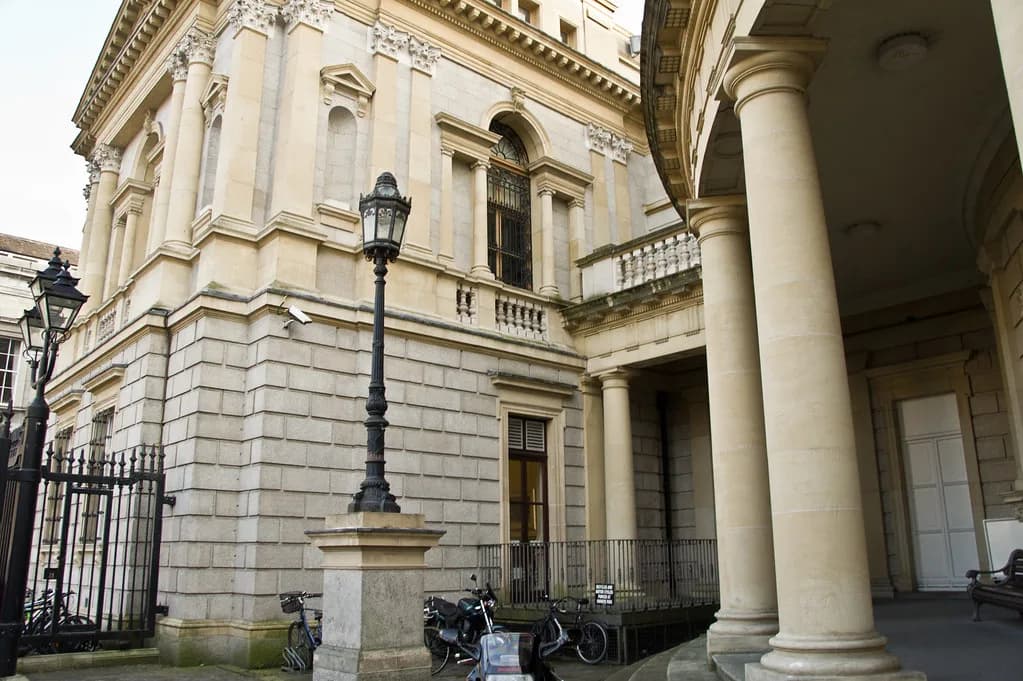
Nothing in the museum's account makes the Meath bog a place to visit; it is an archaeological findspot whose context matters to researchers. For a visitor, the relevant address is the Archaeology building on Kildare Street, Dublin 2, where Kingship and Sacrifice is listed as a permanent exhibition.
Keep the two 2003 finds apart when reading or planning: Clonycavan belongs to County Meath, while Oldcroghan belongs to County Offaly, and the two are treated separately in the research literature. A visit to the Dublin gallery covers both as components of one research story rather than as separate destinations.
Why the Bog Bodies Research Project Existed
The project was established in 2003 specifically after the Oldcroghan and Clonycavan discoveries, according to the National Museum of Ireland's own account. It brought a multi-disciplinary team of 35 international specialists together with staff from the museum's Irish Antiquities Division and Conservation Department to examine and document the remains scientifically.
The museum gives a dating range of roughly 400 to 200 BC for these remains, and it is important to read that as a range rather than a precise year of death for any single person. Treat any online claim of an exact birth or death year for Clonycavan Man with caution unless a published study supports it.
For wider context on the period, the museum's material sits within the broader story of iron age ireland, when connections with Britain and continental Europe were being renewed. That background helps explain why researchers place these finds in a European frame rather than a purely local one.
How the Remains Were Studied
The project's methods were wide-ranging: the museum lists CT and MRI scanning, palaeodietary analysis, fingerprinting, histological study and pathological analysis among the techniques used. That combination is what allows specialists to comment on a body's life and treatment without relying on guesswork from appearance alone.
A comparable approach appears in independent work on the Oldcroghan findspot, where researchers analysed a peat monolith to reconstruct the depositional setting and landscape around the body. Such palaeoenvironmental studies address the ground where a body lay, not the individual's biography, and their conclusions apply to Oldcroghan alone.
Readers who want to understand how such landscape evidence is assembled can look at the longer survey of ancient sites ireland, where excavation and environmental reconstruction are treated as methods rather than spectacle.
From Research to the Kingship and Sacrifice Gallery
The permanent exhibition at Kildare Street presents an overview of the analyses and their significance, and it places the Irish finds in a broader European context. That means the gallery functions as the public face of the research programme rather than a display of isolated curiosities.
The exhibition is built around the theory that human sacrifice and deposition of victims in bogs along tribal boundaries relate to sovereignty and kingship rituals in the Iron Age. Because the museum presents this as a theory, it should not be read as a settled account of what happened to Clonycavan Man as an individual.
For a fuller treatment of the research and the other finds, the irish bog bodies overview collects the wider picture in one place and can be read before or after a gallery visit.
What Else Is in the Same Gallery
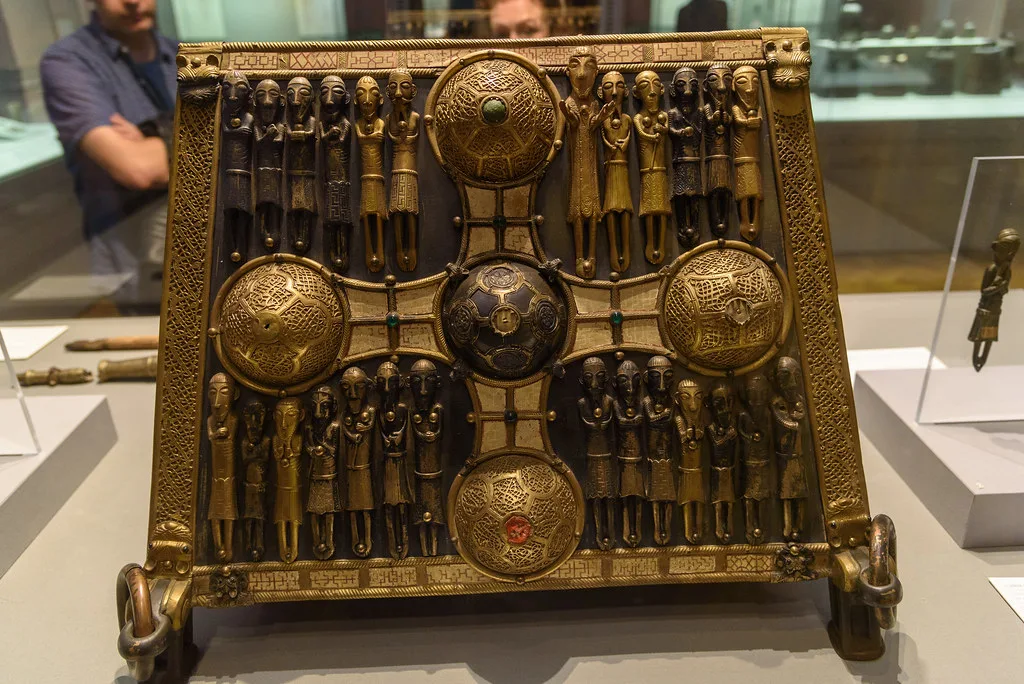
Alongside the human remains, the exhibition displays items of royal regalia, horse trappings, weapons, feasting utensils, boundary markers and votive deposits of butter known as bog butter. These objects give the bodies a material setting, showing what else was placed in bogs and hoarded in the same world.
The gallery presents the two 2003 finds as part of one research story: the Clonycavan Man from County Meath and the Oldcroghan Man from County Offaly are displayed here, so a single Dublin visit can cover both. Two further Irish bog bodies from the museum's collections, Gallagh Man from County Galway and Baronstown West Man from County Kildare, are also featured. Visitors travelling through the west can compare that display with the later castle-building heritage described in castles in county galway, though the two subjects are separated by many centuries.
The gallery also explains Iron Age bog bodies found in Denmark, Germany, the Netherlands and England, which is useful for understanding why the Irish finds are interpreted comparatively. Earlier periods are represented elsewhere in the museum's collections; bronze age ireland material offers a useful contrast in how burial and deposition changed over time.
Planning the Kildare Street Visit
Standard opening hours are Tuesday to Saturday from 10am to 5pm, and Sunday and Monday from 1pm to 5pm, with a recommended last entry of 4.30pm before the 5pm close. Admission to all four National Museum of Ireland sites is free, and the Kildare Street building sits in the centre of Dublin 2, which makes it easy to fold into a wider Dublin History: A Chronological Guide to the City's Key Sites.
A dated exception applies to Sunday 25 and Bank Holiday Monday 26 October 2026, when the Kildare Street site is closed due to industrial action. This is a specified notice rather than a permanent closure, so check the museum's current notice before travelling on those dates.
Some galleries close at short notice, and the museum advises phoning ahead on +353 1 677 7444 if your visit is planned around a particular artefact or exhibition. That is the sensible step if seeing the bog body display is the purpose of your trip rather than one stop among several.
Viewing Respectfully and Photographing the Display
Hand-held cameras may be used in the galleries, but flash, video, tripods and professional equipment are not permitted, and photographs are for personal use only. Those rules matter in a gallery containing human remains, where other visitors may be reflecting quietly.
Cloakroom services were listed as unavailable, with a request not to bring motorcycle helmets, suitcases or large bags into the exhibition galleries. Accessible toilets are on the ground floor beyond the central rotunda, and staff at the reception desk can answer questions on arrival.
Keeping the Story Accurate
The most common error in popular retellings is to blend the 2003 finds into one composite figure, or to assign a cause of death that no source states for Clonycavan Man. The museum's own pages support the discovery context, the dating range and the analytical methods, and they do not supply a personal biography.
A second error is to transfer conclusions across sites: the Oldcroghan peat study reconstructs a bog pool and a deposition episode at that specific location, and it says nothing about Meath. Used carefully, that study is a model of how findspots are investigated rather than evidence about Clonycavan Man.
For related prehistoric context, the wider guide to iron age ireland covers how people of the period worked across the landscape, and it is a useful counterpart to a museum gallery display focused on the bog bodies themselves.
Making the Most of the Exhibition
Clonycavan Man is best understood as one of two 2003 discoveries that triggered a sustained scientific programme, not as a standalone attraction in County Meath. The permanent Kingship and Sacrifice gallery at Kildare Street is where the methods, the objects and the interpretive theory come together in one visit.
Allow time for the surrounding cases rather than heading straight for the human remains, since the regalia, weapons and bog butter explain the depositions far better than the bodies alone. Check opening hours and any closure notices before setting out, and phone ahead if a specific exhibit is the reason for your journey. For another heritage guide, read about Old Croghan Man.
Frequently Asked Questions
Where can I see Clonycavan Man?
The findspot in County Meath is not a public visitor site. The Clonycavan Man is displayed in the permanent Kingship and Sacrifice exhibition at the National Museum of Ireland's Archaeology building on Kildare Street, Dublin 2, alongside the Oldcroghan Man and two other Irish bog bodies from the museum's collections.
How old is Clonycavan Man?
The National Museum of Ireland's Bog Bodies Research Project gives a dating range of roughly 400 to 200 BC for the Iron Age bog bodies examined after the 2003 discoveries. That is a range for the group, not a precise year of death for one individual.
Is the bog where Clonycavan Man was found open to visitors?
No public access is described in the museum's accounts, which treat the location as an archaeological findspot. Visitors should plan around the museum display rather than attempting to reach the bog.
What does the Kingship and Sacrifice exhibition argue?
The exhibition is organised around the theory that human sacrifice and the deposition of victims in bogs along tribal boundaries were connected with sovereignty and kingship rituals in the Iron Age. The museum presents this as an interpretation, not a settled account of any individual.
Which other Irish bog bodies are shown in the exhibition?
The exhibition features the Oldcroghan Man from County Offaly and the Clonycavan Man from County Meath, the two 2003 finds at the centre of the research project. Two further bodies from the museum's collections are also shown: Gallagh Man from County Galway and Baronstown West Man from County Kildare.
What are the opening hours at Kildare Street?
The museum lists Tuesday to Saturday 10am to 5pm and Sunday and Monday 1pm to 5pm, with a recommended last entry of 4.30pm. A dated notice states that the site is closed on Sunday 25 and Monday 26 October 2026 because of industrial action, so check current notices before travelling.
Can I take photographs in the exhibition?
Hand-held cameras are allowed in the galleries for personal use. Flash, video, tripods and professional equipment are not permitted, and photography should not disturb other visitors in a gallery containing human remains.
Is admission free?
The museum states that admission to all four National Museum of Ireland sites is free. Check the visitor information page for current notices before your visit, since gallery availability can change at short notice.
Sources
- Bog Bodies Research Project | National Museum of Ireland
- Kingship and Sacrifice | Archaeology | National Museum of Ireland
- A multi-proxy palaeoenvironmental investigation of the findspot of an Iron Age bog body from Oldcroghan, Co. Offaly, Ireland - Queen's University Belfast
- Opening Hours, Location and Facilities | Archaeology | National Museum of Ireland
You might also like



Continue reading
More guides you'll find useful


