
Irish Bog Bodies: Seeing the Iron Age Remains in Dublin
Irish bog bodies are Iron Age remains held by the National Museum of Ireland. See Old Croghan Man at the Kingship and Sacrifice exhibition in Dublin.
On this page
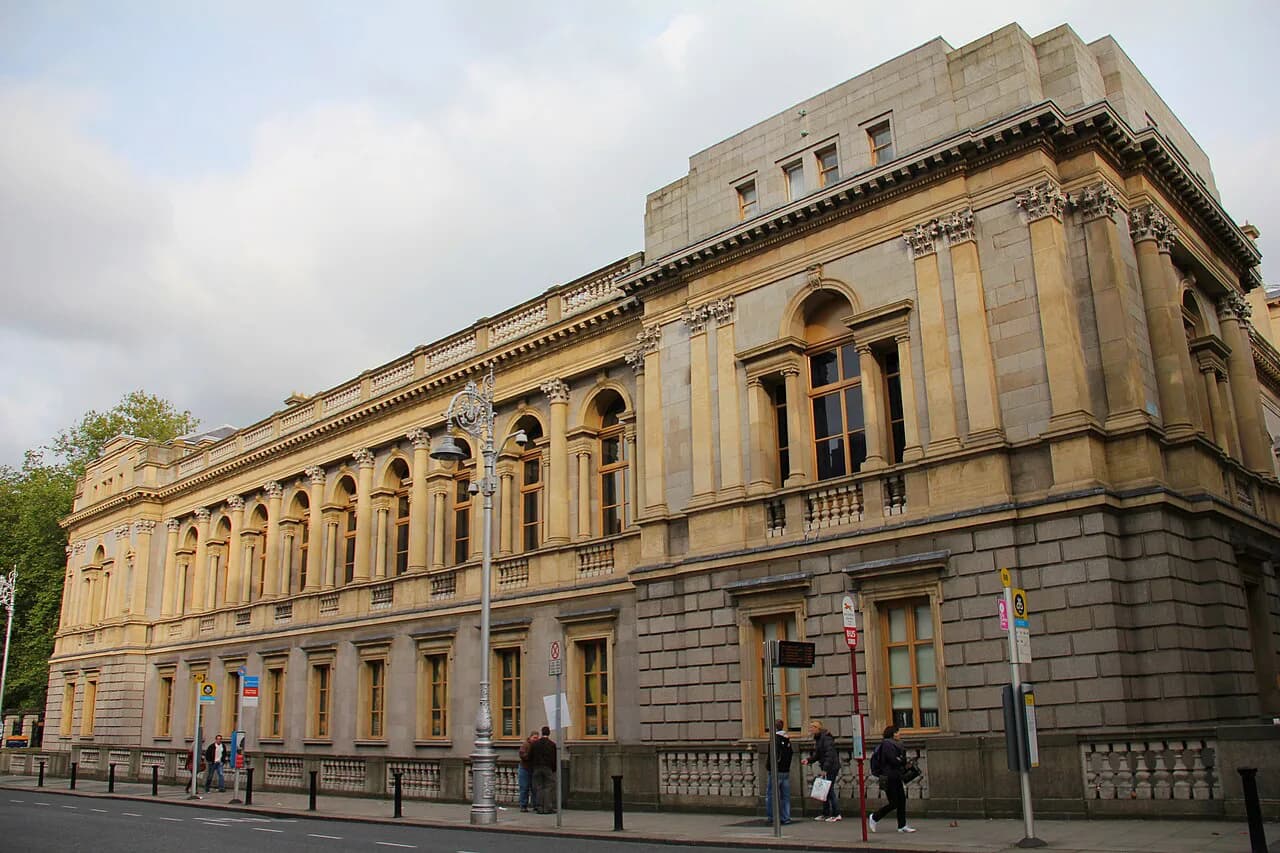
The Irish bog bodies most visitors mean are the Iron Age human remains held by the National Museum of Ireland and presented to the public at its Archaeology site on Kildare Street in Dublin 2. The permanent Kingship and Sacrifice exhibition is the place to encounter them, and the museum marks it as free. The visit is a museum encounter, not a trip to a bog: the findspots themselves are archaeological settings rather than public attractions.
What the Irish Bog Bodies Are and Where You See Them
Bog bodies are human remains preserved in peat, and the Irish examples in this display are Iron Age. The National Museum of Ireland dates the two remains recovered in 2003 to roughly 400 to 200 BC. That range comes from the museum's own research-project page and is the safest figure to carry into the gallery.
The exhibition sits at the Archaeology site, Kildare Street, Dublin 2, D02 FH48, in the centre of the city, and the museum's exhibition page lists no charge for it. Inside, the museum says visitors can come face to face with the past, which is a fair description of a gallery built around preserved human remains rather than around objects alone. Allow time to read the panels, because the interpretation carries as much of the story as the remains do.
The 2003 Discoveries That Started the Research Project
Two finds prompted the museum's dedicated research effort: remains recovered at Oldcroghan in County Offaly and at Clonycavan in County Meath, both in 2003. The Bog Bodies Research Project was set up that year in response. The museum describes the remains as being in a remarkably good state of preservation, which is why they could support detailed scientific study at all.
The two findspots are separate places with separate histories, and it helps to keep them apart when reading labels. Oldcroghan lies in the midlands; Clonycavan lies further east in Meath. Neither is presented by the museum as a site you can visit, so treat any plan to see the locations themselves as a misunderstanding of what is on offer.
How the Bog Bodies Research Project Worked
The project brought together a multi-disciplinary team of 35 specialists, who worked alongside the museum's Irish Antiquities Division and Conservation Department. The museum lists an unusually wide spread of techniques, including CT and MRI scanning, palaeodietary analysis, fingerprinting, and histological and pathological study. In plain terms, the team was asking what these people ate, how their bodies were structured, and what the tissue record could still reveal centuries later.
That breadth is the reason the exhibition can discuss analysis rather than simply display remains. Scanning lets researchers look inside without further disturbance, while dietary and tissue studies add to the record of what these people were and how their bodies were preserved. For background on the wider period these people lived through, see the guide to iron age ireland before or after your gallery visit.
Inside Kingship and Sacrifice
The permanent exhibition is built around a specific idea: that human sacrifice and the deposition of victims in bogs along tribal boundaries related to sovereignty and kingship rituals in the Iron Age, and the museum marks the exhibition as free. It should be read as a scholarly argument rather than a settled verdict on any one individual. The gallery is most useful when you follow that argument through the objects instead of treating it as a conclusion.
Supporting objects give the theory its context. The display includes royal regalia, horse trappings, weapons, feasting utensils, boundary markers and votive deposits of butter known as bog butter. Together they sketch a world of ceremony, hospitality and territorial marking, which is what makes the deposition argument legible to a non-specialist.
The exhibition also sets Ireland in a European frame. It provides information on Iron Age bog bodies found in Denmark, Germany, The Netherlands and England, and it gives an overview of the analyses and their significance. If the Irish material is new to you, that comparative strand is a sensible place to start reading.
Which Individuals Are in the Exhibition
The museum's exhibition page states that Old Croghan Man is on display. It also says two other Irish bog bodies from the museum's collections, Gallagh Man and Baronstown West Man, are featured in the exhibition. Featured is not quite the same as guaranteed on view, so if a particular individual is the reason for your trip, ask staff on arrival.
Keeping the associations straight matters when you read labels or follow up afterwards. Gallagh Man is linked with County Galway and Baronstown West Man with County Kildare, while the Clonycavan find came from Meath. Confusing them is easy, and the exhibition's own text is the authority to check against. If you want to read further on the eastern find, the guide to clonycavan man is a useful companion.
A Separate Line of Evidence From the Oldcroghan Findspot
Academic study of the Oldcroghan findspot adds context that the exhibition does not supply on its own. Oldcroghan Man was recovered in 2003 during cutting of a drainage ditch in a midlands bog, and only some fingernails and a withe fragment survived undisturbed where the body had lain. Researchers from Queen's University Belfast analysed a peat monolith from the spot to reconstruct the local environment.
That work found a bog pool forming at the site in the mid-fourth century BC, with the body most likely deposited during the third century BC, a narrower findspot-specific estimate than the museum's broader 400–200 BC range for the two 2003 finds. The absence of carrion beetles suggests the body was fully submerged. These Oldcroghan findings belong to that findspot alone and should not be carried across to Clonycavan or to any other body.
The same study places the deposition at a moment of wider change, as woodland clearance resumed and connections with Britain and continental Europe renewed. That is landscape history, and it is a useful reminder that the gallery's human remains sit inside a much larger environmental story. Background on earlier centuries is in the guide to bronze age Ireland.
Viewing Human Remains With Care
This is a gallery of real human remains, and the museum's own phrase about coming face to face with the past is worth taking seriously. Read the panels before the cases; the interpretation explains why the remains are displayed and what the analysis established. Treat the display as a burial context rather than a spectacle, and keep conversation and photography considerate of other visitors.
Hand-held cameras are allowed in the galleries, but flash, video, tripods and professional equipment are not, and photographs are for personal use only. Groups of eight or more must book ahead, while families, individuals and small groups do not need a booking. Cloakroom service is currently unavailable, so leave suitcases, motorcycle helmets and large bags behind.
Planning the Visit to Kildare Street
Regular hours are Tuesday to Saturday 10am to 5pm, and Sunday and Monday 1pm to 5pm, with late opening on the last Thursday of each month. The museum recommends a 4.30pm last entry so you can see the galleries before the 5pm close. It closes on Christmas Day, St Stephen's Day and Good Friday, and opens 10am to noon on Christmas Eve.
One dated notice matters if you are planning the coming weekend: Kildare Street is closed on Sunday 25 October and Bank Holiday Monday 26 October 2026 because of industrial action. That notice applies to this site and does not describe a permanent change. Check the museum's visitor page before travelling, since galleries can also close at short notice.
If a specific body or case is the point of your visit, phone the museum on +353 1 677 7444 on the day to confirm it is available. Admission is free across all four National Museum of Ireland sites, so the only cost is your time. Kildare Street sits within easy walking distance of the city's other cultural collections, which makes it simple to pair with a wider day on foot; our Dublin heritage guide maps those nearby sites for the rest of your day.
Where the Findspots Are Not
It is worth saying plainly that neither the Offaly nor the Meath findspot is a visitor attraction. The Oldcroghan remains came to light during drainage work in a midlands bog, and there is no public facility presented by the museum at either location. Anyone seeking the experience of these people should go to the Dublin gallery instead.
If your travels take you west, Gallagh Man's association with County Galway is a historical link rather than an invitation to a display site there. Readers building an itinerary around that part of the country can look at castles in county galway separately from the bog body story.
Make the Gallery the Centre of the Trip
For anyone following the Irish bog bodies, the Kingship and Sacrifice exhibition at Kildare Street is the one place where the remains, the research methods and the interpretive argument come together. Go with the museum's dating and framing in mind, read the panels closely, and treat the kingship theory as a proposition under discussion. Check hours and any closure notices before you set out, and ring ahead if one particular individual is your reason for visiting.
Explore more Ireland guides
Frequently Asked Questions
Where can you see Irish bog bodies in Dublin?
The permanent Kingship and Sacrifice exhibition at the National Museum of Ireland's Archaeology site on Kildare Street, Dublin 2, is the public display. The museum's exhibition page states that Old Croghan Man is on display and that Gallagh Man and Baronstown West Man are featured in the exhibition. If one specific individual is your reason for visiting, ask staff on arrival rather than assuming every case is filled.
Do you need to book to see the bog bodies?
No booking is needed for individuals, families and small social groups, and the museum describes admission as free. Groups of eight or more must arrange a visit in advance through the museum's bookings office. Because galleries can close at short notice, the museum recommends phoning ahead if you are travelling for a particular artefact or exhibition.
Can you visit the bogs where Oldcroghan Man and Clonycavan Man were found?
No. The Oldcroghan findspot in County Offaly and the Clonycavan findspot in County Meath are archaeological settings, not public attractions, and the museum does not present either as a place to visit. The remains themselves are the reason to go to the Kildare Street gallery. Treat any itinerary built around standing at the findspots as a misunderstanding of what is accessible.
How long should you allow for the Kingship and Sacrifice exhibition?
The museum advises a 4.30pm last entry so visitors can see the galleries before the 5pm close, which is the clearest signal that a hurried stop is not the intention. The exhibition pairs preserved human remains with dense interpretive panels and supporting objects, so reading takes longer than looking. Build in time for the surrounding galleries rather than treating the bog body cases as a quick single stop.
What is the Kingship and Sacrifice exhibition actually arguing?
The exhibition is built around the theory that human sacrifice and the deposition of victims in bogs along tribal boundaries related to sovereignty and kingship rituals in the Iron Age. The museum presents this as its interpretive framework for the material, supported by objects such as regalia, weapons, feasting utensils, boundary markers and bog butter. Read it as a scholarly argument rather than a settled verdict on any individual.
Which bog bodies are on display at the National Museum of Ireland?
Old Croghan Man is the individual the museum's exhibition page explicitly describes as on display. The same page says Gallagh Man, from County Galway, and Baronstown West Man, from County Kildare, are also featured in the exhibition, and it notes comparative material from Denmark, Germany, The Netherlands and England. The Clonycavan remains came from County Meath, though the page does not single them out as a guaranteed on-view case, so ask staff if that specific body matters to you.
Sources
You might also like



Continue reading
More guides you'll find useful





