
Irish Culture Through Its Archives, Museums and Crafts
Irish culture through the places that collect it: the National Folklore Collection, Turlough Park folklife galleries, logainm.ie, the ITMA and lace traditions.
On this page
Irish culture is best approached through the named institutions that collect and publish it, not through a single stage image. A university archive records oral tradition, a national museum holds the objects of everyday life, a State-funded database documents placenames, and craft centres keep textile skills in view. This guide explains what each one contains and how a visitor can use it.
The key distinction is access mode. Some material is online and searchable from anywhere, some requires a booked appointment in a reading room, and some sits in museum galleries you can walk through. Knowing which is which saves a wasted journey and shapes what you look for before you travel.
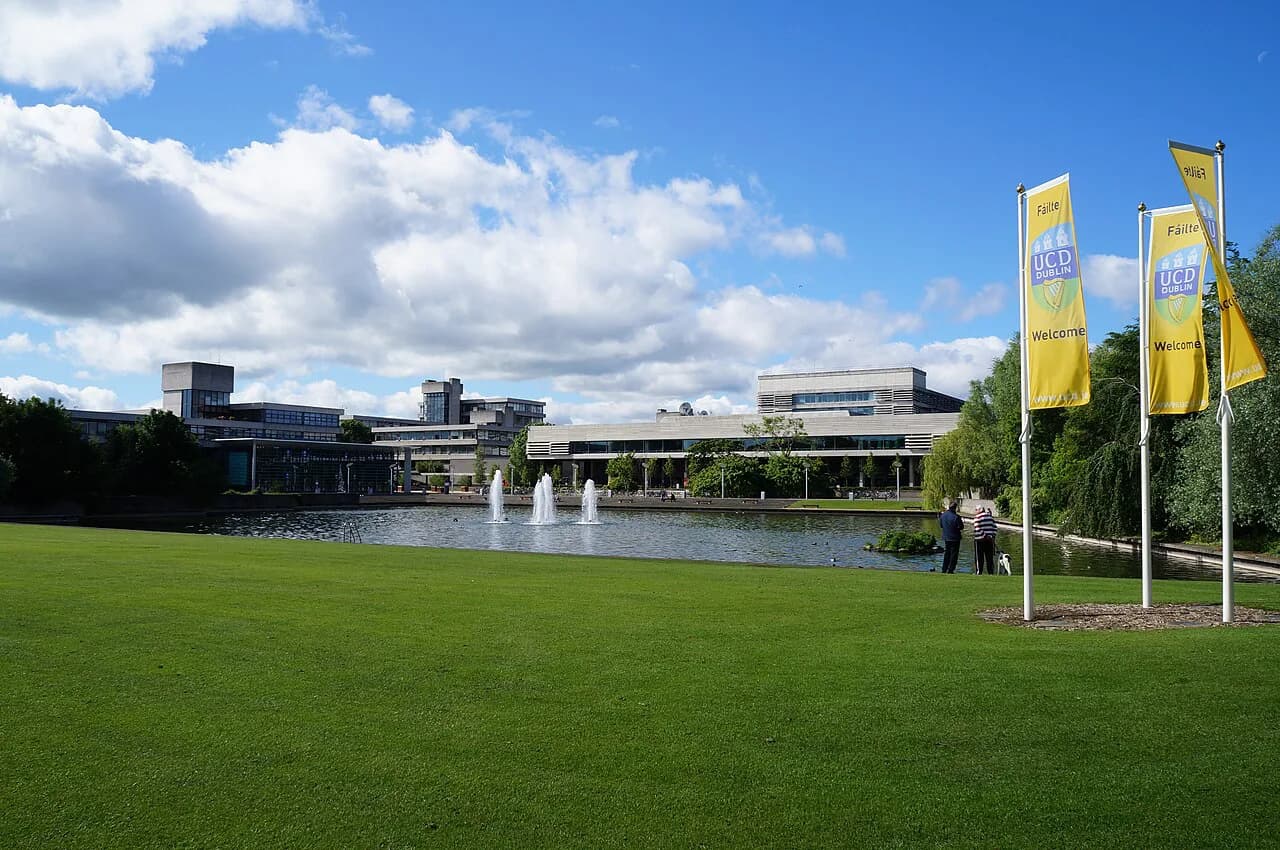
The National Folklore Collection at University College Dublin
The National Folklore Collection is a UNESCO-recognised folklore archive held at University College Dublin and described by its own team as one of Europe's largest archives of oral tradition and cultural history. It sits administratively within UCD Library and was inscribed on the UNESCO Memory of the World Register in December 2017. Its holdings are the product of fieldwork rather than administrative record-keeping, which is why they cover speech, custom and craft as people described them.
The collection was built by predecessor bodies: the Irish Folklore Institute, the Irish Folklore Commission and UCD's Department of Irish Folklore. Because the material was gathered through interviews, questionnaires and recordings, it spans oral literature, calendar customs, folk medicine, song, dance, vernacular architecture and popular belief. That breadth is the point: it documents ordinary life rather than official history.
The formats are unusually varied. The archive holds thousands of manuscripts in Irish and English, around 90,000 archive photographs, wax cylinder recordings, acetate discs and magnetic tape, plus paintings. Film and audio of storytellers such as Peig Sayers and of folk drama performances sit in the same holdings. Many items can only be consulted after checking collection-level descriptions, so treat any single named object as something to request rather than something on view.
The archive's UNESCO inscription is one entry in a wider map of recognised heritage in Ireland, which ranges from archaeological monuments to documentary collections such as this one. Travellers who want to see what else carries that recognition can compare the broader list of Ireland's UNESCO Sites before planning a route.
Dúchas.ie: Searching and Transcribing from Anywhere
Dúchas.ie is the public online interface to the collection, launched in December 2013 as a joint University College Dublin and Dublin City University digitisation project. It is organised by collection, including the Main Manuscript Collection, the Schools' Collection, the Photographic Collection and the Audio Collection. Material can be searched across those collections by place or by person, which suits family historians and local researchers better than a single keyword box would.
Subject searching is available for some collections, notably the Schools' Collection, and the Photographic Collection has its own subject list. International folktales can be traced through an index based on the Aarne-Thompson system. Since 2015 the public has been able to transcribe manuscript material, and those transcriptions feed the search function, so a keyword may surface an extract whose typed text you would otherwise never find.
Digitisation is not complete, and coverage differs from collection to collection. A search that returns nothing is not proof the archive holds nothing on a topic; it may simply mean the item has not been put online. The sensible approach is to search Dúchas.ie first, note the reference details of anything promising, and use that as the basis for an enquiry or a reading-room visit.
The Handbook of Irish Folklore as a Classification Scheme
The archive's arrangement reflects a specific intellectual project. After training at the Dialect and Folklore Archive in Uppsala in 1935, the Irish Folklore Commission's first archivist, Seán Ó Súilleabháin, adapted a Swedish subject system into a practical guide for collectors. Published in 1942 as A Handbook of Irish Folklore, it organised thousands of prompts and questions under broad headings.
The headings still shape how material is arranged today, covering ground such as settlement and dwelling, livelihood, the community, human life, nature, folk medicine, time, popular belief, mythological tradition, historical tradition, oral literature and pastimes. Read the list as a classification tool, not as an inventory of everything Irish people ever did. Its value to a visitor is diagnostic: it tells you which words to search when your interest is a trade, a calendar custom or a type of story.
Visiting the National Folklore Collection Reading Room
Members of the public are welcome in the reading room by appointment, Monday to Friday from 10:00 to 16:30, according to the collection's own information. This is a working archive, not a museum, so there is no casual browsing of shelves. Staff advise, contextualise and provide access to records, and the cataloguing systems are bespoke to folklore material rather than standardised archive description.
Prepare before booking. Use Dúchas.ie to identify collection names, places or people connected to your interest, and bring those references with you rather than a general topic. If your subject is a particular townland or a family name, say so explicitly, because the arrangement by subject, place or person is how staff will locate material.
National Museum of Ireland – Country Life at Turlough Park
Ireland's National Folklife Collection is housed at the National Museum of Ireland – Country Life at Turlough Park, Castlebar, County Mayo. The museum presents four floors of exhibition galleries exploring the lifestyles, skills, crafts, traditions and customs of ordinary people in Ireland between 1850 and 1950. That date range is the crucial framing: this is a collection about rural and small-town life in a defined period, not a survey of all Irish history.
The museum is the complement to the folklore archive, and the contrast is instructive. The archive preserves accounts and recordings of how people described their world, while the folklife collection preserves the objects themselves: tools, furniture, clothing and the equipment of trades. Seen together, they show two methods of documenting the same culture, one through speech and one through things.
Because the museum source describes the galleries as a whole rather than item by item, plan around themes rather than a checklist of objects. Check the museum's own site for current opening arrangements and any gallery changes before travelling to Castlebar, and allow enough time for four floors if the subject genuinely interests you. And bear in mind that the galleries are not the only kind of record: the surrounding landscape holds its own much older evidence, which is why a separate guide to ancient sites in Ireland is useful context for a west-of-Ireland trip.
logainm.ie and Placenames as Cultural Evidence
logainm.ie is a research project of the Gaois research group at Fiontar & Scoil na Gaeilge, Dublin City University, with Dr Brian Ó Raghallaigh as principal investigator. Its stated objectives are to provide technology supporting the Placenames Branch of the Government of Ireland and to disseminate the State's toponymic data online. The project began in 2007, the first public website appeared in 2008, and the current version launched in 2022.
Placenames matter to cultural research because a name can preserve a reference to a feature, a family or a language layer that the modern landscape no longer shows. The database is a published State resource rather than a visitor attraction, so use it as a reference tool while planning a route or reading up on a district. It is funded by the Department of Rural and Community Development and the Gaeltacht with National Lottery support.
Treat the database as authoritative for what it publishes and no more: it does not follow that every name in Ireland is covered in equal detail. When a name matters to your research, check the entry's own record rather than assuming a single form is the only correct one.
The Irish Traditional Music Archive Instrument Thesaurus
The Irish Traditional Music Archive publishes a controlled vocabulary for the instruments of Irish traditional music, the Irish Traditional Music Instrument Thesaurus, compiled by Lynnsey Weissenberger. It sets out core categories with Irish-language and English terms, from bodhrán and cláirseach to píb uilleann, fidil and feadóg stáin. It also lists voice and lilting (portaireacht) alongside physical instruments.
A thesaurus of this kind is a cataloguing tool, and that is exactly why it is useful to a curious visitor. It shows how an archive decides what counts as one instrument and what counts as a variant, grouping accordion, concertina, melodeon and piano accordion as related reeds while keeping early Irish harp and Irish harp as separate entries. Names carry alternatives too, which explains why the same instrument appears under several labels in recordings and sleeve notes.
Read it as vocabulary, not as a gig guide. It will not tell you where to hear music or who plays what, but it will help you understand what you are reading when a collection description, a recording note or a museum label uses an unfamiliar term. That makes it a useful companion to any listening you do around the country.
For the language side of the same material, the Irish terms in the thesaurus sit within a wider story of language and naming that is worth following separately through irish language history.
Kenmare Lace: Convent Origins from 1861
The Kenmare Lace and Design Centre tells the story of lacemaking in the town from the arrival of the Poor Clare nuns in 1861, brought by the parish priest to open a school. Over time the quality of work improved, and the centre's account records many girls capable of earning from five to eighteen shillings a week, while wealthy visitors travelling the Killarney to Glengarriff route were encouraged to call at the convent to view and buy the lace. Medals followed at the Cork Exhibition of 1883, though judges criticised the designs rather than the execution.
That criticism led to formal design teaching: an art class was established in Kenmare under James Brennan, and a design school was affiliated to colleges in London and Cork. The centre's account records royal, papal and private commissions, and credits Sr Bonaventure Smith as the first artist to use Celtic tracery in nineteenth-century ecclesiastical vestments. These are the centre's claims for Kenmare work specifically, not a description of Irish lace generally.
The market for handmade lace declined after the 1914–18 war, but the centre states that original designs survive and can be seen there today. It publishes no opening hours on the page describing that history, so confirm current access before making Kenmare a stop. The value of a visit lies in seeing the designs as documents of a deliberate design programme, not just as finished ornament.
Limerick Lace: A City Tradition with Published Activity
Limerick lace is presented by its own organisation as a tradition with almost 200 years of history in Limerick city, tied to lace schools, lace factories and landmark locations. A Limerick Museum shawl designed and made by Eileen O'Donohue inspired a new mural in the city, linking the museum collection to the streetscape. That makes Limerick unusual among Irish lace stories: the geography of the craft runs through an urban centre rather than a single institution. If the museum link is what draws you, our Limerick Museum: Visitor Guide to Henry Street covers the collection in more detail.
Activity is published as dated notices rather than standing offers. The organisation's site lists beginner workshops, recurring morning and evening class terms, a walking tour of places connected to the city's lace history, and an Amazing Lace Symposium series held in several recent years, with the 2026 edition announced as the fifth in the series. Because each of these is a scheduled event, treat any specific workshop, class or tour as past or programmed rather than permanently available, and check the current listing before relying on it.
The practical consequence is simple: check the current notices before planning around a workshop or tour, and do not assume a class term or symposium will recur. If you want to see lace rather than learn it, look to museum collections and the mural as fixed points, and use the organisation's listings for anything time-limited.
Choosing Between Archives, Museums and Craft Centres
With limited time, match the access mode to your interest. For family or local history, work Dúchas.ie from home first and book the reading room only if you need material that is not digitised. For objects and interiors, the folklife galleries at Turlough Park give the most direct experience. For names, logainm.ie is a reference database to consult while planning rather than a place to visit.
One Check Before You Travel
Opening arrangements change, and this guide deliberately gives none beyond what each institution states about its own access. Confirm current details with the National Museum of Ireland, the Kenmare Lace and Design Centre and the National Folklore Collection before setting out, and treat event listings as dated notices. Some heritage sites elsewhere in the country are managed by the Office of Public Works, whose arrangements are separate again.
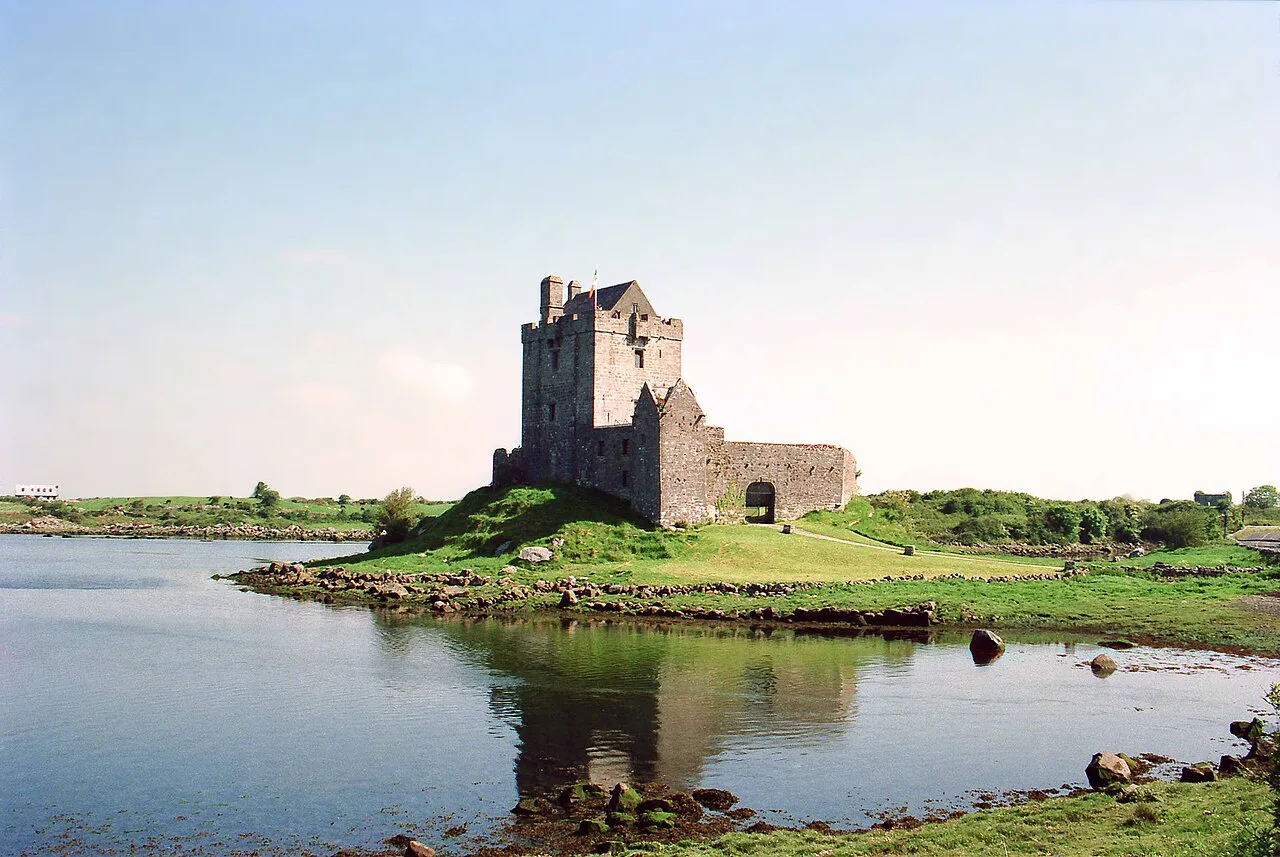
If your interest runs to monuments rather than manuscripts, the archaeological landscape is a different kind of record, and the castles of County Galway show how built heritage in the west is presented to visitors.
Plan Your Visit
Irish culture, as these institutions document it, is a body of collected material: recordings, objects, names, vocabulary and textiles. Each has a named operator and a stated way of being accessed, which is what makes them useful to a traveller rather than merely decorative. Start online, book only what needs booking, and leave room for the galleries.
The strongest itinerary combines one archive, one museum and one craft story, because each method of recording throws light on the others. A manuscript account of a custom reads differently after you have seen the objects associated with it, and a placename reads differently once you know how the material was collected. For another way into material culture, explore our guide to Irish musical instruments.
For other aspects of the same collected culture, our guides to Irish Heritage Card, Irish Traditions and Irish Place Names cover related heritage themes.
Explore more Ireland guides
Frequently Asked Questions
What is the National Folklore Collection and can the public use it?
It is a UNESCO-recognised folklore archive at University College Dublin, administered within UCD Library, holding manuscripts, photographs, audio recordings and film gathered through fieldwork. Members of the public can use the reading room by appointment, Monday to Friday from 10:00 to 16:30, and much of the material is available online through Dúchas.ie.
Can I search Irish folklore material online without visiting Dublin?
Yes. Dúchas.ie, launched in December 2013 as a joint University College Dublin and Dublin City University project, publishes digitised material across the Main Manuscript, Schools', Photographic and Audio collections. You can search by place or person, and some collections by subject, but digitisation is not complete, so an absent result does not mean the archive holds nothing.
What does the National Museum of Ireland – Country Life cover?
The museum at Turlough Park, Castlebar, County Mayo, houses Ireland's National Folklife Collection across four floors of galleries. It covers the lifestyles, skills, crafts, traditions and customs of ordinary people in Ireland between 1850 and 1950. Check the museum's own site for current opening arrangements.
What is logainm.ie used for?
It is a Dublin City University project that supports the Placenames Branch of the Government of Ireland and publishes the State's toponymic data online. Researchers use it to check placename forms and records. It is a reference database rather than a visitor attraction.
Where can I see Kenmare lace designs?
The Kenmare Lace and Design Centre states that original designs from the town's lace school can be seen there today. The centre's history page does not publish opening hours, so confirm current access directly before travelling to Kenmare.
Is Limerick lace still made in Limerick?
Limerick lace activity is published through dated notices rather than a permanent offer, including classes, beginner workshops, a city walking tour and a symposium series that has run in several recent years. Because these are time-limited listings, check the current programme before planning around any of them rather than assuming a class or tour will be running.
Do I need an appointment to use the folklore archive?
Yes. The National Folklore Collection describes its reading room as open to members of the public by appointment, Monday to Friday from 10:00 to 16:30. Identify the collection, place or person you need through Dúchas.ie first, and bring those references to the appointment.
Sources
- National Folklore Collection | dúchas.ie
- Highlight objects from the Irish Folklife Collection | National Museum of Ireland
- About the project | logainm.ie
- https://www.itma.ie/litmus/insts-core/
- The History of Kenmare Lace – Kenmare Lace & Design Centre
- Limerick Lace – The Past, the Present and the Future of Limerick lace
You might also like



Continue reading
More guides you'll find useful




