
Irish Place Names: How to Read Them Using the Placenames Database
Learn to read Irish place names with the Placenames Database of Ireland, from baile and muileann to áith and loiscreán, and see what a name can and cannot tell you.
On this page
Irish place names can be read systematically, but not by guessing from the spelling. The Placenames Database of Ireland at logainm.ie lets you check a name against State toponymic records and a glossary of common elements, and it is honest about where its own data stops. Treat any meaning you find there as a lead to follow, not a verdict to announce.
This guide shows how to use the database as a lookup method: find the record, read the hierarchy around it, check the element in the glossary, and then weigh how the modern English or anglicised form may hide or preserve the original. The worked examples come from the database's own published accounts, including a feature article on names linked to grain processing.
What the Placenames Database of Ireland Is
Logainm is a research project of the Gaois research group at Fiontar & Scoil na Gaeilge, Dublin City University, with Dr Brian Ó Raghallaigh as Principal Investigator. It exists to give the Placenames Branch of the Government of Ireland research technology and to publish the State's toponymic data to the public. The project began in 2007, the first public website launched in 2008 and the current version appeared in 2022.
Funding comes from the Department of Rural and Community Development and the Gaeltacht, with support from the National Lottery. That institutional footing matters for a reader: entries sit alongside the State's own placenames research rather than being a hobbyist list of romantic translations.
The site is an online research resource, so it is something to consult before or after a journey rather than a destination in itself. If you want broader context on how language and lore sit around these names, our notes on irish language history and irish traditions are useful companions.
How the Records Are Arranged
Ireland's geographical administration is hierarchical, and the database follows it: county is the highest unit, then barony, then civil parish, then townland. Electoral divisions are also sometimes used for administrative purposes. Beyond these, the database holds many non-administrative units such as rivers, mountains and islands, all connected in one network.
The hierarchy links do real work for a reader. Open a townland and you see the parish, barony and county that contain it, each clickable. Open something higher, such as the barony of Arklow in County Wicklow, and the page lists the types of sub-units it holds, telling you how many towns, parishes and rivers lie within it.
For travel reading, this structure answers the question a single translation cannot: where exactly does this name sit? Knowing that a name is a townland inside a named civil parish, rather than a town or a monument, keeps you from over-reading it. It also lets you compare neighbouring names that share an element, which is often where the pattern becomes visible.
How to Look Up a Name
Search is the fastest route when you already have a name in mind. The site also offers an interactive map, reached from the BROWSE tab that appears under the logo on any page, which suits cases where you know roughly where a place is but not what it is called.
Lists are the third route, and they come in three flavours: hierarchy links, glossary links and source links. Each leads you from a name into related names or into the documentary sources behind an entry. Working through a list is slower than a search but often more informative, because it shows the company a name keeps.
A practical routine: search the name, note the unit type, follow the hierarchy up to the county so you know where you are, then check the recurring element in the glossary. Only after those three steps is a suggested meaning worth carrying into a conversation. If you are planning heritage stops around a trip, pair that routine with Ireland's UNESCO Sites and ancient sites ireland for places where a name can be checked against a surviving monument, and compare how urban names are treated in this Galway heritage guide.
Reading the Glossary Honestly
The glossary lists words commonly found in Irish placenames, compiled from automated text searches, with editorial checks carried out and still being carried out. The database itself warns that the results may not all be correct. It also states that not all placenames are indexed yet, naming Northern Ireland names without established Irish forms and certain very minor names as gaps.
Where the glossary gives counts, read them as the glossary states them rather than as national totals. It records baile as townland, town or homestead, in 9547 places; mór as great or big, in 2655; loch as lake or inlet, in 2096; cluain as meadow or pasture, in 1623; coill as wood, in 1538; ráth as ring-fort, in 1268; dún as fort, in 1163; and gleann as glen, in 1021.
These figures describe how often an element appears in the indexed data, not how many places in Ireland carry it. That distinction protects you from a common error: assuming a high count means a complete survey. It is better to use the glossary to recognise an element and then check the individual record than to treat the number as an authority on its own.
Case Study: The Mill
Baile an Mhuilinn, the townland of the mill, survives in several English shapes. Some places keep a recognisable echo, such as Ballymullen in County Offaly or Ballinwillin in County Cork. Others were translated outright as Milltown, which hides the Irish origin completely: a Milltown near Myshall in County Carlow is first attested as Ballymollen in 1552 and later as Ballyvullen alias Milltowne in 1631.
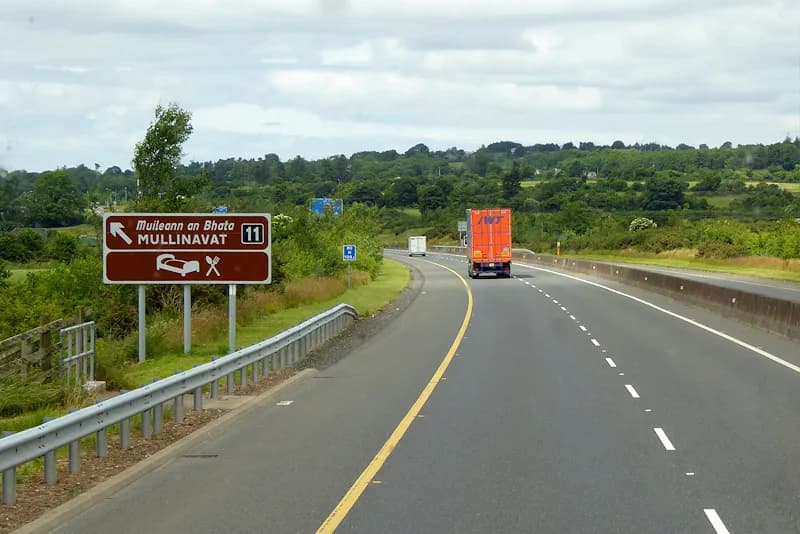
The database also records cases where the Irish form lies behind an English-looking name in a different way, as at Mullinavat or Muileann an Bhata in County Kilkenny, where the meaning of bata is unclear, and at Mullandrait or Muileann an Droichid in County Donegal, the mill of the bridge.
The Counter-Case: Names Coined in English
Spelling alone does not settle a name's origin. The database notes Milltowns that were probably coined in English during the early Anglo-Norman colony, as at Milltown near Newbridge in County Kildare, first attested as Mylton in 1329 and later as Ballemuillyn around 1629. A later Irish form can reflect gaelicisation of an English name rather than the reverse.
This is the single most useful caution for a travelling reader. An English name on a map is evidence of a documentary history, not proof of an Irish root, and an Irish-looking form may itself be a later layer. Read the attestation dates in the record before reaching for an etymology you heard locally.
Case Study: The Drying Kiln
Names built on áith, a drying-kiln for grain, appear in all four provinces. The database gives Aghnahaha in County Leitrim from Achadh na hÁithe, the field of the kiln, and Annahaia in County Monaghan and Aughnahoy in County Antrim from the same element. Knocknahaha in County Kerry and Knocknahaw in County Galway go back to Cnoc na hÁithe, the hill of the kiln.
The trap is áth, a ford, whose genitive form can resemble the genitive of áith in names without the definite article. The database shows how gender saves the reader: because áth is masculine and áith feminine, forms with the article distinguish them, so Coolnaha or Cúil na hÁtha in County Mayo is the nook of the kiln, while Coole in County Wexford, earlier Coulinaghsalligh, is the corner of the dirty ford.
Without the article, or without checking the record, a reader can silently swap a kiln for a crossing. The lesson generalises: use the full entry, including the Irish form and any attested earlier spellings, rather than a single element list.
Case Study: Corn-Singeing and the Bakehouse
Loiscreán refers to singeing or drying corn, and the database records it across several counties: Knockaluskraun and Knockloskeraun in County Clare, Ballystrane in County Dublin, Lugalustran in County Leitrim, Toorlestraun in County Sligo and Lackalustraun in County Mayo. The village of Caherlistrane in County Galway takes its name from the nearby townland of Caherlustraun, Cathair Loistreáin, though the database notes that the location of the cathair itself is unclear.
Bácús, a bakehouse, entered Irish as a borrowing, and several names preserve its shape closely: Coolavacoose or Cúil an Bhácúis in County Kildare, Gortavacoosh or Gort an Bhácúis in County Limerick and Tinvaucoosh or Tigh an Bhácúis in County Kilkenny. Mountoven in Corca Dhuibhne, County Kerry, is the distant rendering, apparently from Cnocán an Bhácúis, where the English form hardly signals the Irish at all.
A borrowed word in a name is a small historical document: it marks contact between Irish and incoming English speech. For readers interested in how such layers accumulate, our notes on irish culture give the wider frame.
When a Later English Name Overwrites an Irish One
Some names were replaced rather than reshaped. Tottenhamgreen in County Wexford carries a family surname, but the database records an original Irish name, Baile an Loiscreáin, also referring to corn-singeing or drying. Mountbell in County Cork looks equally English, yet its earlier name was Cnoc an Loiscreáin, with Mountbell a later reference to a big house in the townland.
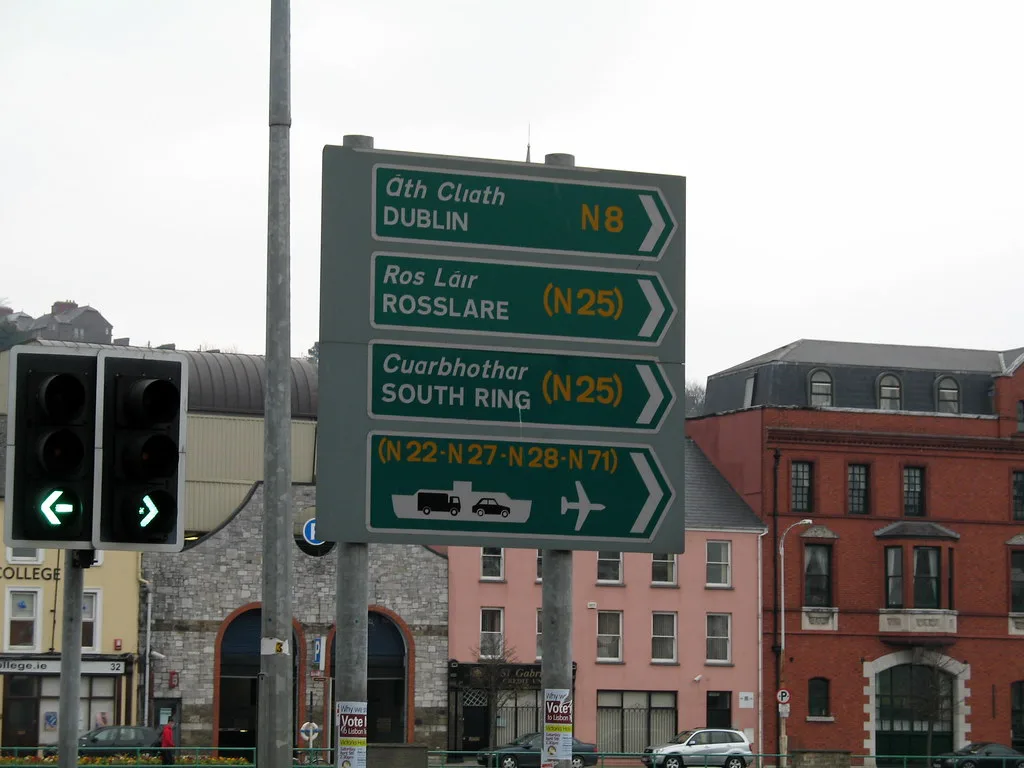
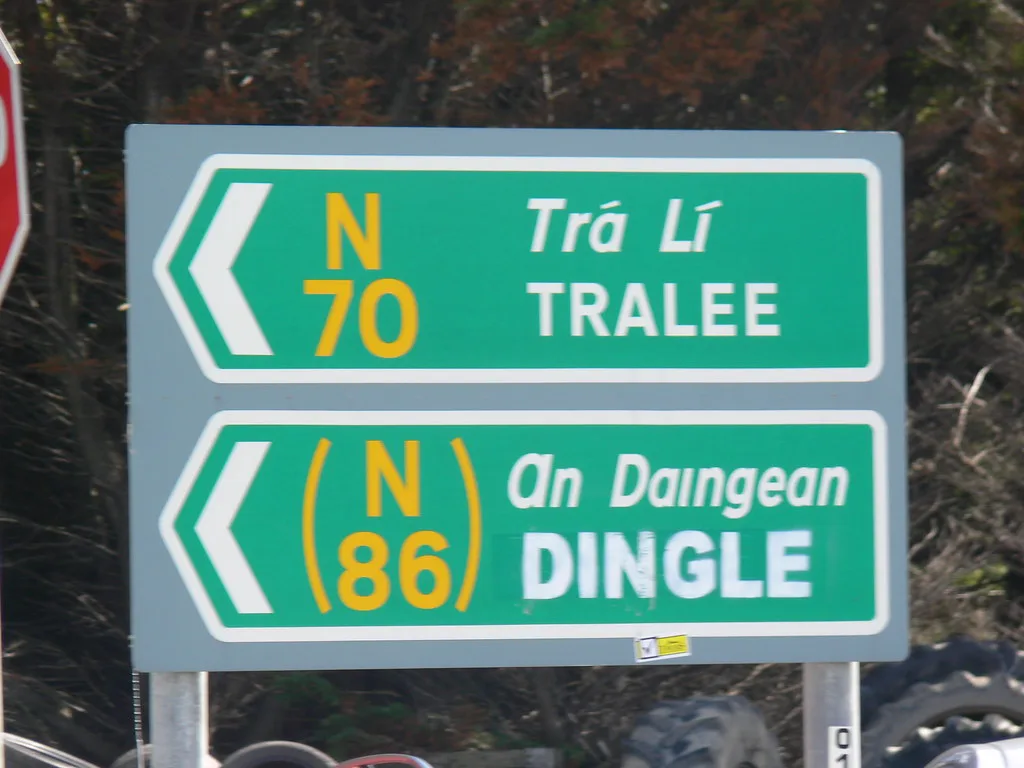
For a visitor, this means a modern name on a road sign may tell you almost nothing about the place's older linguistic history. The database record does, provided you open the full entry rather than trusting an English form. That is also why place-name quizzes and local retellings so often drift: the visible name and the recorded name are two different layers.
Where the Record Admits Uncertainty
Mullinavat or Muileann an Bhata is a useful test case: the database gives the meaning as the mill of the stick or cudgel but adds that the type of stick to which bata refers is unclear. An honest reader repeats that uncertainty rather than inventing a story to fill it. Legends attached to a name should be labelled as legends, not presented as history.
The same discipline applies to monuments. A townland record is not a statement that a site is open, signposted or reachable, and the database does not record access, ownership, opening hours or visitor facilities. Before setting out, check the managing body's own pages; if you are weighing state-managed sites, the Office of Public Works and the irish heritage card are the places to verify current arrangements.
Using the Database Around a Journey
Look a name up before you go, and again afterwards when a sign or a local story has raised a question. Follow the hierarchy to the county so you understand the unit, check the element in the glossary, and read any attested earlier spellings in the record. Two or three names treated this way will teach you more than a long list of translations.
Keep the limits in view: the glossary is automated and still being checked, coverage is incomplete, some names were coined in English, and some entries openly say a detail is unclear. A suggested meaning is the start of a question, not the end of one, and that is precisely what makes these names worth reading.
Explore more Ireland guides
Frequently Asked Questions
How do I look up an Irish place name on logainm.ie?
Use the search box if you know the name, or open the BROWSE tab to use the interactive map if you only know the area. Then follow the hierarchy links to see the civil parish, barony and county, and check recurring elements in the glossary. Lists of names are also reachable through hierarchy, glossary and source links.
Why do some Irish place names appear in English on maps?
Some Irish names were anglicised in shape, some were translated outright, and some later English names replaced an Irish one entirely. The database records cases of each: Baile an Mhuilinn sometimes survives as Ballymullen, sometimes becomes Milltown, and Tottenhamgreen carries a surname over an original Baile an Loiscreáin.
Can I trust a glossary meaning for a place name?
Use it as a lead. The glossary is built from automated text searches with editorial checks ongoing, and the database warns that results may not all be correct and that coverage is incomplete. Always read the individual record, including any attested earlier spellings, before repeating a meaning as fact.
What is the difference between áith and áth in place names?
Áith is a drying-kiln for grain and áth is a ford. Their genitive forms can look alike in names without the definite article, but the nouns differ in gender, so forms with the article distinguish them. Coolnaha in County Mayo is the nook of the kiln; Coole in County Wexford is the corner of the dirty ford.
Is logainm.ie a complete record of Irish place names?
No. The database states that not all placenames are indexed yet, including Northern Ireland names without established Irish forms and certain very minor names. Glossary counts describe the indexed data rather than national totals, so a missing entry is not proof that a name has no recorded history.
Does a townland name describe a place I can visit?
Not necessarily. Townland entries are database records, and the database does not report public access, ownership, opening hours or visitor facilities. If a name points you towards a monument, check the managing body's own published information before travelling.
Sources
You might also like



Continue reading
More guides you'll find useful



