
Irish Traditions: Where They Were Recorded and Where to Explore Them
See how Irish traditions were recorded by folklore collectors and schoolchildren, then explore them online and at the National Folklife Collection in County Mayo.
On this page
Irish traditions, as this guide uses the term, means the recorded ways of life of people in Ireland: calendar customs, crafts, oral storytelling, music, medicine, place lore and beliefs about the world. Two national institutions preserve that material for public access. The National Folklore Collection holds oral tradition gathered through fieldwork, while the National Museum of Ireland's Irish Folklife Collection turns ordinary working life between 1850 and 1950 into objects on display. This overview sits within a wider set of resources on irish culture, from language to landscape.
Read archive material as evidence of what people reported and practised, not as confirmation that supernatural events occurred. Collectors wrote down what informants told them, and children wrote down what parents and neighbours said. That distinction makes the archives more interesting rather than less: they show how communities explained illness, weather, marriage prospects and the dead.
The National Folklore Collection at University College Dublin
The National Folklore Collection is a UNESCO-recognised folklore archive based at University College Dublin, and its own overview describes it as one of Europe's largest repositories of oral tradition and cultural history. In December 2017 it was inscribed on the UNESCO Memory of the World Register. That recognition reflects the scale and documentary range of the material rather than a single building or exhibition, so treat it as a research collection first and a visitor attraction second.
The holdings span manuscript, photographic, audio, library and art collections. They include thousands of manuscripts, tens of thousands of photographs, wax cylinder recordings from the late nineteenth century, acetate discs and reel-to-reel tape, and film of storytellers and seasonal folk drama performers. For a visitor curious about Ireland's UNESCO-listed heritage more broadly, this archive sits alongside the country's monumental sites as a different kind of record.
Much of the material came through predecessor bodies: the Irish Folklore Institute, the Irish Folklore Commission and, later, the Department of Irish Folklore at UCD. Since 2015 the collection has sat administratively within UCD Library. Knowing this history helps explain why the archive is arranged by subject and place rather than like a conventional museum catalogue.
How the Archive Was Built: Collectors, Questionnaires and the Handbook
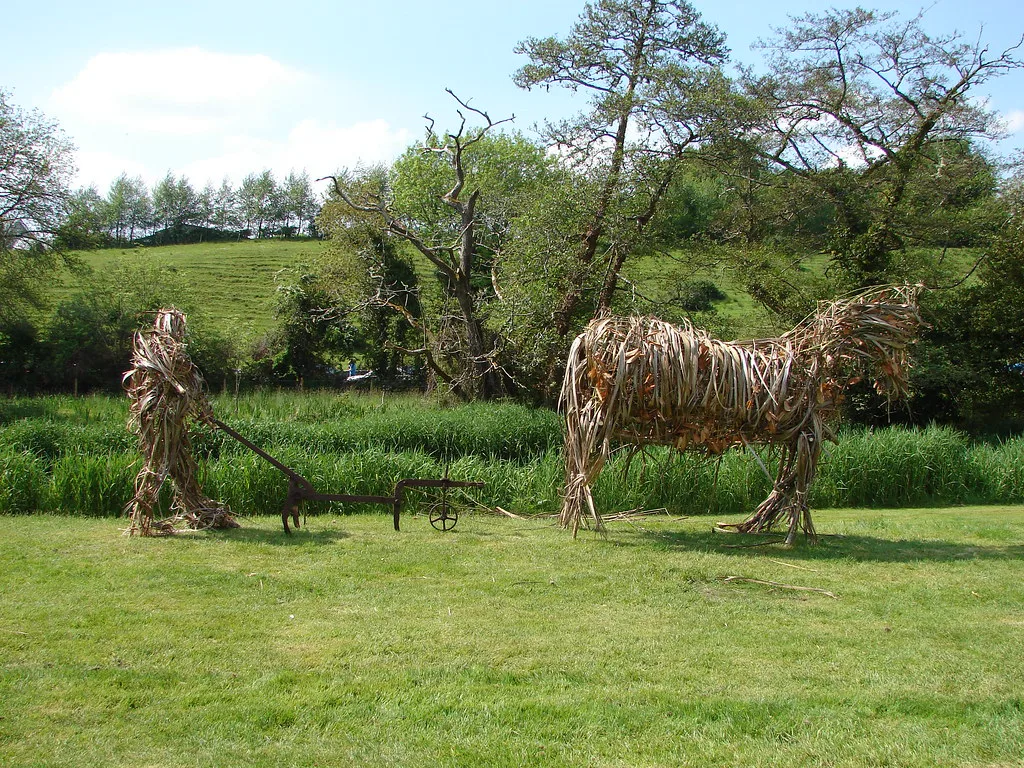
Folklore archives cannot wait for documents to arrive; the records have to be created through fieldwork. Full-time collectors interviewed people, kept diaries about recording sessions and their informants, and worked district by district in Irish and English. Part-time and voluntary contributors, many of them schoolteachers, also sent in local material and answered detailed questionnaires on topics ranging from holy wells to thatching and funerary custom.
The archive's arrangement follows A Handbook of Irish Folklore, published in 1942 and developed by Seán Ó Súilleabháin after training in Sweden. The handbook set out fourteen main headings, from Settlement and Dwelling to Popular Oral Literature and Sports and Pastimes, with thousands of prompts for collectors. That is why a search for a custom often works better when you also try the subject category the handbook would have placed it under.
Among the named tradition bearers represented in the main manuscript volumes are Peig Sayers of the Great Blasket, Éamon a Búrc of Carna and Anna Nic a' Luain of the Blue Stack mountains. The collection also preserves first-person recollections of the Famine period in Ireland and the 1916 Rising. These are oral accounts, so they are primary sources for how events were remembered and narrated, not neutral chronicles.
The Schools' Collection: Children as Collectors
Between 1937 and 1939, pupils at roughly 5,000 primary schools in the Irish Free State gathered folklore from their parents, grandparents and neighbours. The scheme was initiated by the Irish Folklore Commission and ran beyond its original one-year plan in specific cases. The result is around 740,000 pages, including the children's original exercise books and bound volumes, each prefaced with the school, parish, barony, county and teacher's name.
For family historians, the Schools' Collection is unusually tractable. Because each school's material is labelled by parish and county, you can search for a townland and find lore collected by children who lived there. The archive's own site allows searching by place or person, and volunteer transcription since 2015 means keywords can surface matches inside transcribed extracts, not just titles.
Place-name lore is one of the recurring subjects in the manuscript material, so the collection works well alongside the site's own guide to Irish place names when you are tracing a locality. Comparing what a schoolchild recorded with the meanings and forms set out there shows how local story and official record described the same landscape differently.
Samhain and Halloween as Recorded Custom
Samhain, the turning point at the end of the harvest, is treated in the recorded tradition as a liminal time when the world of the living and the Otherworld were thought to meet. Much of the Halloween lore in the Schools' Collection deals with the dead, fairies, ghosts and spirits believed to roam on that night. Present this as belief recorded from informants, not as description of actual events.
The material is concrete and often domestic. Children wrote down divination games involving nuts named for a boy and a girl placed together in the fire, a knife spun on a table to predict who would marry first, and a cloth left on a hedge at midnight. Others described leaving supper out for wandering spirits or walking seven times around a hay rick. These are reported practices, recorded in named schoolchildren's own words.
A researcher at Maynooth University has observed that many of these customs, or versions of them, remain familiar in contemporary Ireland, though some practices have faded. Attribute that continuity to the author rather than generalising to all Irish people. If you want to test the claim, search the Schools' Collection by your own parish and compare what was written down with what local people remember now.
Using Dúchas.ie: Searching the Four Collections
Dúchas.ie is the public online interface of a digitisation project run by University College Dublin and Dublin City University, launched in December 2013. It is not a museum and not a substitute for the physical archive, but it is where most people will first meet the material. You can browse by collection: Main Manuscript, Schools', Photographic and Audio.
The Photographic Collection runs to about 80,000 images, mostly taken by Irish Folklore Commission members and successors, with a large share credited to the Commission's ethnologist Caoimhín Ó Danachair. Images are grouped thematically using the handbook's headings, so categories such as Settlement, Livelihood and Housekeeping, or Time and Festivals give you a way in even when you do not know a photographer or a place.
Lower and medium-resolution images can be downloaded freely for personal use. Higher-resolution copies require contacting the collection by email and paying a stated handling charge per image. If you are working to a publication deadline, request files early and confirm the current charge directly with the archive rather than relying on a figure quoted elsewhere.
Searching by keyword alone can be frustrating because the material is arranged by subject, place and person rather than by modern search conventions. Try a townland, a surname or a named informant first, then widen to the handbook's subject headings. The archive notes that the public transcription work has greatly improved keyword searching inside manuscript extracts.
Visiting the Reading Room by Appointment
Members of the public can use the reading room at the National Folklore Collection by appointment, Monday to Friday, 10:00 to 16:30. Staff assist with contextualising and accessing records, which is useful if you are not sure how a collection is organised. This is an appointment-based research service, not a walk-in visitor attraction, so do not plan a trip around simply turning up.
Before requesting a slot, narrow your question. A specific townland, a named storyteller or a craft tradition is easier for staff to work with than a general interest in Irish customs. Check the archive's own pages for current contact arrangements and any conditions on access, and keep in mind that reading-room access is separate from the museum visiting described below.
The National Folklife Collection at Turlough Park
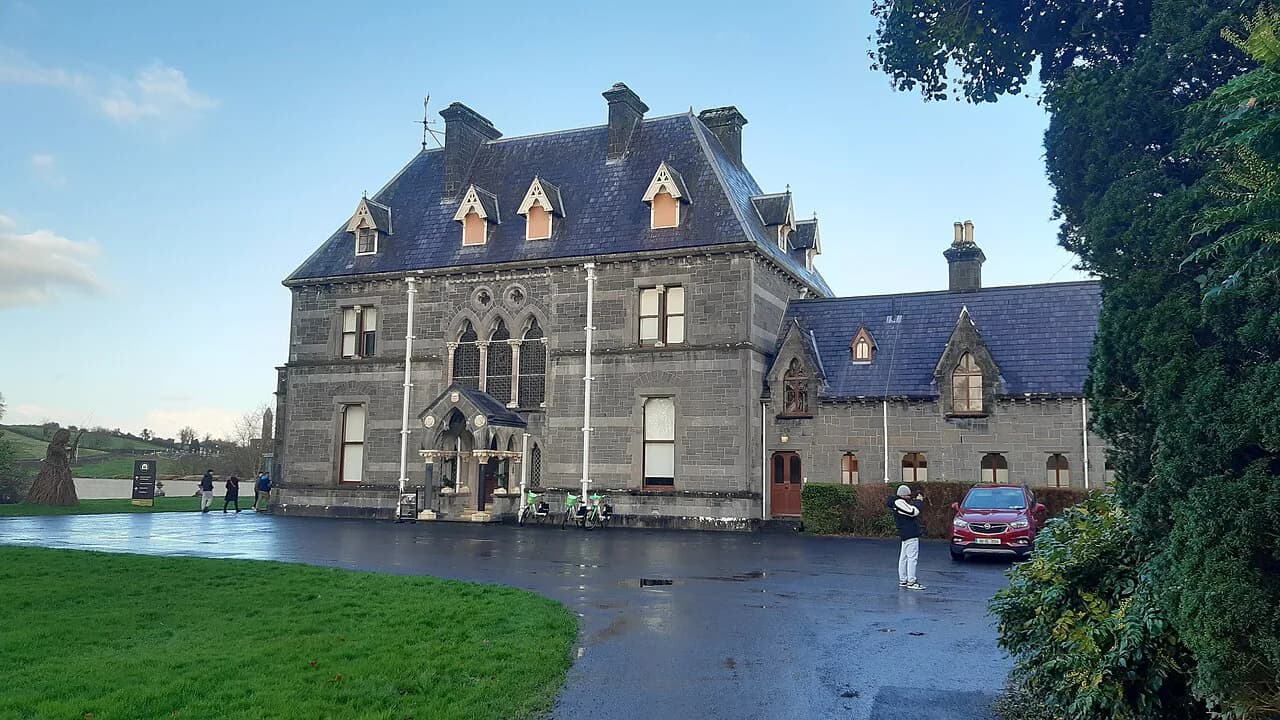
The National Museum of Ireland's Country Life site at Turlough Park, Castlebar, County Mayo, is home to the national Irish Folklife Collection. Four floors of galleries explore the lifestyles, skills, crafts, traditions and customs of ordinary people in Ireland between 1850 and 1950. Where the folklore archive preserves voices and manuscripts, this museum preserves the objects those voices described. If you are planning a wider trip around the capital, Dublin History: A Chronological Guide to the City's Key Sites covers the city's other key heritage stops.
The period framing matters. The Electricity Supply Board began rural electrification in 1946, the project ran until 1965, and the museum notes that some rural areas did not receive electricity until the 1970s. The tools, furniture and household equipment in the galleries belong to a world before mass mechanisation. Understanding that context turns a display of seemingly plain objects into evidence about labour, gender and household economy in a way that complements the archive's written accounts.
Documented Crafts and the Museum's Online Exhibitions
The museum's Irish Folklife Division has published online exhibitions built around documented crafts. One follows John Hamilton, a sieve maker in Kitchenstown, County Dublin, filmed by A.T. Lucas and Kevin Danaher in 1948. Another records wheelwright James Kelliher of Glenflesk, County Kerry, making a donkey cart in 1972, and a third documents currach maker Michael Conneely on Inis Oírr in 1968.
Other features cover traps and snares, antique veterinary instruments, a family document collection from County Sligo and a study of rural electrification's effect on women's lives. These are digital exhibitions, so do not assume that a featured craft, object or theme is currently on physical display at Turlough Park. Use them as background reading before a visit, then check the site or ask staff what is showing.
Craft documentation is a good entry point if the written archive feels abstract. Researching a named maker, such as Bernard Mongan, filmed making a lidded tin can at Cahermorris, County Galway, in 1965, connects an individual's working life to a broader tradition. It also raises useful questions about how much of a craft was recorded because it was already disappearing.
Planning a Visit to Turlough Park
Turlough Park is at Castlebar, County Mayo, postcode F23 HY31, just off the N5 Dublin to Westport road and signposted in both directions. The museum says the site is about thirty minutes from the Mayo section of the Wild Atlantic Way. From Westport the drive is roughly twenty minutes; from Galway or Sligo about an hour.
Mayo Local Link route 454 provides a daily bus connection between the museum, Castlebar and Ballina, with timetables published by the operator. The train alternative is Castlebar station. Once on site, parking is free and there are designated disability spaces plus a set-down area near the main galleries.
Opening hours run Tuesday to Saturday from 10am to 5pm and Sunday and Monday from 1pm to 5pm, with a shorter Christmas Eve morning and closures on Christmas Day, St Stephen's Day and Good Friday. The museum is fully wheelchair accessible with lifts to all floors, and lists a cafe, gift shop, toilets and picnic areas. Check current hours before travelling, especially around public holidays.
Admission charges and any tour arrangements are not set out in the visitor information summarised here, so confirm them with the museum when you plan. Some visitors combine the galleries with a stop at an ancient site or castle on the road, but keep the museum as the anchor rather than trying to fit several major sites into one afternoon.
Choosing Your Route into Irish Traditions
If you want to search, start with Dúchas.ie at home. If you have a specific research question, request a reading-room appointment and prepare a short list of townlands, names or subjects. If you want to see objects and understand how ordinary people worked between 1850 and 1950, travel to Turlough Park. The three routes are complementary, and none requires the others.
The Irish language runs through much of this material, in both the spoken recordings and the manuscripts. Reading about irish culture, including the language's own history, before you begin makes the bilingual catalogue easier to navigate. Some heritage sites around the country offer further context, and a heritage card covering state-managed sites may suit people visiting several of them over a longer trip.
Plan Your Visit
Treat Irish traditions as a set of records to explore rather than a performance staged for visitors. The National Folklore Collection preserves what people said and sang; the National Folklife Collection preserves what they made and used. Start online, book a reading-room slot only if you have a defined question, and save a museum day for County Mayo.
One practical point covers both institutions: check the official pages before you travel. Confirm the reading room's appointment procedure with the archive, and confirm the museum's current hours and admission arrangements with Turlough Park.
Explore more Ireland guides
Frequently Asked Questions
What are Irish traditions and where are they documented?
They cover calendar customs, oral storytelling, music, crafts, folk medicine, place lore and beliefs about the natural and supernatural world. The main documentary record is the National Folklore Collection at University College Dublin, gathered through fieldwork by collectors and schoolchildren. Objects and working life from 1850 to 1950 are represented in the National Folklife Collection at Turlough Park in County Mayo. The archive records what people reported and practised; it does not confirm supernatural events.
Can I visit the National Folklore Collection in person?
Yes, but only by appointment. The reading room is available Monday to Friday from 10:00 to 16:30 to members of the public who arrange a visit in advance. For most people, Dúchas.ie is the simpler starting point because it lets you search digitised manuscript, photographic and audio collections without booking. Confirm current arrangements with the archive before travelling.
What is the Schools' Collection and why does it matter?
It is the result of a scheme run from 1937, which was extended to 1939 in specific cases, in which pupils at around 5,000 primary schools gathered folklore from parents, grandparents and neighbours. The material runs to roughly 740,000 pages and is organised by school and parish. That structure makes it unusually usable for family and local historians tracing a particular townland.
How do I search Dúchas.ie for customs from my ancestors' townland?
Search by place or person first, using the townland or a family surname, then widen to subject headings. Subject lists exist for the Schools' Collection and the Photographic Collection. Volunteer transcription means keywords are now searchable inside many manuscript extracts, so try variations of a name or place and check the Audio and Photographic collections separately.
What will I see at the National Folklife Collection, and is admission free?
The galleries at Turlough Park in County Mayo cover the lifestyles, skills, crafts and customs of ordinary people between 1850 and 1950 across four floors. Admission arrangements are not stated in the visitor information summarised here, so check with the museum before travelling. Parking on site is free, and the building is wheelchair accessible with lifts to every floor.
Are the museum's online exhibitions the same as its physical displays?
No. The online exhibitions are digital features curated from the Irish Folklife Collection, with themes such as craft documentation, trapping and rural electrification. They are not a guarantee that a named object or theme is currently on display in the galleries. Use them as background, then ask the museum what is showing when you plan your visit.
Sources
- National Folklore Collection | dúchas.ie
- The NFC Collections | dúchas.ie
- Folklore Samhain
- Highlight objects from the Irish Folklife Collection | National Museum of Ireland
- Online exhibitions | Country Life | National Museum of Ireland
- Opening Hours, Location and Facilities | Country Life | National Museum of Ireland
You might also like



Continue reading
More guides you'll find useful




