
Lismore Castle: Gardens, Gallery and Visitor Access
Lismore Castle is a private Devonshire home in County Waterford. Visitors can see the walled gardens and Lismore Castle Arts; here is what to expect.
On this page
The residence at Lismore Castle is a privately occupied family home above the River Blackwater in County Waterford, and the operator's published visitor offering is the walled garden, which holds the Lismore Castle Arts gallery, with a defined season, daily hours and tiered admission. The castle's long story supplies the context for what stands around you rather than a room-by-room itinerary.
The Castle Above the Town and Bridge
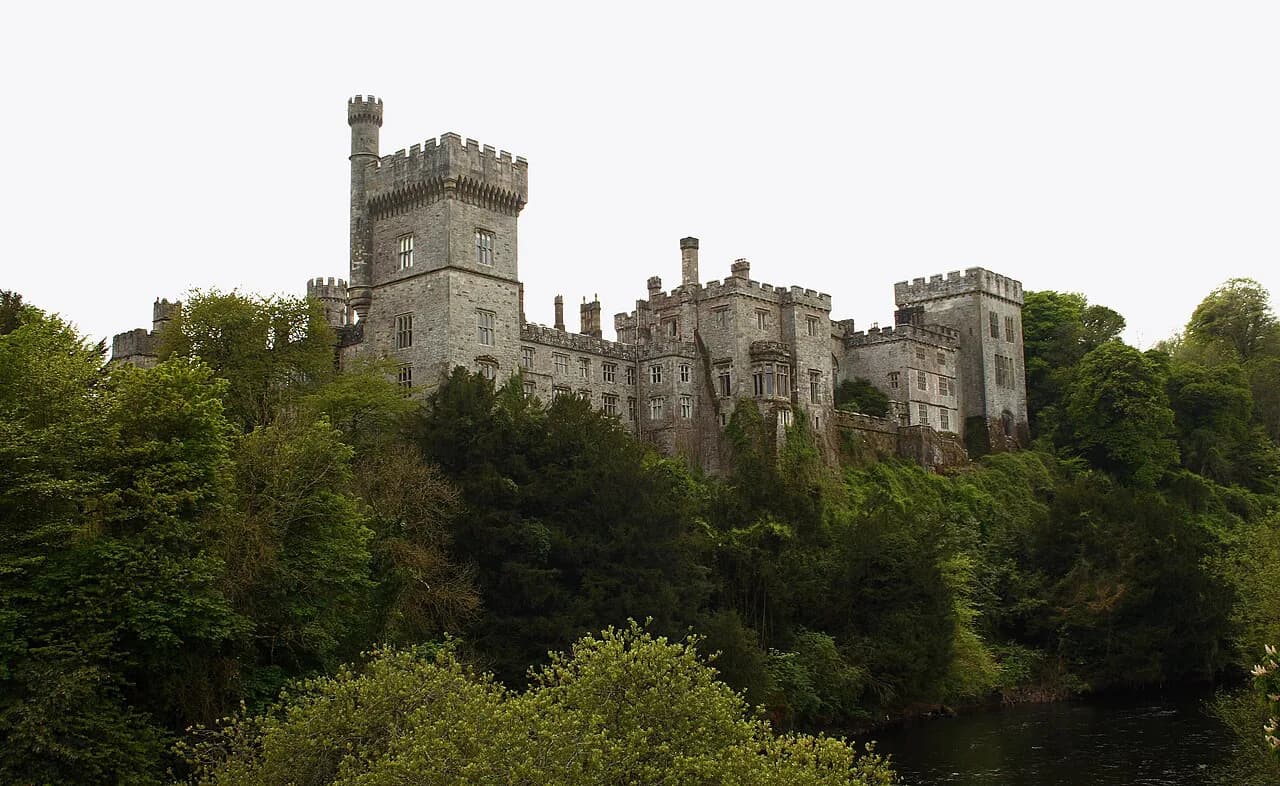
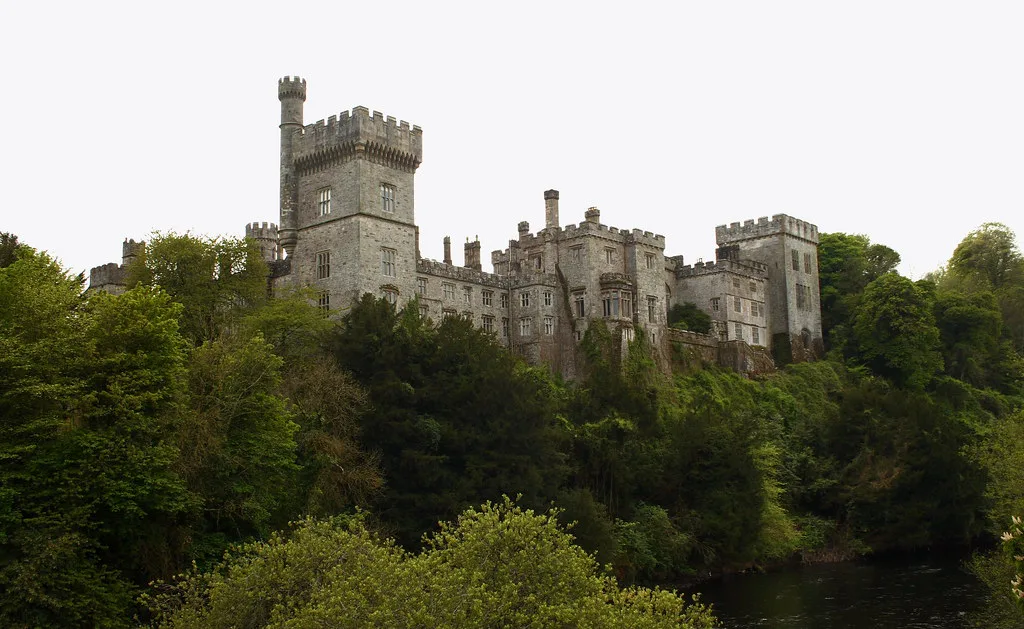
Lismore Castle guards a strategic bridge over the River Blackwater and dominates the town of Lismore, a position that explains its continuous occupation since the twelfth century. The settlement grew beneath walls that began as Prince John's castellum and later served as a palace for the medieval bishops. Because the castle sits above rather than beside the street, the approach from the town gives you the building as a silhouette and backdrop before any garden gate.
A stone bridge commissioned from the Cork-born architect Thomas Ivory still offers views of the castle rising through woodland on the south side of the river, according to Apollo's account of the site's building history. Treat that riverside view as part of the visit rather than an afterthought: it is the clearest way to read the cliff-top placement and the Victorian skyline in one look. Allow separate time for it, since it lies outside the walled garden itself.
From Monastery to Bishop's Palace
The site is said to have been a monastery founded in the seventh century by Saint Mochuda, also called Saint Carthage, before it became a bishop's residence. That origin is traditional and only faintly visible today, so read it as background rather than expecting excavated remains. Prince John visited Ireland in 1185 and established the first castle here, which the FitzGerald Earls of Desmond later seized and held.
After an unsuccessful rebellion against the English government, the Desmond estates were forfeited to the crown, which is how the castle passed out of that family's hands. The layers that followed are the reason a visit rewards some prior reading: each generation rebuilt on the last, so the surviving fabric belongs to several centuries at once. Knowing the sequence helps you place the gatehouse, courtyard and river front as you see them.
Raleigh, Richard Boyle and the Jacobean House
Elizabeth I granted Lismore to Sir Walter Raleigh in 1589, and Apollo dates Raleigh's sale of his Irish holdings to Richard Boyle to 1602, when Raleigh was short of funds and imprisoned in the Tower of London. Historic Houses of Ireland frames the same transfer after Raleigh's fall from favour under James I. The buyer is the fixed point worth carrying with you; the exact year of the sale is where the accounts diverge.
Boyle made Lismore his principal residence and remodelled it as a Jacobean palace, with gabled ranges set around a central courtyard and an outer gatehouse bearing his coat of arms and the motto 'God's providence is my inheritance'. That gatehouse survives and is the most tangible Boyle-era element of the approach. He became Earl of Cork in 1620 and died in 1643, by which point he was the wealthiest man in the country.
Siege, Inheritance and the Devonshires
The castle was attacked and sacked during the Confederate Wars that engulfed Ireland at the time of Boyle's death, and the family restored it afterwards without returning to live there, leaving agents to manage the property. Historic Houses of Ireland notes that Lismore withstood a siege by the Confederate army in 1642 before falling to Lord Castlehaven. The building's later calm is therefore a restoration story rather than an unbroken domestic one.
When the 'Architect Earl', the 3rd Earl of Burlington, died in 1753, his only surviving child Lady Charlotte inherited the entire Boyle estate, according to Apollo. She had married William Cavendish, 4th Duke of Devonshire, and Historic Houses of Ireland dates her inheritance of Lismore to 1748, after which it has been the Devonshires' Irish home. The family connection continues, and the castle is now home to William Burlington, who lives there when in Ireland.
Paxton and the Victorian Castle
The 6th Duke, known as the Bachelor Duke, began with William Atkinson remodelling the reception rooms overlooking the river, then returned to the project from 1850 with Joseph Paxton and Paxton's son-in-law George Henry Stokes. Paxton had started as the duke's gardener at Chatsworth, which is why the castle's Victorian phase reads as garden-led architecture. Only Boyle's gatehouse and Atkinson's reception rooms were left largely untouched.
Paxton's campaign swept away most of Boyle's Jacobean ranges to create the inner courtyard visible today, faced with cut stone shipped from the duke's Derbyshire estate and topped with castellated towers and turrets. The ruined medieval chapel became a banqueting hall, with its interior designed by John Gregory Crace, while Pugin was responsible for the linenfold oak panelling and heraldic stained glass, and the great brass chandelier was made by Hardman & Co. of Birmingham, all attributed by Apollo's architectural study.
The chandelier was first displayed in the Medieval Court of the 1851 Great Exhibition inside Paxton's Crystal Palace, and the great inlaid Derbyshire marble chimneypiece was reportedly rejected as too elaborate for Horsted Place in Sussex before the duke bought it for Lismore. These exhibition connections explain why the Victorian work feels display-scale rather than merely domestic.
The Gardens: Seven Acres Inside the Walls
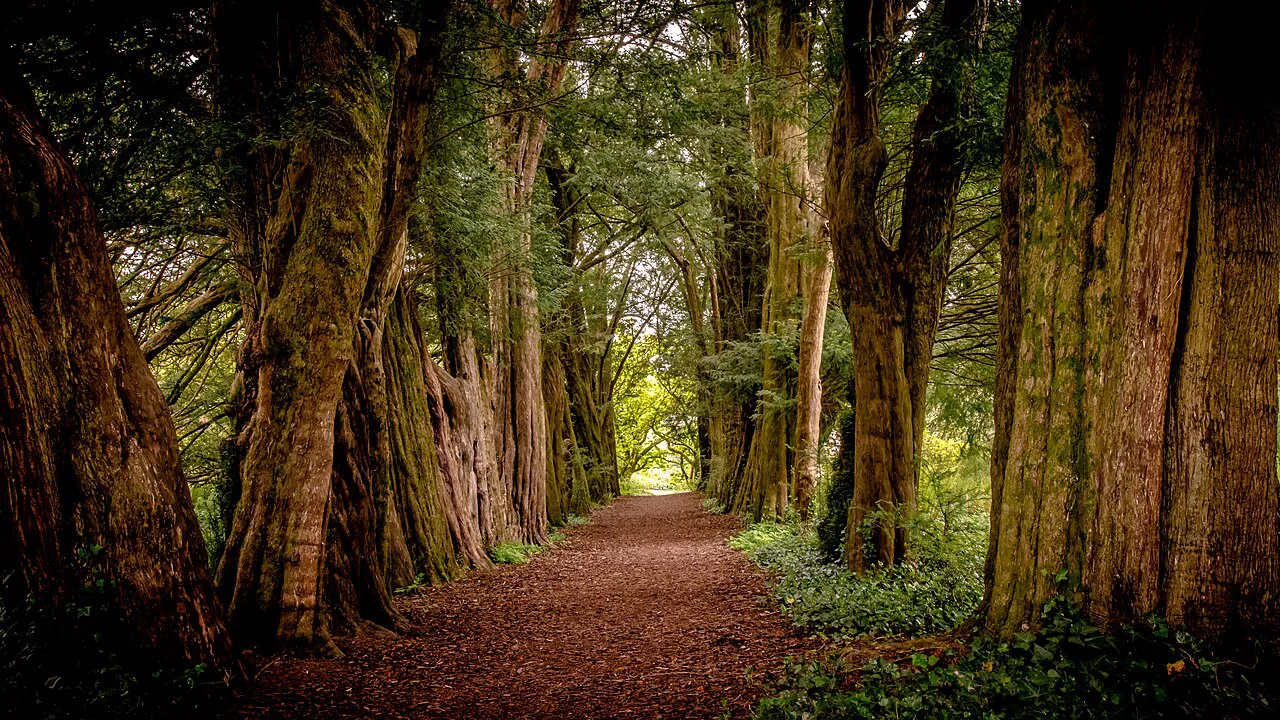
The historic gardens at Lismore are two distinct gardens within the castle walls, together covering seven acres with views of the castle and the surrounding countryside. The upper garden was first laid out by Richard Boyle, 1st Earl of Cork, in about 1605, and most of its walls and terraces remain as they were even though the plantings have changed with each generation's taste. That makes the structure, not the flower beds, the historic fabric to look for.
The upper garden mixes ornamental borders with productive ground, growing vegetables, herbs, fruit and flowers for the kitchen and the house. Plan the garden as an outdoor visit and dress for the weather accordingly. If you are comparing Irish walled gardens more widely, the broader collection of irish gardens gives useful context on how Lismore's terraces relate to other historic layouts.
Lismore Castle Arts and Its Exhibition Record
The gallery sits within the historic gardens, and its programme has included leading international artists such as Anne Collier, Gerard Byrne, Dorothy Cross, Nancy Holt, Richard Long, Charlotte Prodger, Eva Rothschild and Ai Weiwei. The gardens also hold permanent works by Eilís O'Connell and Franz West, and a sculpture yard is being developed in the former stable yard. Because the exhibition programme changes, check which shows are running before you travel rather than assuming any named artist is on view.
The gallery is funded by the Arts Council and by a Waterford City & County Council arts grant, and its community work includes long-term projects pairing artists with local groups. Within the wider Irish garden scene, the gallery model differs from estates such as Mount Congreve Gardens, where the draw is the planting itself. Knowing that distinction helps you decide how much of the day to give to art and how much to the terraces.
Two Town Venues Worth Separate Time
Lismore Castle Arts also runs two venues in and near the town, and these are separate buildings rather than castle rooms. St Carthage Hall opened in 2011 in a former chapel on Chapel Street behind the Heritage Centre in the town centre. Both it and The Mill keep their own exhibition hours, distinct from the garden season.
The Mill opened in 2022 on the outskirts of the town, on the road towards Ballysaggartmore Towers, bringing a historically significant building back into use and allowing more physically demanding works to be shown. It launched with Virginia Overton's Cascade, though that is a past exhibition rather than a permanent installation. Leave the town venues as a separate decision in the day, since their limited weekly hours can close them while the garden is open.
Planning the 2026 Season
Lismore Castle Arts and the Gardens at Lismore Castle are open daily from 11am to 6pm, with last entry at 5pm, from 13 March to 25 October 2026. Admission that season is €11 for adults, €9 for concessions, €7 for children aged 6 to 16 (under-sixes free) and €33 for a family ticket covering two adults and three children under 16, with annual passes available. Because the season ends on 25 October 2026 and later dates are not yet published, confirm the current arrangements before booking travel beyond that window.
St Carthage Hall and The Mill open only on Fridays, Saturdays and Sundays from 12pm to 5pm during exhibitions, with free admission, and both can be visited at other times by appointment. That combination matters: a weekday garden visit will not automatically include the town galleries. The Mill sits a short walk from the town centre on the Ballysaggartmore road, and group bookings can be arranged through the operator's published contact address.
Visitors with access questions can reach the operator on 058 54061 or by email at info@lismorecastlearts.ie, which is the address given for queries and concerns about the visit. If your interests lie further into Irish garden design, botanical gardens or the National Botanic Gardens at Glasnevin offer a different, plant-focused experience worth comparing.
Setting Expectations Before You Travel
The operator's published visitor information presents the ticketed offering around the gardens and gallery rather than the residence interior. Occasional private or group arrangements are not something to assume on arrival. Build your day around the terraces, the gallery and the town venues rather than a hoped-for house tour.
If you have already seen Lismore, the wider Irish garden trail rewards a detour; Ilnacullin on Garinish Island in Bantry Bay is a radically different, waterborne garden experience. Both rely on seasonal access, so treat published opening windows as the first thing to check.
Plan Your Visit
Lismore Castle is best understood as a lived-in Devonshire home with a public garden and gallery attached, not as a house museum. Decide first whether you want the walled garden and its art, the free town venues, or both, then match your day to their separate hours. If you would rather spend the day indoors among collections, our guide to the museums in Cork covers city and county alternatives. Check the season before travelling, since the garden opening and the town venues' weekend-only exhibition hours rarely align perfectly.
For anyone continuing on to County Kerry, Muckross House sits within Killarney National Park, where the combination of house and grounds offers another way to read Irish estate landscapes. Comparing the two clarifies how much Lismore's identity rests on its cliffs, terraces and river setting rather than on interior display.
Explore more Ireland guides
Frequently Asked Questions
Can you go inside Lismore Castle?
The castle is a privately occupied family home, and the general-admission offering covers the walled gardens and the Lismore Castle Arts gallery within them, not the residence interior. Contact the operator before assuming anything beyond the published garden visit.
What can you visit at Lismore Castle?
Visitors see the historic gardens, which are two distinct gardens inside the castle walls covering seven acres, plus the gallery spaces and permanent works in the grounds. Two further venues, St Carthage Hall in Lismore town centre and The Mill on the outskirts, are run by the same organisation but sit outside the castle.
Are St Carthage Hall and The Mill part of the castle?
No. St Carthage Hall is a former chapel on Chapel Street in the town centre, opened as a project space in 2011, and The Mill is a short walk from the town on the road towards Ballysaggartmore Towers, opened in 2022. Both belong to Lismore Castle Arts but are separate from the castle grounds.
When is Lismore Castle Arts open?
The gardens and gallery keep a daily season from 13 March to 25 October 2026, 11am to 6pm with last entry at 5pm, while St Carthage Hall and The Mill open only on Fridays, Saturdays and Sundays from 12pm to 5pm during exhibitions, with other times by appointment. Check the operator's site for any change to those hours before travelling.
How long does a visit to the gardens and gallery take?
No official duration is published, so plan around what you want to see: two gardens across seven acres, the gallery building and any permanent works in the grounds. Add separate time for the town venues if your visit falls on a Friday, Saturday or Sunday during an exhibition, since they are not inside the castle.
Why is the garden historically significant?
The upper garden was first laid out by Richard Boyle, the 1st Earl of Cork, around 1605, and most of its walls and terraces still follow that arrangement even though the planting has been renewed repeatedly. The garden's historic interest lies in its structure and terraces rather than in an unchanged planting scheme.
Sources
You might also like



Continue reading
More guides you'll find useful




