
Muckross House: History, Gardens and Park Setting
Muckross House is an 1843 Victorian mansion beside Muckross Lake in Killarney National Park, shaped by the Herberts, a royal visit and its gardens.
On this page
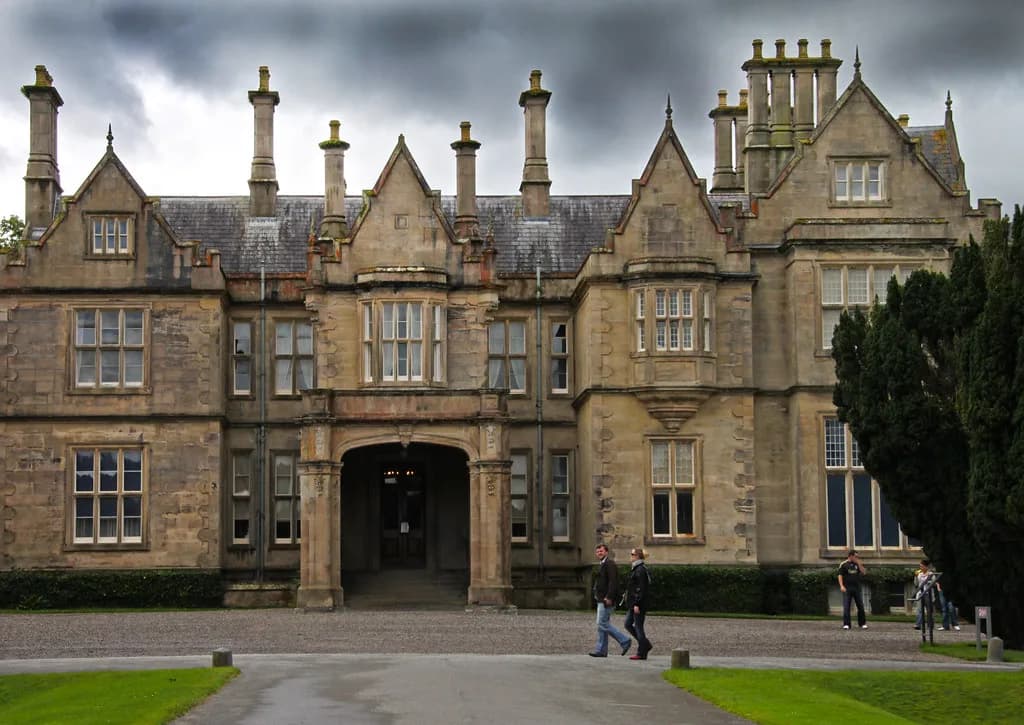
Muckross House is a Victorian mansion completed in 1843, set close to the shore of Muckross Lake in Killarney National Park, County Kerry. The property's own account describes it as the fourth house successive generations of the Herbert family occupied at Muckross, designed by the Scottish architect William Burn.
It rewards more than a quick exterior photograph. Four ownership phases, each with its own documented detail, sit behind the facade, and the gardens around the house developed in parallel with those changes rather than as an afterthought.
What Muckross House Is and Where It Stands
The house stands beside Muckross Lake, one of the three lakes that define the Killarney landscape, and operates as a focal point within Killarney National Park. The operator's landing page frames the wider site as a combination of house, gardens and traditional farms, alongside craft workshops and a restaurant, so the mansion is one element of a larger day out rather than a standalone museum.
A local tour operator's account places the house roughly six kilometres from Killarney town, and that distance is worth treating as approximate. Read it as a short excursion from town into the park rather than a town-centre attraction, and plan the visit as part of a park itinerary.
William Burn and the Building of the Present House
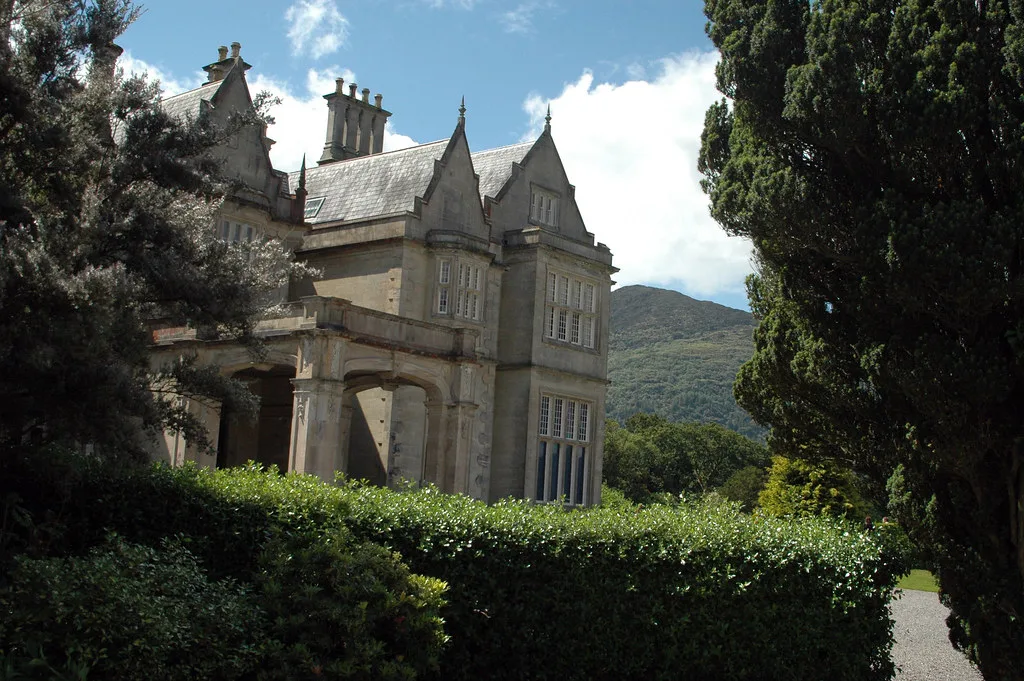
Construction of the present house began in 1839 and finished in 1843, to William Burn's design. The historical span matters for reading the building: it belongs to the early Victorian period, and the estate had already carried earlier Herbert houses before this one was commissioned.
The house was built for Henry Arthur Herbert and his wife Mary Balfour Herbert, a watercolourist. The original intention was for something larger and more ornate, including a bigger servants' wing, stable block, orangery and summer-house; the property's account says those plans are believed to have been altered at Mary's request, a hedge worth keeping when the detail comes up on a visit.
Inside, the operator describes principal rooms furnished in period style to suggest the lifestyle of the nineteenth-century landowning class, with a basement that conveys the servants' working world. Treat that description as a statement about how the interiors are presented, not as a guarantee of which rooms are open on the day you arrive.
August 1861: Queen Victoria and the Prepared Gardens
The Herberts hosted Queen Victoria at Muckross in August 1861. The gardens were groomed in the years before her arrival, with paths opened through the woods and grounds, viewing platforms and seating installed, and a wider range of late-summer flowering shrubs and plants added.
Garden work at Muckross had begun much earlier. The gardens page suggests layout work probably started around the time the house was finished, and cites an 1846 newspaper report of extra men employed at increased wages on terraces, possibly as famine relief during the Great Hunger. That reading of the evidence is presented as likely rather than certain, and it is a useful reminder that designed landscapes carry social history as well as horticulture.
A tour operator's narrative adds local colour around the royal visit, noting rooms overlooking the sunken garden associated with the Queen's stay, but this is a guide's telling rather than the property's own account. Use it as atmosphere and keep the operator page's promotional tour offers out of your planning.
The 1899 Sale and the Ardilaun Years
The end of Herbert ownership came in two documented steps. The Standard Life Assurance Company put the house and estate up for auction in Dublin on 21 November 1899, bidding was slow and the vendors withdrew the property, and on 29 November it was announced that Lord Ardilaun had purchased the estate.
Lord Ardilaun was connected to the Herberts through marriage, and the Ardilauns spent little time at Muckross, letting it annually as a shooting and fishing lodge. That shift explains why the house's later chapter reads as a sporting estate rather than a family home, and it is one of the details most often flattened in short summaries.
The Bourn Vincent Years, 1911 to 1932
Early in the twentieth century the estate passed to the Bourn Vincent family, and their ownership ran from 1911 to 1932. William Bowers Bourn had first taken Muckross on let in 1910, and after his daughter Maud married Arthur Rose Vincent, he bought the property as a wedding present for the couple.
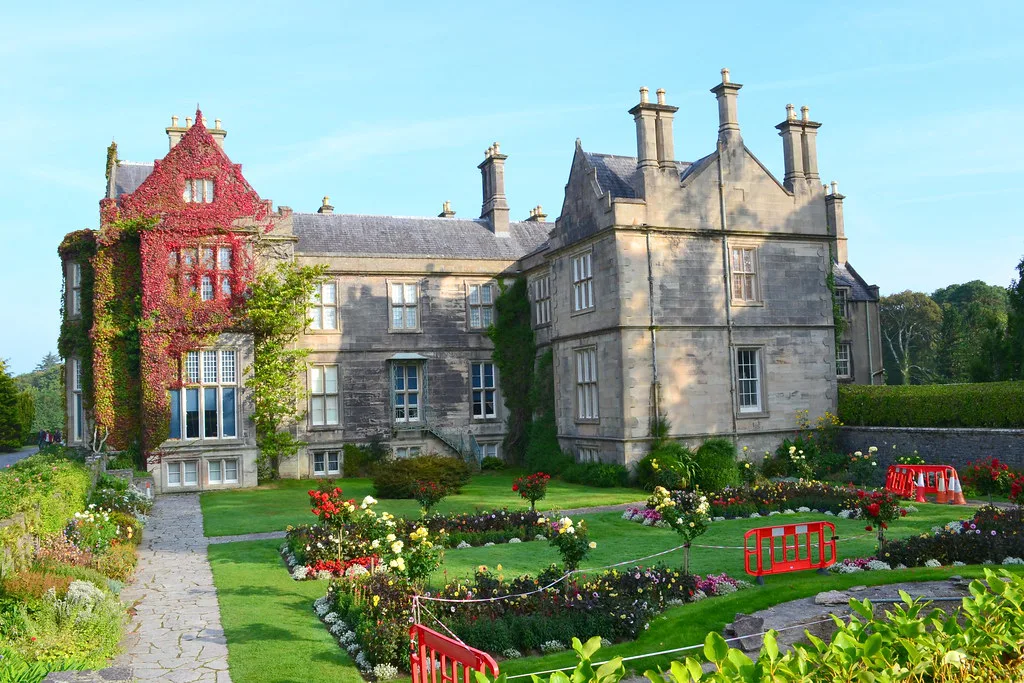
Those two decades brought sustained spending on the estate, and the garden record shows the results clearly. A Sunken Garden designed by Wallace and Co. of Colchester was laid out in 1915, replacing formal Victorian terraces immediately south of the house, while a Rock Garden was developed on a natural outcrop of Carboniferous limestone.
The family gifted the estate to the Irish State in 1932, and accounts of the estate tie that gift to the creation of Killarney National Park that protects the surrounding landscape today. It is worth stating the link as the record presents it, without adding designations or visitation claims that the sources do not make.
The Gardens as a Subject in Their Own Right
The gardens repay separate attention from the house. Beyond the Sunken and Rock Gardens, a Stream Garden was developed to drain the southern part of the grounds, meandering through lawns into Muckross Lake at Dundag Bay, with moisture-loving planting along its banks.
Planting records are historical and seasonal, so treat them as context rather than a promise. Hydrangeas from Muckross won a first prize at Tralee Flower Show in 1868, and a hydrangea border southwest of the house still gives a late-summer display, while rhododendron clumps provide colour from April to July. Camellias have been planted in the old woodland since 1980, an arboretum dates from 1972, and a parterre provides year-round structure.
If formal designed landscapes are the reason you travel, it helps to see Muckross against the wider Irish tradition. The national picture includes the gardens at Ilnacullin – Garinish Island and Altamont Gardens, both framed by very different settings and planting intentions, and the Irish gardens collection gathers more estates to compare. Comparisons of this kind extend beyond gardens, too, as Dublin History: A Chronological Guide to the City's Key Sites shows for the capital's heritage.
Reading House, Lake and Demesne on Foot
The most satisfying way to understand Muckross is to walk the relationship between the house, its lawns and the lake rather than to treat the building in isolation. The Victorian terraces, the Sunken Garden, the stream running to Dundag Bay and the old woodland sit in sequence around the house, so a loop through the grounds reveals how each generation reshaped the same ground.
For orientation before you go, the gardens page offers a downloadable map of Muckross. Use it as a planning aid at home to judge distances and set a rough route; it is not a substitute for on-site wayfinding, and the operator's own visitor pages are the place to confirm what is open and how the site is currently run.
Practical Orientation for Planning a Visit
Muckross is presented by its operator as a single park site with the house, gardens and traditional farms, plus craft workshops, Mucros Weavers, Muckross Pottery, a bookbindery and a Garden Restaurant. That means a visit can be structured around the mansion, the grounds or both, and the gardens and grounds are the most dependable element to plan around. Current opening arrangements, admission and whether guided house tours are running are published by the operator, so check those directly before travelling rather than relying on older descriptions.
If your Irish garden itinerary crosses the south-east, Lismore Castle is a well-known Irish castle address worth researching separately before you set out, useful for comparing how Irish estates of different periods handled their grounds.
Plan Your Visit
Muckross House makes most sense when you treat it as four ownership chapters written into one building, with gardens that changed alongside them. Allow time outside as well as inside, and read the seasonal planting notes as history rather than a schedule.
The operator's own pages carry the current practical detail on access, tours and the site's facilities, and the garden history page is the best starting point for understanding what you will be walking through.
Explore more Ireland guides
Frequently Asked Questions
What is Muckross House known for?
It is a Victorian mansion completed in 1843 near the shore of Muckross Lake in Killarney National Park. It is known for its Herbert origins, the August 1861 visit by Queen Victoria, its later Bourn Vincent ownership, and the 1932 gift of the estate to the Irish State, which the property links to the park's creation.
When was Muckross House built and who designed it?
Construction of the present house began in 1839 and was completed in 1843. It was designed by the Scottish architect William Burn and was the fourth house occupied by the Herbert family at Muckross.
Did Queen Victoria stay at Muckross House?
Yes. The Herberts hosted Queen Victoria at Muckross in August 1861, and the gardens had been groomed in the preceding years in anticipation of the visit. The property does not publish a detailed programme of the stay in its general history, so avoid expecting a room-by-room royal itinerary.
How did Muckross House pass to the Irish State?
The estate was owned by the Bourn Vincent family from 1911 to 1932 and was gifted to the State in 1932. The property's own account connects that gift to the creation of Killarney National Park; current management and access arrangements are published by the operator.
What can you see in the gardens at Muckross?
The designed landscape includes a Sunken Garden laid out in 1915 by Wallace and Co. of Colchester, a Rock Garden on a natural limestone outcrop, and a Stream Garden draining toward Muckross Lake at Dundag Bay. There are also camellia plantings in the old woodland, an arboretum, and a parterre. Flowering is seasonal, not guaranteed, so check what is in bloom before travelling.
Can you visit the gardens without touring the house?
The operator presents the gardens as part of the wider Muckross site and publishes the current arrangements for the house, gardens and other facilities. Confirm what is open and how access is managed on the official visitor pages before you go rather than assuming separate or combined ticketing.
How far is Muckross House from Killarney town?
A local tour operator's account puts the distance at approximately six kilometres, which should be treated as an approximate figure. It is a park excursion rather than a town-centre stop, so build it into a wider Killarney National Park plan.
Is Muckross worth visiting for the history alone?
The documented sequence is unusually complete for an Irish country house: a William Burn design completed in 1843, a withdrawn auction in November 1899 followed by Lord Ardilaun's purchase, the Bourn Vincent era, and the 1932 gift. If you want the interior presentation described by the operator, check current tour arrangements first.
Sources
You might also like



Continue reading
More guides you'll find useful


