
Gardens in Wicklow: Five Estate and Botanic Gardens to Visit
Five garden-centred places in County Wicklow, from Killruddery's formal gardens to Kilmacurragh's rhododendron collection, with practical access details.
On this page
The quickest answer is that Wicklow's gardens divide by type rather than by quality. Killruddery offers formal 17th-century gardens on a family estate, Powerscourt offers designed terraces and lakes, Kilmacurragh is a free national botanic collection, Russborough pairs a walled garden with parklands, and Avondale is a forest park with walled gardens. Choosing between them is a question of what you want from the day, not which one wins a contest.
Each property also draws its own boundary between what a garden ticket covers and what it does not. House tours, parkland access, waterfalls and cafés are often separate decisions with separate rules, so reading each operator's visit page before setting out saves an avoidable disappointment at the gate. The sections below give the type, the sourced detail and the access conditions for each place.
Killruddery House and Gardens: Formal 17th-Century Gardens on a Working Estate
Killruddery is the classic formal-garden visit in Wicklow. Discover Ireland describes an 800-acre estate holding painterly formal 17th-century gardens, flowering woodland, a high hedge sylvan theatre, long ponds and a walled garden, and notes the gardens are among the oldest surviving examples of the original 17th-century style, with 18th and 19th century additions. That combination of formal rooms, water and woodland distinguishes it from a purely ornamental garden. For a different kind of Wicklow garden, see our guide to Mount Usher Gardens.
The estate's own account is that the Brabazon family has lived here since 1618, with three generations on site today, and that the gardens sit alongside a working farm and the gathering space called Killruddery Yard. The same page names the Earl and Countess of Meath among the family. Treat that family continuity as context for what you see rather than as a separate attraction, and the property is covered in more depth in our guide to Killruddery House.
Two architectural details are worth knowing before you walk. The Discover Ireland entry says William Burns designed and built the Orangery in 1852, inspired by the Crystal Palace, and that a French landscape architect named Bonet, a pupil of André Le Nôtre, is known to have been employed by the Earl of Meath in 1682. The same page also repeats a legend that a family tiara was sold to finance the Orangery work; that story is a legend rather than a documented transaction.
Garden access here is seasonal rather than year-round. Killruddery publishes a garden season running from 1 April to 30 October 2026, with April and October opening Tuesday to Sunday and bank holidays from 9.30am to 5pm (last entry 4pm), and May to September from 9.30am to 6pm (last entry 5pm). Dogs are not permitted in the formal gardens, though members have farm-road access for local dog walking.
Beyond the garden gate, Killruddery Yard holds a farm shop and café open daily, with the café running to 6pm in May to September, plus a Pizza Shed open Wednesday to Sunday and bank holidays from 12pm to 5pm. The Grain Store Restaurant serves lunch on Friday, Saturday and Sunday. Discover Ireland notes that Killruddery offers garden admission and house tours, and that a Saturday farm market runs from 10am to 4pm, so a weekend visit can combine the garden with the market.
Powerscourt Estate: Terraces, Lakes and a Walled Garden
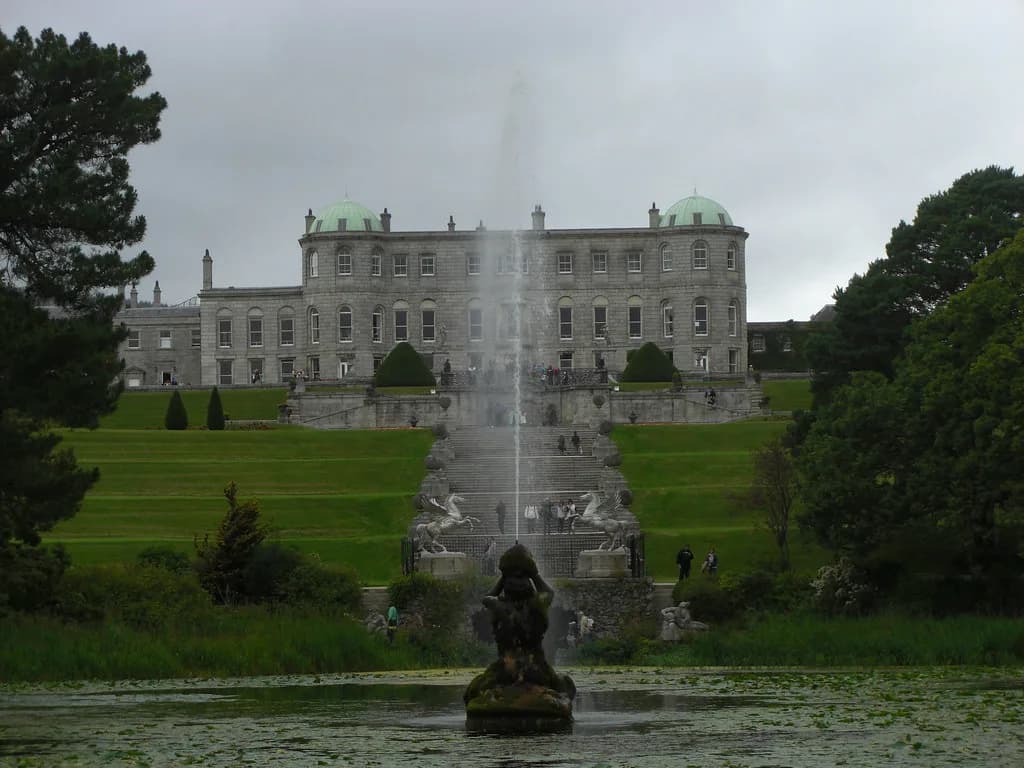
Powerscourt is the designed-landscape visit. The Tourism Ireland description places the house's completion in 1741 and the garden design in the 1860s under the architect Daniel Robertson, with green terraces cascading to Triton Lake, overlooked by the Great Sugar Loaf mountain. Beyond the terrace view, the same page describes Japanese gardens, a tower valley, and a walled garden holding hundreds of heritage roses with a herbaceous border of plants chosen by Lady Powerscourt. Our Powerscourt House and Gardens guide follows the terraces in more detail.
One small feature that rewards a detour is the Pet Cemetery, described as the resting place of the Wingfield and Slazenger families' pets. It is the kind of detail that shows an estate garden is also a lived-in place rather than a display. The same page mentions the free estate app with self-guided audio tours and themed trails for visitors who want the design history explained as they walk.
Two ticketing distinctions matter. Garden tickets can be bought online in advance or on arrival, and the boutiques, cafés and artisan shops inside Powerscourt House can be visited without a garden admission ticket, which makes the house a viable stop on a wet or rushed day. Powerscourt Waterfall sits around six kilometres from the gardens and has its own separate admission ticket; it is not covered by a garden ticket.
Kilmacurragh: The National Botanic Garden of Ireland in Wicklow
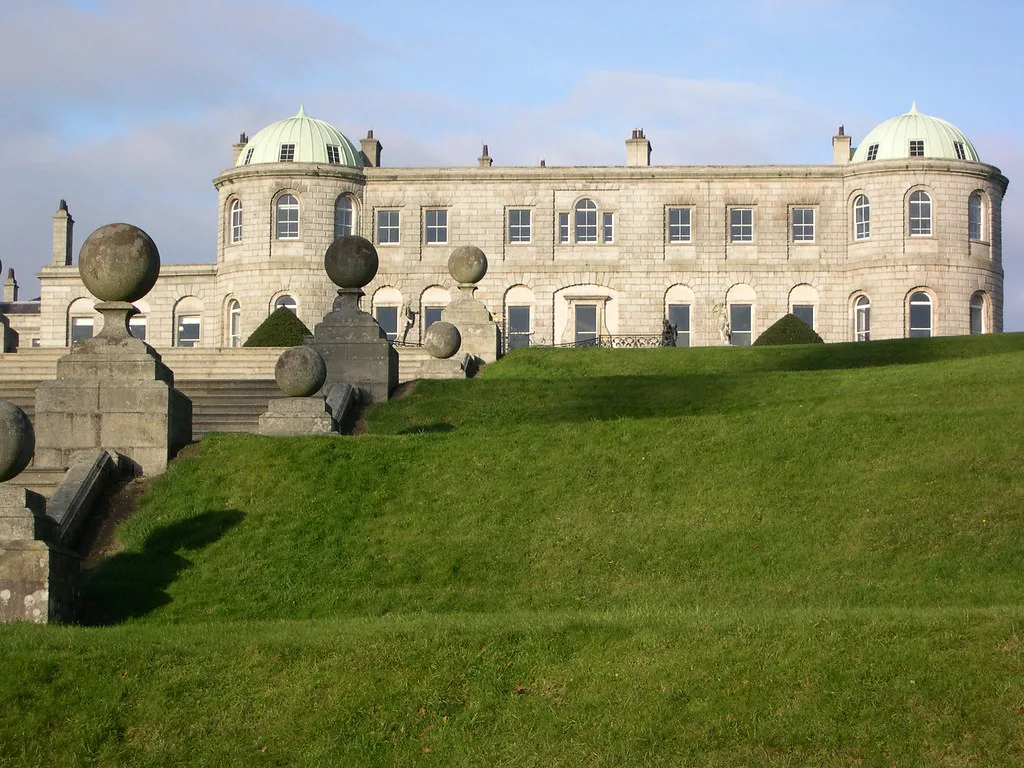
Kilmacurragh is the botanic visit, and the only one of the five that is a national collection. Heritage Ireland records a monastery on the site in the seventh century, with a religious foundation surviving until the dissolution of the monasteries, before the land passed to the Acton family. By the time Thomas Acton inherited the estate in 1854, a period of botanical and geographical exploration was under way, and he built a pioneering garden in collaboration with the curators of the National Botanic Gardens.
In 1996 a 21-hectare portion of the old demesne became part of the National Botanic Gardens of Ireland, and the following decade was spent restoring its rare plants. The site now provides a collection complementary to the parent garden at Glasnevin. The stated holdings are 180 species of rhododendrons and more than 420 varieties, with an annual Rhododendron Week in April and spring walks where fallen blossoms form a magenta carpet.
Admission is free, which changes the planning calculus but not the access rules. Heritage Ireland publishes a season from mid-February to October with opening from 9am to 5pm and last admission at 4.30pm, and from 1 November to mid-February from 9am to 4.30pm with last admission at 4pm; the gardens close on 25 December. The same page carries a separate all-year notice of daily 9am to 4.30pm opening, so treat the seasonal table as the governing times and confirm before travelling. The site also warns that weekends can get very busy and that gates may be closed at certain times if maximum capacity is reached.
Other practical points are firm. There is no parking outside the gardens, so arriving by car means using the site car park rather than roadside space, and booking is essential for all bus and coach tours. Dogs are welcome but must be kept on a lead, while the restrictions list also names assistance dogs only, so confirm the position before bringing a pet. Facilities include an Acton Café, picnic area and walking trails, and the page notes challenging access in places alongside wheelchair-accessible facilities.
Russborough House: A Walled Garden Inside Parklands
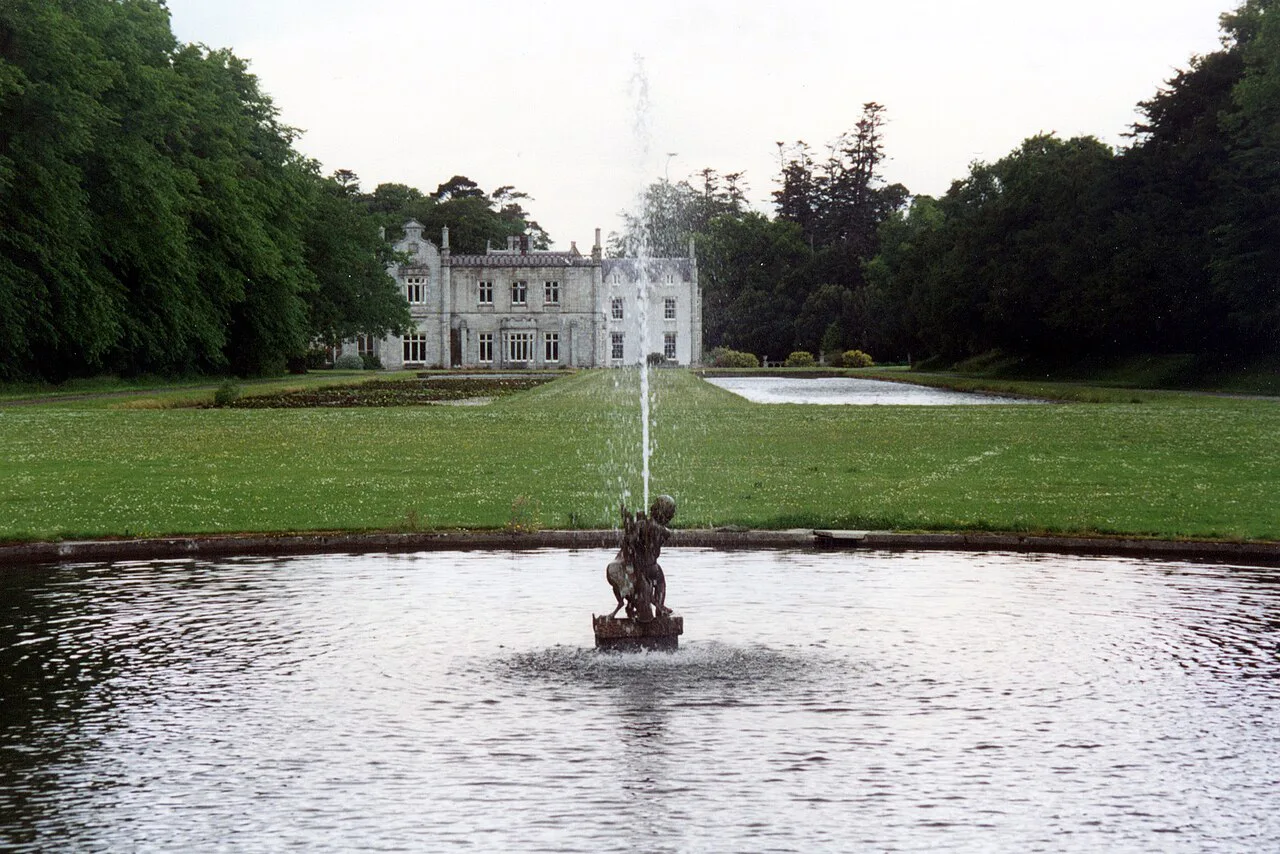
Russborough is best treated as a parklands visit with a walled garden rather than a garden with a house attached. The operator's visit page lists parklands open daily from 9am to 6pm, with a walled garden, playground, walking trails and a parklands map marking those points of interest. The walled garden publishes limited weekly hours rather than parklands hours, so check those separately before relying on it, and our Russborough House guide covers the house itself.
The house is a separate decision with its own published times. Guided house tours run Monday to Friday from 12pm to 3pm and Saturday and Sunday from 10am to 4pm, on the hour, while public guided tours are listed on Saturdays, Sundays and bank holidays at 2.30pm, 3.30pm and 4.30pm. All-day parking costs €4, payable by coins or contactless and free for members; the café opens daily from 9.30am to 5pm with food served to 4.30pm, and the shop runs daily from 9.30am to 5.30pm. The operator lists a range of ticket options from house tours to park tickets, so check which ticket you need for the areas you plan to visit.
One current limitation needs checking before you go. Russborough has posted that the wheelchair lift serving the house and shop is out of service, so wheelchair access to those two areas is temporarily unavailable, and the team invites contact on +353 45 865 239 with access questions. Treat this as a live service notice rather than a permanent closure, and confirm the position when planning.
Avondale: A Forest Park with Walled Gardens
Avondale belongs on a gardens list with a clear caveat: it is a forest park, not a formal ornamental garden. Beyond the Trees Avondale describes forest park trails, walled gardens, Avondale House, the Coillte Pavilion on the role of forests, and the Seed Café. The historical hook is Avondale House as the birthplace of Charles Stewart Parnell, alongside the site's claim as the place where Irish forestry began.
The main draw is vertical rather than horticultural. The treetop walk and viewing tower are described by the operator as the first of their kind in Ireland and as fully accessible, taking visitors up into the canopy and high above the forest floor for views over Wicklow, with a spiral slide or a gently sloping boardwalk for the descent and a marble run along the way. Read the walled gardens as a quieter add-on rather than the reason for the trip.
Choosing Between the Five by Garden Type
If you want historic formality and a defined season, choose Killruddery. If you want designed terraces, water and a walled garden with strong views, choose Powerscourt, and keep the waterfall on a separate ticket if you plan to add it. If you want plants rather than architecture, and free entry, choose Kilmacurragh, but plan around last admission and the possibility of weekend gate closures.
For an easy half-day on open ground, Russborough's parklands and walled garden are a separate choice from the house tour, entered on a park ticket rather than a house ticket, and Avondale suits anyone who wants a canopy walk, an accessible route and forest trails more than clipped borders. Dog owners face conflicting published guidance at Kilmacurragh, where dogs are said to be welcome on a lead but assistance dogs only is also listed; Killruddery bars dogs from the formal gardens. If your day leans toward built heritage instead of planting, our guide to castles in county galway applies the same choose-one-site approach to four very different ruins. For the earlier equivalent of that approach in the burial and ceremonial landscape, our guide to ancient sites ireland asks the same single-site question of tombs, forts and trackways. Tickets are sold online or on arrival where stated, so check the operator page for your chosen day.
Plan Your Garden Day in Wicklow
Pick one type of garden per day rather than trying to tick off all five. A formal garden, a designed estate terrace, a botanic collection, parkland with a walled garden and a forest park each repay unhurried time, and stacking visits across County Wicklow is rarely a good trade. The same logic of choosing by type rather than by quantity applies to ancient sites ireland, where tombs, forts and trackways reward the same slow approach.
Before you travel, confirm the season, last-admission time and any access notice on the operator's own page, since garden hours change with the calendar and live service issues can alter what is reachable. That single check protects the day more than any other preparation.
Explore more Ireland guides
Frequently Asked Questions
Which gardens in Wicklow can you visit for free?
Kilmacurragh, the National Botanic Garden of Ireland's Wicklow site, has free admission, and its grounds are free to enter and explore. It still has published seasonal opening hours and last-admission cut-offs, and the gates can be closed at busy weekends when capacity is reached. Other properties on this list may charge for garden tickets or parking, so check each operator's visit page.
Do you need a separate ticket for Powerscourt Waterfall?
Yes. Powerscourt Waterfall is around six kilometres from the gardens and part of the same estate, but access requires a separate admission ticket from the garden ticket. Do not assume a garden ticket covers both.
Can you visit Powerscourt's shops and cafés without a garden ticket?
Yes. The boutiques, cafés and artisan shops within Powerscourt House do not require a garden admission ticket, so the house is a workable stop even if you skip the gardens. Garden tickets can be bought online in advance or on arrival.
Are dogs allowed at Kilmacurragh and Killruddery?
At Kilmacurragh the page is not consistent: one notice says dogs are welcome but must be kept on a lead at all times, while the restrictions list names assistance dogs only. Confirm before bringing a pet. At Killruddery, dogs are not permitted in the formal gardens, although members can use the farm roads for local dog walking.
Is Kilmacurragh ever closed because it is too busy?
It can be. Heritage Ireland warns that the gardens get very busy at weekends and that gates may be closed at certain times if the site reaches maximum capacity. Arriving earlier in the day and checking the site notice before you travel reduces the risk of a wasted journey.
Do you need a house ticket to walk Russborough's parklands?
Parkland access and house admission are separate. The parklands, including the playground and walking trails, are listed as open daily from 9am to 6pm, with all-day parking charged separately, while the walled garden keeps its own limited weekly hours. House tours are a separate decision with their own published times.
Is the Avondale treetop walk accessible?
The operator describes the treetop walk and viewing tower as fully accessible and as the first of their kind in Ireland. Descent options include a spiral slide or a gently sloping boardwalk, so visitors who prefer a slower route are not obliged to use the slide.
Sources
You might also like



Continue reading
More guides you'll find useful



