
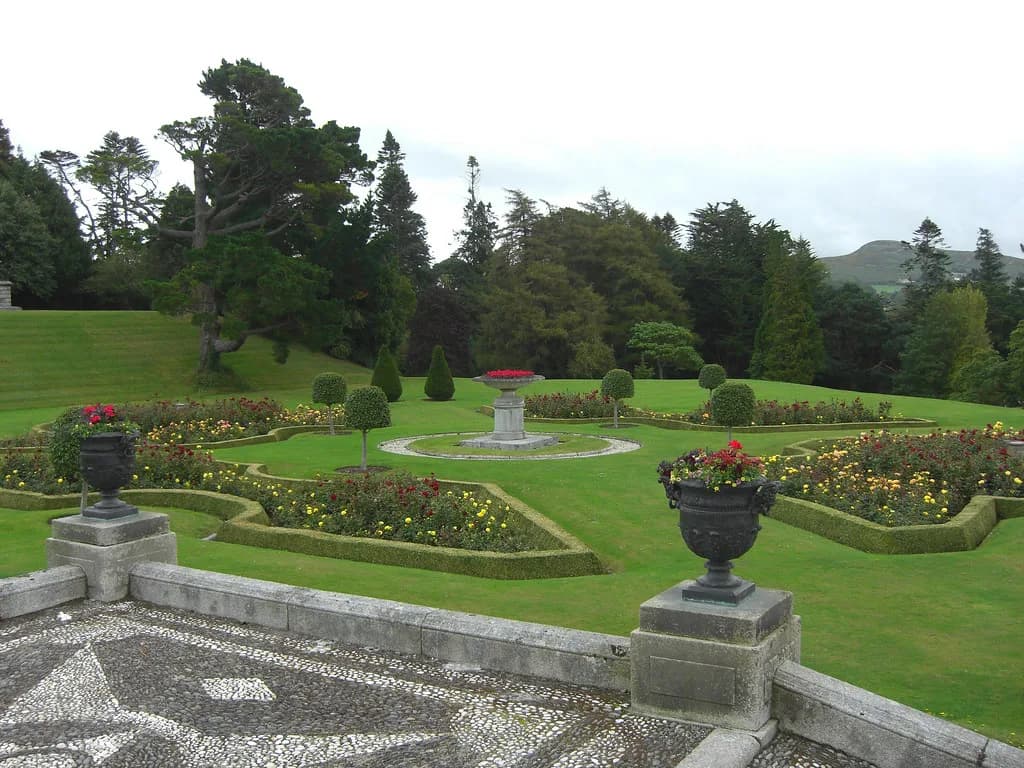
Powerscourt House: House and Gardens Visitor Guide
Plan a visit to Powerscourt House in County Wicklow: the restored house now holds shops and cafés, while the ticketed gardens offer terraces and Triton Lake.
On this page
Powerscourt House is a restored 18th-century Palladian house in County Wicklow, and visitors come for the designed landscape around it rather than for a tour of original historic rooms. The building itself now serves shoppers and diners, while the terraces, lake and wooded gardens carry the visit. Understanding that split before you set out keeps expectations and ticket spending in line with what is actually there.
The estate lies at the foothills of the Wicklow Mountains roughly 20 kilometers south of Dublin, close enough to pair with a wider day in the county. Use this guide to decide how much time the gardens deserve and which parts of the visit need a ticket.
What Powerscourt House Is Today
Powerscourt House was completed in 1741 and was praised at the time for carrying the character of a great Italian Renaissance villa, a description that still explains its formal, symmetrical appearance. What stands today is a restored building rather than a sequence of furnished period rooms, so the architecture is best appreciated from outside and from the garden terraces looking back at it.
Inside, the house contains artisan shops, boutiques and cafés, and it also hosts events such as weddings and corporate gatherings. An independent visitor account describes the interior as commercial in use rather than historical in presentation, which is a fair way to set expectations. Come for the setting and the shopping, not for guided walks through state rooms.
Setting Expectations: Who This Visit Suits
If your priority is original furniture, plasterwork and room-by-room interpretation, Powerscourt House will not satisfy it, and time is better spent at a property that presents historic interiors. If your interest is architecture seen from outside, a formal designed landscape, and an easy outing from Dublin, the estate works well. The trade-off is straightforward: you gain an accomplished garden composition and lose the indoor museum experience. The same contrast between heritage and commercial presentation shapes a day in the capital, as our Dublin heritage guide explains.
Families and mixed groups tend to find the balance useful, since the grounds offer open walking while the house gives somewhere to sit and eat. Travellers with limited mobility should look at the estate's own access information before booking, as the terraces involve changes of level.
The Designed Landscape: Terraces and Triton Lake
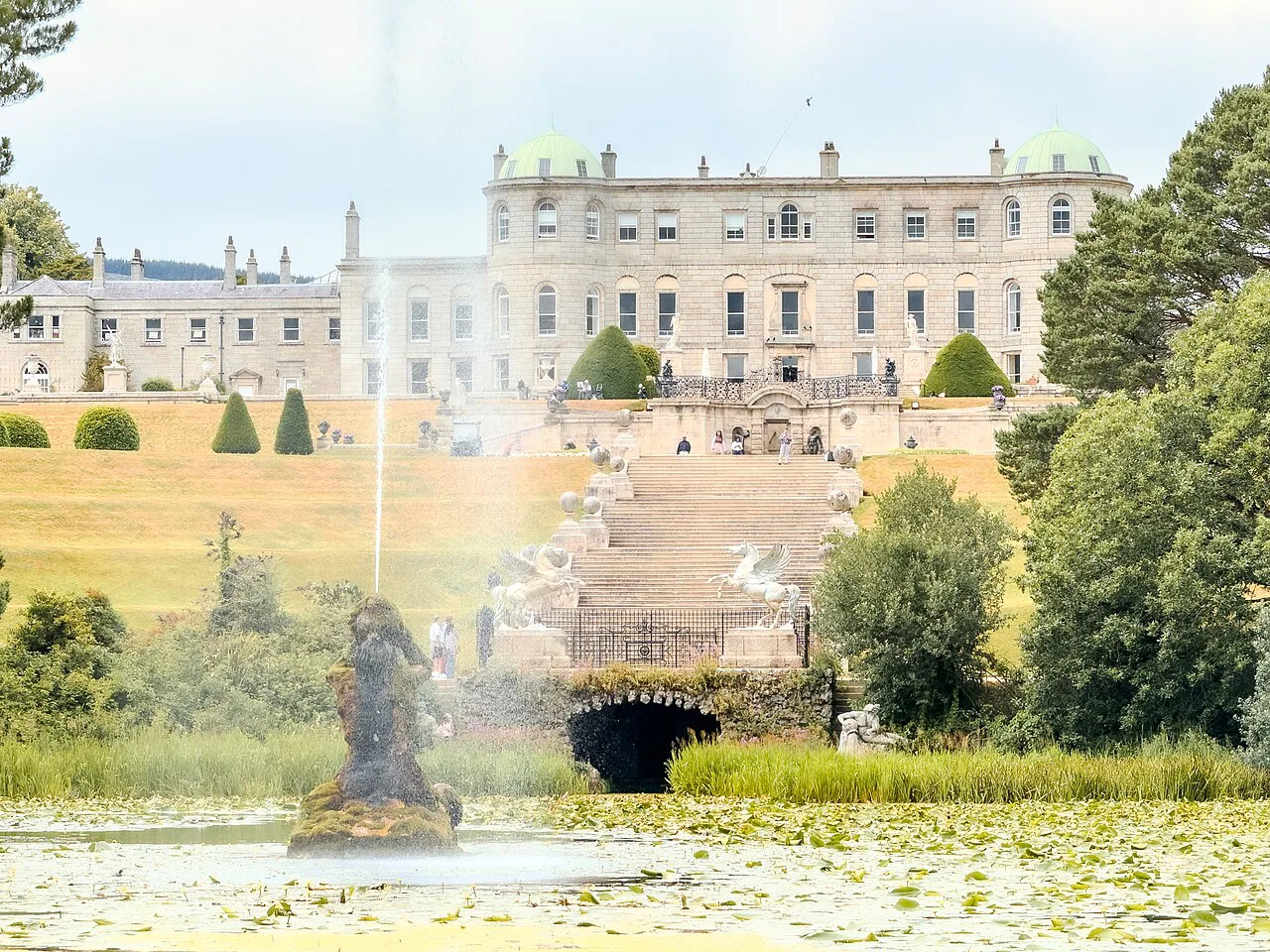
The garden's signature view comes from the upper stone terrace, where the ground falls away toward Triton Lake and the Great Sugar Loaf mountain rises beyond. The terraces were designed in the 1860s by the architect Daniel Robertson, and the composition is deliberately theatrical, built to be read from the top step downward. It is the strongest reason to pay for garden admission.
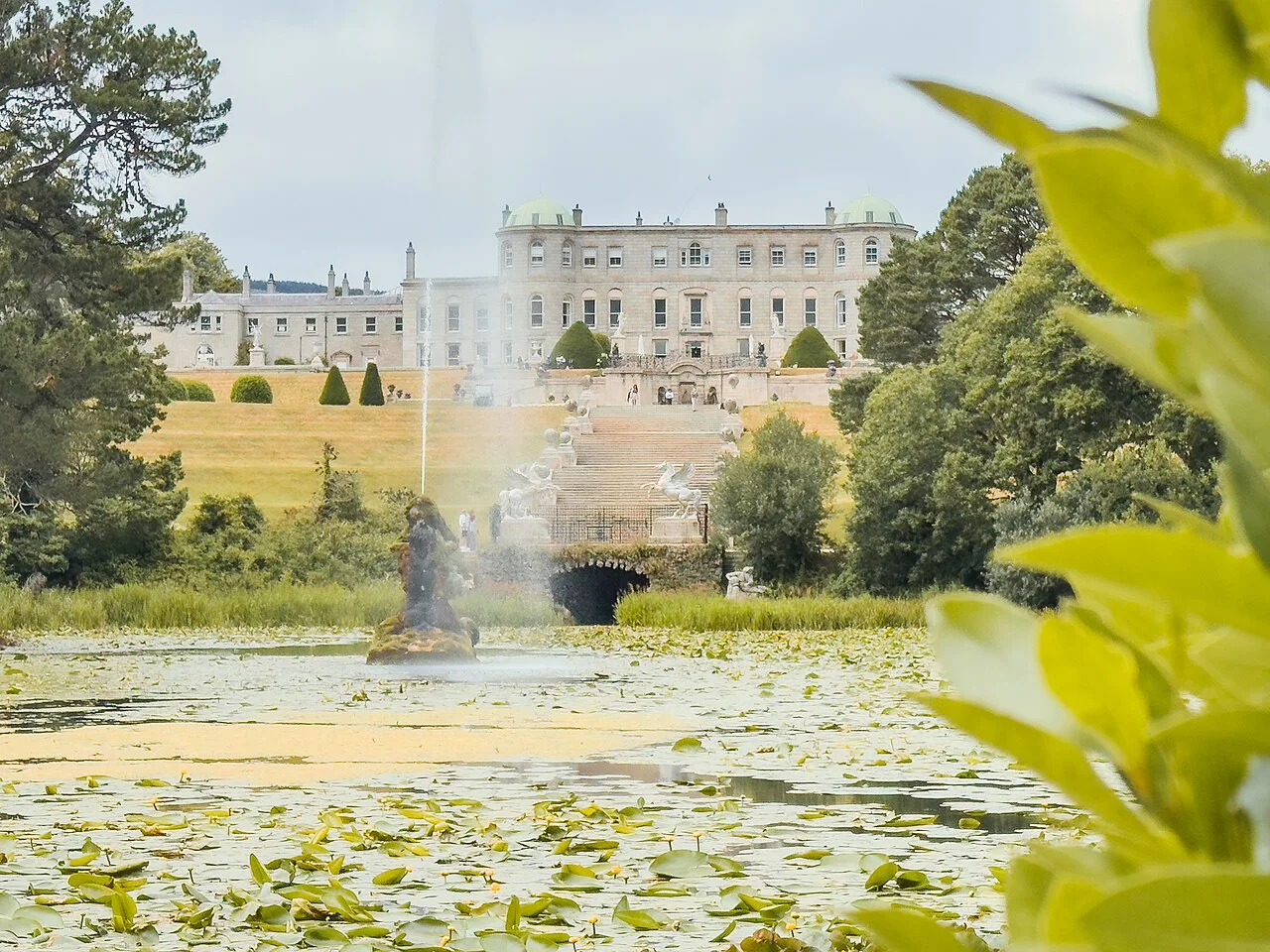
At the lake, lily pads and a pair of winged horse sculptures frame the water, giving the lower level a focal point that rewards the walk down. The terrace faces open country, so the view changes considerably through the day. Allow time to walk back up rather than treating the descent as a one-way trip.
Garden Areas Worth Seeking Out
Beyond the main terrace, the Japanese gardens with their small pagodas offer a quieter, enclosed counterpoint to the open views. The tower valley, marked by a stone tower in a sheltered setting, gives another distinct stop. Treat these as separate destinations within the grounds and pace yourself accordingly.
The walled garden is among the oldest parts of the estate and holds hundreds of heritage roses, with an herbaceous border containing plants chosen by Lady Powerscourt, wife of the 7th Viscount. For anyone interested in planting design rather than scenery, this is the most rewarding section. The Pet Cemetery, resting place of the Wingfield and Slazenger families' animals, adds an unexpectedly personal note.
Visitors who enjoy comparing garden styles across the county can extend the theme through the broader set of Gardens in Wicklow, which ranges from formal demesnes to informal woodland collections.
Trees and Pacing Your Visit
The grounds are notable for specimen trees, including Douglas firs, cedars and redwoods, and the woodland paths reward slow walking. A first-person account suggests allowing about two to three hours for the gardens. Plant lovers and photographers should plan on longer, since side trails multiply the possible routes.
A practical rhythm is to take the terrace and lake first while you are fresh, then work through the walled garden and woodland walks. Leave the shops and café for the end, when a seat indoors is welcome. Because the most striking views sit close to the house, even a short stop feels complete.
Tickets, Access and Self-Guided Tours
Garden entry is ticketed, and visitors can either book online in advance or buy tickets on arrival. Booking ahead is sensible for anyone on a tight schedule or travelling in a group, while buying on the day preserves flexibility if the weather turns.
A free Powerscourt Estate app supplies self-guided audio tours and themed trails covering the history and design of the gardens, which suits visitors who prefer to move at their own speed. It is a useful substitute for a guided walk, especially for first-time visitors who want context at each terrace.
One older travel account quotes an adult garden ticket at €11.50 and winter closing at 16:30, with last admission 30 minutes before closing. Those figures are that blog's own and may be out of date, so treat them as a prompt to check rather than as current facts. Confirm current prices, hours and last entry with the estate before travelling.
What You Can Do Without a Garden Ticket
You do not need a garden admission ticket to browse the boutiques, artisan shops and cafés inside Powerscourt House. That makes the house a legitimate stop in its own right, whether you want independent Irish retailers, a coffee, or a meal at the Avoca Terrace Café overlooking the grounds. For a rainy hour or a short break on a longer drive, it is a low-commitment option.
Parking is described as free and easy to find in the same independent account. The 44 bus connects Dublin with Enniskerry village, but it stops in the village rather than at the estate, leaving a walk of roughly two kilometers on arrival. Check routes and timetables with the transport operator before relying on them.
Beyond the Gardens: Waterfall and Village
Powerscourt Waterfall sits several kilometers from the gardens, around six kilometers by the tourism authority's account, and requires a separate admission ticket. At 121 meters it is described as the highest waterfall in Ireland, set in a valley beneath Djouce Mountain and the Great Sugar Loaf. Woodland paths lead to it, and a small kiosk operates at weekends and daily in summer.
Budget separately for the waterfall and plan to drive between the two sites, since the gap is too long to treat as a garden extension. The village of Enniskerry, a short drive from the estate, offers cafés and traditional pubs as a post-visit stop.
Pairing Powerscourt with Nearby Wicklow Sights
Glendalough, with its monastic remains and lakeside trails, lies within the same county and pairs naturally with a Powerscourt morning. Wicklow Mountains National Park suits anyone wanting longer hill walks after the formal gardens. These are separate attractions, not parts of the Powerscourt estate, so plan travel time between them rather than assuming a single ticket covers everything.
For a contrasting house-and-garden day, nearby Avondale and Killruddery House are named among County Wicklow's other draws. Beyond the Trees at Avondale offers a treetop walkway through the forest canopy, while Killruddery House and Gardens is noted for its horticultural heritage. Choosing one of these alongside Powerscourt rather than both keeps the day realistic.
Travellers who enjoy comparing designed landscapes can continue to Mount Usher Gardens, named among the county's nearby attractions. Check each estate's own published information for current access before building a day around it.
Who Powerscourt Suits and How to Plan
Powerscourt House rewards visitors who want architecture viewed in a designed landscape, a strong terrace-and-lake composition, and a relaxed hour among shops and cafés. It does not reward anyone hoping to walk through furnished historic rooms, and knowing that in advance is the single most useful planning decision. Allow two to three hours for the gardens alone, and longer if plants and trees are your main interest.
Decide in advance whether you are paying for the gardens only, adding the waterfall, or simply stopping at the house. Book garden tickets online if your timing is fixed, and confirm current prices and opening hours with the estate before travelling. Pair the visit with one nearby Wicklow sight rather than several, so the day stays comfortable. For a wider comparison of garden visits, explore our guide to Irish gardens. For another heritage guide, read about Russborough House.
Explore more Ireland guides
Frequently Asked Questions
Is Powerscourt House worth visiting if you want to see historic rooms?
Not if period interiors are your priority. The restored house is used for shops, boutiques, cafés and events rather than presenting original historic rooms to tour. Visitors wanting furnished state rooms should look at a house that interprets its interiors. The reason to come to Powerscourt is the designed landscape outside, especially the terraces and the view down to Triton Lake.
Can you visit Powerscourt House shops and cafés without a garden ticket?
Yes. The boutiques, artisan shops and cafés inside the house can be browsed without buying garden admission, so the house works as a stand-alone stop for shopping or a meal. The gardens themselves are ticketed, and you need a garden ticket to walk the terraces, lake and woodland paths.
How long should you allow for Powerscourt House and Gardens?
Plan on roughly two to three hours for the gardens according to one visitor account, which covers the main terrace, Triton Lake, the walled garden and a woodland loop at an easy pace. Anyone seriously interested in trees and planting should add more time, since side trails extend the walk. Add separate time if you also plan to drive to the waterfall.
Is Powerscourt Waterfall included in garden admission?
No. The waterfall is a separate site several kilometers from the gardens and requires its own admission ticket. It stands around 121 meters and is described by the national tourism authority as the highest waterfall in Ireland. Plan to drive between the two and budget separately for each.
Do you need to book Powerscourt gardens in advance?
Booking is not the only option, since tickets can also be bought on arrival. Booking online helps if you have a fixed schedule or are travelling in a group, while buying on the day keeps plans flexible. Check current prices, opening hours and last admission before you go.
What is the relationship between Powerscourt House and the terraces?
The house was completed in 1741 in a Palladian style, while the terraces below it were designed in the 1860s by the architect Daniel Robertson. Together they form a single composition, with the garden viewed from the upper stone terrace and the Great Sugar Loaf rising beyond Triton Lake. The house anchors the view rather than being a separate attraction.
Sources
You might also like



Continue reading
More guides you'll find useful




