
Russborough House: A Visitor Guide to the Wicklow Estate
Plan a visit to Russborough House near Blessington, County Wicklow: an eighteenth-century Palladian house with art-filled rooms and around 200 acres of parklands.
On this page
Russborough House stands near Blessington in County Wicklow: an eighteenth-century Palladian house whose interiors hold fine art and antiques, set within roughly 200 acres of parklands. A visit is best understood as two separate experiences, a guided look inside the house and a walk through trees, planned vistas and pathways. The operator treats these as distinct access arrangements rather than one all-inclusive ticket.
The house matters for more than its Palladian facade. Its collection carries a twentieth-century story involving collector Sir Alfred Beit and a series of well-documented art thefts, and some famous paintings once associated with the estate now belong elsewhere. That is why looking at what actually hangs in the rooms is more rewarding than checking off a list of master names.
A Palladian House Near Blessington
The operator describes Russborough as a Palladian house of eighteenth-century date, set within 200 acres of parklands that it treats as integral to the estate's heritage. That combination of formal architecture and designed landscape is what distinguishes a visit here from a single-building stop. The house is the centrepiece, but the grounds are presented as part of the same inheritance rather than as leftover land.
One publisher places the estate about five kilometres southwest of Blessington, which makes it a straightforward addition to a day in west Wicklow. If you are building a wider garden itinerary, our guide to gardens in wicklow sets Russborough beside other designed landscapes in the county.
The Architecture and Its Builders
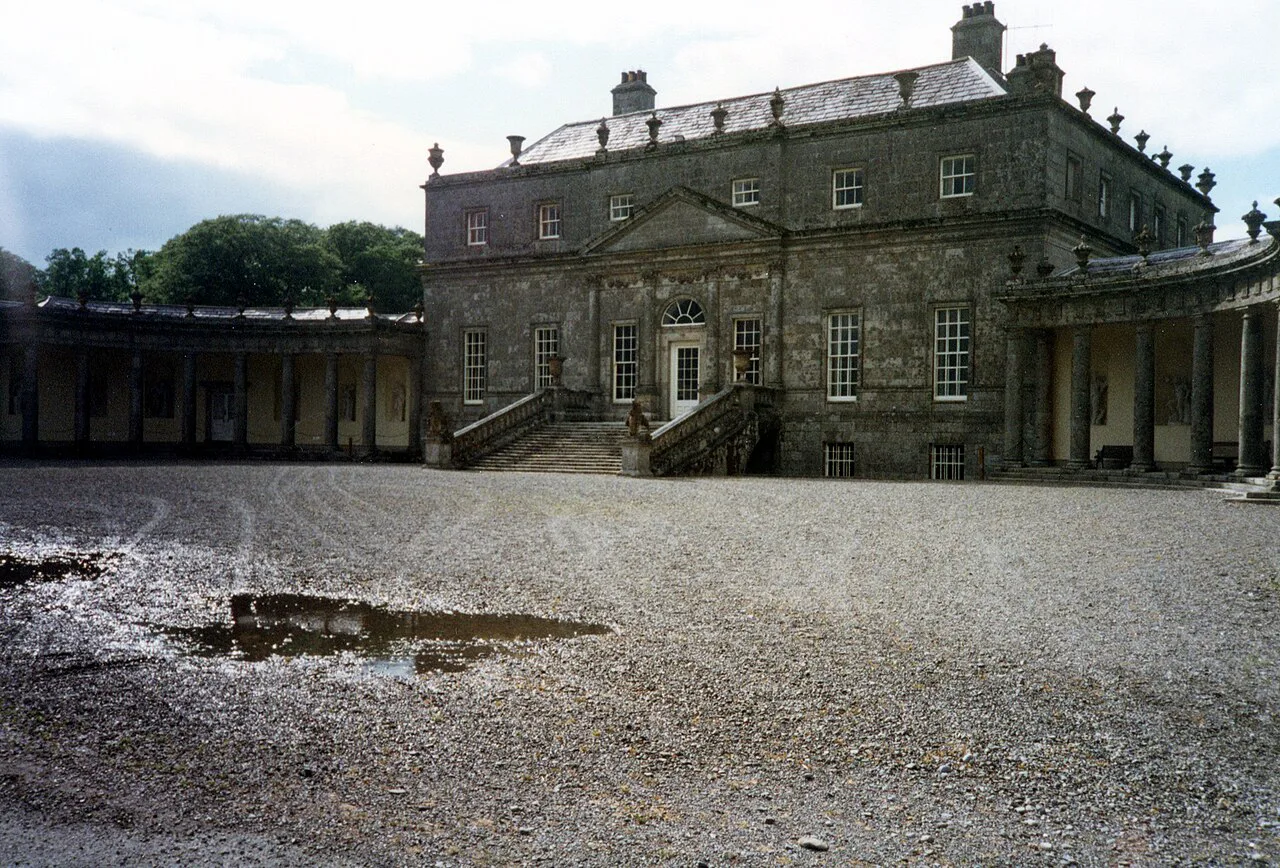
Historical accounts credit the house to Joseph Leeson, later first Earl of Milltown, with Richard Cassels as architect. One publisher adds that Cassels did not live to see the work finished and that Francis Bindon completed it, a claim worth treating as that account's detail rather than settled fact. What is consistent is the Palladian design and the mid-eighteenth-century setting.
A second travel publisher gives construction dates of 1741 to 1755 and names Cassels as architect, while the first gives 1741 to 1751. Because the operator's own page fixes no completion year, this guide deliberately avoids one. If exact chronology matters to you, read the dates as a period rather than a single event; the surviving interior decoration tells you more about the house than any one year can.
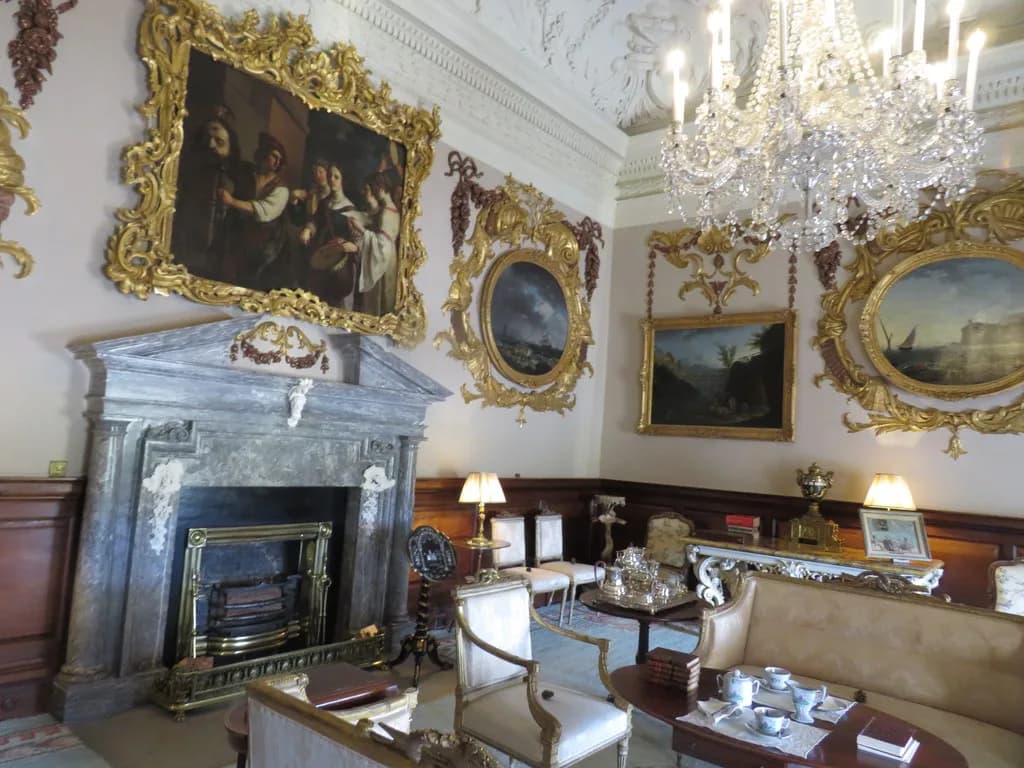
Externally the house reads as austere Palladian geometry; internally the same building opens into decorated rooms with plasterwork, furnishings and chandeliers. That contrast between plain outside and enriched inside is the standard Palladian performance, and it is the reason a guided walk through the rooms repays attention to ceilings and doorcases as much as to paintings.
Inside the House: Rooms, Art and Antiques
The operator describes rooms filled with fine art, antiques and the stories of people who lived there, with architecture and craftsmanship presented alongside the collections. Visitors are shown the house through guided tours rather than free wandering, so the commentary frames what you are looking at. Expect bedrooms, dining and reception rooms rather than a single gallery hang.
Because the tour is led, the experience depends on the guide as much as on the objects. Listen for the distinction between pieces owned by the family, pieces donated elsewhere and pieces on loan or retained, since the house's collecting history is unusually tangled. If a particular painting is your reason for coming, ask the operator before booking whether it is on view, because displays shift.
The Beit Era and the Collecting Story
Sir Alfred Beit bought the house in 1952, according to secondary accounts, and used it to display master paintings by artists including Rubens, Goya and Vermeer. That purchase marks the moment Russborough became associated with old master collecting rather than merely with Georgian architecture. These details come from published histories, not from the operator's own description of the house today.
The collection's fame brought trouble as well as prestige. One published account records a 1974 raid in which paintings were taken and later recovered, then a 1984 theft organised through a Dublin criminal, with most of that haul also recovered, followed by further break-ins including attempts in 2001 and 2002. The details are dramatic, but the point for a visitor is simpler: the collection has been dispersed, damaged and recovered over decades.
In 1988 Beit donated the most valuable works to the National Gallery, so part of Russborough's art story now belongs to a national institution in Dublin. That is why the names associated with the estate do not map neatly onto the walls of the house. Read any account of the collection as a history of ownership rather than a current inventory. If you want to understand the collections that received those paintings, our Dublin heritage guide sets out the city's key historical sites.
The Parklands: A Separate, Slower Walk
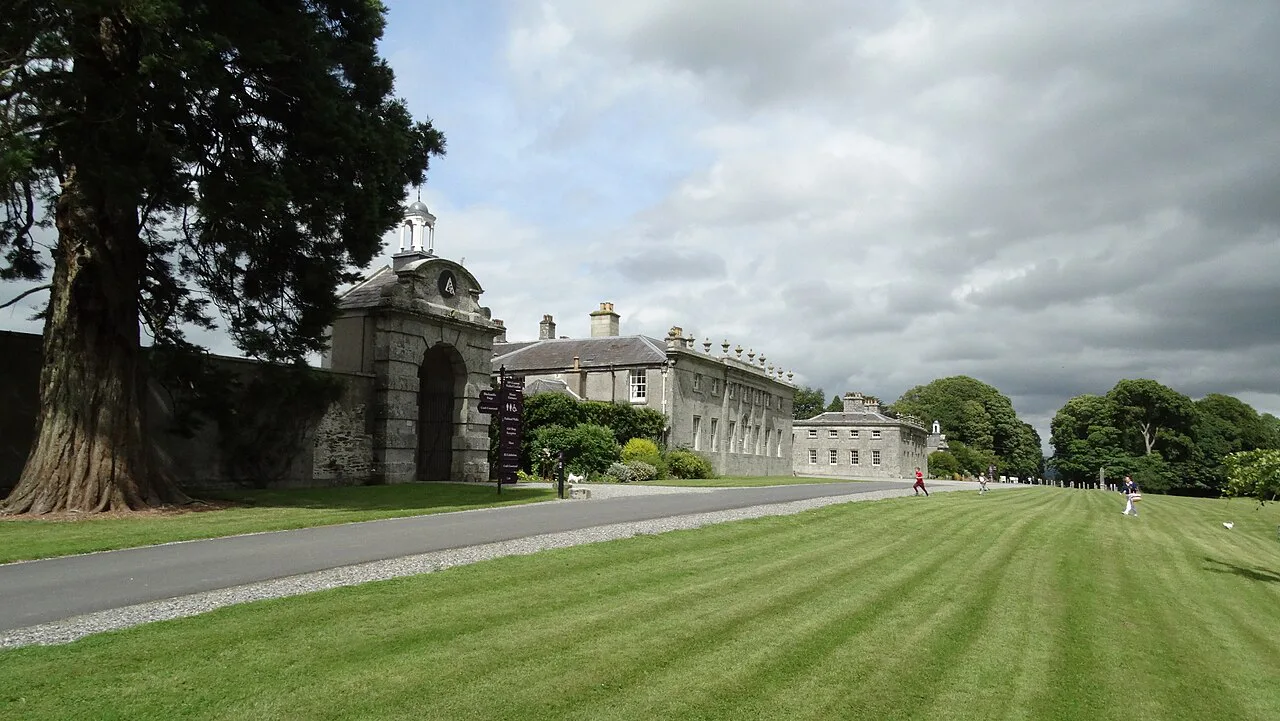
The operator presents the parklands as roughly 200 acres shaped over centuries, with ancient trees, planned vistas and hidden pathways. This is designed landscape, not rough ground: the interest lies in sightlines, tree planting and the way paths open onto views. Give the grounds their own time slot instead of squeezing a walk in before or after a tour.
One publisher describes an eighteenth-century walled garden and a hedge maze within the estate. Because the operator advertises walled-garden days as separate and more restricted, treat those features as parts of the property to confirm rather than amenities open on every parkland day. For a broader survey of formal and informal gardens across the county, see our gardens in wicklow collection and compare Russborough's landscape with the formal terraces at powerscourt house.
Access Modes Kept Separate
The operator distinguishes three ways in: guided house tours, general parkland access, and separate walled-garden days that are more restricted. Do not assume that a day when the estate is open also opens the walled garden, or that a parkland visit includes the house. Plan which of the three you want before you set out, then confirm the current position with the operator.
This matters most for anyone travelling specifically for the garden. A walled garden is a defined enclosure with its own gate, planting calendar and staffing, so its opening pattern can differ from the wider estate's. Check the operator's notices for the dates you intend to travel rather than relying on a general description of the grounds.
Conservation, Charity and Support
Russborough is run as an independent charity, and its own framing is that support helps conserve the house, collection and parklands for future generations. That is a useful frame for a visit: the estate is maintained rather than frozen, and upkeep is continuous. The operator lists membership, patronage and donation as ways to contribute, without obliging anyone to do so.
The operator also advertises programmed events through the year, from music to seasonal gatherings, with details changing by season. If you are considering timing a visit around one, treat the listing on the operator's site as the live schedule and confirm before booking travel. Elsewhere in the county, avondale house offers a contrasting day out in the Wicklow landscape.
Shaping a Wicklow Heritage Day
Russborough works best as the anchor of a half day rather than a quick photo stop: the house tour rewards attention, and the parklands reward a slow loop. Pair it with one other site rather than several, since west Wicklow distances add up. Killruddery House & Gardens offers another estate visit with a different garden character if you want a second designed landscape in the same trip.
For travellers interested in earlier layers of the landscape, the county's upland and monastic remains sit in a different tradition from Russborough's Georgian polish. Our ancient sites ireland guide helps place those monuments in context, and mount usher gardens offers an informal garden contrast to Russborough's formal parkland. Neither is a substitute for the house, but each broadens a Wicklow itinerary.
Before You Go
Confirm the current tour arrangements, estate access and any walled-garden days on the operator's site before you travel, and ask directly about any painting or room you particularly want to see. Treat published histories as context for what you encounter, not as a guarantee of what is on display.
Allow time for both the interior and the grounds, and dress for walking if you plan to explore the parklands properly. The estate is a conservation project as much as a visitor attraction, so a little patience with restricted areas is part of the experience.
Explore more Ireland guides
Frequently Asked Questions
Can you visit Russborough House without joining a house tour?
The operator advertises guided house tours for the interiors and separate access to the parklands. The two are distinct arrangements, so if you only want to walk the grounds, check with the operator that estate access is available on your chosen day. Do not assume a parkland visit includes the rooms.
Is the walled garden open whenever the parklands are?
No such assumption is safe. The operator treats walled-garden days as separate and more restricted than general estate access. Confirm the specific walled-garden opening dates with the operator before travelling, especially if the garden is your main reason for visiting.
What paintings can you see at Russborough House today?
Published accounts link the house with works by Rubens, Goya and Vermeer, but the collection was dispersed over time, including a 1988 donation of major works to the National Gallery. Displays change, so ask the operator whether a particular painting is currently on view rather than relying on older descriptions.
Who built Russborough House and when?
Accounts credit Joseph Leeson, later first Earl of Milltown, with commissioning the house and Richard Cassels as architect, with one publisher adding that Francis Bindon completed the work. Construction dates are given variously as the 1740s to 1751 or to 1755, so treat the chronology as a period rather than a precise completion year.
Why is Russborough House associated with art thefts?
The high-value collection attracted several raids, including a 1974 theft and a 1984 theft organised through a Dublin criminal, with most works recovered. Further break-ins followed, including attempts in 2001 and 2002. These events are part of the collection's history rather than a feature of the current visit.
How long should you allow for the house and parklands?
Plan the house and the grounds as two separate activities rather than one combined stop. A guided interior visit takes focused time, while the parklands reward a slower walk through designed vistas and paths. The operator does not publish a single recommended duration, so build your own schedule around the tour you book.
Sources
You might also like



Continue reading
More guides you'll find useful





