
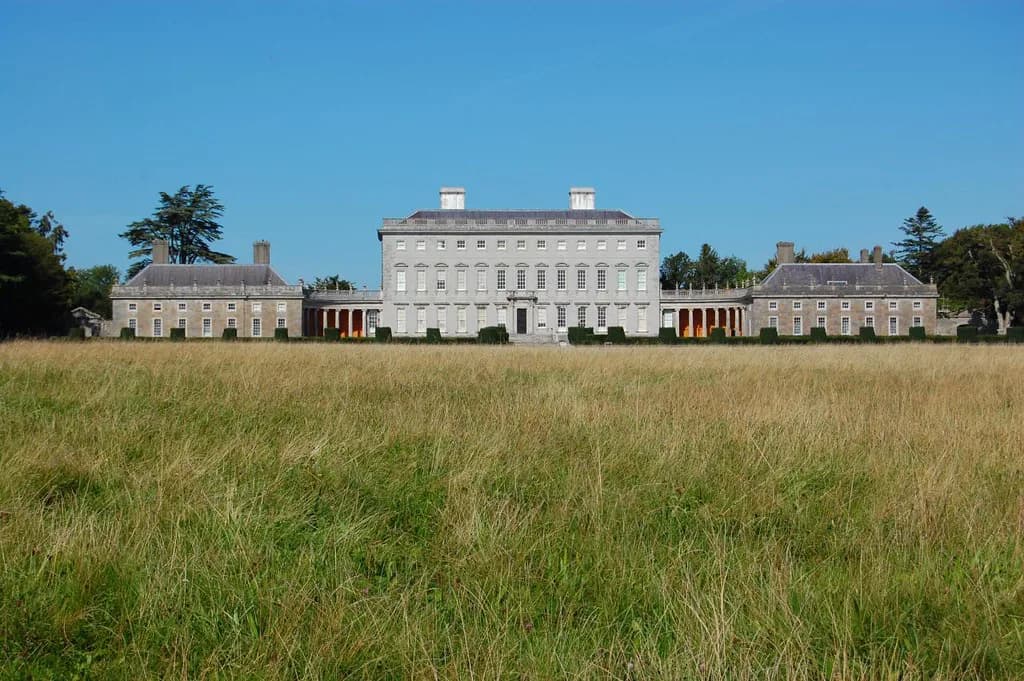
Castletown House, Celbridge: A Visitor Guide to House and Parklands
Plan a visit to Castletown House in Celbridge, County Kildare. See how the 2026 tour season works, when the parklands open and how to arrive from Dublin.
On this page
Castletown House is the great Palladian country house on the banks of the River Liffey at Celbridge, County Kildare, begun around 1722 for William Conolly, Speaker of the Irish House of Commons. Heritage Ireland, which manages the site through the Office of Public Works, describes it as the most splendid Palladian-style country house in Ireland, a framing worth reading as the operator's assessment rather than a neutral ranking.
The practical point that shapes every visit is the split between grounds and house. The parklands open all year, with gates running from 07:00 to 20:30, while the house itself is shown on guided tours within a dated season, published as 15 March to 4 November 2026. Outside that window, treat the interiors as out of season rather than permanently shut, and check the current season before building a trip around a tour.
Where Castletown Sits in Celbridge
The estate meets the village rather than sitting in open countryside: the gate lodges stand at the top of Celbridge's Main Street, so you can arrive by bus or on foot and walk straight in through the gates. From there a lime-tree avenue leads towards the house, and some of those trees are said to date from the 1740s. That arrangement makes Castletown unusually easy to fold into a day that also uses the village itself.
Because the entrance is an ordinary town street, the first impression is not a grand approach but a working village edge. Allow time to walk the avenue both ways rather than treating it as a corridor to the door; the length of the walk is where the estate's scale begins to register. Visitors relying on buses should note that the stops named by the operator are close to these gates, not deep inside the demesne.
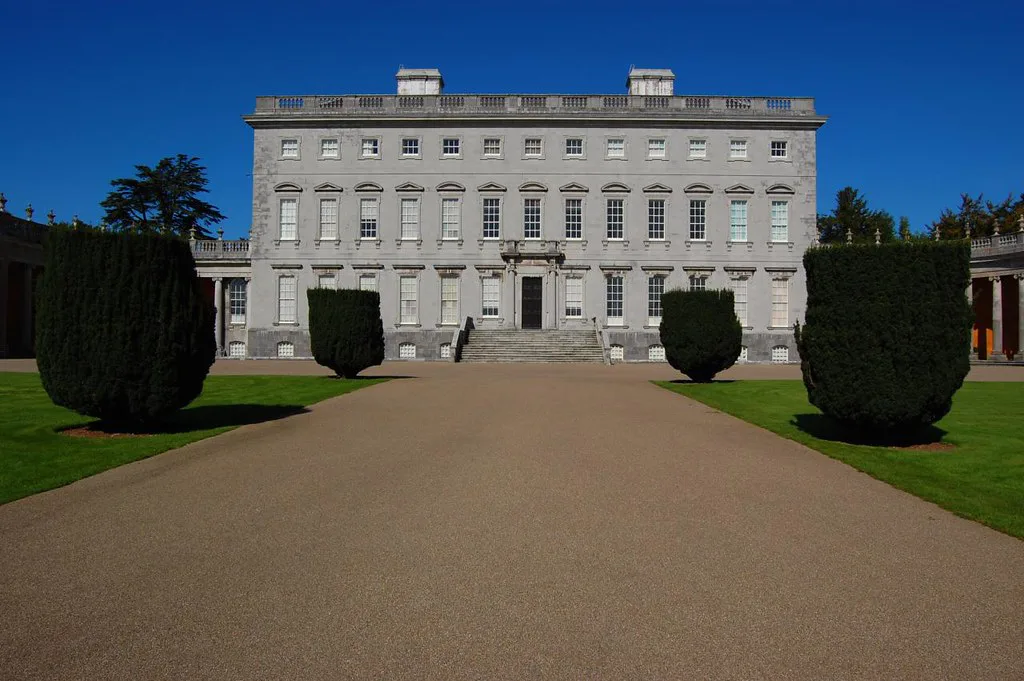
Building for Power: William Conolly's House
Castletown was commissioned by William Conolly, Speaker of the Irish House of Commons, and built from around 1722 to designs attributed to several renowned architects. Heritage Ireland explains the intention plainly: the house was meant to project Conolly's power and to host political entertaining on a grand scale. Reading the facade with that purpose in mind changes what you notice, because grandeur here was an argument about influence as much as a matter of taste.
A secondary encyclopedic account credits Alessandro Galilei with the design and Edward Lovett Pearce with the wings, and places the original estate at roughly 800 acres. Treat those attributions and figures as the secondary source's version rather than settled detail printed on site, and weight the operator's vaguer phrase about several architects accordingly. The useful takeaway for a visitor is simpler: this was a statement house on a large working estate, positioned where politics and landscape met.
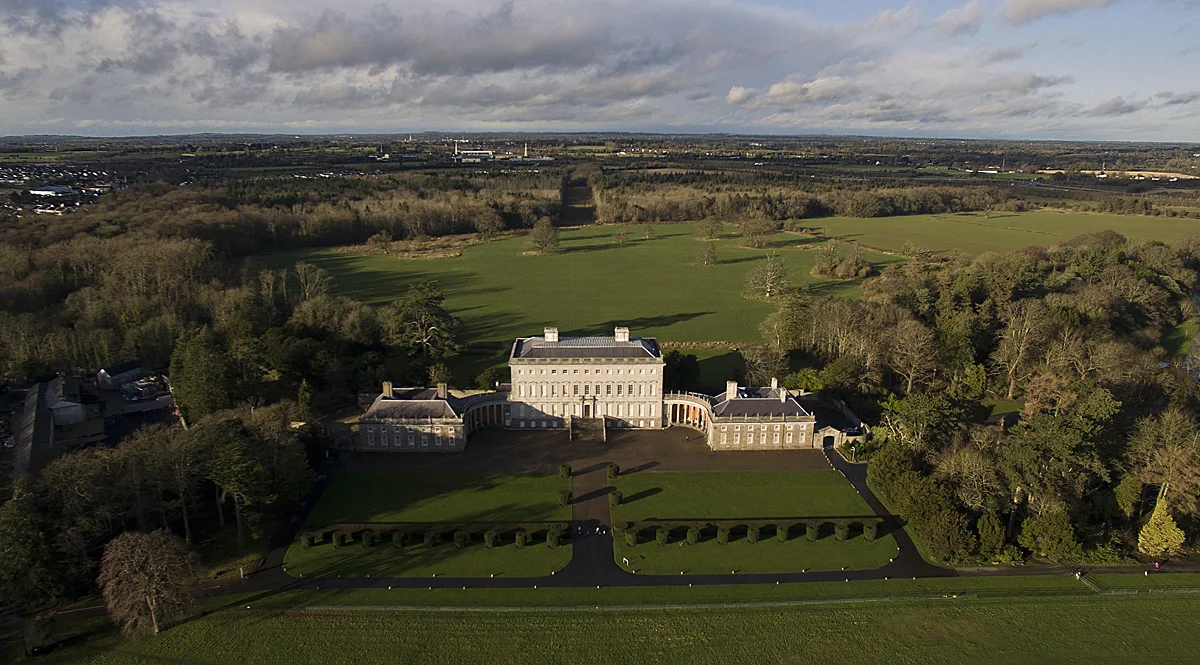
The Conolly Generations and the Interiors
The estate flourished under William Conolly's great-nephew Thomas and his wife, Lady Louisa Conolly, who devoted much of her life to improving the house and its surroundings. The interiors most visitors come to see were largely shaped in that later phase, with work continuing into the 1760s and 1770s. Lady Louisa's letters, paraphrased by the Irish Landmark Trust, record her attention to the gate piers and planting at the Celbridge entrance, a reminder that the estate's edges were part of the design.
If you want to understand how a Georgian country house worked as a political and social machine, this is a strong estate to study. The sequence of rooms, the scale of the entertaining spaces and the long approach all belong to the same programme. It is also a useful comparison point within Irish Georgian Architecture, where similar ambitions were expressed at different scales and budgets. For the capital's own version of that story, pair it with this Dublin heritage guide to the city's key historic sites.
Inside, When Tours Run
Heritage Ireland lists a significant collection of paintings, furnishings and objets d'art, including three eighteenth-century Murano-glass chandeliers and the only fully intact eighteenth-century print room in the country. Those two details are the clearest reasons to time a visit to the tour season rather than settling for the grounds. A secondary account describes the main-floor sequence from the hall through the Green Drawing Room, also called the Saloon, the Red Drawing Room, the Print Room, the State Bedroom and the roughly 80-foot Long Gallery.
The print room is the item to prioritise if your interests lean towards decoration rather than politics: the assembled cut-out prints make it a rare survival, and Heritage Ireland describes it as the only fully intact eighteenth-century print room in the country. Chandeliers and the Long Gallery reward a slower look at ceiling height and light. Guided tours are the route through these rooms, so plan the day around a tour slot rather than assuming you can wander inside.
Rescue, Sale and OPW Stewardship
Castletown's survival was not guaranteed. A secondary history records that the estate was sold in 1965 and later divided, with the house and about 120 acres bought by people intent on saving it, in what it describes as the first major project of the Irish Georgian Society. The same account credits Mariga and Desmond Guinness with a 1967 purchase, and says the house passed to the Office of Public Works in 1994 after the Castletown Foundation struggled with maintenance costs.
The same secondary account describes landscape work under state care, with lake restoration beginning in 2012 and work on the pleasure grounds from 2016. For a visitor, this explains why the grounds read as partly recovered rather than wholly original: the demesne was carved up in the twentieth century, and some features near the house survive while other parts of the wider estate were developed. Walk with that patchwork in mind and the odd gaps make more sense.
The Parklands: A Year-Round Visit
The parklands are the dependable part of a Castletown trip. Heritage Ireland states that they are open all year, with gates from 07:00 to 20:30, which makes an early morning or late afternoon walk feasible if you are staying nearby. The grounds are set among eighteenth-century parkland on the Liffey, so riverside and woodland edges give the walk its variety without requiring a house ticket.
The trade-off is straightforward: a grounds-only visit gives you freedom over timing but no access to the collection, while a house tour anchors your day to a fixed slot. If you have only an afternoon, choose one. If you have a full day, walk the parklands first and take the house tour afterwards, when you have already absorbed the scale of the estate and can read the interiors as part of it.
The Three Gate Lodges
Three gate lodges mark the Castletown entrance and are known locally as the Round House, the Pottery and the Gate House. They form part of the Celbridge streetscape and are now self-catering properties rather than visitor attractions, so admire them from the street instead of expecting to step inside. The Gate House has a definite construction date of 1783, matching family papers that record the gate piers as finished that year, while the Round House's date is less certain.
The Irish Landmark Trust has also gathered memories from the Mercier family, who lived in the lodges in the 1950s and recalled simple furnishings and an outdoor toilet in the first of them. Those recollections are useful because they puncture the idea that estate architecture was always grand: these were modest homes at the edge of a great house's grounds. For how Castletown fits the broader tradition, see Irish Georgian Architecture.
Getting There from Dublin
Public transport is practical here. The C4 runs from Ringsend Road via the city-centre quays to Celbridge; get off at stop 3907 and the Castletown gates are in front of you. The 120 bus, operated by Go-Ahead towards Edenderry, stops at 7085 English Row, from where you walk up Main Street to the gates. By rail, take the W61 bus from Hazelhatch station to Main Street Celbridge, again at stop 3907.
Driving deserves separate checking rather than the same confidence as the bus routes. The operator page carries only a dated notice that car-park access via the M4 was to resume from the afternoon of Sunday 21 December 2025, which is not confirmation that parking is available now. Confirm access before setting out by car, and treat the bus stop at the gates as the more predictable arrival point.
The Courtyard Café, run by Kennedys, is listed as open daily from 09:30 to 17:00, subject to seasonal and site arrangements, so confirm it is trading on the day rather than planning around it. Prices for the house tour and any admission charges are not given on the operator page, so check with Heritage Ireland when you book rather than budgeting from secondhand figures.
Other Estates Nearby
Two other OPW sites make sense as separate outings rather than add-ons to a Castletown day. Maynooth Castle, founded in the early thirteenth century as a FitzGerald seat, has its own bounded 2026 season from 23 April to 23 September, opening 10:00 to 17:45 with last admission at 17:15, and it has no toilet facilities. Farmleigh, a 78-acre estate in Dublin's Phoenix Park, keeps its grounds open daily 10:00 to 18:00 with last entry at 17:00, but its house is closed for the remainder of 2026 for the EU Presidency.
If your interest is the wider estate tradition, Emo Court and Doneraile Court are further Irish estate visits worth considering as separate outings. Each has its own access arrangements, so check before travelling rather than assuming Castletown's pattern applies.
Making the Most of a Castletown Visit
Castletown rewards planning around two timetables. The parklands open all year from 07:00 to 20:30, so a walk is almost always possible; the house interiors depend on a guided-tour season published as 15 March to 4 November 2026. Decide which matters more before you set out, and check the current season if the interiors are the point of the trip.
Arrive by bus or rail from Dublin if you want a predictable start at the gates on Main Street, and treat car parking as something to verify rather than assume. Once inside, walk the avenue, look at the lodges from the street and give the print room its due if you take the tour. Castletown is best read as a political statement that became a public estate, not simply as a pretty facade. For related reading, explore Belvedere House, Gardens and Park.
Explore more Ireland guides
Frequently Asked Questions
Is Castletown House open to visitors now?
It depends which part you mean. Heritage Ireland lists the parklands as open all year, with gates from 07:00 to 20:30, so a walk is generally possible. House interiors are seen by guided tour, and the published season runs from 15 March to 4 November 2026, so check the current dates on the operator page before travelling for the rooms.
Can you walk the Castletown parklands without a house tour?
Yes. The grounds are listed as open all year with gate hours, and the parkland setting along the Liffey is why many people come. A grounds-only visit gives you flexible timing but no access to the paintings, chandeliers or print room, so decide before you set out whether the collection is the point of the trip.
What can you see inside Castletown House?
On a guided tour you see a collection of paintings, furnishings and objets d'art, three eighteenth-century Murano-glass chandeliers and the only fully intact eighteenth-century print room in the country according to Heritage Ireland. Secondary descriptions add the Saloon, Red Drawing Room, State Bedroom and Long Gallery, but the operator page is the source to trust for what is currently shown.
How do you get to Castletown House from Dublin without a car?
Take the C4 from Ringsend Road via the city-centre quays to stop 3907, where the gates are in front of you, or the 120 towards Edenderry to stop 7085 English Row and walk up Main Street. From Hazelhatch rail station, the W61 connects to Main Street Celbridge at stop 3907.
Are the gate lodges at Castletown open to the public?
No. The Round House, the Pottery and the Gate House are self-catering properties at the estate entrance, though they remain part of the Celbridge streetscape. You can see them from the street; the Gate House has a definite 1783 construction date, while the Round House's building date is uncertain and should not be assumed to match.
Sources
You might also like



Continue reading
More guides you'll find useful



