
Irish Landscape Paintings: A Guide to the Tradition
Irish landscape painting moved from Georgian estate views to Romantic and modern visions of the west. See how the tradition developed and where to read it.
On this page
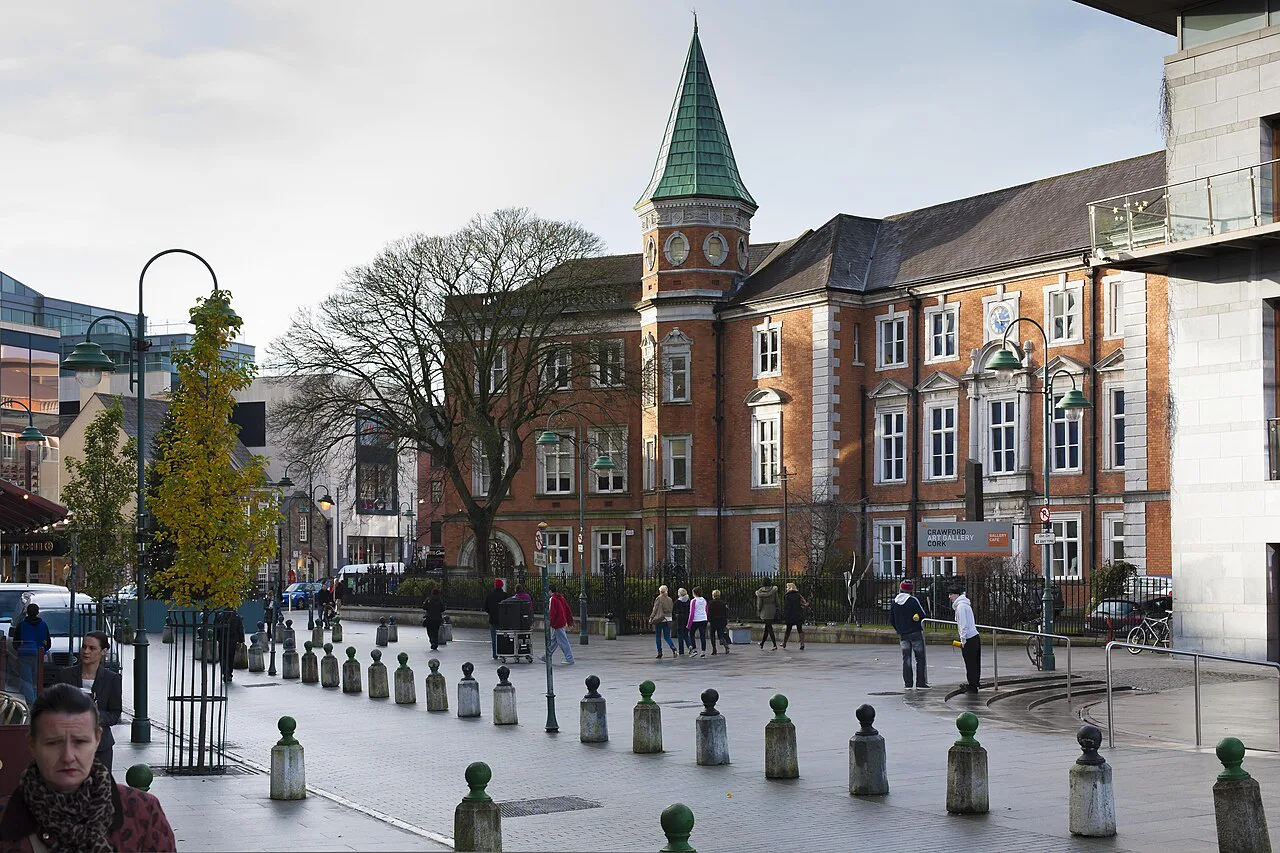
Irish landscape paintings are not a single style but a centuries-long argument about land, labour and national identity. The tradition runs from ordered Georgian estate views through stormy Romantic scenes to cloud-dominated images of the west, and each phase asked a different question about what the Irish countryside was for. Two published sources anchor this guide: the National Gallery of Ireland in Dublin, where works from the national collection can be studied in person, and a Crawford Art Gallery essay on landscape and Irish identity, used here as interpretation rather than as a place to visit.
Why Irish Landscape Painting Is a Contested Tradition
The idea that a people's identity is embedded in the landscape reaches back to the careful siting of Neolithic monuments, and the impulse to read meaning into scenery never fully faded. Crawford Art Gallery's published essay frames the tradition as a shifting relationship between landscape and national feeling rather than a steady stylistic progression. That framing matters for visitors, because it turns a gallery wall from a row of pretty views into a sequence of arguments about who worked the land and who got to depict it.
That approach also prevents two common mistakes: treating every green field as inherently nationalist, or assuming the west of Ireland was always the centre of the story. For much of the eighteenth century, the admired scenery lay closer to home in the mountains and lakes of Killarney, Antrim and Wicklow, appreciated well before Achill or Connemara became shorthand for Irishness. Keep that sequence in mind as you look at any single painting, since the region a picture celebrates tells you something about when and for whom it was made.
Georgian Foundations: Touring Taste Turns Homeward
In the eighteenth century, wealthy British and Irish travellers finished their education on the Grand Tour through France to Italy, returning with glowing accounts of Italian scenery and paintings of the bay of Naples to hang in Irish houses. The published interpretation notes that from around 1700 a parallel appreciation grew for mountains and lakes nearer at hand. The result was a market for Irish views that started among grand tourists and gradually extended to ordinary sightseers.
Susanna Drury won a prize at the Dublin Society Drawing Schools annual exhibition in 1740 for a painting of the Giant's Causeway, and her view proved popular enough to be engraved and sold as a print. Three decades later, Jonathan Fisher of Dublin published a series of large aquatint etchings of Killarney in 1770, following it with a second portfolio of twenty views in 1789. Fisher etched the plates himself from his own paintings and reckoned on tourists beginning to travel to Kerry as his market.
Early visitors to Kerry described the scenery through Roman poetry and the Italian landscapes of Claude Lorrain, and some carried a small darkened convex mirror known as a Claude Glass to harmonise the tones of sunlit hills. It is a useful reminder that Picturesque touring was a technique of seeing, not merely a fashion in pictures, and that travellers were being taught how to frame a view before artists painted it.
The Estate View and Its Silences
Georgian Ireland presented itself as a triumph of order, symbolised by elegant streets, squares and Palladian country houses set in deer parks and enhanced with follies, temples and monuments. Painters including William Ashford, Thomas Roberts, Robert Carver, George Mullins and Solomon Delane adapted Dutch and Italian conventions to convey sweeping Irish skies and wooded hillsides, often for patrons such as the Fitzwilliam, Powerscourt and Lucan families. The essay cites Ashford's paintings of Tourin house on the river Blackwater and his view of the bridge at Killarney as examples.
What those pictures leave out is as telling as what they include. The fields are golden and empty of the labourers who made them, with at most a fisherman or a picturesque figure leaning on a staff to lend scale, in landscapes that patrons wanted to appear natural despite decades of toil behind them. In Cork, the leading landscape painters John Butts and Nathaniel Grogan worked in the same period, with Grogan publishing aquatint views of the River Lee and Cork Harbour.
Burke, the Sublime and Drawing from Nature
Edmund Burke's A Philosophical Enquiry into the Origins of our Ideas of the Sublime and Beautiful, published in 1757, gave the tradition a new vocabulary of precipices, chasms and overwhelming feeling. Burke's early years with his mother's family in the Blackwater valley gave him an appreciation of Irish scenery, and while working as a lawyer in Dublin he was drawn to the Wicklow mountains, encouraging George Barret and others to paint scenes such as Powerscourt waterfall from life rather than from memory. That push to draw directly from nature was, in the essay's assessment, genuinely revolutionary.
By the early nineteenth century, war in Europe had closed France and Italy to travellers, and Irish artists responded with storm, jagged cliffs and thunder. James Arthur O'Connor's The Frightened Waggoner turns a landscape into a scene of anxiety, and his Monk in a Stormy Landscape sets a frail figure against wild rocks and trees. The National Gallery of Ireland's self-guided Irish art tour applies the same Sublime framework to Francis Danby's apocalyptic landscape, noting that such pictures translated religious messages into nature and asked viewers to feel how powerless humans were before it. For the wider cast of painters, our Irish artists guide is a useful companion.
Romantic Nationhood and the Ruined Site
After the Act of Union in 1800, Romantic painters reached for the twilight and the ruined monastery, evoking a golden age when Gaelic patronage supported abbeys, schools and poets. George Petrie, a graduate of the Dublin Society's Drawing Schools, painted sites of long pilgrimage in the 1820s, including Gougane Barra, Glendalough and Clonmacnoise, places that began to embody a growing sense of national identity. Frederic William Burton, born near Corofin, sustained and developed that vision in works such as The Blind Girl at the Holy Well.
Those monastic sites are real places in the landscape as well as motifs in paint, and knowing their geography sharpens how you read a picture of a round tower or a lake island. If you plan to combine gallery looking with outdoor visits, compare what the painter chose to include against what remains at the site itself, keeping in mind that a Romantic composition often rearranged rather than recorded. That comparison is the most reliable way to see how an imagined nation was built on observed ground.
Training Abroad, Painting Home
In the late nineteenth century, Irish art students typically finished their education in Paris and Antwerp. Joseph Malachy Kavanagh, who studied in Antwerp, painted scenes such as The Cockle Pickers that first read as picturesque landscape with figures but in fact depict poor people surviving on the margins, and Hugh Charde, who studied in Paris, painted Inchigeelagh as both beautiful and windswept and barren. Arriving at a gallery with that in mind changes how you look at any apparently decorative rural scene.
This continental network ran both ways. John Lavery's On the Bridge at Grez is a view on the old bridge at Grez-sur-Loing rather than of it, and the figure leaning on the wall is almost certainly the Carlow-born Frank O'Meara, a key member of the village's artists' community. The National Gallery of Ireland's catalogue entry links the picture's subdued palette to Rustic Naturalism, a style developed by Jules Bastien-Lepage and taken up widely across Europe.
Paul Henry and the Making of the West
Paul Henry, born in Belfast, studied at the Belfast School of Art and then in Paris, where he attended the Académie Julian and worked in Whistler's studio. He and his wife, the painter Grace Mitchell, first travelled to Achill Island in the summer of 1910, returned, and lived there from 1912 to 1919 before settling in Dublin. The National Gallery's selection credits his work with a strong sense of atmosphere and notes that his landscapes were reproduced as tourism posters during the 1920s, helping to fix an image of the west.
Launching the Currach is set on Achill, and the Gallery's catalogue entry explains that Henry probably painted it from memory because some islanders were reluctant, on superstitious grounds, to be sketched. A currach, the entry explains, is a rowing boat traditionally used along the western seaboard, built of cowhide and wickerwork and light enough for shallow water yet strong enough for rough seas. Henry's figures often have obscured or hidden faces, making them representatives of a western type rather than portraits.
His later work pushed further toward pure landscape, with bold mountainous terrain and expansive cloudy skies. Reflections across the Bog, painted around 1919 to 1920, gives more than half the canvas to weather and cloud, with a narrow band of terrain below and dark turf stacks linking earth and sky. The Keough-Naughton Institute's commentary on the painting, which is held in the O'Brien Collection rather than the National Gallery, describes how Henry's vision shaped subsequent perceptions of the west, a claim worth testing against the pictures themselves.
Landscape Commodified and Contested
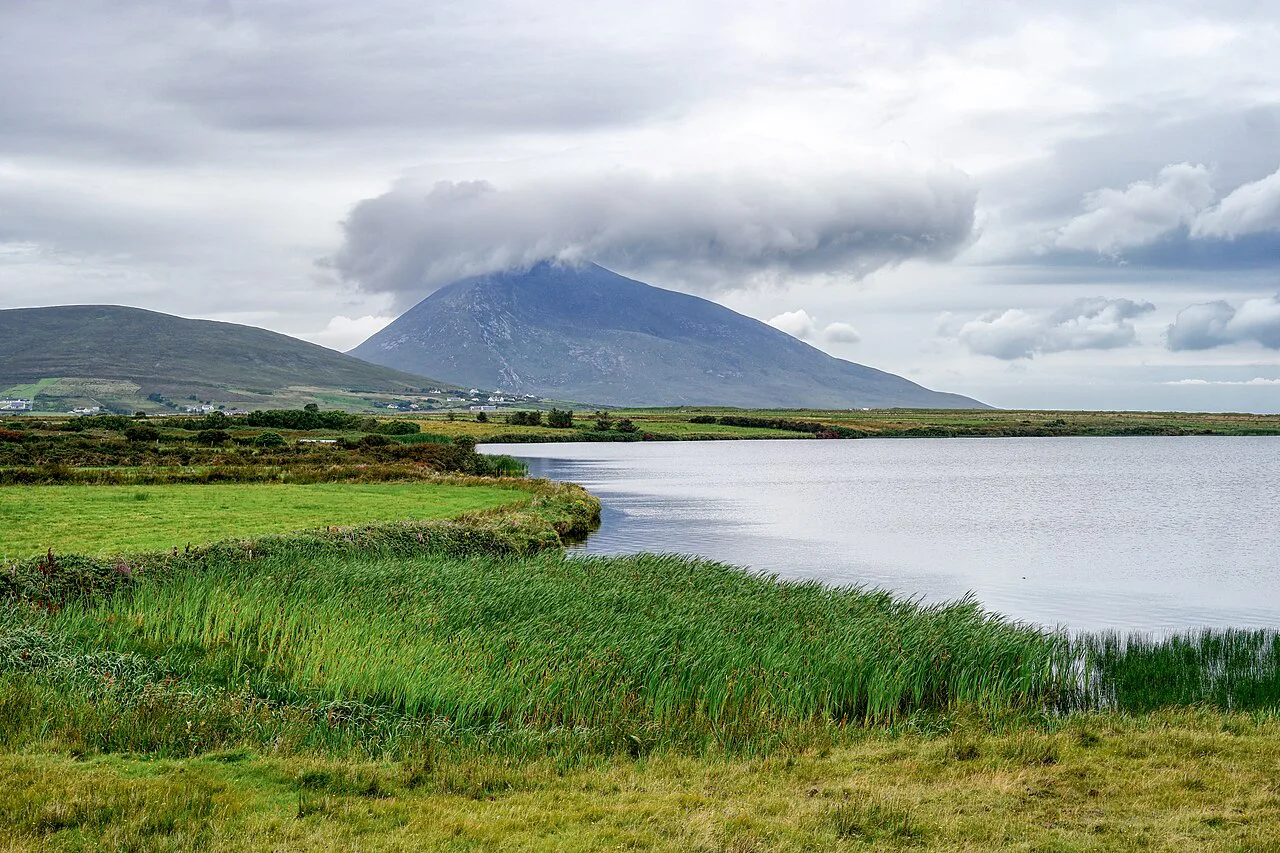
Once Henry's images became tourist posters, the west risked hardening into a cliché, and by the 1960s sentimental views of western people and places were largely avoided by younger artists looking to Europe and the United States. Earlier, Sean Keating had set allegorical paintings in recognisable landscapes, recording the War of Independence and Free State projects such as the hydroelectric station at Ardnacrusha on the Shannon. Others, including Nathaniel Hone and James Humbert Craig, kept painting cattle and fields in styles that avoided overt comment but could not escape it.
Modernism arrived slowly. Mainie Jellett's cubist work was mocked when shown in Dublin, with George Russell calling two works exhibited in 1923 artistic malaria, while Jack B. Yeats used fast brushwork, colour and light to communicate feeling rather than record appearances. Later figures such as Patrick Collins, Alanna O'Kelly, Elizabeth Magill and Martin Gale show that the landscape subject never disappeared; it simply absorbed new political and emotional registers.
Reading the Tradition at the National Gallery of Ireland
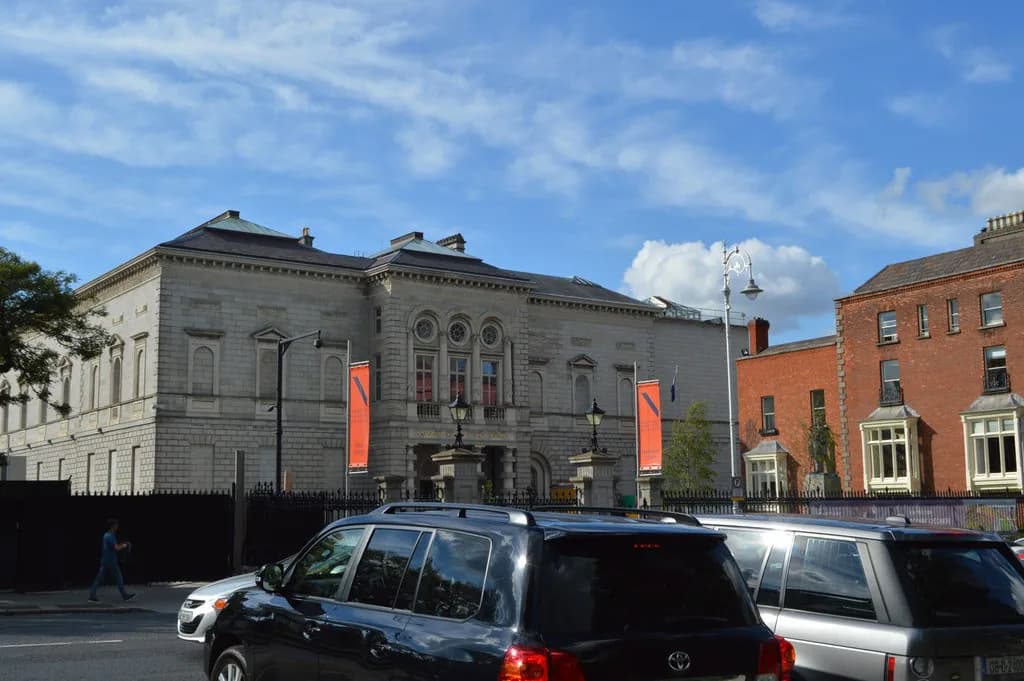
The National Gallery of Ireland publishes a self-guided Through a Lens tour of Irish art that spans decades, styles and genres, offering a starting point rather than an exhaustive list. For a broader understanding of the museum landscape, see this Dublin heritage guide. It is best treated as a published selection to structure a visit around the Irish rooms, not as a guaranteed route with fixed room numbers or works hanging on a given day, so check the works against the collection online before you travel.
Standard opening is Monday 11am to 5.30pm, Tuesday and Wednesday 9.15am to 5.30pm, Thursday 9.15am to 8.30pm, Friday and Saturday 9.15am to 5.30pm, and Sunday 11am to 5.30pm. Closing begins at 4.50pm daily and 7.50pm on Thursdays, starting with the upper floors, and last entry is 15 minutes before closing. The Gallery is closed 24 to 26 December and Good Friday, and admission is free to the permanent collection, though some temporary exhibitions charge.
Because the Gallery flags possible short-notice closures, confirm opening on its own channels before making a trip. Thursday evenings offer the longest window, useful if you want to work slowly through several rooms. If your interest extends to other collections, our guide to art museums in Ireland helps you decide which institutions justify a longer stay.
Plan Your Visit
Irish landscape painting rewards a reader who asks who commissioned the view, where the artist trained and what was left out. Use the National Gallery of Ireland's published selection as a starting structure, look closely enough to spot the absent labourer or the theatrical turf stack, then decide which artists deserve a deeper look in the wider Irish collection.
Two checkpoints before you go: confirm current hours on the Gallery's own page, and verify whether a work you want to see is on display rather than merely held in the collection. Beyond that, the most useful preparation is simply knowing the tradition's shifts, so that a quiet nineteenth-century scene and a cloud-heavy western view register as different arguments rather than variations on the same picture. For a wider choice of collections to visit, compare museums in Ireland. For another heritage guide, read about Harry Clarke Stained Glass.
Explore more Ireland guides
Frequently Asked Questions
What makes a painting an Irish landscape painting?
The label covers a long argument rather than one style. It includes Georgian estate views made for landed patrons, stormy Romantic scenes built on Burke's ideas of the Sublime, images of monastic ruins that carried national feeling, and later cloud-heavy views of the west. What links them is that each treats the Irish countryside as a subject with something at stake, whether property, labour, faith or nation.
Why did Georgian painters leave labourers out of estate views?
Crawford Art Gallery's essay argues that patrons wanted their parkland to look natural, even though it had been shaped by years of work. Painters such as William Ashford and Thomas Roberts supplied landscapes that appeared unworked, with at most a picturesque figure to give scale. Reading an estate view with that omission in mind turns a pleasant scene into evidence about who owned the land and who was edited out of it.
How did Burke's idea of the Sublime change Irish landscape painting?
Edmund Burke's enquiry of 1757 gave artists a vocabulary of precipices, chasms and overwhelming feeling, and he encouraged painters to work from nature rather than memory. Once war in Europe closed off France and Italy, Irish painters turned that language on home scenery, producing storms and agitated figures. The effect is visible in works such as James Arthur O'Connor's anxious, weather-driven landscapes, where the land itself becomes threatening.
Is the National Gallery of Ireland free to enter?
Admission to the permanent collection is free, and some temporary exhibitions carry a charge. The Gallery publishes standard daily opening times, closes on 24 to 26 December and Good Friday, and asks visitors to check its own channels because short-notice closures can occur. It is worth confirming that a particular painting is on display before travelling, since collection ownership does not guarantee it is hanging.
Can I see the paintings discussed here in person?
The National Gallery of Ireland publishes a self-guided Irish art selection that spans different decades, styles and artists, and it is a sensible way to structure a visit to the Irish rooms. Treat it as a starting point rather than a fixed route, since works move and rooms change, and check the online collection records to confirm details of individual pictures before travelling. Not every painting mentioned here is held by the Gallery or currently on display, so plan gallery time separately from visits to the outdoor sites they depict.
Why is the west of Ireland so central to Irish landscape art?
Western scenery became shorthand for Irishness largely through the twentieth century. Paul Henry lived on Achill Island from 1912 to 1919 and later produced landscapes reproduced as tourism posters, while painters before him had trained in Paris and Antwerp and brought continental techniques to Irish subjects. By the 1960s those sentimental western images were being avoided by younger artists, which shows how recently and how contested the association is.
Sources
- Landscape And Irish Identity - Crawford Art Gallery
- Launching the Currach – Explore the National Gallery of Ireland's collection: – National Gallery of Ireland
- Reflections across the Bog | Irish Art . . . Amplified | Special Projects | Research & Policy | Keough-Naughton Institute for Irish Studies | University of Notre Dame
- Through a Lens tour: Irish art | National Gallery of Ireland
- On the Bridge at Grez – Explore the National Gallery of Ireland's collection: – National Gallery of Ireland
- Opening hours | National Gallery of Ireland
You might also like



Continue reading
More guides you'll find useful





