
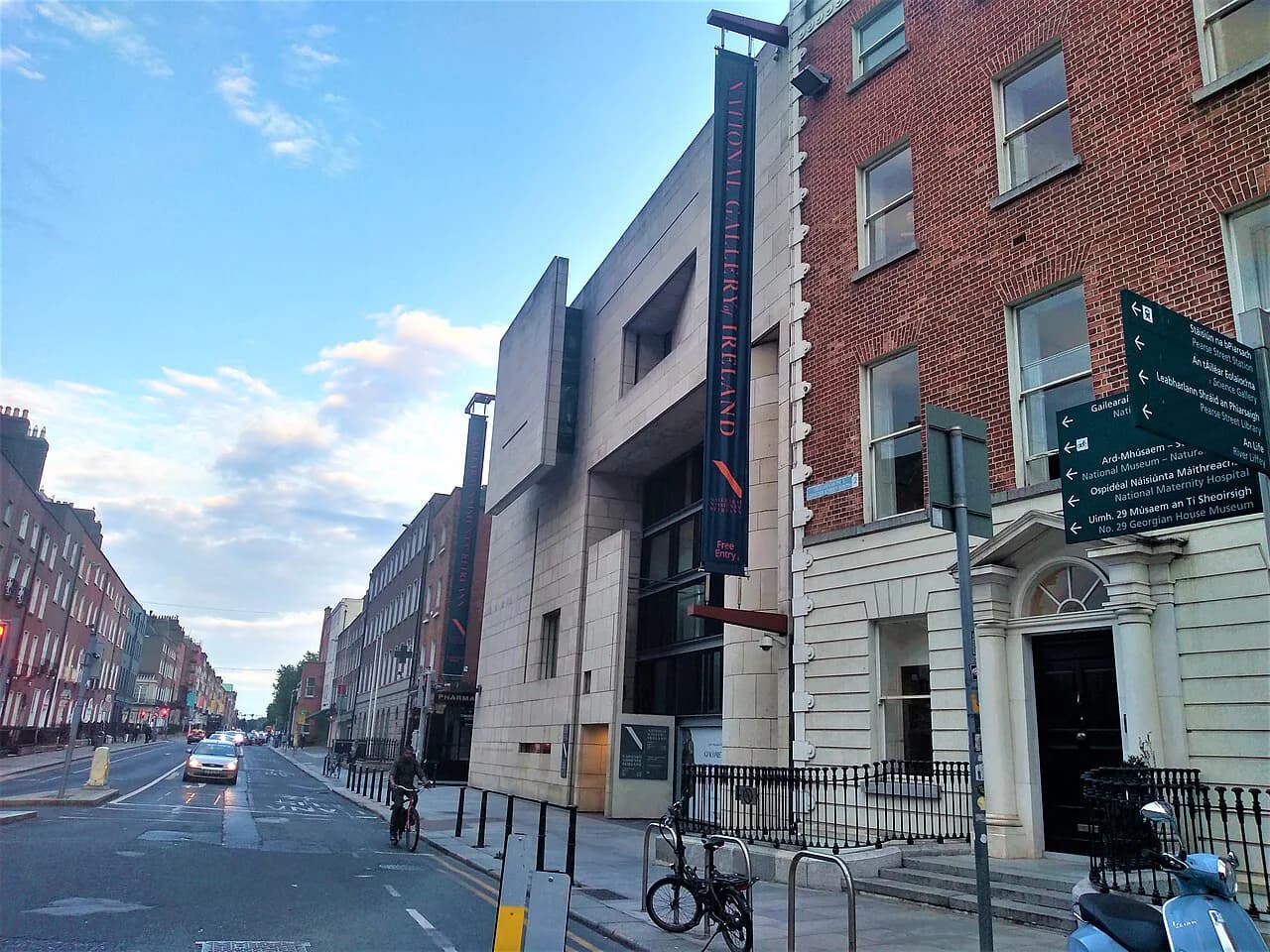
Walter Osborne: Dublin Street Life in the National Gallery
Walter Osborne painted Dublin's street traders and sketched the city in pencil. See what the National Gallery of Ireland holds and how to plan a visit.
On this page
The most direct way to meet Walter Frederick Osborne (1859–1903) in Dublin is through the National Gallery of Ireland, which holds a street-scene oil, Dublin Streets: a Vendor of Books, and a pencil study of Merrion Row dated 1895/1900. The Gallery's own interpretations of these works explain what is in front of you and how the artist composed it, which makes them the best starting point before you look for Osborne's Dublin on the streets themselves.
Treat what you read here as a reading of specific works, not a gallery trail. Osborne's subjects were city people and city views, and the Gallery's labels and learning pages supply the detail that turns a picture of a book stall into evidence about labour, poverty and a changing riverfront.
Dublin Streets: a Vendor of Books
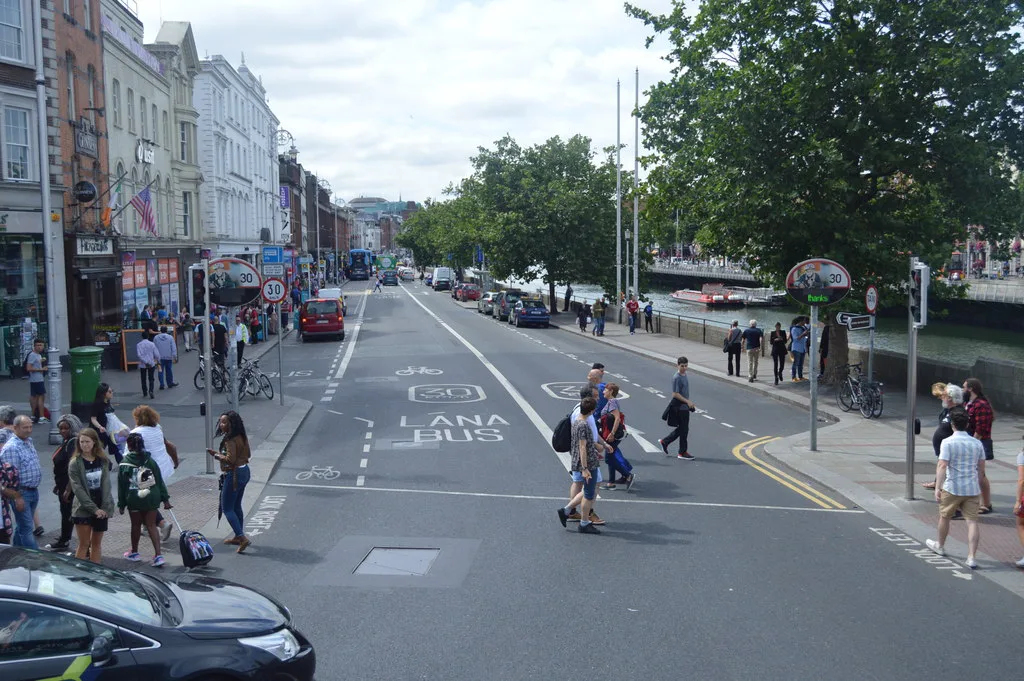
Osborne set this painting on Aston Quay, which the Gallery notes had long attracted street hawkers and stall holders. A book stall occupies the scene, and the Gallery's label reads a small human drama into it: a mother with a baby appears to have sent an older child to charm the men browsing the books into buying daffodils.
The Gallery does not present the picture as picturesque charm. The flower girl's bare feet are described as an explicit reference to the hardships endured by Dublin's poor, and a barge and skiff on the Liffey stand as evidence that this was a working river rather than a decorative backdrop.
For a visitor, that reading is the useful part: look at the stalls, the child's stance and the boats before the architecture, because the Gallery treats all of them as social record. Do not assume the painting is hanging in a particular room, since an online collection record documents the work rather than its current placement.
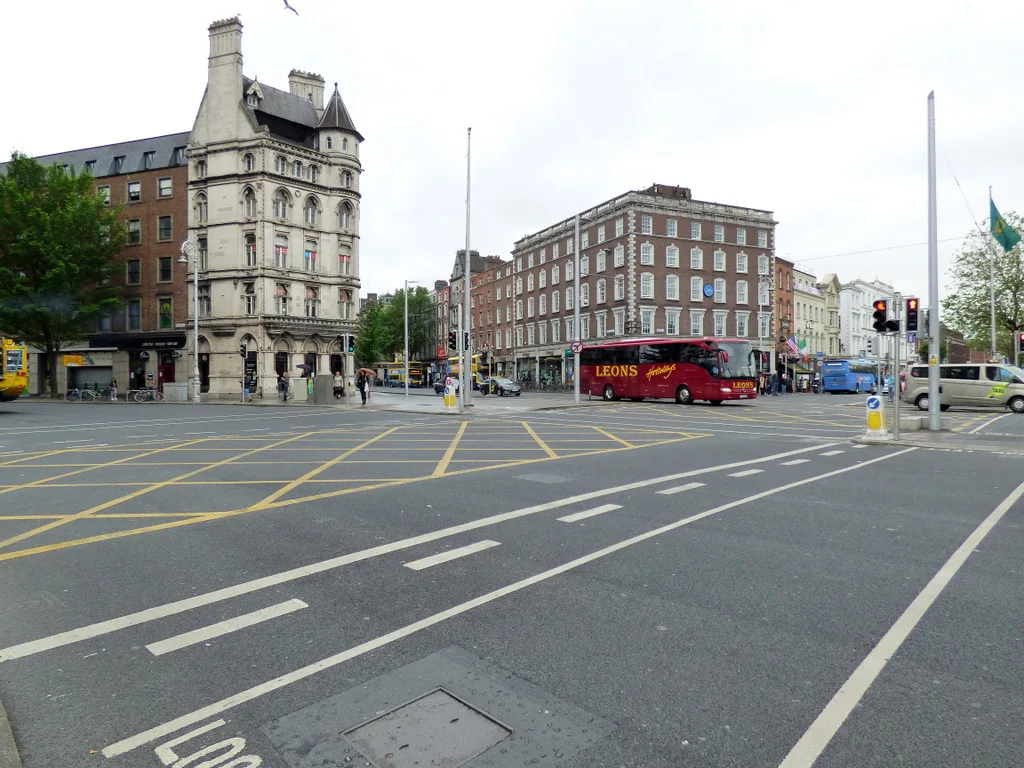
The City Backdrop: Custom House, O'Connell Bridge and the Loopline
Behind the traders, the painting opens east along the Liffey toward James Gandon's Custom House, a view the Gallery describes as remarkable and one soon to be compromised by the building of the Loopline Bridge. That detail lets you use the picture as a record of a river prospect at a moment when new infrastructure was about to alter it.
The main bridge in the foreground is treated by the Gallery as one of the earliest paintings of it, noting that it had been widened and flattened in 1880 and renamed O'Connell Bridge in 1882. Keep those two dates as the Gallery states them; they describe the bridge's history, not a schedule for visitors.
The Gallery's self-guided Irish art tour adds an orientation cue: you may recognise the five lamps from O'Connell Bridge and the top of the Custom House in the background, and Osborne chose the south bank at Aston Quay to obtain this view. That is useful for reading the composition, but the Gallery's rooms do not contain the riverscape itself, so plan any riverside walk separately from a gallery visit.
How Osborne Worked: Sketchbooks and Photographs
Osborne was a persistent draughtsman who filled sketchbooks with Dublin streets and alleys, drawing fish sellers, flower girls and other market characters and later using those studies as references for his oils. The Gallery makes clear he did not rely on sketching alone, but also made extensive use of photographs, a modern and popular resource at the time.
That combination matters when you stand in front of a finished painting and assume it was painted straight from life. The evidence points to a layered process: observation on the street, notes on paper, photographic references, then composition in the studio.
The Merrion Row Sketch
The Gallery's drawing feature presents a loose pencil sketch, Merrion Row, Dublin and Tracton House from Saint Stephen's Green, dated 1895/1900, as an example of how much Osborne could capture in a few lines. It is a counterpart to the oil rather than a preparatory cartoon: one shows a resolved urban scene, the other the quick notation behind such work.
Because the Gallery dates the sheet 1895/1900, resist forcing it into a single year. If you want to see it, ask the Gallery which Osborne drawings are on view rather than travelling on the assumption that this sheet is hanging. Gallery hours, including the later Thursday session, are worth checking before you go.
Biography as Context
Osborne was born in Dublin, the son of the animal painter William Osborne (1823–1901), and studied at the Royal Hibernian Academy and the Dublin Metropolitan School of Art before winning a Royal Dublin Society scholarship and going on to the Académie Royale des Beaux Arts in Antwerp. The Gallery notes that he travelled for work but returned each year to spend winters in Ireland.
The Gallery's object record adds that Osborne painted Dublin Streets: a Vendor of Books on one of several visits home from England, where he had been based since 1884. For readers tracing a wider generation of painters with European training, the story has parallels among other Irish artists in public collections.
Style: Plein Air and the 'Irish Impressionist' Label
According to the Gallery, Osborne was strongly influenced by painters in Brittany who worked en plein air, outdoors, to record light and atmosphere as accurately as possible, and he absorbed Impressionist techniques of soft light and open-air painting. The Gallery records that some called him the Irish Impressionist.
Keep that label in perspective. It reflects how contemporaries and later interpreters described his affinity with French practice; it is not a settled verdict on his place in art history, and the Gallery presents it as a name some applied rather than an official category.
Visiting the National Gallery of Ireland
Admission to the permanent collection is free, while some temporary exhibitions carry a charge; exhibitions are free for members, so budget only for the shows you choose to add. Opening hours run from 11am to 5.30pm on Monday and Sunday, 9.15am to 5.30pm Tuesday to Wednesday and Friday to Saturday, and 9.15am to 8.30pm on Thursday.
The building starts to close from 4.50pm daily, or 7.50pm on Thursdays, working down from the upper floors, and entry to the galleries stops 15 minutes before closing. That makes the late Thursday session the most generous window, but it also means a late arrival leaves little time upstairs.
The Gallery closes on 24–26 December inclusive and Good Friday, opens 11am–5.30pm on 1 January, and states that hours are subject to change; it also warns that short-notice closures can occur, for example through industrial action, and advises checking its channels before travelling. Because hours and displays can shift, confirm before you set out that the works you hope to see are available.
What the Works Do Not Tell You
A catalogue entry is a record, not an installation plan. The Gallery's object page documents the painting's subject and history, and its published exhibition history lists past showings rather than a current display, so neither guarantees that the canvas is on the walls during your trip.
Equally, Osborne's Aston Quay is a viewpoint rather than an exhibit. The Gallery's interpretation explains where he stood on the south bank to achieve the view, but the quayside and the river are public city space you encounter on your own, not part of the Gallery visit.
Plan Your Visit
Start with the Gallery's own descriptions of Dublin Streets: a Vendor of Books and the Merrion Row sketch, then use its opening hours page to choose a slot that gives you time before the upper floors begin to close. If Osborne's city views draw you further into Irish painting, the wider landscape of Irish art in public collections is worth exploring next, and our National Gallery of Ireland: A Visitor's Guide to the Dublin Collection helps you plan the rest of the building around these works.
If your interest runs to figures of the same generation, comparisons are easy to make: Jack B. Yeats in Ireland offers another painter whose work rewards close looking in Irish collections. Keep one practical rule in mind, though: check what is actually on display before travelling for a named work.
If you want to continue exploring Irish art on this site, read about the painter Grace Henry. For another heritage guide, read about William Orpen.
Explore more Ireland guides
Frequently Asked Questions
Where can I see Walter Osborne's paintings in Dublin?
The National Gallery of Ireland holds Dublin Streets: a Vendor of Books and documents it in its online collection. A catalogue record does not confirm that a work is currently hanging, so contact the Gallery or check its visitor information before making a special trip.
What does Dublin Streets: a Vendor of Books show?
The Gallery describes a book stall on Aston Quay, where street hawkers had long traded, with a flower girl whose bare feet it reads as a reference to poverty. A barge and skiff indicate the Liffey as a working river, and the background opens east toward Gandon's Custom House.
Why is Osborne sometimes called the Irish Impressionist?
The National Gallery of Ireland notes his plein-air practice picked up from painters in Brittany, his use of soft light and outdoor painting, and Impressionist influence. The Gallery records that some called him the Irish Impressionist, which is a description rather than a settled art-historical category.
Is the National Gallery of Ireland free to enter?
Admission to the permanent collection is free, and some temporary exhibitions carry a charge. Members enter exhibitions free. Check the Gallery's own pages for the current position on any particular show.
What are the National Gallery of Ireland's opening hours?
The Gallery opens 11am–5.30pm on Monday and Sunday, 9.15am–5.30pm Tuesday to Wednesday and Friday to Saturday, and 9.15am–8.30pm on Thursday. It closes 24–26 December and Good Friday, and hours can change, so verify before travelling.
Can I see the exact view Osborne painted by walking Aston Quay?
The Gallery states that Osborne stood on Aston Quay on the south bank of the Liffey to achieve this view, looking east toward the Custom House. The quays are public city space rather than part of the Gallery, and the skyline has changed since, so treat the painting as a historical viewpoint.
Sources
- Dublin Streets: a Vendor of Books – Explore the National Gallery of Ireland's collection: – National Gallery of Ireland
- Drawing Inspiration: Walter Frederick Osborne (1859-1903) | National Gallery of Ireland
- Through a Lens tour: Irish art | National Gallery of Ireland
- Opening hours | National Gallery of Ireland
You might also like



Continue reading
More guides you'll find useful





