
Irish War of Independence: Where to See the Evidence in Dublin
The Irish War of Independence ran from 1919 to 1921. See its evidence at Collins Barracks, Kilmainham Gaol and the National Archives online.
On this page
The Irish War of Independence ran from 1919 to 1921: a guerrilla campaign fought mostly in small ambushes around the country rather than in the large urban battles of the 1916 Easter Rising. It ended with a truce in mid-1921, the Anglo-Irish Treaty signed on 6 December 1921, and the separate Civil War of 1922–1923. Dublin is the practical base for studying the period, because the National Museum of Ireland holds the objects and the National Archives holds the records, and Kilmainham Gaol held prisoners from the conflict. To place these years within the longer story of the city, see this Dublin heritage guide.
For a visitor, the period is best approached through three kinds of evidence: the museum collection, the prison buildings, and the paper record. The National Museum's exhibition at Collins Barracks sets the war within a combined 1919–1923 display, while Kilmainham Gaol preserves the penal setting where political prisoners were held until the prison closed in 1924, and the National Archives has put Decade of Centenaries material online for free. Each gives a different angle on the same years.
21 January 1919: Two Unconnected Events
The National Museum's education factsheet treats 21 January 1919 as the start of the War of Independence, but notes that two unrelated events happened that day. The First Dáil met in Dublin as a counter-state parliament formed from Irish MPs elected in 1918, and at Soloheadbeg in County Tipperary a group of Irish Volunteers killed two Royal Irish Constabulary men while trying to seize gelignite. The political and physical conflicts began side by side, not as one coordinated plan.
That distinction matters when you read about the period: the Dáil and the IRA were separate institutions with different authority, and the factsheet is explicit that the Soloheadbeg attack was organised by a local group without authorisation from either the Dáil or the Volunteers' leadership. Keep that in mind when you see the two events printed side by side on a timeline or an exhibition label.
How the War Was Fought
The factsheet describes a war of ambushes and small actions rather than large battles: the IRA used civilian clothing, local knowledge, safe houses and support from the public, and from mid-1920 formed Flying Columns, small mobile units that often moved by bicycle. In response, the British authorities created the Auxiliaries and the Black and Tans to reinforce the RIC. Fighting spread across the whole island, unlike the more concentrated fighting of 1916, and ended with a truce in mid-1921.
Weapons were a constant constraint. The factsheet records raids on barracks, purchases from soldiers and imports from America, and eventually home-made grenades and land mines produced in workshops around Dublin and elsewhere. Because arms arrived unevenly, some brigades were well equipped and others had little more than farm tools, which is one reason the war looks so different from county to county.
Civilians and Women in the Conflict
Civilians were targeted by both sides, and the factsheet gives particular attention to violence against women. One common punishment was the forced cutting of a woman's hair, known at the time as bobbing or shearing, used by Crown forces against women linked to republicanism and by the IRA against women suspected of consorting with police. Women also carried weapons and intelligence for the IRA, including a pistol smuggled into a Dublin hotel under a false name.
The museum holds related objects, including shorn hair found in the possession of an IRA man arrested in 1920, displayed as part of the exhibition's focus on ordinary people and on women's roles. When you look at such material, the label matters more than the object alone: the museum's curatorial approach is to tell personal stories and to trace how the conflict touched people who were not combatants.
Bloody Sunday, 21 November 1920
The factsheet records that on 21 November 1920 the IRA attacked British intelligence agents across a small area of south inner Dublin, with one shooting at the Gresham Hotel on O'Connell Street. Fifteen people were killed and six wounded in the morning operation. That afternoon, British forces entered Croke Park during a Dublin–Tipperary Gaelic football match and fired on the crowd; fourteen civilians were killed, including the Tipperary player Michael Hogan, after whom the Hogan Stand is named. The factsheet puts the day's total at 32 deaths and notes that other events share the name Bloody Sunday, so the date and setting need to be kept clear.
The factsheet also points to the deaths at Dublin Castle that night, including the IRA men Dick McKee and Peadar Clancy and the civilian Conor Clune, killed by Auxiliaries in disputed circumstances. Together these episodes show how quickly the war moved between the streets and the sports ground.
Terence MacSwiney's Hunger Strike
Terence MacSwiney, the Lord Mayor of Cork, was arrested in August 1920 and died on hunger strike in Brixton Prison in London after 74 days, on 25 October 1920. The factsheet describes his protest as a turning point in public opinion in Ireland and abroad, and the museum holds a plaster life mask made a few days before his death. MacSwiney had been elected Lord Mayor earlier in 1920 after his predecessor, Tomás MacCurtain, was killed by the RIC.
His death belongs to the story the museum tells through objects rather than through a single room. The exhibition page lists death masks of Griffith, Collins, Brugha and MacSwiney among items returned to display after years in storage. If you want to see a particular piece, check with the museum before travelling, because the exhibition is part of a larger gallery and individual displays can be affected by short-term changes.
Where to See the Evidence: Collins Barracks
The Irish Wars 1919–1923 exhibition is at the National Museum of Ireland's Decorative Arts & History site at Collins Barracks, Benburb Street, Dublin 7. It forms part of the permanent Soldiers and Chiefs exhibition and was substantially reimagined for the Decade of Centenaries. The exhibition page states free admission and no booking required for individuals, with booking needed only for groups of eight or more; it also notes that galleries and exhibits can close at short notice, so call ahead if you are travelling for a specific object.
The collection is broad: RIC handcuffs worn by Seán Hogan when he was rescued at Knocklong in 1919, materials connected with prison escapes, experimental IRA weapons, and an IRA intelligence file shown publicly for the first time. Multimedia includes newsreel footage from the Irish Film Institute covering searches, funerals and captures. That mix makes Collins Barracks a strong single stop for the period, but it also means the displays are subject to maintenance and rotation rather than being a fixed set.
Practical Access at Collins Barracks
Opening hours, as published by the museum, are Tuesday to Saturday 10:00–17:00 and Sunday and Monday 13:00–17:00, with late opening until 20:00 on the last Thursday of each month. The museum is closed on Christmas Day, St Stephen's Day and Good Friday, and recommends a last entry time of 4.30pm. Admission is free at all four National Museum sites. If you are driving, on-site parking is pay and display, with tariffs published on the same page and no overnight parking.
All galleries are lift-accessible, wheelchairs are available at reception, and the site has toilets on the ground floor and within the Soldiers and Chiefs area. Gallery 4 of Soldiers and Chiefs, covering the Irish in British Regiments, is currently closed; the rest of the exhibition remains open. For queries, the museum's number is +353 1 677 7444. This is the first of two points at which it is genuinely worth checking before you travel.
Study Beyond the Display Cases
The museum's education factsheet is a free, detailed companion to the exhibition, organised around themes from the First Dáil and Soloheadbeg to weapons production, civilian punishment and state executions during the Civil War. It identifies individual objects with reference numbers and suggests further reading, which makes it useful before or after a visit. It was created by the museum's Education Department at Collins Barracks for teaching, not as a substitute for the displays.
The National Archives of Ireland has a free online Decade of Centenaries resource covering 1912 to 1923, including the War of Independence. Its collections include daily Dublin Metropolitan Police detective reports on pro-independence suspects from 1915 to 1916, and the 1901 and 1911 censuses, which can add family and local context. This is the place to go if you want to read records rather than look at objects, and it costs nothing to browse.
The National Archives' online material is the strongest option for adding local and family context before or after a museum visit: its Decade of Centenaries site covers 1912 to 1923 and includes records such as Dublin Metropolitan Police detective reports and the 1901 and 1911 censuses. Search there first if you want a specific person or place rather than a general narrative.
Kilmainham Gaol: Prisoners and Sentences
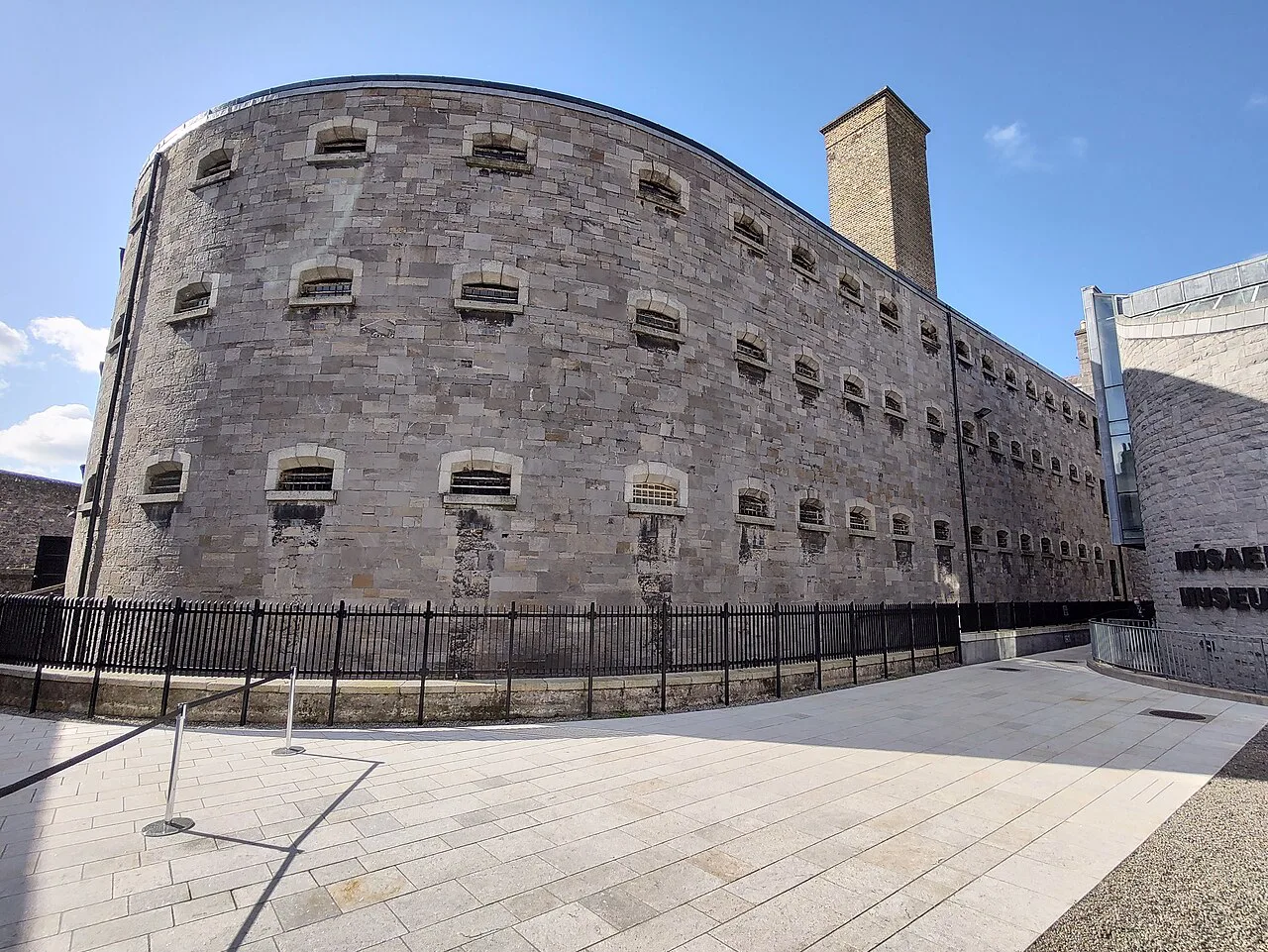
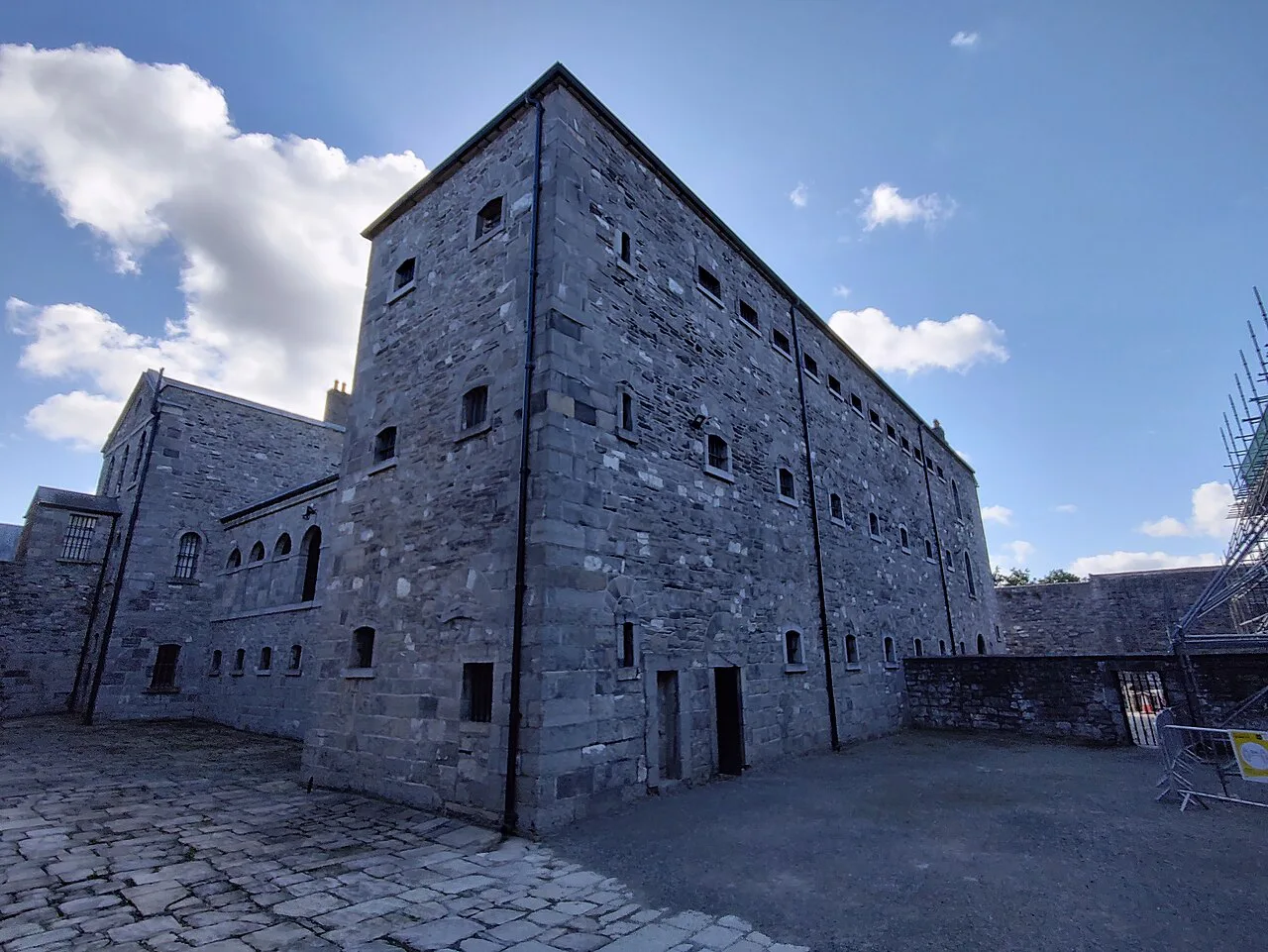
Kilmainham Gaol opened in 1796 and was used as a prison until 1924, holding ordinary prisoners alongside political prisoners from the rebellions, the War of Independence and the Civil War. That span makes it the best place in Dublin to understand the penal side of the conflict: who was imprisoned, how they were held, and how the prison later became a national memorial. Its museum and the guided tour are separate parts of a visit, and the site is operated by the Office of Public Works.
Access is by pre-booked guided tour only, so it is not a walk-in site; the operator suggests allowing about 90 minutes. Part of the tour is outdoors and the interiors are cold in winter, so rainwear and warm layers matter more than they do at a museum. It is also worth noting that the 1924 date marks the end of the prison's use, not a current closure. This is the second point at which checking ahead is worthwhile, especially in busy periods.
After the War: Treaty and Civil War
The War of Independence did not end at the Treaty. A truce in mid-1921 was followed by negotiations in London and the signing of the Anglo-Irish Treaty on 6 December 1921, but the House of Commons Library briefing is clear that the Irish Free State came into being on 6 December 1922, and that the Free State was a dominion under the Crown rather than the later republic. The Treaty did not itself create partition; Northern Ireland could opt to stay in the United Kingdom and did so. Treating 1916, 1921 and 1922 as interchangeable independence dates gets the sequence wrong.
The Civil War that followed is a distinct conflict, fought between pro-Treaty and anti-Treaty forces from 1922 to 1923. The National Museum's factsheet covers it within the same 1919–1923 exhibition, including the shelling of the Four Courts on 28 June 1922 and the state executions that followed. To follow that story in detail, use the separate account of the irish civil war rather than reading it back into the War of Independence.
The two conflicts share some ground: Kilmainham held prisoners from both, and the museum presents them side by side. But their politics, dates and endings are different, and a visit is clearer if you keep them separate. The Commons Library briefing sets out the constitutional sequence around the Treaty and the Free State, while the museum is the place for the material culture.
Planning Your Visit Around the Evidence
A workable order is Collins Barracks first, for the objects and interpretation, then Kilmainham Gaol for the prison setting, with the National Archives online before or after the trip. Each answers a different question, and together they cover the political, military and civilian sides of the period. Allow enough time at Collins Barracks for the wider Soldiers and Chiefs galleries, since the Irish Wars display is one part of a larger exhibition.
Check opening hours and the booking rules before travelling, since museum galleries can be affected by short-term changes. If you have an ancestor or a local incident you want to trace, search the National Archives collections first, so that a museum visit can be targeted rather than general. For another heritage guide, read about Michael Collins House.
Explore more Ireland guides
- Easter Rising 1916
- The 1798 Irish Rebellion
- The Irish Civil War
- The Irish Penal Laws
- Cavan County Museum
- Donegal County Museum
- Jackie Clarke Collection
- Michael Collins House and the Other Collins Sites in West Cork
- Michael Davitt Museum
- Monaghan County Museum
- The Battle of Vinegar Hill
- Wolfe Tone in Ireland
Frequently Asked Questions
What years did the Irish War of Independence cover?
The War of Independence ran from 1919 to 1921, beginning with the events of 21 January 1919 and ending with a truce in mid-1921. It is separate from the 1916 Easter Rising and from the Civil War of 1922–1923, which followed the Anglo-Irish Treaty.
What happened on 21 January 1919?
Two unconnected events took place that day. The First Dáil met in Dublin as a counter-state parliament, and at Soloheadbeg in County Tipperary Irish Volunteers killed two RIC constables during an attempt to seize explosives. The museum factsheet notes that the attack was organised locally without authorisation from the Dáil or the Volunteers' leadership.
Where can I see artefacts from the War of Independence in Dublin?
The Irish Wars 1919–1923 exhibition at the National Museum of Ireland, Collins Barracks, is the main display, and it forms part of the Soldiers and Chiefs exhibition. Kilmainham Gaol holds the prison setting, while the National Archives offers records online.
Do I need to book the Irish Wars exhibition at Collins Barracks?
No booking is required for individuals, families and small groups, and admission is free. Groups of eight or more must book in advance. Because individual galleries can close at short notice, call the museum if you are travelling to see a particular object.
Is Kilmainham Gaol connected to the War of Independence?
Yes. Kilmainham held political prisoners associated with the War of Independence and the Civil War, as well as ordinary prisoners, between 1796 and 1924. Access today is by pre-booked guided tour, and part of the route is outdoors.
Did the Treaty end the War of Independence?
No. A truce in mid-1921 was followed by the Anglo-Irish Treaty signed on 6 December 1921, but the Irish Free State came into being only on 6 December 1922. The Civil War of 1922–1923 followed, so the dates are not interchangeable.
Sources
- Irish-Wars-factsheet-links-PF6.pdf
- Irish Wars 1919 to 1923 | Decorative Arts & History | National Museum of Ireland
- Opening Hours, Location and Facilities | Decorative Arts & History | National Museum of Ireland
- Decade of Centenaries Collection | The National Archives of Ireland
- The Anglo-Irish Treaty, 1921
- Kilmainham Gaol Museum | Heritage Ireland
You might also like



Continue reading
More guides you'll find useful





