
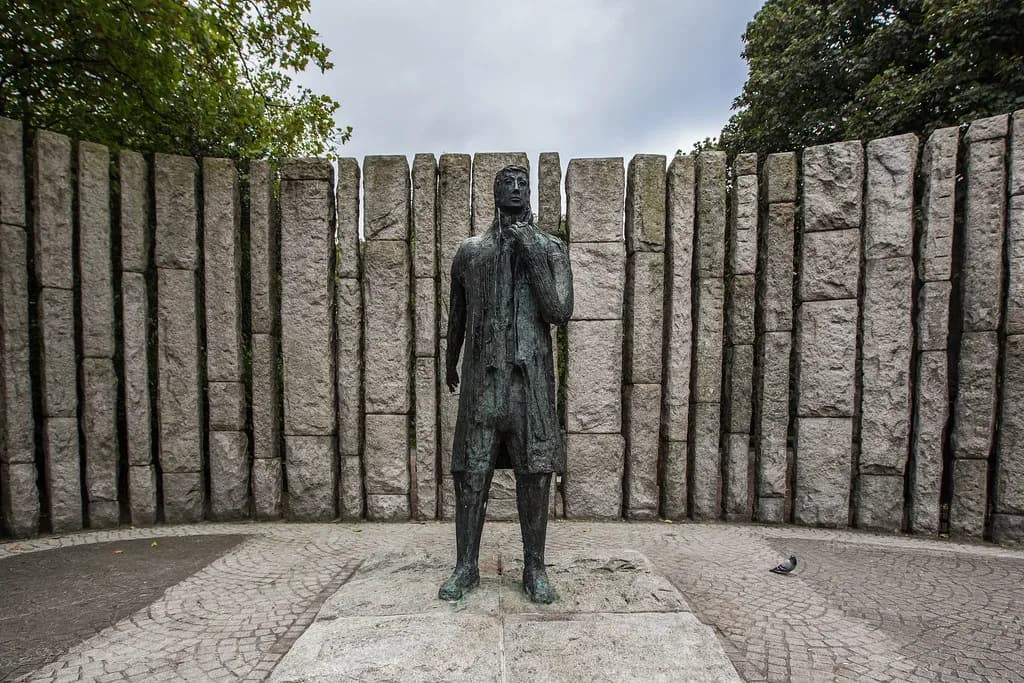
Wolfe Tone in Ireland: His Story and Where to Explore It
Wolfe Tone shaped the United Irishmen and sought French aid for Irish independence. Trace his story at Enniscorthy's 1798 Centre and Vinegar Hill.
On this page
Wolfe Tone was an Irish political organiser and revolutionary, not a battlefield commander. He helped found the Society of United Irishmen, campaigned for Catholic rights, and spent his final years seeking French military support for Irish independence. The most direct public heritage setting for the wider 1798 story he set in motion is Enniscorthy, County Wexford, where the National 1798 Rebellion Centre and the outdoor battlefield of Vinegar Hill sit within walking distance of the town.
Who Wolfe Tone Was Before Politics
Tone was born in Dublin in June 1763 into a middle-class family and entered Trinity College in 1781. An early military career was closed to him by his father's wishes, so he trained in law instead. At Trinity he met and married Matilda Witherington, a match that angered her uncle, the future Lord Chancellor John Fitzgibbon, and narrowed his prospects in establishment circles.
He practised briefly as a barrister before drifting toward the Whig party and political writing. Parliamentary debates in 1790 introduced him to Thomas Russell, a friendship that pulled him into organised radical politics. This matters for visitors because Tone's significance lies in drafting, argument and negotiation rather than in any battlefield command.
Drafting the United Irishmen, 1791
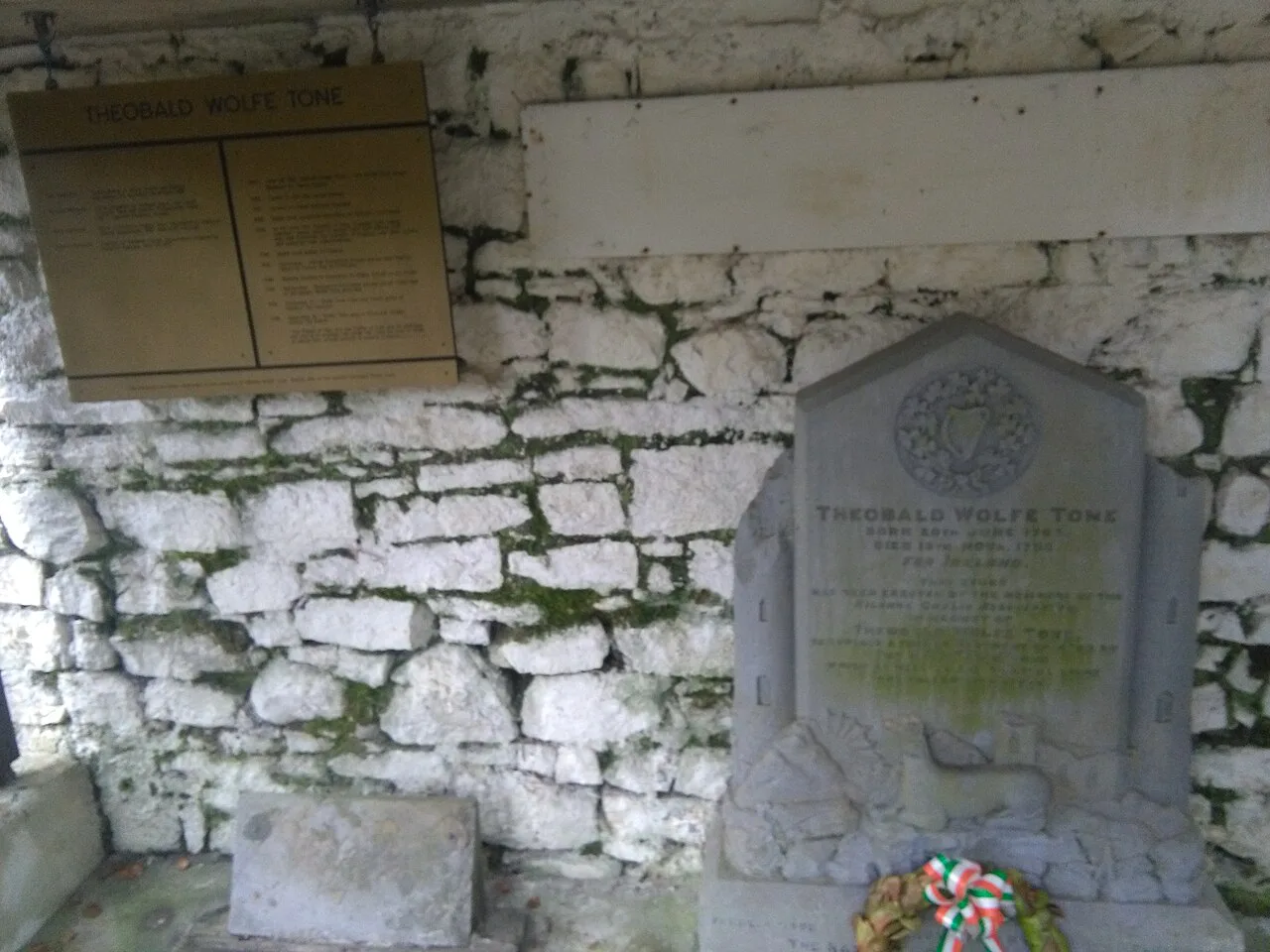
In July 1791 Russell asked Tone to compile a set of resolutions for a Belfast event marking the fall of the Bastille. When the Society of United Irishmen was founded in Belfast that October, its declaration and resolutions were built on Tone's text. Founding members included Samuel Neilson, Thomas Russell, James Napper Tandy and Tone himself, and a Dublin branch soon followed with Tone as the link between the two cities.
The society's original aim was parliamentary reform by peaceful means, spread through pamphlets and its newspaper, The Northern Star. Ireland at the time had 150 constituencies in the House of Commons, over half dominated by individual landowners or small groups of them. Catholics could not vote until 1793 and could not sit in parliament until 1829, while Presbyterians were under-represented by property qualifications, a grievance structure worth understanding before you enter the museum galleries.
Catholic Rights and the Turn to Radicalism
In July 1792 Tone was appointed assistant secretary to the Catholic Committee, coordinating a campaign that culminated in a representative Catholic assembly. The Catholic Relief Act of 1793 granted Catholic landowners voting rights but kept Catholics out of parliamentary seats, a half-measure that left Tone bitterly disappointed. The same year brought the Gunpowder, Militia and Convention Acts and the imprisonment of leading United Irishmen, pushing the leadership toward the conclusion that reform through parliament was futile.
In 1794 Tone wrote a memorandum arguing that a French invasion would be welcomed in Ireland. It fell into government hands, and he avoided imprisonment only by agreeing to exile. By 1795 the society had become a secret, oath-bound body preparing for armed uprising. For a reader tracing how legal grievance hardened into rebellion, this sequence of restricted rights and failed reform is the key to the era, and it also explains the penal-era context behind so much of the period.
America, Paris and the Pursuit of French Aid
Tone left Ireland for America in June 1795, settling in New Jersey, where the political system he had admired from afar disappointed him. He approached the French minister Pierre Adet and argued for a French intervention in Ireland, then left America for France in January 1796. His writings impressed the French government, and troops were promised, though the first invasion attempt collapsed when a storm scattered the fleet off Bantry Bay in December 1796.
Tone remained in France negotiating while events in Ireland outran him. Early in 1798 he and Edward Lewins were still dealing with Napoleon Bonaparte, who initially agreed to send a force to Ireland that spring before diverting his troops to Egypt instead. That change delayed French help and deepened disagreement among United Irishmen over whether to rise without it.
Where Tone Sits in the 1798 Narrative
The rebellion broke out in late May 1798, and the plan to seize Dublin failed when Crown intelligence exposed it. Fighting spread through Leinster and Ulster before the decisive engagement at Vinegar Hill on 21 June, after rebel defeats at Newtownbarry, New Ross and Arklow. Nothing in the record places Tone on that hill or at any battle; he was an organiser and negotiator working from abroad.
In September 1798 Tone sailed for Ireland aboard the flagship Hoche with a French force. He was captured off the coast of Donegal on 12 October, tried and sentenced to death. His request to be shot by firing squad was refused, and he died in November 1798. A small French landing under General Humbert at Killala in August achieved early victories but ended in defeat at Ballinamuck in September, and organised resistance ceased by 23 September.
Visiting the National 1798 Rebellion Centre
The Centre faces the visitor squarely as an interpretation of the rebellion, bringing the key figures into view, walking through the Battle of Vinegar Hill and explaining period weapons. Its own framing contrasts a large insurgent force with a smaller, better-armed Crown army. Enniscorthy Castle is run as a sister site, so the town can hold a full day of history rather than an hour's stop.
Posted hours are Monday to Friday 9.30am to 5.00pm, weekends and bank holidays 12.00pm to 5.00pm, with last admission at 4.15pm. The Centre lists adult, concession, child aged 3 to 18 and family tickets; check the current price list before travelling, since fees can change. Group and specialised tours, guided walks and talks, and school resources are advertised, but times and availability should be confirmed by phone or email rather than assumed on the day.
The Centre is in Enniscorthy, County Wexford, Eircode Y21 PY03; its own pages give the street as both Millpark Road and Parnell Road, so navigate by the Eircode and town. The site lists free parking for cars and coaches plus an on-site café. From Dublin, the Rosslare Europort train stops at Enniscorthy, a roughly 15-minute walk from the museum; Bus Éireann route 2 or Wexford Bus stops about 10 minutes away. Because these are point-to-point directions from the operator, confirm departure times and days when planning.
Vinegar Hill: A Separate Outdoor Visit
Vinegar Hill is not an annexe of the museum and does not share its hours or tickets. A free carpark at the base holds a memorial plinth with information on the rebellion, and a paved walk climbs to the ruins of a stone windmill with views over the battlefield and across the River Slaney to Enniscorthy town. Treat it as an outdoor stop: weather, daylight and walking comfort govern the experience, and the museum's admission and last-entry rules do not apply to the hill.
On 21 June 1798 Crown forces under General Lake attacked the rebel camp here after the Wexford rebel army regrouped following earlier defeats. General Needham's troops on the southern slope arrived late, which allowed an ordered retreat toward Wexford town; civilians sheltering in the camp fared far worse. Standing on the hill after seeing the Centre gives that sequence a physical shape, though the climb and surface should be judged against your own mobility.
Aftermath, Memory and Later Revolutions
Estimates in the Centre's resource put total deaths across Ireland at over 30,000, alongside burned churches, destroyed farmland and thousands made homeless. The British response included the Act of Union of 1800, which dissolved the Irish House of Commons and moved direct rule to London. Understanding that settlement helps explain why the rebellion became a reference point for later generations rather than a closed episode.
Robert Emmet's rising of 1803 came directly out of 1798, and the Centre's resource records that participants in the Young Ireland rising of 1848, the Easter Rising and the independence struggle that followed all drew on the same ideals. Patrick Pearse credited the leaders of 1798 with giving Irish people a clear concept of nationality. If that chain of influence interests you, read it through the later conflict and its consequences, not just the Wexford campaign.
The sequel to that independence struggle was the split over the treaty, which visitors often follow through the same commemorative landscape. A visit to Enniscorthy can be paired with background reading on The Irish Civil War to see how the revolutionary tradition Tone helped shape divided again in the 1920s. Keep the two eras distinct: Tone's world was the 1790s, and the sites in Enniscorthy interpret 1798 on its own terms. If you want to trace the capital's older layers before this era, a Dublin heritage guide sets out the city's key sites in sequence.
Plan Your Visit
Build the day around two contrasting stops: the National 1798 Rebellion Centre for the interpreted story of the rebellion and its figures, then Vinegar Hill for the ground itself. Check the museum's posted hours, prices and last admission before setting out, and ask directly about guided tours. The hill is a separate outdoor site with a free carpark and paved walk rather than a ticketed attraction, but it does need daylight and a reasonable walking ability.
Tone's own life ends in Donegal and Paris rather than Wexford, so treat the Enniscorthy sites as the public gateway to the movement he helped build. Reading the sequence from the 1791 Belfast foundation, through the 1793 Relief Act and the 1794 memorandum, to capture on the Hoche in October 1798 makes the exhibition legible. That framing keeps biography and battlefield in their proper places.
Explore more Ireland guides
Frequently Asked Questions
Who was Wolfe Tone and why is he important in Irish history?
Wolfe Tone was a Dublin-born barrister turned political writer who helped found the Society of United Irishmen in Belfast in 1791. He campaigned for Catholic rights, argued for a union of Irish citizens, and later sought French military support for Irish independence. He is remembered as an organiser and revolutionary thinker rather than a battlefield leader.
Did Wolfe Tone fight at the Battle of Vinegar Hill?
No. Tone was in France during the 1798 rising and did not command rebels at Vinegar Hill or anywhere else. The Battle of Vinegar Hill on 21 June 1798 was fought by rebel forces in County Wexford while Tone was attempting to bring a French expedition to Ireland. He was captured off Donegal in October 1798 and died that November.
Where can I learn about Wolfe Tone and the 1798 Rebellion in Ireland?
The National 1798 Rebellion Centre in Enniscorthy, County Wexford, interprets the rebellion, its key figures, the Battle of Vinegar Hill and period weapons. The battlefield hill itself is a separate outdoor site nearby, with a memorial plinth and a paved walk to the windmill ruin. Together they give the movement's history a physical setting.
What does the National 1798 Rebellion Centre in Enniscorthy cover?
The Centre presents the key figures of the rebellion, the course of the Battle of Vinegar Hill, and the weapons used by both sides. Its exhibits contrast the large insurgent force with a smaller, better-trained Crown army. Group tours, guided walks and educational resources are also advertised; confirm availability before travelling.
Is Vinegar Hill free to visit and is it part of the museum?
Vinegar Hill is a separate outdoor site with a free carpark at its base, and the Centre's own pages do not attach museum tickets or opening hours to it. There is a memorial plinth with information and a paved walk to the windmill ruins. Expect open ground, weather and daylight to shape the visit.
How do I get to the National 1798 Rebellion Centre from Dublin?
The Centre's directions suggest the Rosslare Europort train to Enniscorthy station, then a walk of roughly 15 minutes, or Bus Éireann route 2 or Wexford Bus to the Enniscorthy stop, about 10 minutes on foot. Free parking is listed for cars and coaches. Verify current train and bus times before you travel.
Sources
You might also like



Continue reading
More guides you'll find useful




