
Cavan County Museum: Visitor Guide to the Ballyjamesduff Collection
Plan a visit to Cavan County Museum in Ballyjamesduff, a former Poor Clare convent with Stone Age to twentieth-century collections and an outdoor WWI trench.
On this page
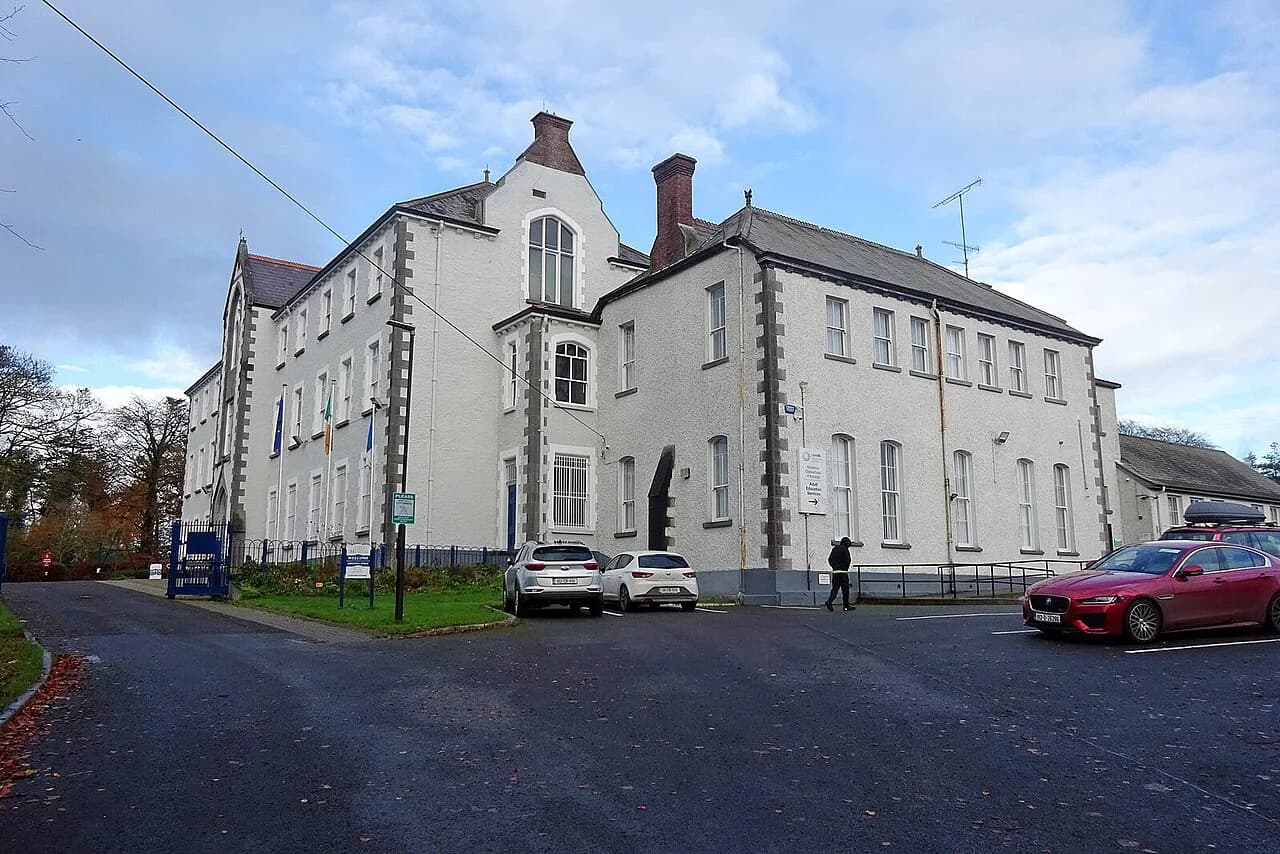
Cavan County Museum is the county's collecting institution for the material, cultural and historical heritage of County Cavan and its surroundings, and it sits in the town of Ballyjamesduff rather than in Cavan town. The museum describes itself as gathering, caring for and displaying that heritage, so the visit is best approached as a county collection rather than a single-subject attraction. Its setting inside a former convent gives the displays a different feel from a purpose-built gallery, and that building is part of what you are seeing.
A visit works on two levels: three floors of indoor galleries covering material from the Stone Age to the twentieth century, and a permanent outdoor reconstruction of a World War One trench. That split matters for planning, because the outdoor element depends on going outside and the indoor route rewards slow reading. The museum lists a downloadable flyer, floorplan and visitor guide if you want to study the layout before arriving.
The Building: A Former Poor Clare Convent
The museum occupies a building that began as a convent for the Poor Clare Sisters, with the structure dating to 1872 and many architectural features retained in its present use. Knowing this changes how you read the rooms: the galleries are fitted into a religious house rather than designed from scratch, and the fabric of the place is part of the collection's context. Look for surviving architectural detail as you move between floors rather than treating the interior as a neutral shell.
The galleries are arranged over three floors, which is the single most useful fact for pacing a visit. Stairs between levels mean you should decide early whether to work from the top down or begin with the ground-floor displays, particularly if time is limited. The floorplan the museum offers is the sensible way to settle that order before you set off.
Reading the Collections: Stone Age to Twentieth Century
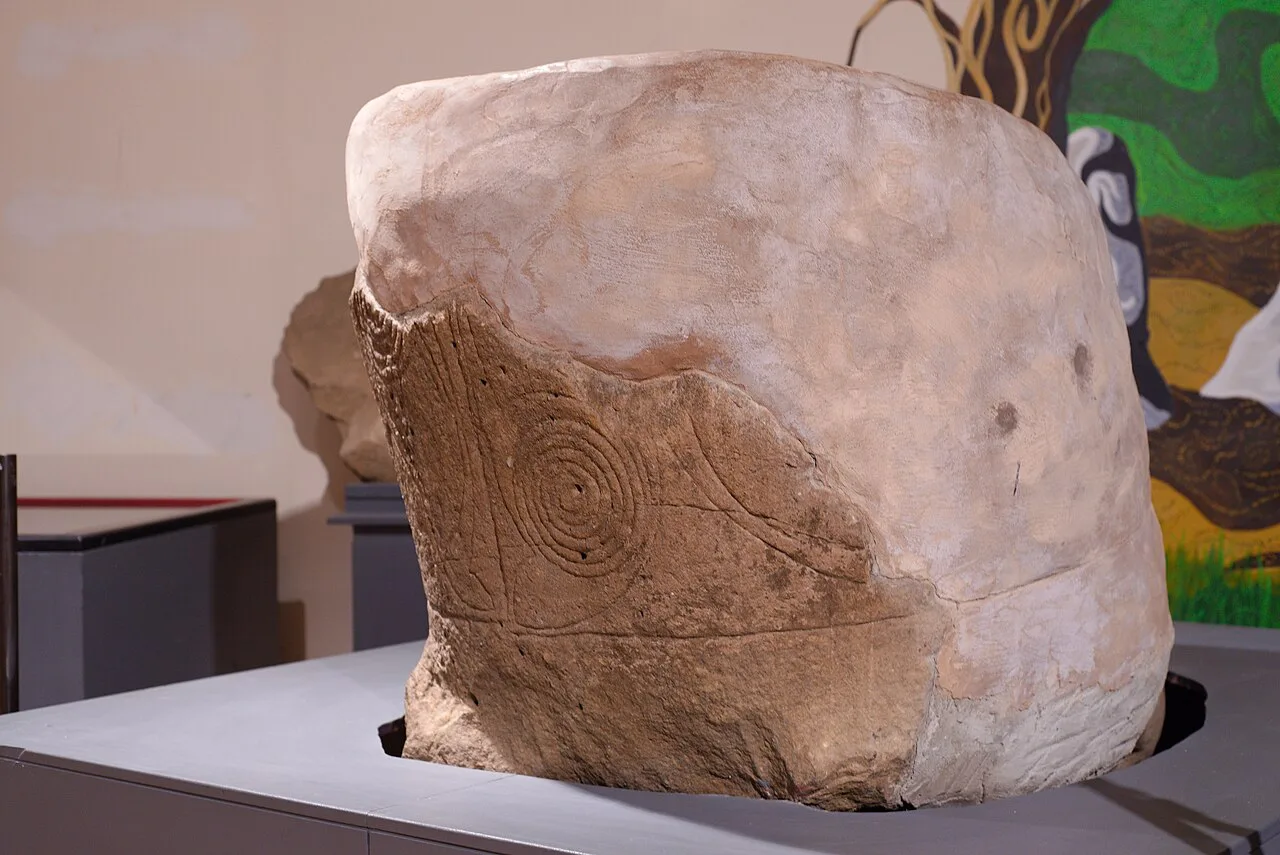
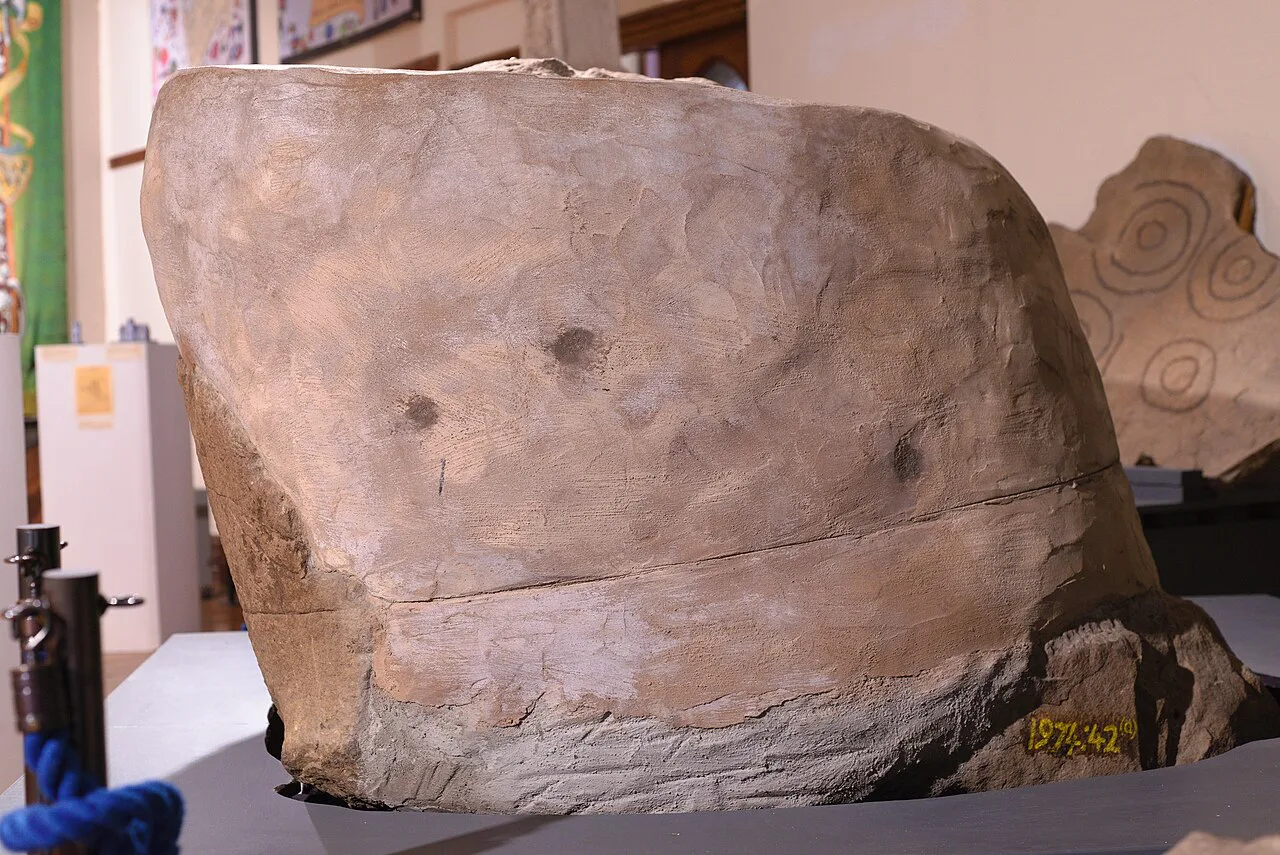
The museum's holdings span the Stone Age through to the twentieth century, and its own highlights list names three objects worth seeking out: the Killycluggin Stone, bog butter and a selection of Sheela-na-gigs. Each belongs to a different kind of story, from prehistoric sculpture to food preservation to medieval church architecture, so they are best treated as separate stops rather than a single prehistoric room.
The Killycluggin Stone deserves particular attention to framing. The museum gives an age estimate of 4,000 to 6,000 years for it, which is the operator's own figure rather than a fixed archaeological date, so read the label as the museum's interpretation. For visitors who want broader context on prehistoric and early monuments, the range of ancient sites ireland covers is a useful companion before or after the visit.
Bog butter and the Sheela-na-gigs are the kind of objects that reward a second look, each pointing to a different part of the county's past. Neither is presented as spectacle, so allow time to read the accompanying museum text. Together with the prehistoric stone, they give the collection its long chronology.
Named Galleries and Exhibitions to Look For
Beyond the headline objects, the museum names a series of galleries and exhibitions: a Folklife Gallery and a GAA history exhibition, plus displays on the Great Famine, the Lords Farnham, the Pig-House Collection and a Women of Influence Exhibition. The spread is unusually wide for a county museum, moving from everyday rural life to landed estate history to sport, and it is worth planning time to read the Famine material carefully as part of the county's wider story.
Photographs and documents in the Folklife Gallery and the GAA history display are where the museum's recent-past material is concentrated, according to its own description. That makes these rooms the place to slow down if you care about social history rather than objects alone. Give them enough attention rather than treating them as a corridor to the next display.
The Percy French Gallery
One gallery is given over to Percy French, described by the museum as Cavan's greatest songwriter, with works on display in the Percy French Gallery. The gallery is a reminder that the county museum's brief includes cultural figures as well as archaeological material. Treat it as a distinct stop with its own mood rather than a corridor between the history rooms.
If you are travelling around Ireland's county museums, the Donegal County Museum offers a comparable institutional model: a county collection telling a regional story. Comparing how two counties present their heritage is a practical way to judge what is distinctive here, and the same exercise works for the Museums in Galway City: Two Places Worth Your Time. The Percy French material is the clearest example of Cavan's cultural, rather than purely historical, collecting.
Outside: The World War One Trench Experience
The museum's outdoor space holds its World War One Trench Experience, which the operator describes as the largest outdoor replica trench open to the public in Ireland and the UK, and calls award-winning. It is a permanent outdoor reconstruction, built according to the manual produced by the Irish Guards and used by the Royal Irish Fusiliers at the Somme. Since the scale and award wording are the museum's own, read them as the operator's framing; and because the trench is outdoors, weather and footwear belong in your planning in a way the indoor galleries do not require.
The trench is accompanied by exhibitions on the 1916 Rising, the Battle of the Somme and a display titled Road to War - Path to Reflection. The pairing is deliberate: the outdoor reconstruction gives physical context to the war years, while the indoor material connects them to Irish events. For the wider revolutionary period, the irish war of independence guide provides the sequence that helps place 1916 and the Somme in order.
Visitors often want to know whether the trench can be entered and how long it takes; the museum's own pages describe the reconstruction but do not publish access rules or timings for it. Confirm the outdoor route on arrival rather than assuming, and check whether it is part of the standard visit that day, especially if the trench is what drew you.
Cross-Border Heritage Work: The PEACE III Project
Cavan County Museum delivered a cross-border project called Connecting Peoples, Places and Heritage, funded under the EU PEACE III Programme, which paired schools and adult groups in Cavan with partners in Fermanagh. Its workshops and site visits covered cultural diversity, Christianity, Plantation, the Establishment of the Border and prejudice. A gallery was given over to displaying the participants' work.
The figures on that page belong to a specific period: the schools element ran through 2010 and 2010/11, with 33 meetings between partner schools reported over the life of the project, and 24 adult partnership meetings in total. Read it as a record of past work rather than a current programme of tours or workshops, which the page does not offer. Its value to a visitor is context: it shows how a border county museum has treated contested history directly.
That border context is the reason the museum's revolutionary-era displays carry more weight than a simple chronological account might suggest. The 1916 material links naturally to the easter rising 1916 story, while the later period is covered in the irish civil war guide. Understanding the sequence from 1916 through the War of Independence to the Civil War makes the exhibitions easier to read together.
Planning Your Visit
The museum states that it opens Tuesday to Saturday from 10am, with last entry at 4.15pm, and that it is closed on Sunday and Monday. It also lists an adult admission rate of six euro. These are the operator's own details, so confirm them with the museum before travelling, since published times and prices can change between seasons.
For individual visitors the museum says there is no need to book in advance, while group leaders are directed to contact the museum separately; no further group terms are published. On site it lists a playground, a Nun's Walk and tea rooms alongside the galleries, but without hours, menus or prices, so treat them as available features to check on the day rather than fixed plans.
The museum provides a downloadable flyer, floorplan and visitor guide, funded by the Department of Tourism, Culture, Arts, Gaeltacht, Sport and Media's Regional Museum Exhibitions Scheme 2024. Loading the floorplan onto a phone before you travel is the simplest way to plan a route across the three floors. It is also worth a final check of the museum's own pages for hours and admission on the morning of your visit.
If Time Is Short: Galleries or Trench?
The central trade-off is indoor versus outdoor. Three floors of galleries hold the Killycluggin Stone, bog butter, Sheela-na-gigs, the Folklife material and the Percy French works, while the trench reconstruction sits outside and connects to the 1916 and Somme displays. Decide which of those two experiences matters more to you and build the route around it.
A chronological route through the indoor floors gives the collection coherence, ending with the twentieth-century material; the outdoor trench then works as a physical finale. If your interest is revolutionary history, reverse that order and go outside first while energy is high. Visitors comparing county collections elsewhere in Ireland may find the castles in county galway material a useful counterpoint on how landed history is interpreted at other sites.
Plan Your Visit
Cavan County Museum rewards a deliberate visit: a convent building of 1872, three floors of county collections running from the Stone Age to the twentieth century, a songwriter gallery, and an outdoor trench reconstruction with accompanying exhibitions on 1916 and the Somme. Set aside enough time to read the labels and to step outside rather than rushing the rooms.
Before you go, check the museum's own published hours, last entry and admission, since the details above are stated by the operator and subject to change. The floorplan is the most practical pre-visit download; the rest you can discover at your own pace.
Explore more Ireland guides
Frequently Asked Questions
What can you see at Cavan County Museum?
The museum displays material from the Stone Age to the twentieth century across three floors, including the Killycluggin Stone, bog butter and Sheela-na-gigs, alongside a Folklife Gallery, a GAA history exhibition, displays on the Great Famine and the Lords Farnham, a Pig-House Collection, a Women of Influence Exhibition and a Percy French Gallery. Outdoors, a permanent World War One trench reconstruction is accompanied by exhibitions on the 1916 Rising, the Battle of the Somme and a Road to War display.
Where is Cavan County Museum located?
It is in Ballyjamesduff, County Cavan, in a building that was originally a convent for the Poor Clare Sisters, dating to 1872. The museum describes its role as collecting and displaying the heritage of County Cavan and its environs. It is not in Cavan town, so plan the journey accordingly.
Is the World War One trench experience indoors or outdoors?
It is outdoors. The museum describes it as a permanent outdoor reconstruction, built according to the manual produced by the Irish Guards and used by the Royal Irish Fusiliers at the Somme. Because it is outside, check conditions on the day and dress for the weather.
Do you need to book Cavan County Museum in advance?
The museum states that individual visitors do not need to book ahead, and that group leaders are directed to contact the museum separately. No further group terms are published, so confirm arrangements directly if you are bringing an organised group.
What is the Killycluggin Stone and how old is it said to be?
It is one of the museum's named highlights, a prehistoric stone for which the museum gives an age estimate of 4,000 to 6,000 years. That figure is the operator's stated estimate rather than a fixed archaeological date, so read the museum's label as its interpretation. It sits among the Stone Age to twentieth-century collections.
How should I plan a route through the museum?
The galleries are arranged over three floors, so decide whether to work from the top down or start with the ground floor and read the museum's downloadable floorplan before arriving. Allow separate time for the outdoor trench and the related 1916 and Somme exhibitions. If revolutionary history is your priority, go outside first.
Sources
You might also like



Continue reading
More guides you'll find useful





