
Battle of Vinegar Hill: History and Visiting the Site
The Battle of Vinegar Hill was fought on 21 June 1798 above Enniscorthy, County Wexford. Learn what happened and how to visit the hill and its museum.
On this page
The Battle of Vinegar Hill was fought on 21 June 1798, when Crown forces under General Lake attacked the rebel encampment on the hill above Enniscorthy in County Wexford. It closed a campaign in which the Wexford rebels had already lost at Newtownbarry (Bunclody), New Ross and Arklow before regrouping on the hill. Today the site is an open landscape rather than a staffed attraction, and the indoor interpretation sits separately in Enniscorthy town.
Visitors should plan the hill and the museum as two different outings. The hill is reached by a paved walk from a free car park at its base, where a memorial plinth carries information on the rebellion; the summit holds the ruins of a stone windmill and looks across the River Slaney to Enniscorthy. The National 1798 Rebellion Centre in town has its own opening hours and admission charges, so neither set of details should be carried over to the other.
How the Hill Became a Rebel Camp
Vinegar Hill entered the campaign as a stronghold won in the field. After the rebel victory at Oulart Hill on 27 May 1798, rebel forces moved on Enniscorthy on 28 May and took the town, then established their main camp on the hill above it.
The camp was not purely military. The centre's educational resource notes that the permanent camp also sheltered family members of rebels and other non-combatants who sympathised with the cause, which matters when reading the casualty figures later. Understanding this helps visitors see the hill as a place where a civilian population gathered under pressure, not simply a parade ground for pikemen.
Numbers at the camp grew quickly as parish leaders brought their forces in during the day after Enniscorthy fell. The centre's account describes rebel command at this stage including Fr. Michael Murphy, Fr. John Murphy, Miles Byrne and Edward Roche. Their forces were a mix of pike and musket men, with only a portion carrying firearms.
The Campaign Closing In
Vinegar Hill was the end of a sequence of setbacks rather than an isolated fight. The centre describes rebel defeats at Newtownbarry, New Ross and Arklow in the weeks before the battle, after which the rebel army regrouped on the hill. General Lake, having suppressed the rebellion in Antrim and Down, turned his attention to Wexford and redeployed troops there after reinforcements reached Dublin.
The wider rebellion had begun in May 1798 with planned risings around Dublin that Crown intelligence disrupted, followed by outbreaks in counties such as Kildare, Meath and Wicklow, and later in Ulster. French help arrived too late and in the wrong place to affect Wexford, landing at Killala in August 1798 after the eastern rebellion had already been crushed. Placing Vinegar Hill in this sequence explains why the rebel position was ultimately a defensive last stand rather than a springboard for a march on Dublin.
That context also explains the scale of Crown deployment at the hill. The centre records that thousands of troops arrived in Dublin on 16 June, freeing Lake to concentrate forces in Wexford for the decisive engagement five days later. For a visitor, this is the point to hold onto: the battle was the product of a closing operation, with Crown artillery massed against a camp that included civilians.
The Battle Itself: 21 June 1798
Lake's plan was to surround the rebels so that no escape route remained. The centre notes one flaw: General Needham, ordered to hold the southern slope, had not arrived when the fighting began, which left a gap in the encirclement. That delay became significant when the rebel leadership decided to withdraw rather than fight to the end on the hill.
The battle opened at 3am with artillery bombardment of rebel positions on the hill and on the outskirts of Enniscorthy town. By 7am Lake's infantry began its assault on the hill, while Crown troops under General Johnson fought through the town itself. The combination of cannon fire and disciplined infantry against largely pike-armed defenders made the outcome difficult to change once the bombardment began.
By around 9am the rebel leaders judged the defence futile without reinforcements from Wexford town and ordered a retreat in that direction. The withdrawal was possible partly because of Needham's late arrival, and it was covered by forces from Wexford town under Edward Roche, who engaged Needham's troops and broke off his pursuit. The rebel army largely left the field in order; the civilians in the camp did not.
The Human Cost
The centre's material estimates that about 1,500 lives were lost during the battle, with most of those being women and children who had taken shelter in the rebel camp. That figure should be read as an estimate from the centre's interpretation rather than a precise record. It nonetheless indicates where the heaviest loss fell: on the non-combatants rather than on the fighting men who withdrew.
After the defeat, rebel leaders regrouped at Wexford town. Some, such as Bagenal Harvey, went into hiding, while others including Thomas Cloney and Edward Hay sought terms of surrender. Fr. John Murphy and Miles Byrne led a column into Carlow and Kilkenny before it broke up, and Murphy was later captured and executed at Tullow.
In the aftermath, the British government moved to tighten control of Ireland, which led to the Act of Union of 1800 and the dissolution of the Irish Parliament in Dublin. Later generations of Irish republicans drew on 1798 as inspiration, a line that can be traced into the nineteenth and twentieth centuries. For readers following that longer story, the memory of Vinegar Hill feeds into later separatist movements, including the campaign traced in the irish war of independence more than a century later. Those tracing the capital's part in this story can pair it with this Dublin heritage guide to the city's key sites.
Why the Position Fell
A useful question for visitors is why the rebels did not make the hill a stronger defensive position in the weeks before the attack. Miles Byrne, one of the rebel leaders present, later wrote that the fences and ditches around the hill had not been levelled to open fields of fire, and that little had been done to make the place formidable. His account, paraphrased here, suggests that the camp's role as a refuge took priority over preparing it as a fortress.
The hill's shape helps make that point on the ground. It is a low rise, and today's paved walk follows a route that makes the approach easy to read as you climb toward the summit. Standing near the top by the windmill ruins, the town lies close below and the Slaney runs beyond it, with views over the battlefield site and across the river to Enniscorthy.
Walking the Hill Today
The site is an open landscape reached on foot rather than a staffed, ticketed attraction. A free car park at the base carries a memorial plinth with information on the 1798 Rebellion, and a paved walk leads to the top of the hill. Visitors should treat this as an outdoor stop and check the weather and daylight before setting out, since the centre's description covers only the car park, plinth and walk.
At the summit, the ruins of a stone windmill give the hill its most recognisable landmark. From there, the view takes in the battlefield slopes, the town of Enniscorthy and the River Slaney beyond. Reading a short account of the battle before you climb makes the walk more useful, because the terrain itself tells you little about what happened on it without context.
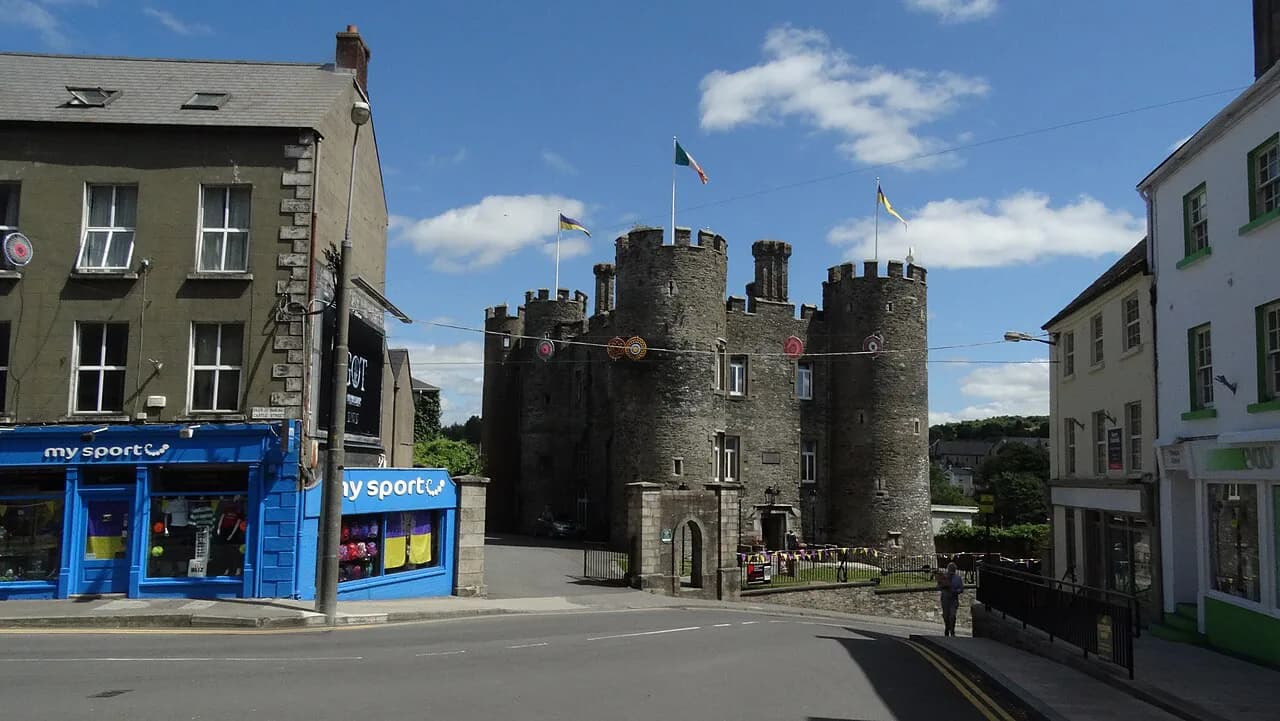
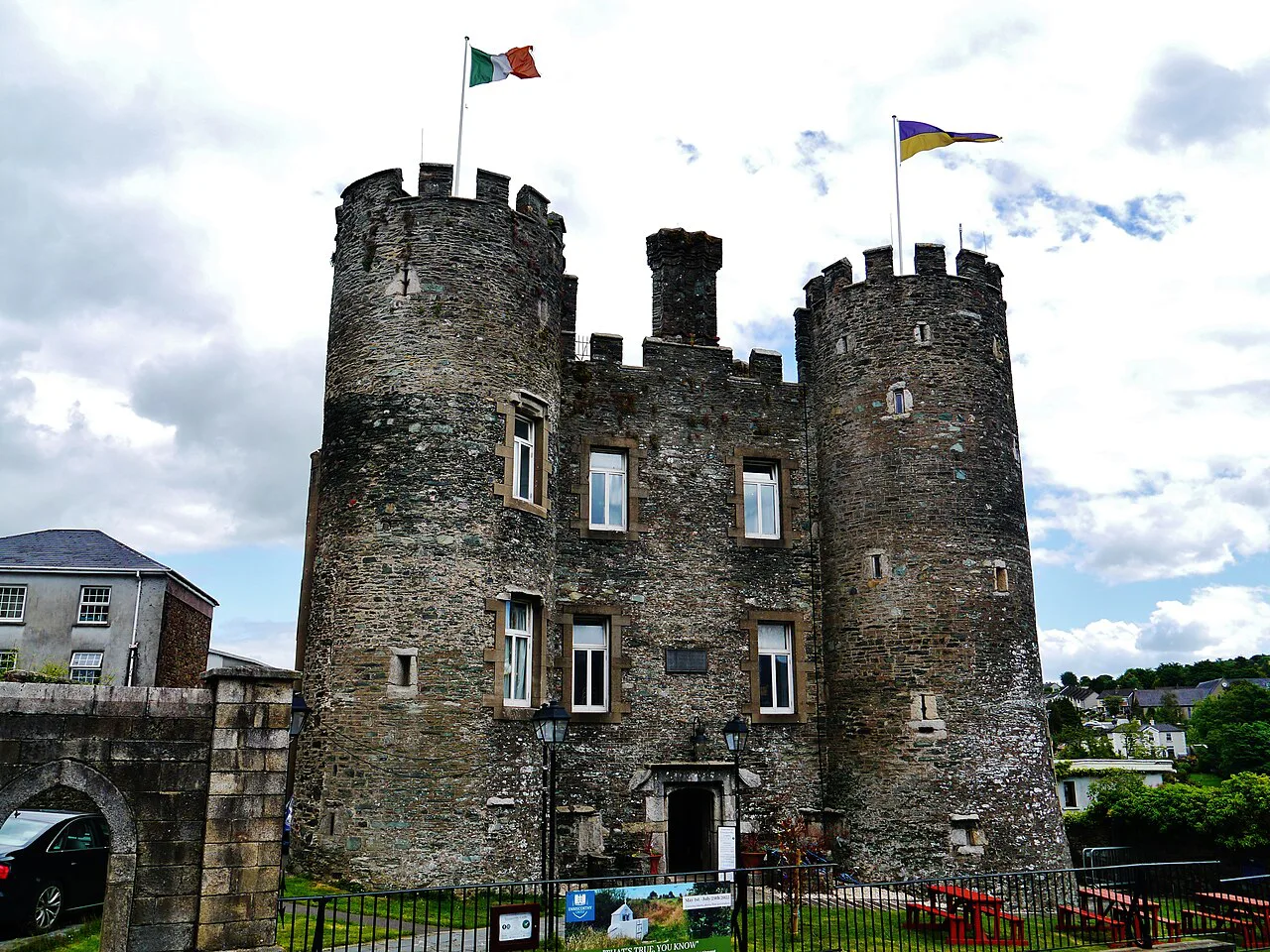
Vinegar Hill is listed by the National 1798 Rebellion Centre as one of its sister sites, alongside Enniscorthy Castle, so the centre invites visitors to continue the local story between the two. Combining the walk with the museum gives a fuller picture than either alone. If you would rather start with the indoor interpretation and finish with the landscape, that order works well and lets you read the hill with the battle already in mind.
The Museum Interpretation in Enniscorthy
The National 1798 Rebellion Centre in Enniscorthy presents the rebellion indoors, including the Battle of Vinegar Hill. Its exhibition lets visitors follow the key figures and the fighting through displays and weapons from the period rather than the bare ground of the hill. For travellers who want a structured account before or after walking the site, the centre is the obvious counterpart.
Its opening hours are Monday to Friday 9.30am to 5.00pm, weekends and bank holidays 12.00pm to 5.00pm, with last admission at 4.15pm each day. Admission is charged: adults pay €10, concessions €8, children aged 3 to 18 €6, and a family ticket for up to two adults and three children costs €30. These details apply only to the museum, so visitors should not assume the hill is ticketed or that the hill's opening follows the same hours.
Reaching Enniscorthy is straightforward on the main road network, with the M11 from the north, the N80 from the west and the N25 via New Ross from the south. Trains on the Rosslare Europort line stop at Enniscorthy, about a 15-minute walk from the centre, and Bus Éireann and Wexford Bus services stop within roughly 10 minutes on foot. Free parking for cars and coaches is available at the centre.
The Wider Rebellion in Brief
The Society of United Irishmen was founded in Belfast in October 1791, with founding members including Samuel Neilson, Thomas Russell, James 'Napper' Tandy and Theobald Wolfe Tone. Its aim was to reform the Irish Parliament and reduce English influence, initially by peaceful means. Wolfe Tone's role was diplomatic and political, negotiating for French support; he was not a commander at Vinegar Hill and did not fight there.
The rebellion finally broke out in May 1798 after the arrest of the Leinster leadership and the disruption of plans around Dublin, with fighting spreading through Kildare, Meath, Wicklow, Wexford and later Ulster. The French landed at Killala in August 1798 under General Humbert, too late to relieve pressure on Wexford. For the broader picture beyond Wexford, the irish rebellion 1798 guide covers the United Irishmen and the national campaign in more depth.
Later events drew directly on 1798: Robert Emmet's rising in Dublin in 1803 was, in the centre's account, a direct consequence of the earlier rebellion, and the participants in 1848 and 1916 looked back to it. That long afterlife is part of why the hill matters today. Travelers tracing the later period can follow it through the easter rising 1916 and the Irish Civil War, both of which carry the memory of earlier risings into the twentieth century.
Plan Your Visit
The best way to understand Vinegar Hill is to allow time for both parts of the story. Walk the hill first or last, using the free car park, the memorial plinth and the paved route to the windmill ruins to see the ground for yourself, then use the National 1798 Rebellion Centre to fill in the soldiers, the weapons and the decisions behind the day.
Check the centre's current opening hours and admission charges before travelling, since those details change and apply only to the museum. The hill itself is open ground reached by the free base car park and the paved walk to the summit. Read a short account of the battle before you climb, so the landscape has something to say.
Explore more Ireland guides
Frequently Asked Questions
What was the Battle of Vinegar Hill and when was it fought?
The Battle of Vinegar Hill was fought on 21 June 1798, when Crown forces under General Lake attacked the rebel camp on the hill above Enniscorthy in County Wexford. It ended the Wexford campaign after rebel defeats at Newtownbarry, New Ross and Arklow, and the rebel army withdrew toward Wexford town.
Why did the rebels camp on Vinegar Hill?
After taking Enniscorthy on 28 May 1798, rebel forces set up their main camp on the hill above the town. The camp also sheltered family members and other non-combatants, which made it a refuge as well as a military base.
Who commanded the Crown forces at Vinegar Hill?
General Lake commanded the Crown forces at Vinegar Hill, having come from suppressing the rebellion in Antrim and Down. General Needham was ordered to hold the southern slope but had not arrived when the fighting began, which left a gap in the encirclement. Wolfe Tone was not at the battle.
How many people died at Vinegar Hill?
The National 1798 Rebellion Centre's material estimates that about 1,500 lives were lost in the battle, and states that most of these were women and children who had taken shelter in the rebel camp. That figure is an estimate rather than a precise record.
Can you walk up Vinegar Hill today?
Yes. A free car park at the base of the hill carries a memorial plinth with information on the 1798 Rebellion, and a paved walk leads to the top. The summit has the ruins of a stone windmill and views over the battlefield and across the River Slaney to Enniscorthy town.
Where can I learn more about the battle indoors?
The National 1798 Rebellion Centre in Enniscorthy interprets the rebellion and the Battle of Vinegar Hill in its exhibition. It has its own opening hours and admission charges, which visitors should check before travelling. The hill itself is open ground with no charge.
Is Vinegar Hill the same as the National 1798 Rebellion Centre?
No. Vinegar Hill is an open heritage landscape outside the town, reached by a paved walk from a free car park. The National 1798 Rebellion Centre is an indoor museum in Enniscorthy with tickets and set hours. The two are separate sites operated as sister attractions.
Sources
You might also like



Continue reading
More guides you'll find useful





