

The Irish Penal Laws: What They Were and Where to Trace Them
The Irish Penal Laws were a code of eighteenth-century statutes restricting Catholics. Learn what they covered and how emancipation was finally won.
On this page
The Irish Penal Laws were not a single enactment but a code of statutes passed by the Protestant Parliament of Ireland to regulate the status of Roman Catholics across most of the eighteenth century. That framing comes from the University of Minnesota Law Library's archive of the laws, which also notes that comparable penal legislation predates the 1691 starting point of its own collection.
Two questions dominate most readers' interest: when did these laws operate, and how did they end? The answers are less tidy than a single date. The statute texts and scholarly summaries date the code differently, the system has roots before its main window, and the dismantling stretched into the nineteenth century before culminating in Catholic emancipation in 1829.
A Code of Statutes, Not a Single Law
Describing the Penal Laws in the plural matters, because visitors and students arriving from general histories often expect one act with one date. The Minnesota archive instead presents a body of statutes passed under successive monarchs, each addressing a different slice of Catholic legal status. Reading the collection's summaries by subject shows how the restrictions were spread across many separate provisions rather than gathered into one code.
The archive's own remit also signals breadth: it reproduces statutes enacted under William and Mary, William III, Anne, and George I and II, and adds selected English statutes that applied to Ireland. Before the union of the two kingdoms, England and Ireland maintained separate parliaments, yet the English parliament could still legislate for Ireland, so a full picture requires both statute books. This is why the archive's editorial choices about scope matter to anyone citing it.
When Were the Penal Laws in Force?
Dates depend on which source you follow, and the difference is worth understanding rather than smoothing over. The Minnesota collection covers acts passed between 1691 and 1760, the span defined by the reigns it documents. A scholarly chapter published by Springer describes the laws as enacted between 1695 and 1750, a narrower window reflecting its own analytical framing of the key legislation.
Neither range should be read as a clean start and end date for persecution. The archive explains that penal-type legislation began with the Reformation and that related statutes also targeted Jews, Protestant Dissenters and Quakers, so the eighteenth-century Catholic code sits inside a longer pattern of religious penal law. Nor do the archive's dates mark the code's repeal, which its introduction explicitly does not cover.

What the Laws Did, as the Archive Describes Them
The Minnesota archive characterises the declared purpose of the Penal Laws as disenfranchising the native majority from political and economic power, while stressing that the disabilities were based on religion rather than race. It notes that conversion to Protestantism offered an escape from the restrictions, and that the statutes went to considerable lengths to detect insincere converts and backsliders. Those clauses are central to understanding how the code worked in practice, and the wider city story is set out in this Dublin heritage guide.
A useful caution: the archive itself is a documentary resource rather than a full history of enforcement, which it places outside its scope. Questions about how rigorously the laws were applied in different regions belong to the scholarship, not to the statute texts alone. Researchers should treat the summaries as a route into the language of the acts, not as a verdict on daily life.
Scholarship and the Problem of Myth
Public memory of the penal era has been shaped by two centuries of myth-making and political argument, according to the abstract of the Springer chapter, which sets out to address persistent misconceptions about the laws. The same abstract identifies origins, purpose, enforcement and impact as areas of ongoing academic study with remaining gaps.
For readers, that means scepticism is appropriate toward dramatic claims on either side, whether exaggerating the code's reach or minimising it. The most reliable starting point is the statutory language itself, read alongside modern scholarly interpretation. The archive's summaries and the peer-reviewed literature answer different questions and are best used together.
The Long Road to Catholic Emancipation
Relief came slowly and through repeated parliamentary defeats. Henry Grattan's emancipation motion in May 1808 was defeated by 281 votes to 128, according to the UK Parliament's overview, and a further motion in favour of considering Catholic claims passed the Commons in June 1812 by 225 votes to 106. An emancipation Bill introduced in February 1813 was lost in committee by a narrow margin.
Frustration with that stalled progress produced the Catholic Association in 1823, which Parliament moved to restrict two years later. The decisive turn was Daniel O'Connell's election in Clare, which the same page describes as proof to the Commons and Cabinet that action could not be avoided. The King's Speech of February 1829 promised relief, a Bill followed within a month, and it received Royal Assent in April.
Placed against the wider national story, the emancipation campaign belongs to a longer arc of constitutional and physical force politics that later shaped the struggle for independence covered in our guide to the irish war of independence, and the split that followed it is traced in our account of the irish civil war. The 1829 settlement was a landmark, not a final word, and later generations continued to contest its limits.
Reading the Statutes Yourself
The Minnesota archive is a research tool rather than a museum, and its organisation is worth learning before you open it. Users can browse summaries by twelve subject headings or in chronological order, click from a summary to the corresponding full text where one has been digitised, and search most browser-based summaries for specific words. Some statutes are available only as scanned images, which cannot be searched.
The project's editor warns that the summaries simplify the original statutes and that the collection may not be complete, inviting researchers who find further laws to make contact. Case law on land transactions and the later dismantling of the penal system are explicitly outside its scope. Plan any deep research with those limits in view, and cite the full texts rather than the summaries where precision matters.
Derrynane House: An Emancipation-Era Visit
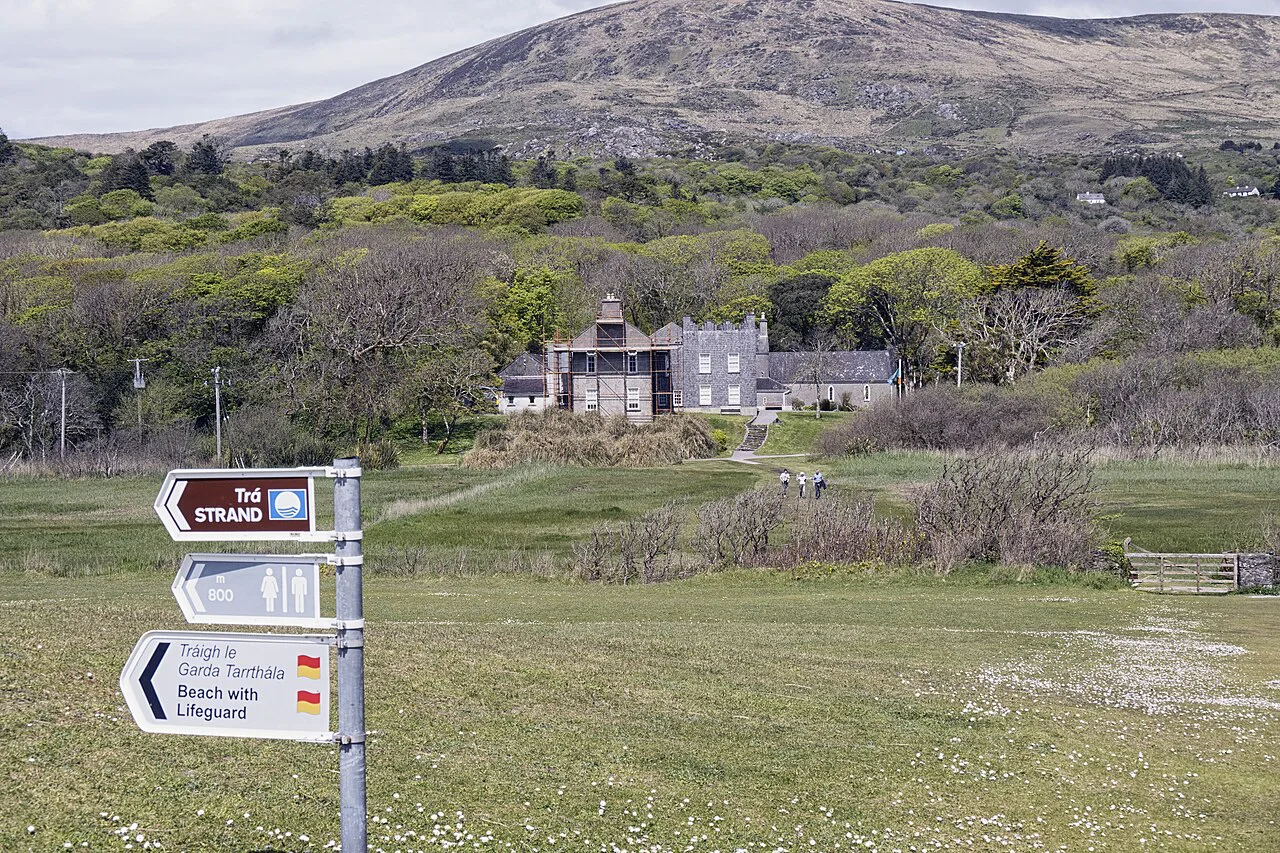
There is no museum of the Penal Laws on the scale of the documentary archive, but the emancipation era has a concrete visitor destination. Derrynane House, at the southern tip of the Iveragh Peninsula, was the ancestral home of Daniel O'Connell, and Heritage Ireland describes him as the lawyer, politician and statesman known as The Liberator. The young Daniel was raised there and returned almost every summer for the rest of his life. The house is a memorial to O'Connell and his era, not a site of penal enforcement.
Heritage Ireland, the state heritage service, reports that the house displays relics of O'Connell's life, including a triumphal chariot presented to him by the citizens of Dublin in 1844 and the bed in which he died three years later. Current displays can change, so treat those objects as the page's account rather than a guaranteed inventory. The surrounding demesne now forms part of Derrynane National Historic Park, over 120 hectares of land the page highlights for its archaeological, horticultural, botanical and ecological interest, so allow time beyond the house itself.
Before travelling, check the official Heritage Ireland page for current opening times, seasonal hours, admission arrangements and directions. The same page offers a downloadable social guide to help first-time visitors and families prepare for a visit.
Where to Take the Story Next
The Penal Laws are best approached as an archive question and a human story at once. Read the statutes through the Minnesota collection, weigh them against current scholarship, then follow their afterlife to the parliamentary record of emancipation and to Derrynane House in County Kerry, the ancestral home of Daniel O'Connell, whose life the official Heritage Ireland property page presents. Check that page for current visiting arrangements before planning a trip. The push for full independence that came after the emancipation era is traced in our guide to the irish war of independence, and the divisions that followed it in our account of the irish civil war.
Explore more Ireland guides
Frequently Asked Questions
Were the Irish Penal Laws a single law?
No. They were a code of statutes passed by the Protestant Parliament of Ireland to regulate the status of Roman Catholics, and the University of Minnesota's archive shows them spread across many separate acts and subjects rather than gathered into one measure.
When were the Penal Laws passed?
Framing varies. The Minnesota law-library collection covers acts passed between 1691 and 1760, while a Springer-published scholarly chapter describes enactment between 1695 and 1750. The archive also notes that penal-type legislation began before 1691, so avoid treating either window as a clean start date.
Who did the Penal Laws affect?
The code's central target was Roman Catholics, and the archive stresses that the disabilities rested on religion rather than race, with conversion as an available escape. The same archive notes that related penal statutes also affected Jews, Protestant Dissenters and Quakers.
How did Catholic emancipation come about?
Through a long parliamentary campaign, not a single repeal. Parliament's overview traces the defeated 1808 motion, the lost 1813 Bill, the Catholic Association of 1823, O'Connell's election in Clare, the February 1829 King's Speech and the Act that received Royal Assent that April.
What was Daniel O'Connell's role in Catholic emancipation?
His election in Clare convinced the Commons and Cabinet that relief could not be resisted. The King's Speech of February 1829 promised it, a Bill followed, and Royal Assent came that April, as recorded in Parliament's account.
Can I read the Penal Laws online?
Yes. The University of Minnesota Law Library hosts summaries and some full texts of the statutes, browsable by subject or chronology and largely searchable. The editor cautions that the summaries are simplified and the collection may be incomplete.
Is Derrynane House a Penal Laws site?
No. It is the O'Connell family home and a museum devoted to Daniel O'Connell, the emancipation leader. It provides context for how the penal era ended, not a display of penal enforcement or the statutes themselves.
What should I check before visiting Derrynane House?
Consult the official Heritage Ireland page for current opening times, seasonal arrangements, admission and directions, and consider the visit-preparation social guide it offers. The demesne is part of a park of over 120 hectares, so allow time for the grounds as well as the house.
Sources
You might also like



Continue reading
More guides you'll find useful





