
The 1798 Irish Rebellion: Enniscorthy and Vinegar Hill Guide
Understand the 1798 Irish Rebellion through Wexford's rising, the Battle of Vinegar Hill and the two Enniscorthy sites where visitors can follow the story.
On this page
The 1798 Irish Rebellion was a nationwide rising against English interference in Irish affairs, shaped by Enlightenment ideas and by the American and French revolutions. According to the National 1798 Rebellion Centre, its County Wexford phase produced the decisive encounter at Vinegar Hill on 21 June 1798. Enniscorthy is the practical base for understanding it, because the town and the hill above it hold the story in two very different ways.
Plan for two separate visits rather than one. The National 1798 Rebellion Centre uses an exhibition to explain the causes, key figures and weaponry, while Vinegar Hill itself is an outdoor site reached by a paved walk to a ruined windmill. Neither substitutes for the other, and reading the hill without the background leaves you looking at a landscape with no context.
Before the Rising: Ideas, Revolutions and the United Irishmen
The centre's educational resource places 1798 within a wider age of revolution. It notes risings in America, the Dutch Netherlands, Hungary, Poland and elsewhere in the late 1700s, and argues that the American War of Independence and the French Revolution had the greatest effect on Irish political thought. Enlightenment arguments about liberty, equality and fraternity led middle- and lower-class Irish people to question how they were governed.
The Society of United Irishmen was founded in Belfast in October 1791, with Samuel Neilson, Thomas Russell, James 'Napper' Tandy and Theobald Wolfe Tone among its founders. It began as a reform movement seeking fair parliamentary representation by peaceful means, spreading its message through pamphlets and the Northern Star newspaper. A Dublin branch followed, and the first Wexford branch was formed at Gorey in 1792.
That early reforming impulse matters for reading the later violence accurately. The society's stated aim was a union of all Irish citizens, and its founding leadership included figures from different Protestant traditions as well as those excluded from political power. The centre presents the turn to arms as a response to refused reform, not as the movement's original purpose. For the wider story of the capital's role in this era, a Dublin heritage guide offers a chronological counterpart.
From Reform to Arms: Suppression, France and Wolfe Tone
War between Britain and France in 1793 changed the government's approach. The centre describes a policy combining limited concession with repression: the Catholic Relief Act gave Catholic landowners voting rights but stopped short of emancipation, while the Gunpowder, Militia and Convention Acts restricted the society's room to organise. Arrests of leading members convinced many that constitutional reform was closed off.
In 1795 the society reconstituted itself as a secret, oath-bound body preparing an armed rising, and Wolfe Tone went abroad to seek French assistance. A French fleet carrying troops for Bantry Bay in December 1796 was scattered by storms and returned home, a serious setback. The following year brought martial law and a severe crackdown in Ulster under General Lake, which the centre treats as a major blow to rebel preparations there.
Tone's role is often blurred in popular memory, so keep the distinction clear when visiting. He was a political organiser and negotiator who pressed for French intervention; he was not a commander on Vinegar Hill. He was captured off Donegal in October 1798 and died in November while awaiting execution.
Wexford Ignites: the Harrow, Oulart Hill and Enniscorthy
The Wexford rising began with a small, local confrontation. On 26 May 1798, men cutting turf for Fr. John Murphy near Boolavogue ambushed a patrol of Yeomanry cavalry from Camolin after the patrol burned a suspect's cabin; Lieutenant Bookey and a private were killed. The centre's timeline treats this skirmish at the Harrow as the spark that set the county alight.
The next day, militia sent from Wexford town advanced on roughly 2,000 rebels gathered at Oulart Hill and were broken by a pike charge. On 28 May the rebels moved on Enniscorthy, where the centre records a force of several thousand against a much smaller garrison of Yeomen and militia. After taking the town they established their main camp on Vinegar Hill, which also became a refuge for non-combatants.
That refugee presence is the detail to carry with you up the hill. A camp holding families and civilians is not the same thing as a fortified military position, and it explains why the battle's cost fell so heavily on people who were not fighting.
Turning Points: Three Rocks, New Ross, Newtownbarry and Arklow
Rebel success at Enniscorthy was followed by argument over where to strike next. The centre's account has the leadership decide to march on Wexford town to free imprisoned leaders, camping at Forth Mountain, where they learned of reinforcements approaching. Rebels from the Barony of Bantry ambushed that column at the Battle of Three Rocks, and the Wexford garrison abandoned the town for Duncannon.
The campaign then divided, and the chronology matters. On 1 June a force under Myles Byrne and Fr. Mogue Kearns attacked Newtownbarry, now Bunclody, forcing Crown troops back before being repulsed with heavy losses. On 5 June Bagenal Harvey led the assault on New Ross, where rebels initially broke into the town before being driven back. At Arklow on 9 June the rebels were again defeated, and Fr. Michael Murphy was killed. These reverses narrowed the rising's chances of spreading beyond Wexford.
The centre's timeline also records the killing of loyalist civilians at Scullabogue, near Newbawn, where a barn was set alight during the fighting around New Ross. It belongs in any honest account of the rebellion's civilian toll and should be read soberly rather than passed over.
21 June 1798: The Battle of Vinegar Hill
After the Ulster rising was suppressed, General Lake turned his attention to Wexford, and Crown troops surrounded the rebel camp on Vinegar Hill on 21 June 1798. The centre's battlefield page and its timeline differ on how many Crown soldiers were engaged, so treat specific figures cautiously and read whichever number you encounter as that account's estimate. What is consistent is the outcome: the camp was overrun.
Lake intended a complete encirclement, but General Needham's troops had not reached the southern slope when the attack began, and the gap allowed the rebel force to withdraw towards Wexford town. Miles Byrne, one of the youngest rebel leaders, later wrote in his memoirs that the fences and ditches around the hill had been left standing rather than levelled for defence. The centre reports that judgement as Byrne's account rather than settled fact.
The human cost was severe, and the centre describes the majority of those killed on the hill as women and children who had taken shelter in the camp. Casualty totals should be attributed to the source giving them; the centre presents the civilian deaths as an estimate rather than a precise count.
People and Weapons: Why the Pike Mattered
The rising was led by local people whose biographies are worth knowing before you walk the ground. Fr. John Murphy of Boolavogue led rebels at Oulart and Enniscorthy and was executed at Tullow in July 1798. Myles Byrne, born in 1780, fought at Bunclody, Arklow and Vinegar Hill, later joined Robert Emmet's rising, and died in Paris in 1862. Bagenal Harvey, a lawyer and United Irishman, commanded at New Ross.
The pike was the rebellion's defining weapon, made of ash or more commonly oak with an iron head fitted by local blacksmiths. Its shaft ran roughly twice the height of the man carrying it, and a hook near the top could catch cavalry reins and pull a rider down. Crown forces relied on flintlock muskets, bayonets, cavalry sabres and cannon, so rebel fighters were usually outgunned at range and depended on close-quarters charges.
That imbalance explains the shape of the Wexford battles. Successful rebel actions such as Oulart Hill came from massed pike charges at close quarters; at Arklow and Vinegar Hill, artillery and disciplined infantry fire broke those charges before they could close.
Aftermath and Memory: Union, Later Risings and Ballads
A French force under General Humbert landed at Killala in August 1798, too late to revive the rising, and won early victories before surrender at Ballinamuck in September. The centre estimates that more than 30,000 lives were lost across Ireland and that thousands were left homeless. In the aftermath, the Act of Union of 1800 dissolved the Irish House of Commons and brought Ireland under direct rule from London.
The centre presents 1798 as an inspiration for later revolutionary movements, including Emmet's rising in 1803 and, in the next century, the events of Easter 1916. Its own summary of that legacy gives useful context if you want to follow the story beyond Wexford into the Irish War of Independence, 1919, when a very different campaign was fought. Treat the connection as continuity of inspiration rather than a single chain of causation.
Commemoration came largely through song. The centre notes that 'At Boolavogue' and 'Kelly from Killanne', both by P. J. McCall, were written in the late 1890s for the rebellion's centenary. They are evidence of how the rising was remembered a century later, not contemporary testimony, and that distinction is worth holding on to when you meet the ballads in Wexford.
Visiting Today: the Centre and the Hilltop
The National 1798 Rebellion Centre in Enniscorthy is the indoor starting point, with an exhibition covering the key figures, the Battle of Vinegar Hill and period weapons, plus guided tours and educational resources. It also names Enniscorthy Castle and Vinegar Hill as sister sites. The centre sits at Parnell Road, Enniscorthy, County Wexford, Y21 PY03.
Published opening hours are Monday to Friday 9.30am to 5pm, and weekends and bank holidays 12pm to 5pm, with last admission at 4.15pm. Admission is listed as €10 for adults, €8 concession, €6 for children aged 3 to 18 and €30 for a family of up to two adults and three children. Check the centre's own pages before travelling, since these details can change.
To reach Enniscorthy, take the Rosslare train from Dublin Connolly and walk about 15 minutes from the station; Bus Éireann No. 2 and Wexford Bus stops are about 10 minutes away. Free parking is available for cars and coaches. Allow time for two stops, since the museum and the hill are separate visits.
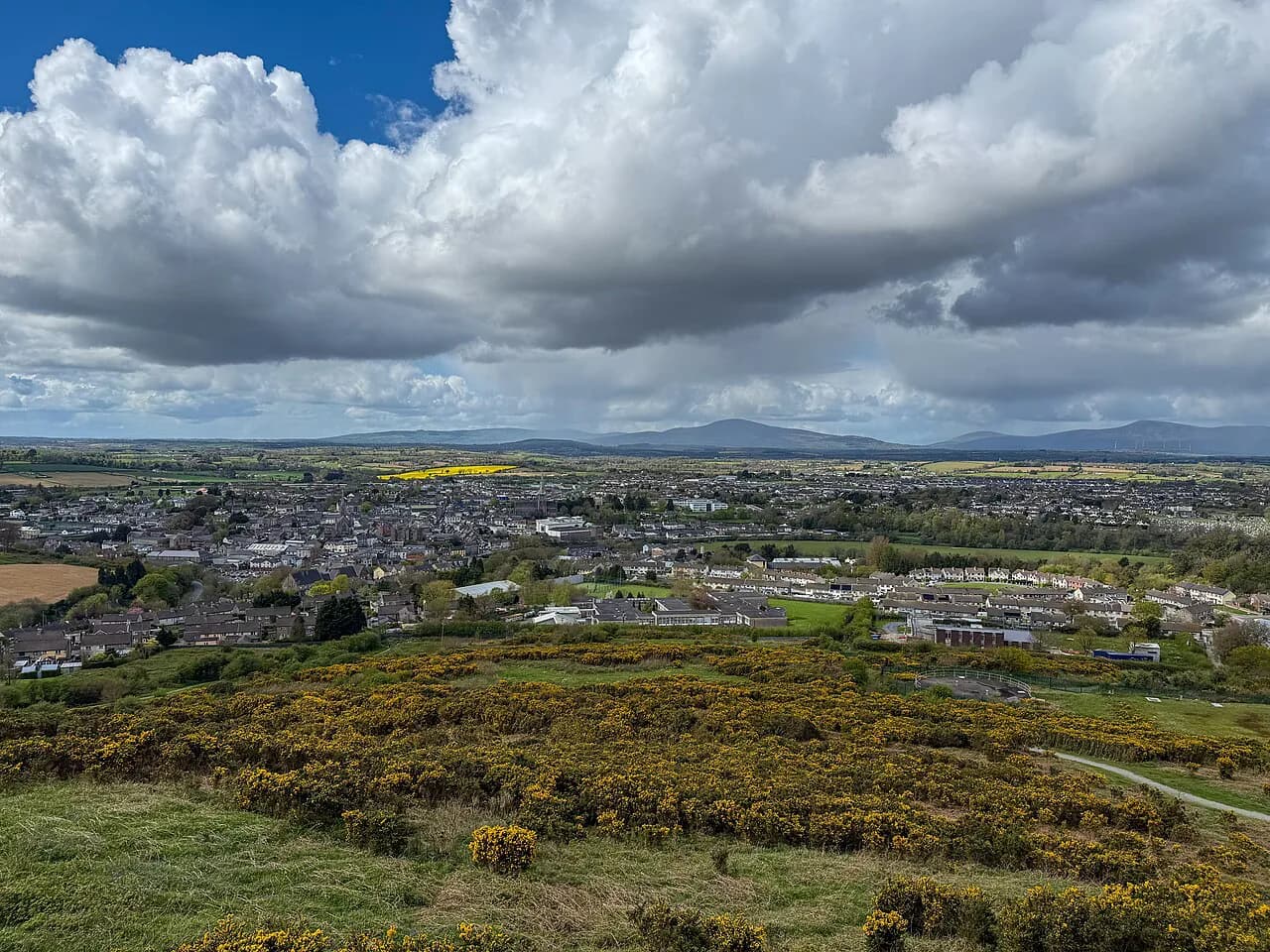
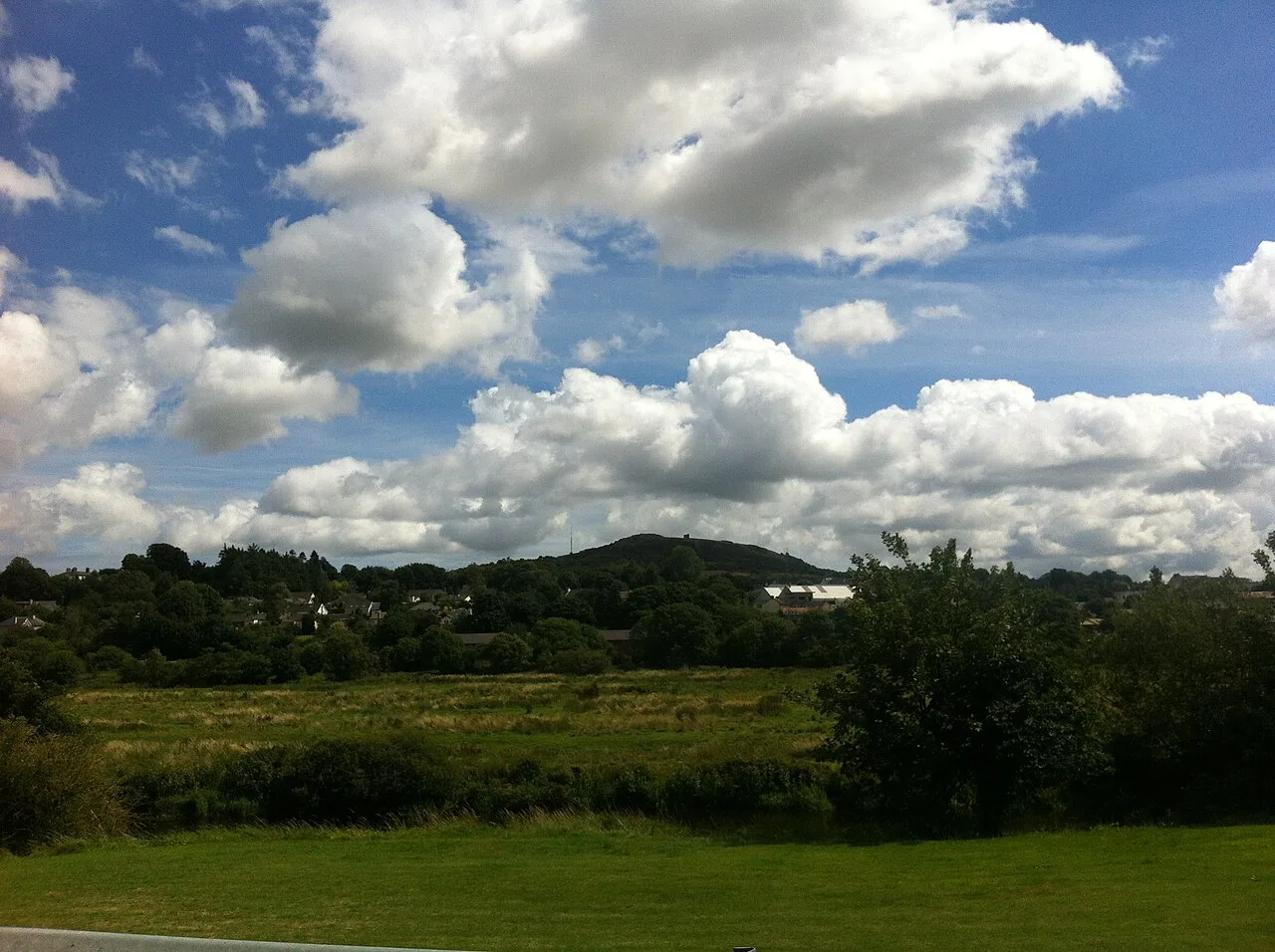
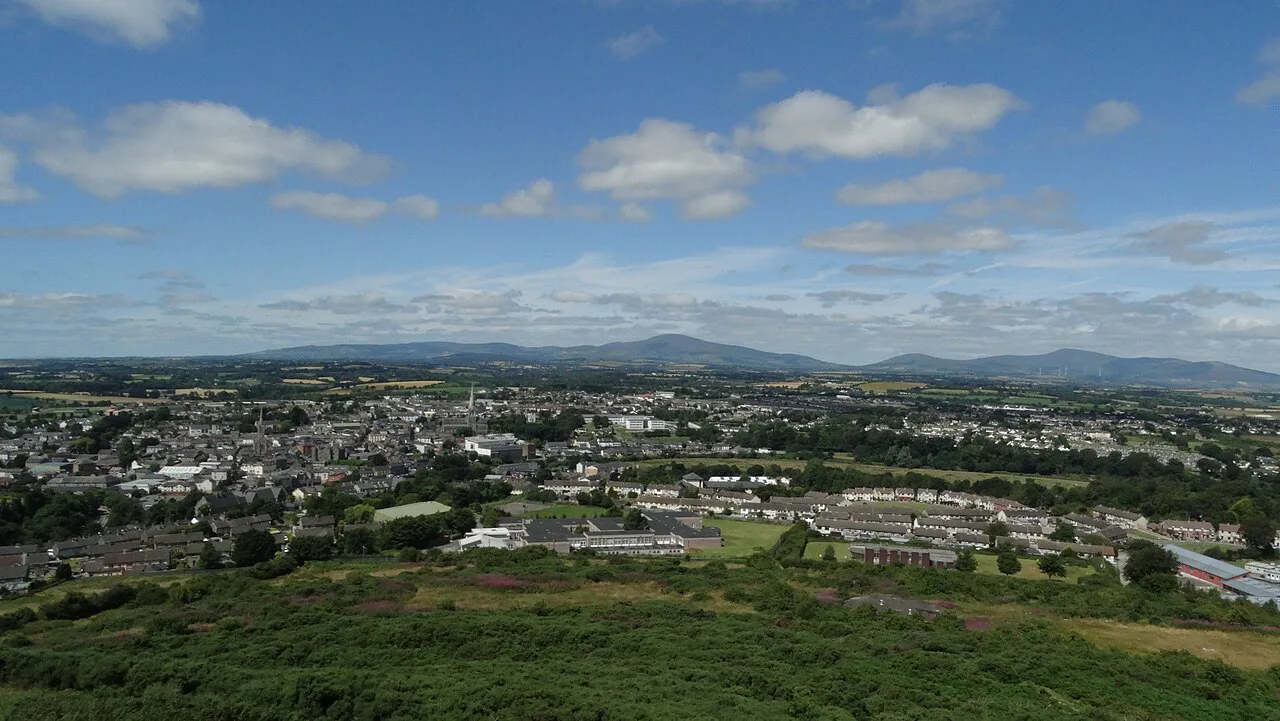
Vinegar Hill is an outdoor site, and the centre publishes no formal opening hours for it. A free carpark at the base holds a memorial plinth with information on the rebellion, and a paved walk leads to the ruins of a stone windmill with views over the battlefield and across the River Slaney to Enniscorthy town.
FAQ
The questions below cover the battle date, Wolfe Tone's role and the difference between the two sites, which are the points visitors most often ask about at Enniscorthy.
Plan Your Visit
Build the day around the indoor exhibition first and the hill second. The centre supplies the causes, characters and weapons, which makes the walk to the windmill and the view over the Slaney legible rather than merely scenic. If time is short, prioritise the centre and read the battlefield from the memorial plinth at the base.
Two practical points are worth confirming before you travel. Check the centre's opening hours and admission on its own pages, and remember that Vinegar Hill is unenclosed open ground with a free carpark and memorial plinth at the base but no published opening hours. If the rebellion's later chapters interest you, the Irish War of Independence, 1919 is the natural next step in the same national story, with the Irish Civil War following it.
Explore more Ireland guides
Frequently Asked Questions
What was the Irish Rebellion of 1798?
It was a nationwide rising against English interference in Irish affairs, organised chiefly by the Society of United Irishmen and influenced by Enlightenment ideas and the American and French revolutions. County Wexford saw the most decisive fighting, ending with the Battle of Vinegar Hill on 21 June 1798 and further French landings at Killala in August.
When was the Battle of Vinegar Hill?
The battle took place on 21 June 1798, when Crown forces under General Lake attacked the rebel camp on the hill above Enniscorthy. The rebel force withdrew towards Wexford town through a gap left by troops that had not arrived on the southern slope.
Did Wolfe Tone fight at Vinegar Hill?
No. Tone was a founding organiser of the Society of United Irishmen who worked to secure French military support and spent much of the period abroad. He was captured off Donegal in October 1798 and died in November while awaiting execution; battlefield command at Vinegar Hill rested with local leaders.
What can you see at the National 1798 Rebellion Centre?
The centre in Enniscorthy presents an exhibition on the rebellion's key figures, the Battle of Vinegar Hill and weapons of the period, and offers guided tours and educational resources. It also points visitors towards its sister sites, Enniscorthy Castle and Vinegar Hill.
Is Vinegar Hill free to visit?
Yes. The centre describes a free carpark at the base of the hill, a memorial plinth with information on the rebellion, and a paved walk to the ruined stone windmill. It is an outdoor site with no published opening hours, and it is separate from the paying museum in town.
How do you get to the 1798 centre in Enniscorthy?
Enniscorthy is served by the Rosslare train from Dublin Connolly, and the centre is about a 15-minute walk from the station. Bus Éireann route 2 and Wexford Bus stop roughly 10 minutes away on foot, and free parking is available for cars and coaches.
Sources
You might also like



Continue reading
More guides you'll find useful





