
Easter Rising 1916: A Visitor's Guide to the History and Records
Understand the 1916 Easter Rising through the National Library of Ireland's exhibition, then trace the records and visit Kilmainham Gaol with pre-booked access.
On this page
The Easter Rising began on Easter Monday, 24 April 1916, when members of the Irish Volunteers and the Irish Citizen Army occupied buildings in Dublin and proclaimed an Irish Republic. That date and framing come directly from the National Archives research guide, which also holds detailed records of the political and military activities around the event. For a visitor, the Rising works best as three separate projects: reading the narrative, tracing the archival trail, and booking the one supported on-site visit.
Treat the Rising as its own subject rather than a prelude to everything that followed. It was primarily a Dublin event, though smaller outbreaks occurred in Meath, Galway and Wexford, as the National Museum of Ireland factsheet on the later Irish Wars notes. That distinction matters because the guerrilla conflict of 1919 to 1921 and the Civil War of 1922 to 1923 involved different personnel, tactics and geography.
How the Rising Was Planned
The National Library of Ireland's online 1916 exhibition traces the preparations in unusual detail. After the First World War broke out in August 1914, the Irish Republican Brotherhood resolved to stage an insurrection at the next opportune moment, and in May 1915 it formed a military committee that included Patrick Pearse, Joseph Plunkett and Éamonn Ceannt. Seán MacDiarmada and Tom Clarke joined later that year, and the group became known as the Military Council.
In January 1916 the council agreed with James Connolly, who was not an IRB member, to mount a joint insurrection using both the Irish Volunteers and the Irish Citizen Army, and Connolly was co-opted onto the council. Thomas MacDonagh became a seventh member in early April. The seven members then constituted themselves the Provisional Government of the Irish Republic and settled the text of the Proclamation, with Pearse entrusted with the drafting.
Read that section of the exhibition before any site visit, because it explains why the rising was smaller and more improvised than its reputation suggests. The council placed heavy reliance on a proposed arms shipment from Germany arranged through Roger Casement, and that dependence shaped the week's outcomes. Knowing this makes the chronology in the following sections easier to follow.
The Proclamation, the Lost Arms and Easter Monday
The plan nearly collapsed before it began. The ship Aud arrived off the Kerry coast on Holy Thursday but failed to make contact with local Volunteers and was eventually scuttled by its captain, and when news came on Holy Saturday that Casement had been arrested and the arms lost, Eoin MacNeill definitively countermanded Pearse's orders for Easter manoeuvres. The Military Council met at Liberty Hall early on Sunday and decided to postpone the Rising until noon the following day so that Volunteers across the country could be told it was going ahead.
The Proclamation was printed that Sunday on the press at Liberty Hall, according to the same exhibition narrative. The decision to rise on Easter Monday despite the lost shipment is the pivot of the whole story, and it is the point where a reader can see how narrowly the Rising was improvised. When you encounter the Proclamation in any exhibition or archive, treat it as the document the council finalised and signed in the days before Easter rather than as a text issued once fighting was under way.
Easter Week in Dublin: The GPO, Moore Street and North King Street
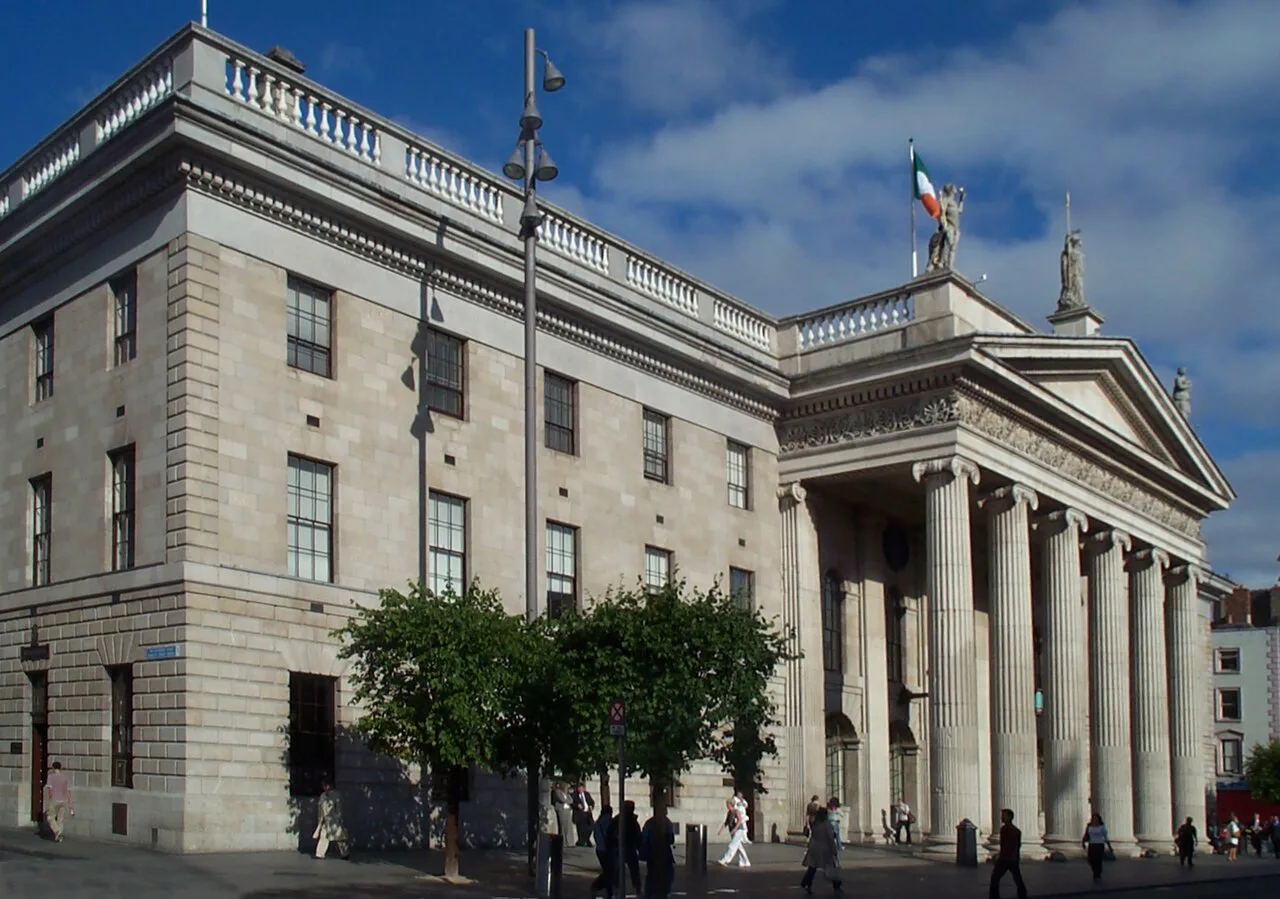
The National Library of Ireland's day-by-day account of Friday 28 April gives a concrete picture of how the week ended. General Maxwell arrived in Dublin that morning, Pearse issued a statement admitting the Rising was almost over, and by evening the General Post Office was on fire, with the garrison evacuating to houses in the Moore Street area. The O'Rahilly was mortally wounded while leading a charge to clear the way for that evacuation, and intense fighting continued that night in North King Street, held by Commandant Ned Daly's men.
Those three place names, the GPO, Moore Street and North King Street, are the most useful anchors for a reader because they mark the shift from a fixed headquarters to a dispersed fight in ordinary streets. The exhibition's chronology is the strongest remedy against the tidy version of the week in which the GPO stands for everything. Read the 28 April page alongside a modern map of central Dublin to see how compressed the final fighting was.
Beyond Dublin: Ashbourne and the Limits of the 1916 Outbreak
The same 28 April page records that at Ashbourne in County Meath, Thomas Ashe and the 5th Dublin Battalion achieved the greatest success of the Rising when they forced a large contingent of police to surrender. That detail is worth holding onto, because it complicates the assumption that the Rising was purely a city event. It also marks the outer limit of the 1916 outbreak, a contrast worth keeping in view when you read about the nationwide conflict that came later.
Keep the scale of 1916 in proportion. The National Museum of Ireland's factsheet on the Irish Wars of 1919 to 1923 notes that 1916 fighting was primarily in Dublin with smaller outbreaks in Meath, Galway and Wexford, whereas the later conflict spread across the country. If your interest lies in that later period, start with The Irish War of Independence, 1919 guide, then continue with The Irish Civil War narrative that follows from the treaty split.
Kilmainham Gaol: The Bookable On-Site Visit
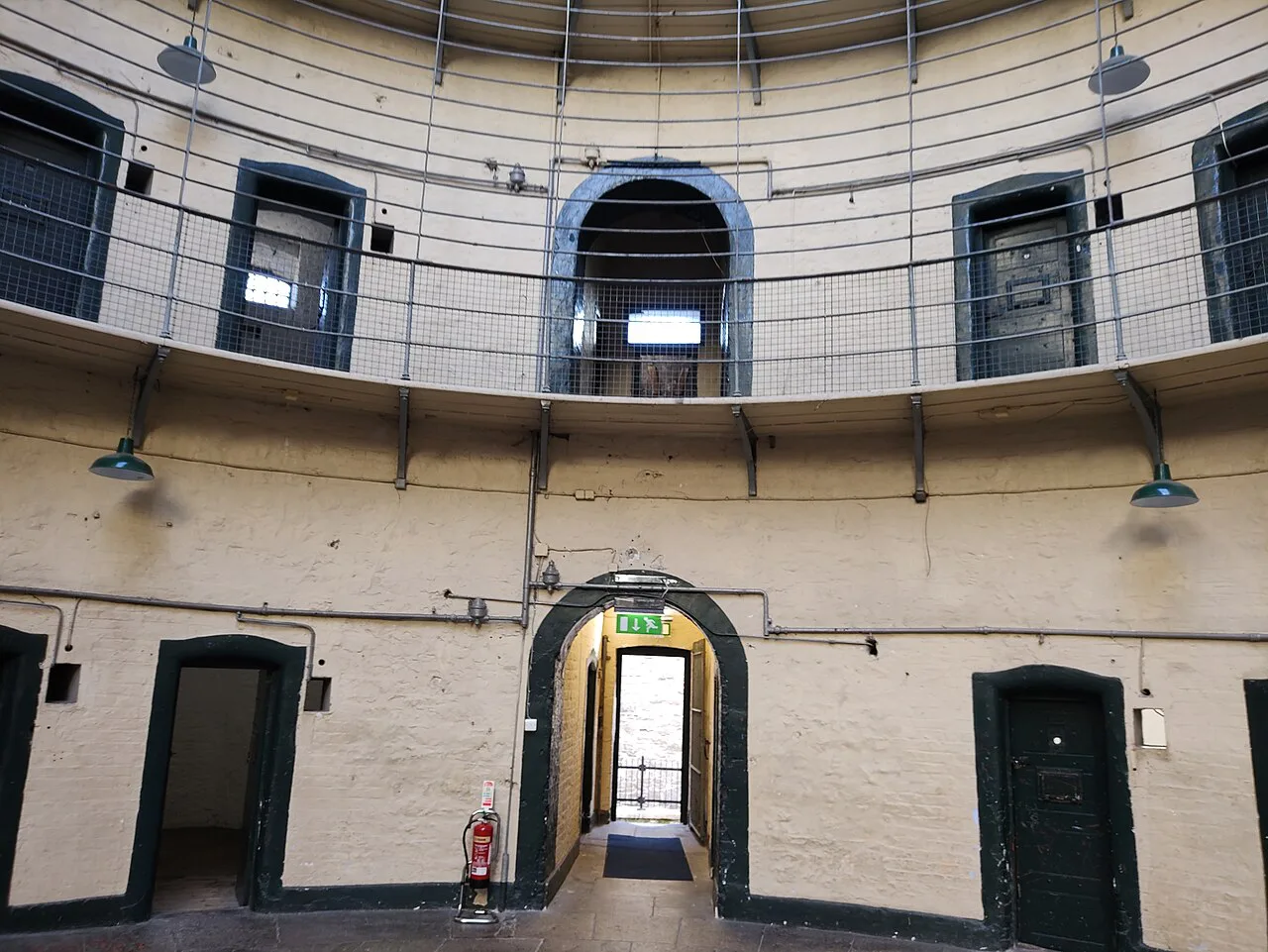
Kilmainham Gaol is the strongest supported place to encounter the penal and political history that surrounds the Rising. The Office of Public Works, which runs the site, notes that it opened as Dublin's county gaol in 1796 and operated until 1924, holding ordinary men, women and children as well as political prisoners connected with rebellions, the War of Independence and the Civil War. That breadth is the reason to go: it is a site about imprisonment and punishment, not only a gallery of famous names.
Access is by pre-booked guided tour, so do not plan on walking in, and the operator suggests allowing about 90 minutes. Part of the tour is outdoors and the interior is cold in winter, which argues for dressing for the weather rather than treating the gaol as a rainy-day shelter. The museum and the gaol tour are distinct elements of the visit, so decide in advance how much time you want for each.
Because Kilmainham spans 1796 to 1924, it lets you place 1916 inside a longer story of Irish confinement and political protest. If that longer history interests you, the Irish penal laws provide the earlier legal background against which later political imprisonment is usually explained. Read the exhibition narrative first and the gaol becomes a place where policies and sentences are visible rather than abstract.
Following the Record Trail Online
The National Library of Ireland's 1916 exhibition is an online resource, which means it can be read before you travel and revisited afterwards; do not assume that any particular item from it is currently on physical display. Its value lies in the connected narrative of preparations, the Proclamation and the day-by-day chronology. Use it as your spine, then branch into archives for individuals and specific events.
The National Archives of Ireland's Decade of Centenaries collection covers 1912 to 1923 and includes free access to material from that period. Among its holdings are daily reports compiled by the Dublin Metropolitan Police detective department on the movements and associations of pro-independence suspects between 29 May 1915 and 20 April 1916, ending just before the Rising. The 1901 and 1911 censuses, the only surviving full censuses open to the public, help place individuals and families in the city on the eve of the event.
The National Archives in the UK holds the administrative and military paperwork of the Rising and its aftermath. Its research guide points to series such as WO 35 for law and order under the military authorities, CO 904 for the Dublin Castle records, and WO 71 for the courts martial of those executed in May 1916. Familiarise yourself with the reference codes before you search, because they are the practical key to the catalogue.
Not everything is digitised or free. Some series are available online through commercial partners, while others can only be consulted at Kew or obtained as paid copies, and the guide also lists related collections held at other institutions. Plan around that split rather than assuming a single search will produce everything. If your subject is the period after 1919, the |The Irish War of Independence, 1919| overview is the more efficient route, with the |Irish Civil War| guide picking up the treaty split and its aftermath.
Sequencing Research and a Visit
A workable order is narrative first, records second, site third. Read the National Library's preparations and chronology pages to fix the sequence of events, then use the National Archives of Ireland material to find named people, and only then book Kilmainham so the tour lands on a story you already know. This order prevents the common experience of leaving a guided tour with dates but no thread to follow, and it keeps 1916 distinct from the |War of Independence| that followed.
Set aside the assumption that a single institution holds the whole story. The Rising is documented across a library exhibition, a national archive in Dublin, a national archive in London and a former prison, each with different access rules. Decide what question you are actually asking, whether it is what happened in a particular street or what happened to a particular person, and choose the institution that answers it. For the events that came next, the era of the Anglo-Irish Treaty and what followed is covered in the site's civil war guide.
Plan Your Visit
Start with the National Library of Ireland's online exhibition to establish what happened and in what order, then use the two national archives to pursue individuals, units and court records. Book Kilmainham Gaol in advance if you want the on-site experience, and allow about 90 minutes while preparing for a partly outdoor, cold-weather tour.
Check current opening arrangements and booking conditions with the operator before you travel, since these change and are best confirmed at source. The history itself is stable: the Rising began on 24 April 1916, its planning and its week are documented, and the surviving records — some digitised and some consultable only in person or by paid copy — let anyone follow the reference codes. For the city’s wider historical setting, continue with our |Dublin history| guide.
Explore more Ireland guides
Frequently Asked Questions
What was the Easter Rising of 1916?
It was an insurrection that began on Easter Monday, 24 April 1916, when members of the Irish Volunteers and the Irish Citizen Army occupied buildings in Dublin and proclaimed an Irish Republic. The National Library of Ireland's online exhibition traces the months of planning behind it, including the Military Council's decision with James Connolly to mount a joint insurrection and the loss of the German arms shipment that forced a last-minute change of date.
Where can I research the Easter Rising before visiting Ireland?
The National Library of Ireland's 1916 exhibition is an online resource covering the preparations and a day-by-day chronology of Easter Week, so it can be read in advance. The National Archives of Ireland's Decade of Centenaries collection adds free access to material from 1912 to 1923, including Dublin Metropolitan Police detective reports on suspects between 29 May 1915 and 20 April 1916.
Can I visit Kilmainham Gaol without booking?
No. The Office of Public Works, which runs the site, requires pre-booked guided access, so do not plan on walking in. Check current booking arrangements directly with the operator before you travel, and note that the museum and the gaol tour are distinct elements of the visit.
How long does a Kilmainham Gaol visit take?
The operator suggests allowing about 90 minutes. Part of the tour is outdoors and the interior is cold in winter, so dress for the weather rather than expecting indoor shelter throughout; build in extra time if you want to give the museum separate attention from the guided gaol tour.
Are the National Archives records about the Rising all available online?
No. The National Archives research guide notes that some series are digitised through commercial partners while others can only be consulted at Kew or obtained as paid copies. It also points to related collections held at other institutions, so plan around that split instead of assuming a single catalogue search will surface everything.
What is the difference between the 1916 Rising and the War of Independence?
The Rising was primarily a Dublin event, though smaller outbreaks occurred in Meath, Galway and Wexford, as the National Museum of Ireland's factsheet on the later Irish Wars notes. The War of Independence that began in 1919 was a guerrilla conflict fought across the country, followed by the Civil War of 1922 to 1923, so the personnel, tactics and geography differ from 1916.
Sources
You might also like



Continue reading
More guides you'll find useful





