
Irish Traditional Crafts: Where Weaving, Pottery and Silver Are Still Made
Irish traditional crafts come alive at working mills, pottery workshops and museum collections. See where weaving, spongeware and silver skills are shown today.
On this page
Irish traditional crafts are easiest to understand in three strands: textiles (spinning, weaving, dyeing), pottery and silversmithing. This guide is selective rather than a definitive canon, because Ireland's craft record is far too varied to compress into one page. You will find two National Museum of Ireland collections that interpret making through objects, plus three family businesses that still make and sell their work in Kilkenny and Kerry.
Choose your experience by what you actually want to do. A museum lets you handle and examine objects and read the history; a working mill or pottery shows production, with limits on how far inside you go. Rather than rank places, this guide sets out spacing and booking constraints, then lets you fit them into existing travel plans across Mayo, Dublin, Kilkenny and Kerry.
Threads of history: spinning and weaving in Ireland
The Irish Guild of Weavers, Spinners and Dyers attributes some of the earliest evidence of woven material in Ireland to pottery from about 1600 BC that shows impressions of cloth, and dates a fragment of bog-found cloth in the National Museum to at least 700 BC. The guild also notes that spinning was practised in Ireland in Neolithic times and that stone spinning whorls have been recovered from excavated Irish settlements such as crannogs of the first and second centuries BC. Treat these as the guild's account of deep craft history, not a catalogue of sites to visit.
A useful detail for understanding the social place of textile work comes from the guild's discussion of the Brehon Laws, which it says entitled a wife, on divorce, to keep her spindles, wool bags, weaving reeds and a share of yarn and cloth. The same article distinguishes the rural handweaver making cloth for home and neighbouring households from organised urban craftsmen working for larger domestic and export markets from the thirteenth century. That split shaped where Irish weaving actually happened and how its decline was felt.
Dublin's Weavers' Guild and the Liberties
According to the guild's historical account, the Dublin Weavers' Guild dedicated to the Blessed Virgin Mary received its first charter in September 1446, regulating weaving within the city and for six miles beyond. The guild could inspect and punish offences, held its own seal, and required apprentices to serve seven years before proving their skills to the Master and Wardens. It also imposed fines for inferior output, using lead seals to guarantee the maker and standard of finished cloth.
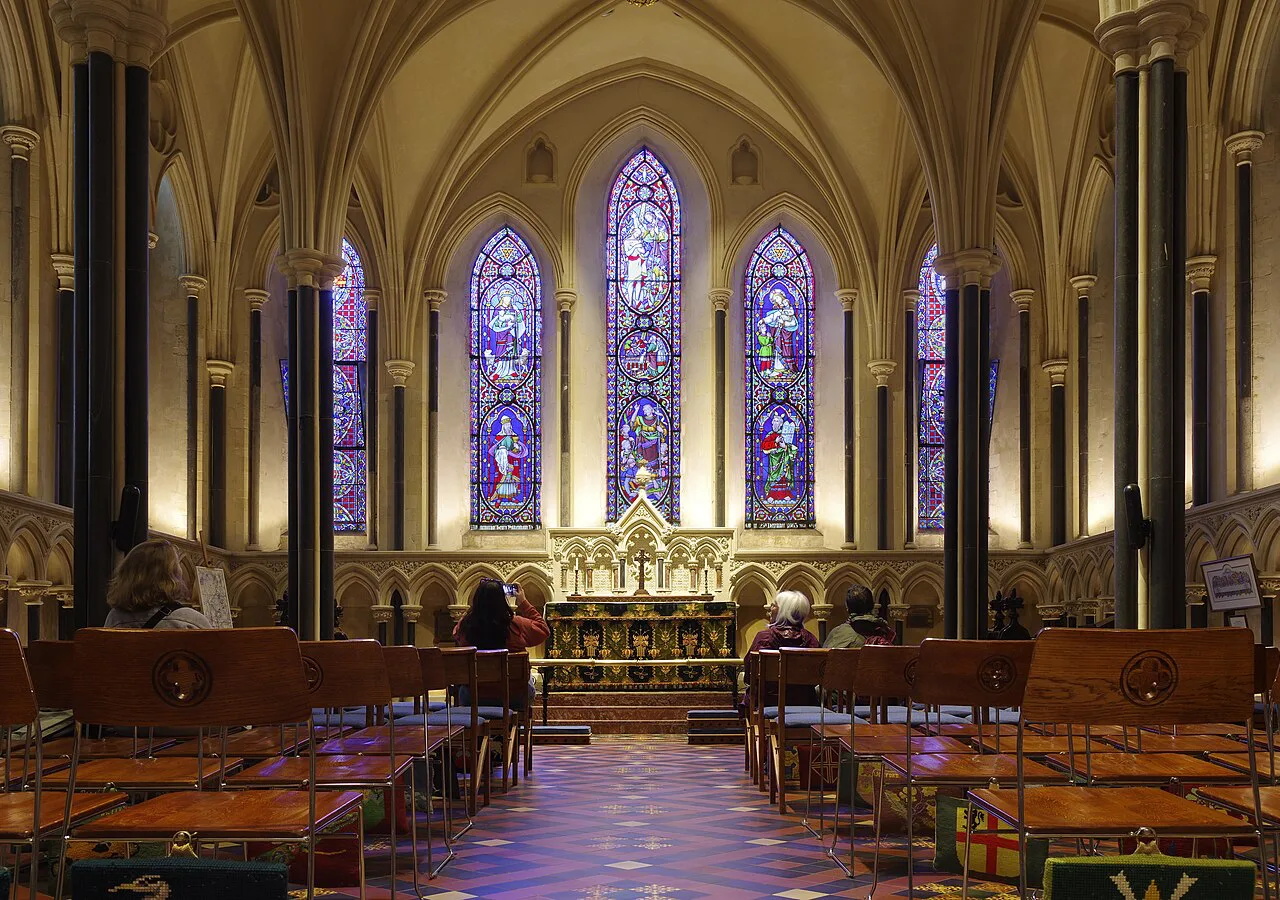
The same account explains that French Huguenot weavers arriving in the seventeenth century settled mainly in the Liberties, west of St Patrick's Cathedral, where their silk expertise fed a silk and poplin industry. Export restrictions on Irish woollen cloth later caused hardship, and the guild system was abolished in 1840. A visitor should not travel expecting the guild's hall, which the article says was demolished in 1965; it also reports that some silk and poplin weaving is still done in Fumbally Lane in the Liberties, by P.C. Weavers, as of its 1991 text.
Lillias Mitchell and the modern revival of textile skills
The guild's history credits Lillias Mitchell, born in Dublin in 1915, with founding a weaving department at the National College of Art in 1951 after studying weaving abroad and buying looms in Sweden. She later founded the Irish Guild of Weavers, Spinners and Dyers in 1975, and the guild still carries her name in its account of workshops in weaving, spinning, dyeing and basket making. Her career is context for the teaching tradition, not a visitor attraction in itself.
That background matters when you read museum labels or workshop displays, because it explains why textile skills in Ireland are demonstrated and taught rather than only remembered. If you are following this theme, the museum and mill sections below are where the surviving evidence and living practice can actually be seen.
The Irish Folklife Collection at Country Life, County Mayo
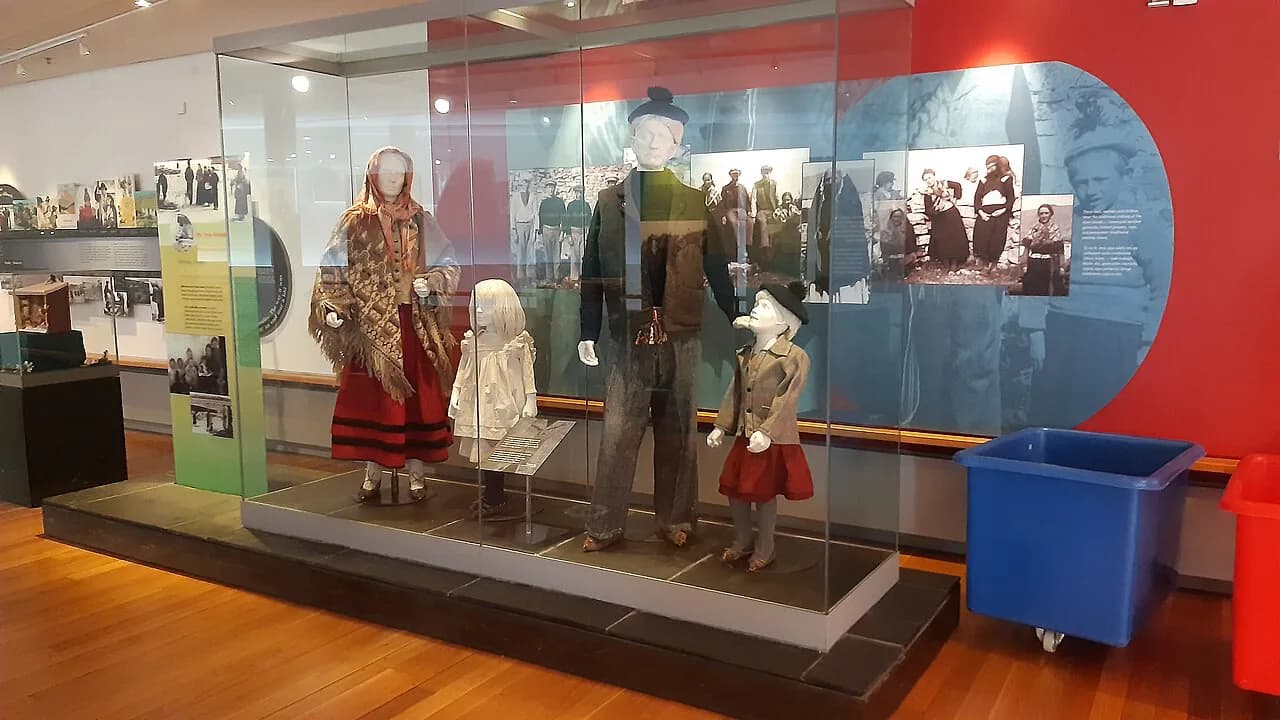
The National Museum of Ireland's Country Life site at Turlough, County Mayo, holds the Irish Folklife Collection, described in the museum's own learning resource as objects representing Irish rural life from 1850 to 1950. The resource sets out exhibition themes including Aran Island clothing and the materials used to make it, the folklife collection itself, romanticised versus realistic images of country life, timeless objects, and straw, hay and rushes. A separate section asks students to work as historians by noting an object's material, size, shape, weight and marks.
That framing is important: the resource asks visitors to match photographs of knitting, weaving, sewing and spinning to items on display, which means the museum interprets processes through objects rather than promising live demonstrations. It also describes a clothing cart activity involving looking at, feeling and trying on items. The workbook is written for school groups, so ask at reception what hands-on elements are available on the day of a general visit rather than assuming every activity is running.
The learning resource prints opening hours of 10am to 5pm Tuesday to Saturday, 2pm to 5pm on Sundays, closed Mondays, Good Friday and Christmas Day, and gives a bookings office telephone number and email for arranging visits. Check the museum's current visitor page before travelling, since this document was prepared for schools and may not reflect seasonal changes.
Irish silver at Collins Barracks: closed for now
The Irish Silver Gallery at the National Museum of Ireland, Collins Barracks, Dublin 7, is temporarily closed for maintenance, and the museum's exhibition page gives no reopening date. Treat the gallery as planning context rather than a stop you can currently enter, and do not build a Dublin day around it until the museum announces otherwise; while you are reworking that day, the Dublin heritage guide covers other historic sites worth your time.
When it reopens, the gallery traces silversmithing from the early seventeenth century to the present and groups pieces by European design terms such as Baroque, Rococo and Celtic Revival. The page credits the Company of Goldsmiths of Dublin, founded in 1637, with hallmarking, and notes that silversmiths in Cork, Galway, Limerick, Kinsale and Waterford used their own town marks to avoid sending precious metal to Dublin. The collection also owes much to the collector Dr Kurt Ticher, whose pieces include silver-gilt standing cups made for the Dublin Guild of Merchants.
Cushendale Woollen Mills, Graiguenamanagh, County Kilkenny
Cushendale Woollen Mills in Graiguenamanagh, County Kilkenny, states that its family has woven wool textiles for six generations over more than 250 years, working with traceable Irish fleece. The showroom is set inside the working mill, where visitors encounter the sights, sounds and smells of production and the team can explain the process. That makes it a useful complement to museum displays, because you see wool being transformed rather than only finished cloth.
Access is strictly bounded: tours run by appointment only, and the operator lists a private tour at €40 per person and a group tour at €20 per person, subject to operational capacity. Stated showroom hours are 9am to 5.30pm Monday to Friday and 10.30am to 5.30pm Saturday, with a daily closure from 12.30pm to 1.30pm and closure on Sundays and bank holidays. Confirm times and tour prices directly before booking.
Nicholas Mosse Pottery, Bennettsbridge, County Kilkenny
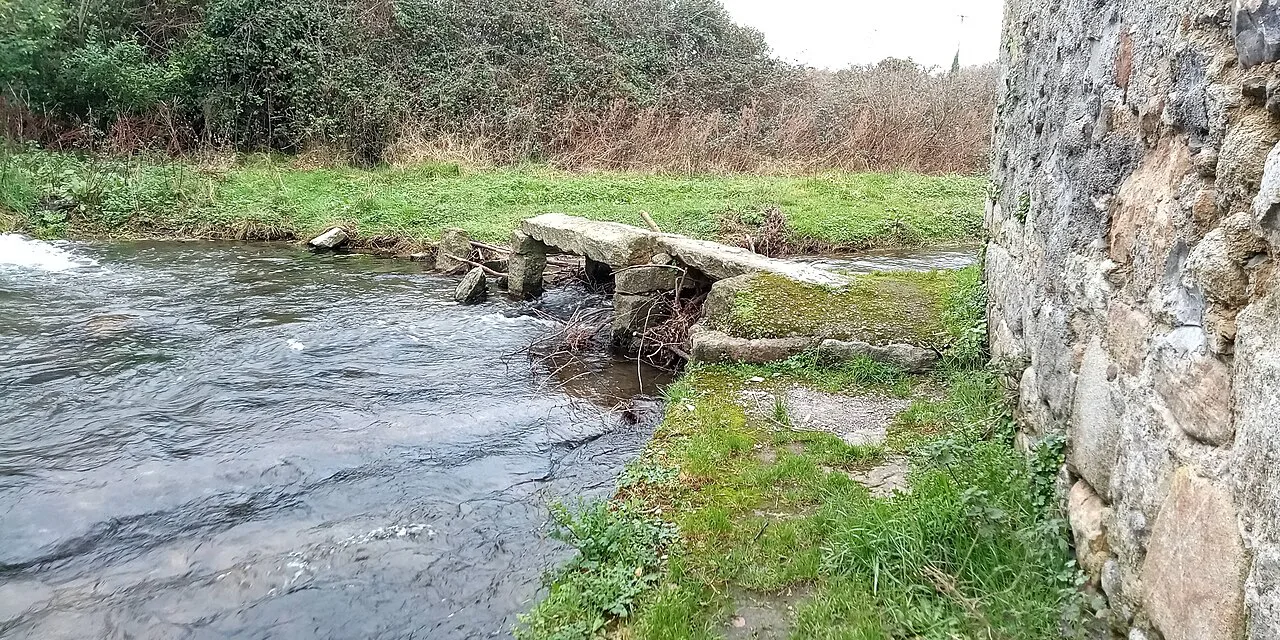
Nicholas Mosse Pottery in Bennettsbridge, County Kilkenny, was founded in 1976 by Nick and Susan Mosse and still makes every piece by hand in the family's old mill beside the River Nore. The company describes a twenty-step handmade process and a sponge-decoration technique it traces to the eighteenth century, with patterns inspired by hedgerows and wildflowers around Bennettsbridge. Statements about the craft come from the pottery's own history page rather than independent assessment.
The visitor offer is simple: a shop, a café and viewing windows into the pottery when the team is working, with free parking on site and no booking needed for a general shop or café visit. The pottery does not promise a guided tour, so go for the shop and the vantage points rather than a factory walk-through. Stated shop hours are 10am to 6pm Monday to Saturday and 1.30pm to 5pm Sunday, with the café open 11am to 5pm Monday to Saturday and 1.30pm to 4pm Sunday; the operator notes seasonal variation and asks visitors to check before travelling.
Louis Mulcahy Pottery, County Kerry
Louis Mulcahy Pottery in County Kerry offers a working workshop where pieces are made and decorated by hand, a showroom and shop, and a hands-on experience. On the wheel, an experienced potter helps you create a small pot or vase, which is fired and glazed once dry, with delivery options if you cannot carry it home. The pottery's page is bilingual and presents meeting the makers as part of a visit.
Details of scheduling and cost are not fixed on the page, so treat the wheel session as something to arrange through the pottery rather than a walk-in activity. It is the only place in this guide where you can attempt the craft yourself, which makes it worth planning around if you are in Kerry with time to return for a finished piece.
Choosing between a museum collection and a working workshop
Decide first whether you want to handle or examine objects, or to see and try making. Country Life is the stronger choice for rural social history because its folklife collection covers a century of everyday objects, while Cushendale and Nicholas Mosse show commercial production with defined visitor limits. The museums reward slower reading; the mills and potteries reward a shorter, focused stop. If your interest runs to other making traditions, the wider field of Irish pottery shows how much this page leaves out.
Geography then sorts the shortlist. Country Life sits in County Mayo, Cushendale and Nicholas Mosse are both in County Kilkenny and can be paired in one day by car, and Louis Mulcahy is in County Kerry. None of these places should be ranked as the best; each answers a different question about how craft skills were learned, regulated, sold or revived. If you also enjoy other making traditions, the range of irish folk art on the island shows how much this page leaves out.
Plan Your Visit Around Craft
Build the trip around one museum and one working site rather than trying to cover all five. Country Life needs a museum slot for its folklife galleries, Cushendale needs a booked tour, Nicholas Mosse suits an unhurried stop, and Louis Mulcahy needs a planned wheel session. Check the museums' current opening details and each business's booking page separately, because closures and seasonal hours change independently.
Leave the Irish Silver Gallery for a later trip unless the museum has announced that the maintenance work is finished. For textiles, compare how the same story appears at Country Life and at Cushendale: one interprets a recent rural past, the other keeps a working mill in production. That contrast is the most honest answer to what Irish traditional crafts are today.
For more on Ireland's ceramic traditions, read the guide to Irish Pottery. For another heritage guide, read about Foxford Woollen Mills.
Explore more Ireland guides
Frequently Asked Questions
What are Irish traditional crafts?
The phrase covers a very wide field of making, from textiles and basketry to metalwork, glass and ceramics. This guide concentrates on three strands: spinning and weaving, pottery, and silversmithing, because each has both a museum record and working places a visitor can reach. It is a starting point rather than a full inventory of every Irish craft.
Is the Irish Silver Gallery at Collins Barracks open?
No. The National Museum of Ireland states that the gallery is temporarily closed for maintenance and does not give a reopening date, so it should not be planned as a stop. Check the museum's own exhibition page before any future Dublin visit rather than relying on older guides that list it as open.
Do I need to book the craft visits in this guide?
It depends on the place. Cushendale runs mill tours by appointment only, and the Louis Mulcahy wheel session should be arranged through the pottery because no fixed timetable is published. Nicholas Mosse needs no booking for a general shop or café visit, while museum entry arrangements should be confirmed with each museum before travelling.
Where can I actually see weaving in Ireland?
Cushendale in Graiguenamanagh, County Kilkenny, is a working mill where the showroom sits alongside production, so you can see wool textiles being made rather than only finished stock. For the historical side, the National Museum of Ireland's Country Life site in County Mayo interprets spinning, weaving and related skills through objects and handling activities.
Sources
You might also like



Continue reading
More guides you'll find useful





