
Irish Dry Stone Walls: The Craft and Where to See It
Irish dry stone walls are built without mortar. Learn what defines the craft, how UNESCO recognises it, and which heritage sites show it best.
On this page
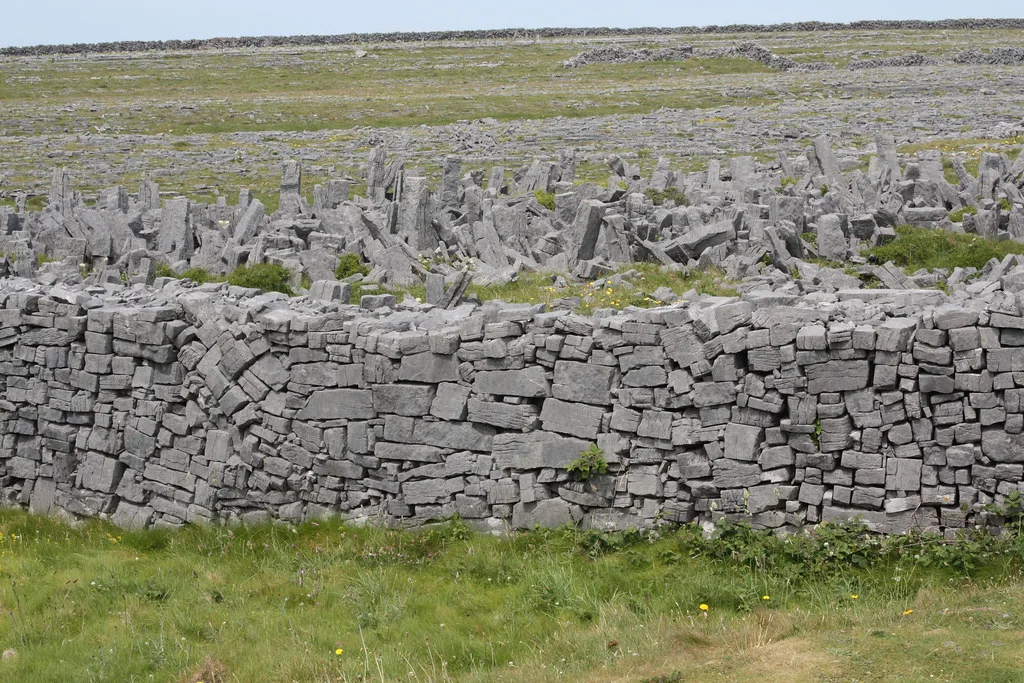
A dry stone wall is exactly what the name says: stone laid without mortar, lime or any other binding material. Stability comes from choosing stones that lock together and arranging them to suit the slope, the weather and the load they must carry. That makes every wall a piece of applied judgement rather than a manufactured product, and it is why the craft has survived as a skill passed between people.
Ireland's walls are a tradition, not a single monument type. Some are prehistoric field boundaries now buried under bog, some are defensive ramparts on a cliff, and many are later working walls on farms. This guide uses two publicly accessible heritage sites plus the association that teaches the craft to show those differences, because confusing them is the most common mistake visitors make.
Ireland Inside a Shared European Practice
At its nineteenth session in 2024, the committee behind UNESCO's Intangible Cultural Heritage convention inscribed the art of dry stone construction on the Representative List of the Intangible Cultural Heritage of Humanity. The listing is multinational, covering practice in several European countries rather than a single site. It recognises knowledge and technique, not architecture alone.
That distinction matters. Intangible heritage status does not make any individual Irish wall a World Heritage Site, and it does not protect a particular field boundary near a particular village. What it does is give official visibility to the skills, the teaching and the communal work that keep walls standing. For a visitor, the useful takeaway is that you are looking at a living practice with a shared European background, not a museum exhibit frozen in one era.
What the Craft Actually Builds
UNESCO's description of the practice lists a surprisingly wide range of structures: houses, bridges, piers, arches, tombs, sheds, paths, vaulted cellars, beehive huts, religious structures and fortifications. What unites them is the absence of binding material and the need to understand how weight moves through stacked stone. The same underlying logic serves a field wall and a cliff-top rampart.
The craft is also social by nature. Building and repairing walls involves several people handling stones of very different sizes and weights, and the knowledge travels through demonstration rather than manuals. That is why conservation groups treat teaching as seriously as repair: a wall rebuilt without the skill behind it will not last.
Céide Fields: A Neolithic Landscape Under Bog
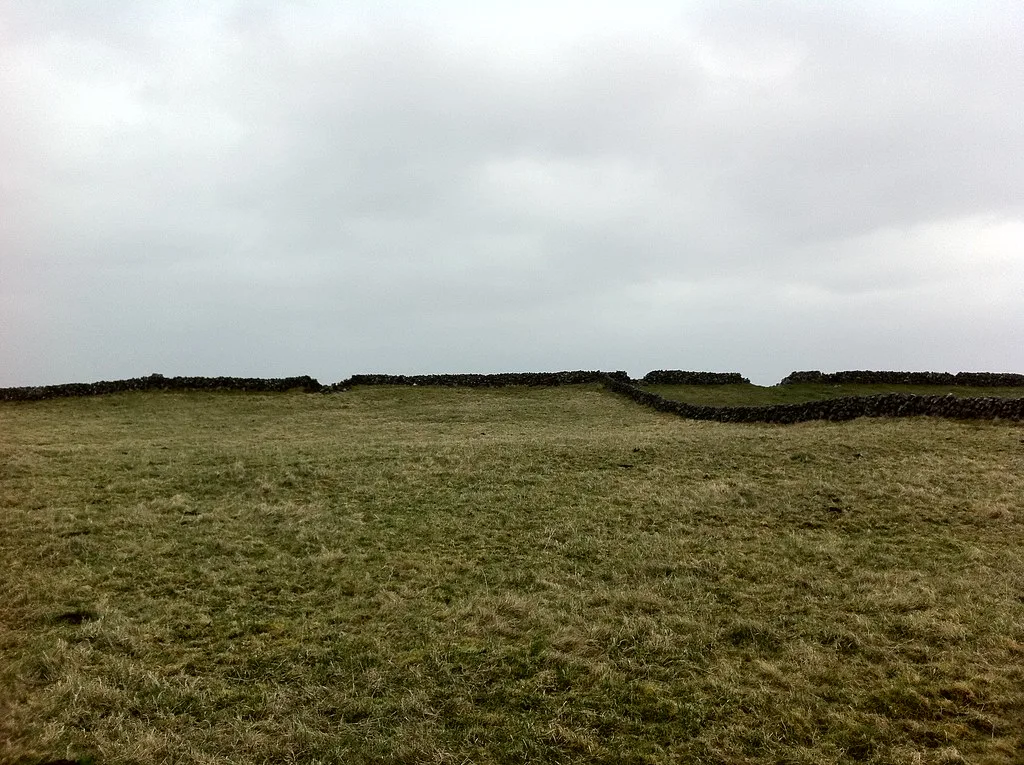
Céide Fields in north Mayo holds a system of stone-walled fields, dwelling areas and megalithic tombs beneath blanket bog, described by Heritage Ireland as the most extensive Stone Age monument in the world. The stone-walled fields are described as the oldest known globally, dating back almost six thousand years. Importantly, they are buried. You are not walking through a network of exposed field walls; you are looking at an archaeological landscape preserved under peat.
That has a practical consequence for expectations. The visitor centre and exhibition do much of the explaining, and guided tours help translate what the bog is hiding. Treat the visit as an introduction to a buried landscape rather than a wall-spotting walk, and the experience makes sense.
Visiting Céide Fields
The 2026 season runs from 12 March to 4 November, with daily opening from 10:00 to 18:00 and last admission at 17:15. From 5 November the site moves to a winter arrangement available for bookings rather than assured daily walk-in access, so anyone travelling in late autumn should confirm arrangements before setting out. The site lies 8 km west of Ballycastle on the R314.
Ground and weather are the main practical constraints. Heritage Ireland advises protective clothing and sturdy footwear because the terrain and conditions can be challenging, with uneven walkways across exposed bogland and a cliff-top viewing platform at 110 metres for those who want the coastal view. The centre lists a café, car park, exhibition and guided tours, which makes it a reasonable half-day stop rather than a quick roadside pause.
Dún Aonghasa: Standing Defensive Walls on Inis Mór
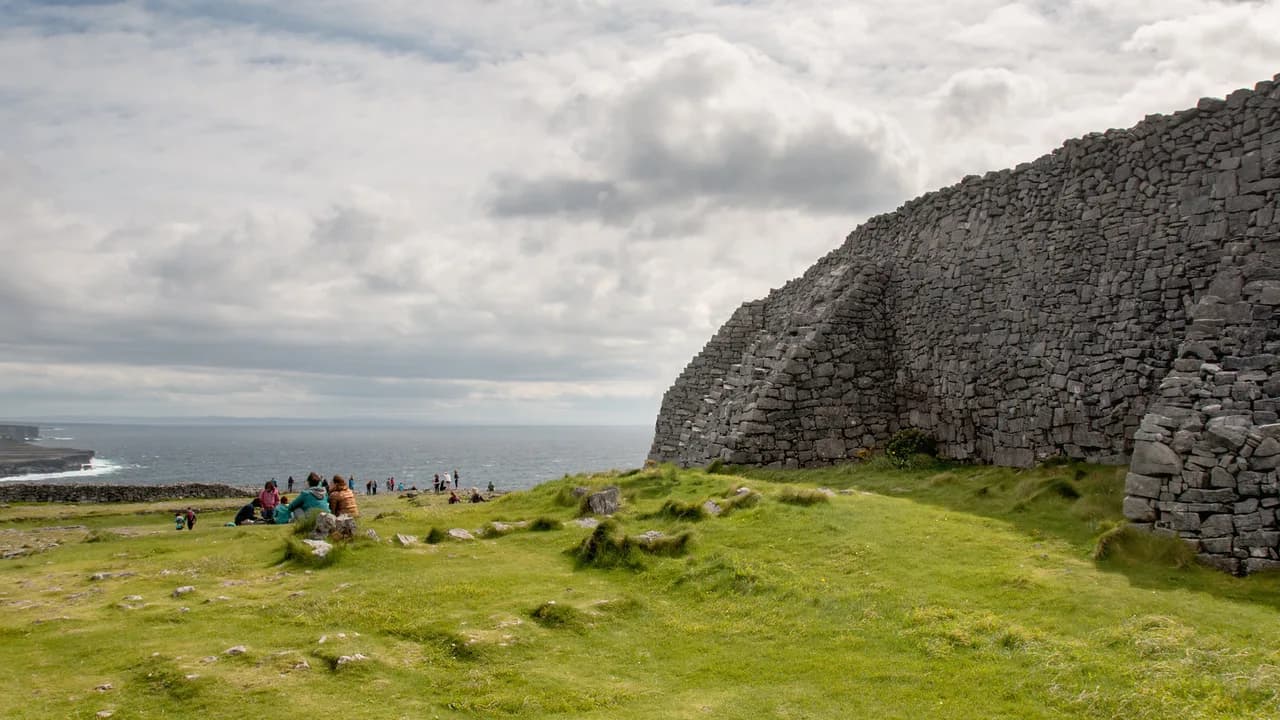
Dún Aonghasa on Inis Mór is the largest of the prehistoric stone forts of the Aran Islands, perched directly above the Atlantic. It consists of three massive drystone defence walls, and outside them lies a chevaux-de-frise: a dense band of thousands of jagged upright stones set to impede anyone approaching. The fort is more than three thousand years old, was refortified in the eighth century, and excavations have revealed prehistoric metalworking, houses and burials.
This is the opposite experience to Céide Fields. Here the dry stone work is standing, monumental and defensive, and its scale is legible without explanation. If forts of this kind are what draws you, castles in county galway covers a later wave of stone building on the mainland, and ancient sites ireland sets monuments like this in a wider sequence. If you are spending time in the west afterwards, our Museums in Galway City: Two Places Worth Your Time is a good companion for indoor heritage on a wet day.
Visiting Dún Aonghasa
The visitor centre operates year-round with guided tours and is closed from 24 to 30 December. The monument sits about one kilometre from the centre along a pedestrian route over rising ground, with the final stretch crossing rough natural rock, so boots or strong walking shoes are recommended and the descent needs care. There is no fence or barrier at the cliff edge, which drops 87 metres, and drones are prohibited. The site is 7 km west of Cill Rónáin.
Heritage Ireland publishes the current admission categories on its own page, including a free-admission arrangement for visitors staying overnight on Inis Mór in participating accommodation, so check those figures directly before you travel. The facilities at Céide Fields have no equivalent here; this visit is about terrain and exposure.
Keeping the Craft Alive
The Dry Stone Wall Association of Ireland was founded in 2009 and is run entirely by volunteers, with a committee mixing professional stonemasons and interested amateurs. It registered as a company limited by guarantee in April 2017 as its workload of events and workshops grew. Its stated purpose is to raise awareness of the need to preserve dry stone building in Ireland and to educate both the public and professionals in the craft.
The association frames its work around a community of members, amateur and professional, involved in dry stone projects, and it promotes study through lectures, discussions, exhibitions, workshops, training and certification. For travellers, that matters less as a ticketing tip than as evidence that the walls you see are maintained by an active culture rather than inherited passively. It is one strand of the broader revival covered in our guide to Irish Traditional Crafts, where stone sits alongside clay and textile work.
How the Craft Is Learned Today
DSWAI workshops are generally held on working farms repairing existing walls, and they are open to the general public regardless of experience unless a session states otherwise. The teaching is therefore practical and embedded in real structures, not simulated in a classroom. Because the association runs programmes in cycles, anyone hoping to join one should consult its events listing and social updates for what is actually scheduled at the time of travel rather than relying on an old calendar.
The association's wider activity includes European partnerships and public workshop programmes, but specific dates pass quickly and should not be assumed to be running. If your interest is hands-on, contact the association directly about upcoming sessions; if it is observational, the two heritage sites above give you the range without needing to book a course. A related strand of Irish craft tradition — working clay rather than stone — is covered under Irish Pottery.
Reading Irish Walls Carefully
It helps to separate three things visitors often blend together. Céide Fields is a prehistoric field system preserved under bog; Dún Aonghasa is a prehistoric defensive monument with standing ramparts; and the walls crossing farmland today are later working boundaries whose dates and builders vary from place to place. No single era or group accounts for all of them, and a wall's appearance tells you little on its own.
Practical courtesy matters too. Walls on private farmland are not public walking routes, even where a gate stands open; use waymarked trails and the named heritage sites instead. For a broader view of how stone, clay and textile crafts sit together in Ireland, reading the wider craft landscape alongside these walls repays the detour.
Plan Your Visit
Choose your site by what you want to see. For a buried Neolithic landscape with an exhibition and guided explanation, head to Céide Fields in north Mayo and plan around the seasonal calendar; for standing defensive dry stone work with a dramatic approach, take the ferry or flight to Inis Mór and allow time for the rough walk to Dún Aonghasa.
Two checks are worth making before either trip: confirm the current opening arrangements on the operator's page, since Céide Fields runs a seasonal pattern and Dún Aonghasa closes over the Christmas period, and confirm admission details directly. For a craft-focused visit, also look at what the Dry Stone Wall Association is running, treating its calendar as the live source.
Explore more Ireland guides
Frequently Asked Questions
What is a dry stone wall?
It is a structure built by stacking stone without mortar, cement or any other binding material. Stability depends on selecting stones that fit and arranging them so the structure adapts to its ground and climate. UNESCO describes the practice as requiring an understanding of geometry and physics plus skill in handling the raw stone.
Are Irish dry stone walls a UNESCO World Heritage Site?
No. The art of dry stone construction is inscribed on the Representative List of the Intangible Cultural Heritage of Humanity, a multinational listing of knowledge and skills. That is a different designation from World Heritage Site status, which applies to specific places, so no individual Irish wall gains World Heritage status from the inscription.
Where can I see dry stone walls in Ireland?
Two public heritage sites give strongly contrasting views. Céide Fields in County Mayo preserves Neolithic stone-walled fields beneath blanket bog, while Dún Aonghasa on Inis Mór has three massive standing drystone defence walls with a chevaux-de-frise outside them. Both are operated by Heritage Ireland with visitor facilities.
Can you see the walls at Céide Fields above ground?
Not as a network of standing walls. The stone-walled fields, dwelling areas and tombs lie under natural blanket bog, so the visit is about a buried archaeological landscape explained through the visitor centre, exhibition and guided tours rather than about walking between visible field boundaries.
How hard is the walk to Dún Aonghasa?
The fort is roughly one kilometre from the visitor centre over rising ground, with the final section crossing rough natural rock. Heritage Ireland recommends boots or strong walking shoes and warns that the cliff edge has no fence or barrier. Allow time for the climb and take care on the descent.
Do private farm walls count as public walking routes?
No. Walls on working farmland are private property even when a gate is open, so walkers should use waymarked trails and public heritage sites. The DSWAI's workshops take place on working farms by arrangement, which is a different matter from public access.
How can I learn dry stone walling in Ireland?
The Dry Stone Wall Association of Ireland runs workshops that teach building, maintaining and repairing walls, generally on working farms and open to the public regardless of experience. Schedules change, so check the association's current events listing and contact it directly before planning around a session.
Sources
You might also like



Continue reading
More guides you'll find useful


