
Listowel Castle: Anglo-Norman Tower House Guide
Listowel Castle is closed for the 2026 season, with reopening anticipated in 2027. Plan ahead for its Anglo-Norman towers, siege story and free tours.
On this page
Listowel Castle cannot be entered at present. As of 23 October 2026 the Office of Public Works states that the site is closed for the 2026 season, with visitors expected back in 2027; no specific reopening date is published. This guide therefore explains what the castle is, what a future visit involves and how it fits with other medieval sites in Kerry and west Limerick.
The castle stands on raised ground above the River Feale in Listowel, County Kerry, overlooking the site of an old strategic ford. Only part of the building remains, yet the operator treats it as a strong teaching example of Anglo-Norman military building in the county. Readers who want the wider typology can compare it with other irish tower houses before deciding which sites to prioritise on a heritage-focused trip.
Status: Closed for the 2026 Season
Heritage Ireland's page for the castle carries a clear seasonal notice: the site is closed for the 2026 season and the operator looks forward to welcoming visitors again in 2027. That is an intention, not a fixed opening date, so anyone building an itinerary around it should treat early 2027 as unconfirmed until a new notice appears. Nothing on the page suggests the interior can be seen while the closure stands.
The same page also publishes a daily pattern of 10:00 to 17:00 with last admission at 16:15, but that describes how the site normally runs in season rather than availability on any given October day. Read the closure banner first and the hours second. This is the one point in the guide where checking the official page before travelling matters most, because seasonal dates shift between years.
What Survives of the Castle
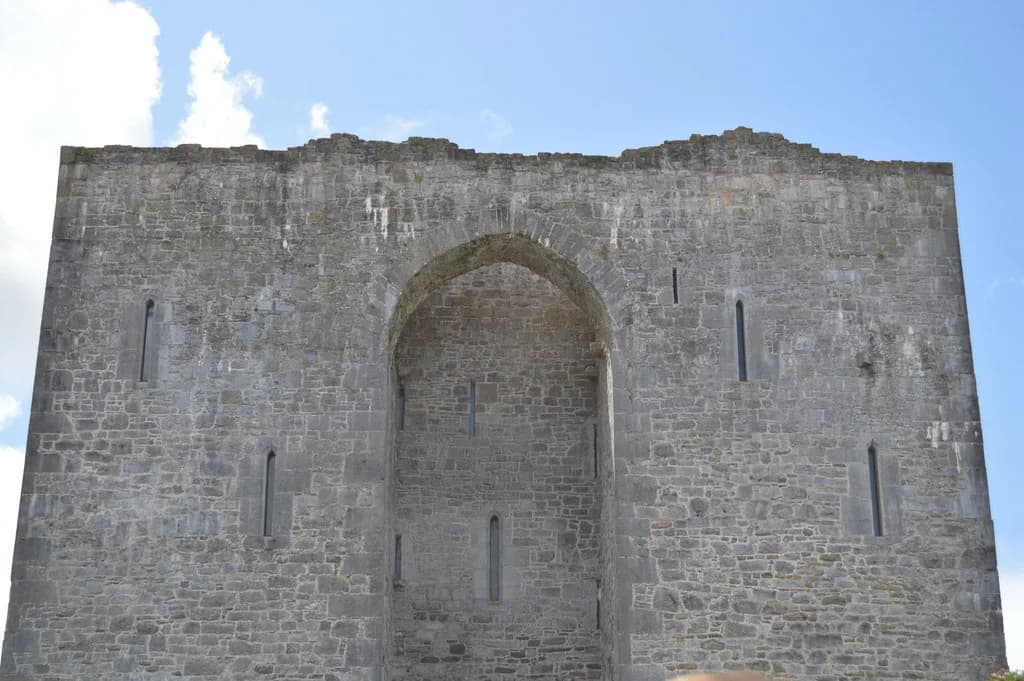
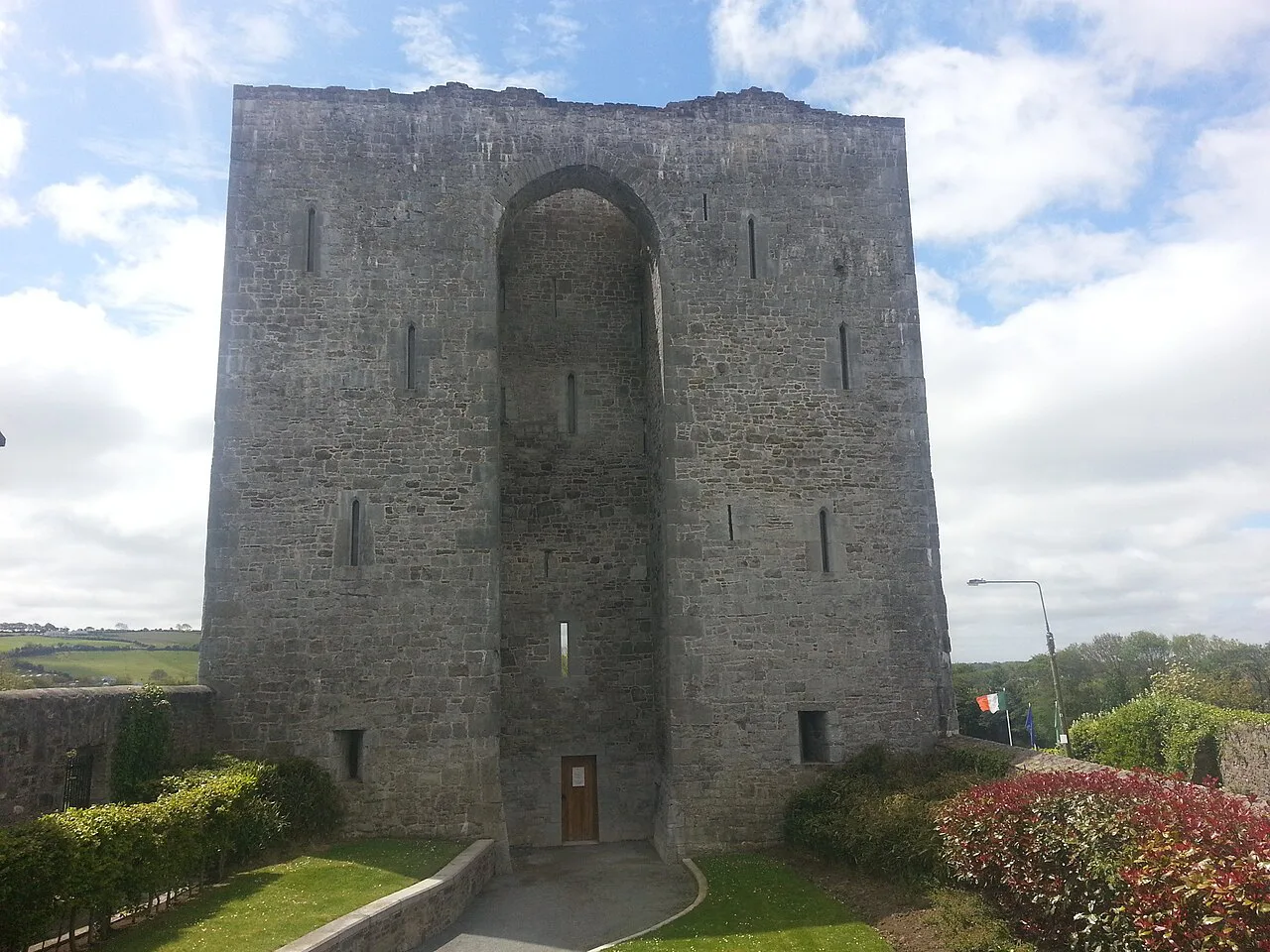
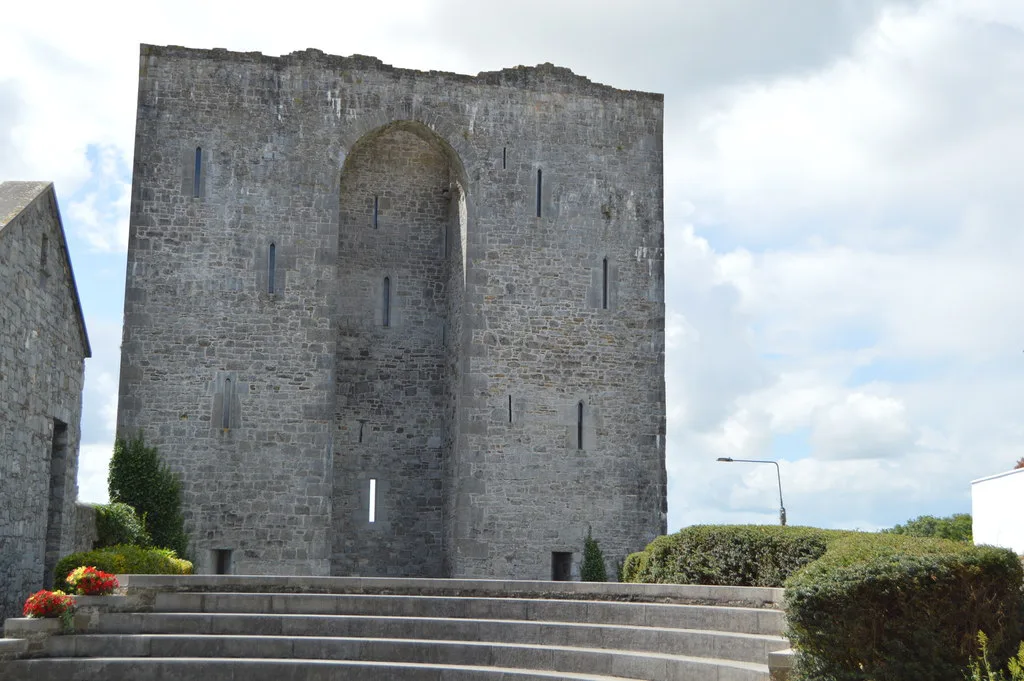
Roughly half of the original building still stands. According to Heritage Ireland, two of the four square towers remain, each rising more than 15 metres, joined by a curtain wall of similar height. The unusual feature is an arch linking the towers on one side, a detail worth looking for because it departs from the plain rectangular norm of many Irish tower houses.
The operator describes the remains as one of Kerry's best examples of Anglo-Norman architecture, a claim best read as the caring authority's assessment rather than a neutral ranking. No construction dates are given for the surviving fabric, so treat questions about when the towers were raised as open unless a published account supplies them. What can be said with confidence is the shape of the survivor: a partial enclosure of towers and wall rather than a complete fortress.
Why the River Feale Setting Mattered
Position explains much of what remains. The castle sits on high ground above the River Feale, close to where a ford once offered a crossing point, and that combination of height and crossing is the reason a fortified site made sense there. When you eventually stand outside the walls, look at the ground falling toward the river before looking up at the towers; the siting is the first piece of evidence.
The same logic of river crossing and defended ground recurs at Carrigafoyle castle on the Shannon estuary in County Kerry, where a tower house guarded a strategic waterway. Neither site copies the other, but seeing both sharpens your eye for how Irish castle builders used water and height together. Carrigafoyle is a separate site with its own access arrangements, so plan it independently of Listowel.
The Siege of 1600
Listowel was the last stronghold held by the Fitzmaurice rebels against Queen Elizabeth's forces during the Nine Years War. Heritage Ireland records that the castle fell in 1600 after a 28-day siege, when Sir Charles Wilmot's troops finally overcame the garrison, and that soldiers remaining inside were executed afterwards. Those details come from the operator's account and are best attributed to it rather than presented as independently corroborated figures.
The highlights page adds scale to the story, describing 18 defenders holding out for 28 days against an attacking force of 300 English soldiers before surrendering. Such numbers are dramatic and are worth reading as the guided narrative you would hear on site rather than as statistics verified elsewhere. The siege is dated to November 1600 in that account, which places the castle's final chapter late in the wider conflict.
For comparison, Askeaton castle in County Limerick was another Desmond stronghold contested in the same era of Elizabethan campaigns, and it too is a ruined site rather than an intact residence. Visiting both, once each is open, gives a sense of how the same war reshaped very different buildings across the region. Treat them as two separate outings with separate notices to check, and for the city's own collections see this guide to museums in Limerick.
Reading the Walls: Thomas the Ape and the Upper Rooms
High on the northern wall is a carved stone face known as Tomás an Ápa, or Thomas the Ape. Heritage Ireland says it is said to represent Thomas FitzGerald, a local Norman lord, which is a tradition attached to the carving rather than a settled identification. Look for it as a sculpture with a story rather than a portrait with a documented sitter. For a contrasting surviving stronghold of the Earls of Desmond elsewhere in Munster, ballyhack castle is a useful comparison.
The same name surfaces at Desmond Castle in Newcastlewest, where the hall was begun in the thirteenth century by Thomas 'the Ape' FitzGerald, so called after a tale that an ape carried him from his cradle to the top of Tralee Castle and returned him safely. The operator presents that story as a tale rather than a record. Encountering the same nickname at two sites shows how FitzGerald family memory travelled through Munster.
On a future tour, the upper rooms are the payoff. Heritage Ireland frames them as a way to understand how the lords of Kerry, their servants and the garrison soldiers lived within the same walls. The climb is what makes that possible, and it is also what limits who can manage it. Readers exploring the wider tower-house tradition can browse irish tower houses for related examples.
Tours, Stairs and Access Realities
Admission is free, and Heritage Ireland lists free guided tours led by Office of Public Works guides. That makes Listowel an unusually low-cost stop compared with paid heritage sites elsewhere in the region. Do not, however, assume the same terms at neighbouring attractions, each of which sets its own admission.
The decisive constraint is vertical. Upper floors are reached by steep, winding medieval staircases, and Heritage Ireland states plainly that wheelchair access on site is very limited. Visitors with mobility difficulties, young children or a fear of confined steps should decide before travelling whether the exterior and ground-level interpretation alone justify the journey. No toilets, café or other facilities are listed for the castle, so plan accordingly.
Similar stair problems shape visits to other multi-level tower houses elsewhere in Ireland, and reading access notes before you commit to a long drive is the single most useful planning habit for this class of site. Each venue publishes its own restrictions, so compare them rather than generalising from one.
The View from the External Staircase
At the top of the external staircase, Heritage Ireland promises one of the best panoramas in Listowel, taking in the racecourse and the River Feale. The view is the reward for the climb and a reminder that the castle's value is partly topographic: you see what the garrison saw. Photographers should note that the panorama is described from the stair top, so it depends on being able to ascend.
Views of water and defended ground are a recurring pleasure at Irish coastal castles too, from Dunlough castle on the Mizen to Doe Castle, County Donegal, above Sheephaven Bay. They are different buildings in different landscapes, but each rewards the visitor who looks outward as much as upward. Use them as complements to a Listowel visit, not substitutes for it.
Other OPW Medieval Sites in the Region
Ardfert Cathedral in County Kerry is linked to St Brendan the Navigator, who was born in the area in the sixth century and founded a monastery there before his legendary voyage. The present cathedral was begun in the twelfth century and holds a thirteenth-century window and a row of nine lancets in the south wall. A late Romanesque church and Temple na Griffin, named for a carving of a griffin and dragon, stand on the same site. Adult admission is listed at five euro, and the cathedral has its own 2026-season closure with reopening expected in 2027.
Desmond Castle in Newcastlewest preserves one of the most impressive surviving medieval halls in west Limerick, most of it built in the fifteenth century when the Desmond earls were at their height, with a restored oak gallery above the banqueting space. Access is by guided tour only, admission is free, and the site shares the pattern of a 2026 closure with a 2027 return anticipated. It is a strong companion piece to Listowel because both carry FitzGerald family associations.
Scattery Island in the Shannon estuary adds monastic and military layers: a round tower, a cathedral, medieval churches, a lighthouse, an artillery battery and a restored village where pilots once lived. Reaching it involves a ferry from Kilrush Marina of about 30 minutes each way, weather and tide permitting, and the island is free to enter but has uneven walkways. It too is closed for the 2026 season with visitors expected back in 2027, so its logistics belong to a separate planning exercise.
If your interest is early Christian and medieval archaeology more broadly, ancient sites ireland offers a wider frame for comparing monastic remains such as Scattery with secular castles like Listowel. Neither replaces the other; the contrast is the point.
Planning Around the 2027 Season
All four sites discussed here share the same seasonal rhythm: closed now, with the operator anticipating a return in 2027. That makes late autumn and winter a good time to read up and choose which interiors you actually want to climb, rather than a time to turn up hoping for access. Build a shortlist, then verify each site's notice individually, since closures and hours are set per site rather than uniformly.
Listowel's combination of free entry, guided tours and a short but steep climb suits travellers who prefer substance over spectacle. Pair it with Ardfert for architecture and Newcastlewest for the FitzGerald story, and keep Scattery as a separate day dependent on ferry conditions. Adare Castle and its River Maigue setting offer a further comparison point in County Limerick for anyone tracing the Desmond lordships.
Plan Your Visit
Listowel Castle is a compact, guide-led site with free admission, a genuine siege history and an unusual double-tower plan, but it is shut for the 2026 season and the reopening in 2027 has no published date. Before booking travel, confirm the current notice on the official page and decide whether the steep stairs suit everyone in your group.
Travellers who enjoy comparing fortified houses across the country can extend their reading to irish tower houses, where the wider typology of tower houses and later houses is set out. Treat each site as its own visit with its own access rules. Listowel remains the anchor for the Fitzmaurice story.
Explore more Ireland guides
Frequently Asked Questions
Is Listowel Castle open to visitors at the moment?
No. The Office of Public Works states that the castle is closed for the 2026 season and that visitors are expected back in 2027. No specific 2027 opening date has been published, so check the official Heritage Ireland page before making plans.
What is left of Listowel Castle today?
About half of the original building survives. Two of the four square towers remain, each over 15 metres tall, joined by a curtain wall of similar height and, unusually, linked by an arch on one side. The operator describes the remains as a leading example of Anglo-Norman architecture in Kerry.
What happened at Listowel Castle in 1600?
It was the last stronghold of the Fitzmaurice rebels against Queen Elizabeth's forces in the Nine Years War. Heritage Ireland records a 28-day siege before Sir Charles Wilmot's troops overcame the garrison, with executions following. The operator's highlights page gives the attacking force as 300 against 18 defenders.
What is the Thomas the Ape carving?
It is a carved stone face high on the northern wall, known as Tomás an Ápa. Heritage Ireland says it is said to represent the local Norman lord Thomas FitzGerald, so the identification is a tradition attached to the carving rather than a settled fact.
Do you need a guided tour to see inside Listowel Castle?
The castle is shown by Office of Public Works guides, and the operator describes these tours as free along with admission. Upper floors are reached by steep winding medieval stairs, so access depends on your ability to climb them safely.
Is there an admission charge for Listowel Castle?
Admission is free according to Heritage Ireland, and the guided tours are described as free as well. This does not apply to every heritage site in the region; Ardfert Cathedral, for example, lists a separate adult charge.
How accessible is the castle for wheelchair users?
Access is very limited. The operator notes that upper floors are reached by steep, winding medieval staircases and that wheelchair access on site is therefore very restricted. Visitors with mobility difficulties should plan on the exterior and ground-level interpretation.
Which other medieval sites are worth pairing with Listowel?
Ardfert Cathedral for Romanesque and Gothic church architecture, Desmond Castle in Newcastlewest for a FitzGerald banqueting hall, and Scattery Island for monastic and military remains reached by ferry. Each has its own seasonal closure notice, admission terms and access restrictions.
Sources
You might also like



Continue reading
More guides you'll find useful





