
Barryscourt Castle: Ireland's Restored Tower House Guide
Barryscourt Castle is closed for the 2026 season, with visitors expected back in 2027. Read its tower-house history, restored halls and gardens before you plan.
On this page
Barryscourt Castle is not open to visitors at present. The Office of Public Works states on its Heritage Ireland page that the site is closed for the 2026 season and that it looks forward to welcoming visitors again in 2027, with no reopening date published, so confirm the position on that page before planning around the castle.
That makes this a plan-ahead guide rather than a walk-round itinerary. It covers what the castle is, what survives inside it, how it came to be restored, which rooms require a guided tour, and what to re-check when the gates open again.
What Barryscourt Castle Is
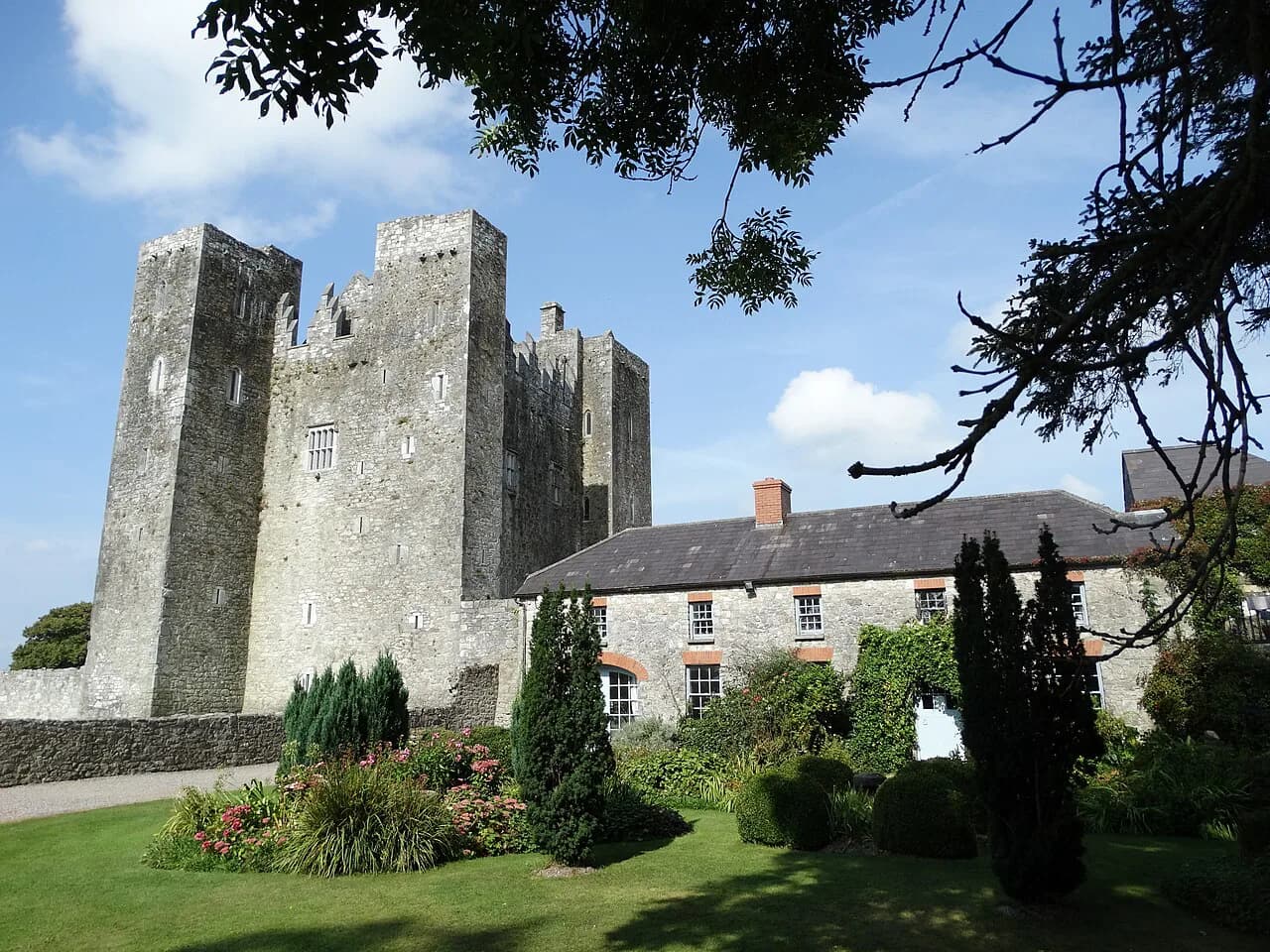
Barryscourt is a tower house in eastern County Cork, close to Carrigtwohill. The Office of Public Works, through Heritage Ireland, identifies it as one of the finest examples of the Irish tower-house form and dates its construction to between 1392 and 1420, during the reign of John Ciotach Barry, the 7th Lord Barry.
Its setting has changed more than the building. The Irish Aesthete notes that the castle once stood beside an inlet of Cork harbour that has long since silted up, and that the present structure is believed to date from the late 14th or early 15th century, describing it as later than the Norman-period remains on the site rather than identical with them.
For readers working through the wider story of these defended residences, our guide to irish tower houses sets the building type in context, and Barryscourt makes a useful case study because its structure and setting are described in some detail in the sources below.
Current Opening Status
The operator's position is clear for now: the castle is closed for the 2026 season, and the page states that visitors will be welcomed again in 2027. No month, date or booking arrangement for the reopening has been published, so treat any plan as provisional.
The same official page lists opening times for open periods, with daily hours of 10:00 to 18:00 and a last admission at 17:15, but those times should not be read as applying today. Check them again once a reopening is confirmed.
Admission is covered in a separate section of the official page rather than priced here, so read that section directly when planning. The Irish Aesthete separately reported in May 2025 that the castle had reopened after further renovation; that is a dated account of a past event, not confirmation of current access.
Access arrangements vary from one tower house to another, even within State care; our guide to doe castle is another property in the network, but details should never be transferred from one site to another.
The Barry Family at Barryscourt
The Barry connection begins with the Norman arrival in Ireland. The Irish Aesthete records that the Cambro-Norman knight Philip de Barry came to Ireland in 1183 with his brother Gerald, the chronicler known as Giraldus Cambrensis, and acquired extensive lands in what is now County Cork, with Barryscourt among the family's bases.
Heritage Ireland states that from 1420 the castle served as the main seat of the next six Lords Barrymore. A compendium account adds that the property passed to a distant cousin, James FitzRichard of the Barryroes, in 1556, after the direct Barrymore line died out.
The castle's standing as a family home faded in the 17th century. The Irish Aesthete explains that after David de Barry died in 1617, his grandson made Castlelyons the family's principal seat instead, leaving Barryscourt to decline as a residence.
Dating the Building: Sources Disagree
The sources describe when the standing tower house was built, and they do not agree. Heritage Ireland gives 1392 to 1420 under the 7th Lord Barry; The Irish Aesthete places it in the late 14th or early 15th century; the compendium offers a tentative date of about 1550 based on architectural style.
The disagreement matters because it changes which Barry generation the building belongs to: an early 15th-century tower fits the Barrymore seat described by the operator, while a mid-16th-century date would make it a later insertion. Read the official dating as the operator's position rather than as a settled fact.
What is not in dispute is the earlier activity on the site. The compendium account notes evidence of a wooden watermill beside a stream in the 7th century, long before any fortification, with masonry from the Norman period possibly belonging to another mill or an early Barry stronghold.
Rebellion, Destruction and Cannon Fire
Barryscourt's most dramatic episode came during the Desmond rebellions. Heritage Ireland states that the Barrys supported the Fitzgeralds of Desmond and partially destroyed the castle to stop Sir Walter Raleigh and his army from capturing it; The Irish Aesthete dates the deliberate defacing to around 1581 and notes that Raleigh briefly occupied the property.
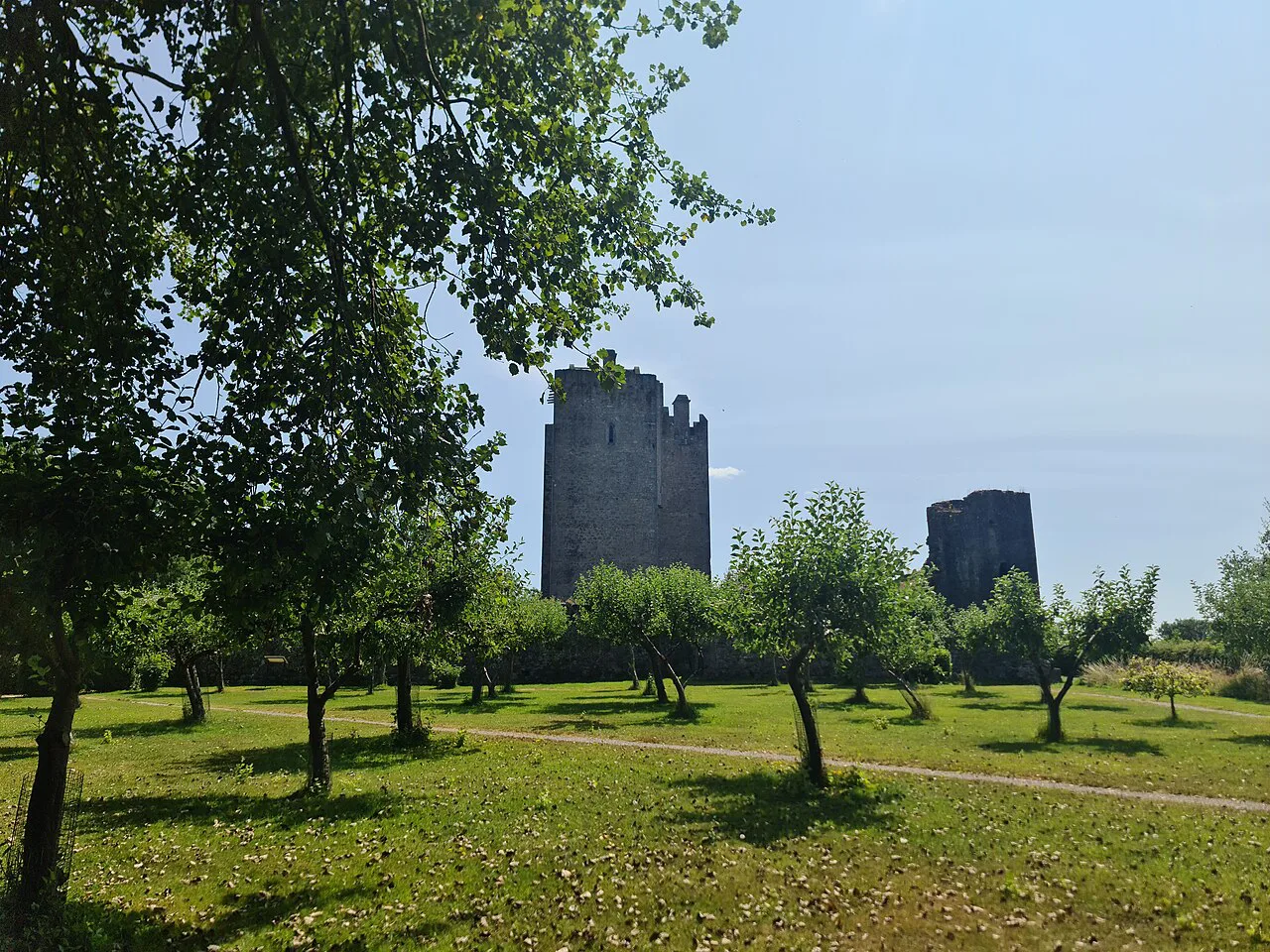
Repair followed. According to The Irish Aesthete, David de Barry regained possession in 1583 and began an extensive programme of improvement, part of which was the bawn wall measuring about 54 by 48 metres with substantial towers at three corners; the compendium likewise describes a walled courtyard with three corner towers added after the rebellion.
The next war left physical traces. Heritage Ireland notes that the castle was successfully attacked again during the Irish Confederate War of the 17th century, and that cannonballs lodged in the wall above the entrance still bear witness to the fighting. The compendium dates that capture to 1645.
Reading the Building Fabric
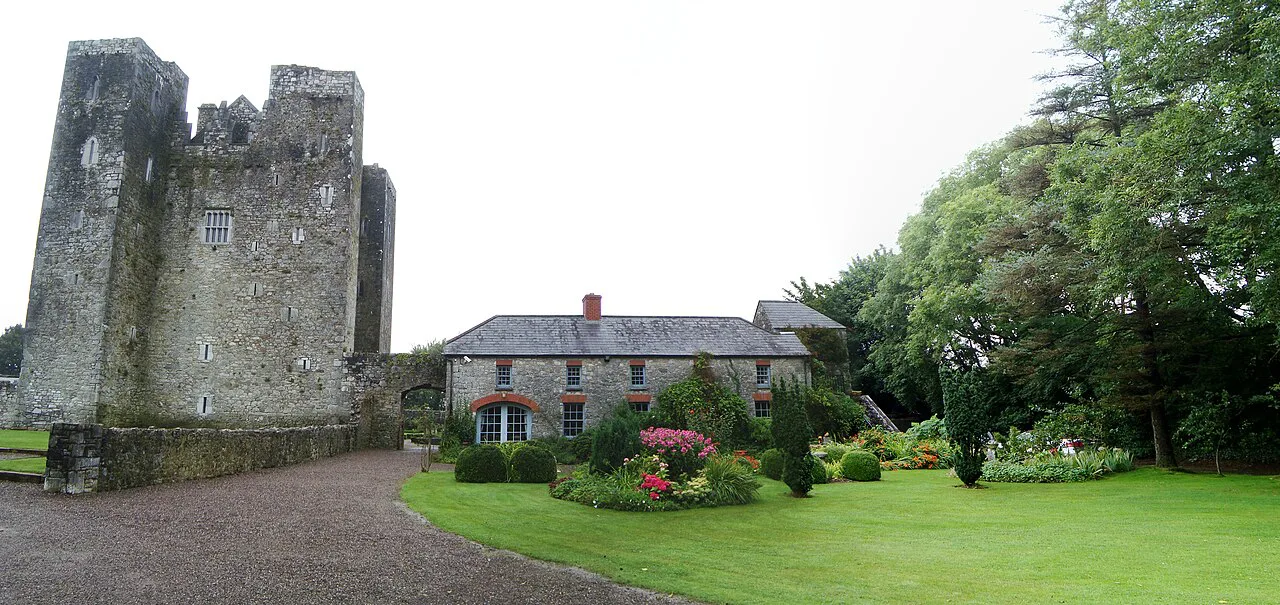
The tower house rewards attention to its plan. The Irish Aesthete describes a rectangular tower measuring about 15.3 by 10.7 metres, with a single arched entrance at the north end of the east wall leading into a small lobby and a stair, and a large vaulted chamber at entry level lit only by narrow, deeply set windows.
Above that, the great hall is the room to linger in. It has much larger windows, one on the north wall carrying the date 1586, and a limestone chimneypiece dated 1588 with the initials of David de Barry and his first wife, Ellen Roche; a vaulted private chapel and a chamber above it sit on the same level. For a contrast in furnished versus ruined interiors at another site, see our guide to askeaton castle.
Around the tower, the compendium describes a roughly rectangular bawn with the main tower at its south-west corner, an entrance in the south curtain wall, a smaller gate to the north, and three turrets projecting from the main block, each five storeys high against three in the main block itself.
The Irish Aesthete also makes a size comparison, suggesting the tower is among the largest of its kind in Ireland and thought to be exceeded only by Bunratty and Blarney. That is the blog's hedged assessment rather than an established ranking, and it is worth reading as such.
Restoration, Halls and Gardens
By the 20th century the castle was a ruin. The Irish Aesthete records that it remained in that condition until 1987, when the Barryscourt Trust was established to conserve and develop the site, after which it passed into the care of the Office of Public Works. The compendium likewise places the trust's foundation in 1987 and credits repair and reroofing of the tower's shell to Dúchas in the 1990s.
The interiors were then refitted. Heritage Ireland states that the Main Hall and Great Hall have been completed with fittings and furnishings reinstated, giving visitors a sense of how the rooms were furnished rather than an empty shell; the compendium describes the interior as furnished as it would have been in the 16th century.
The grounds were treated in the same spirit. The operator notes that the herb and knot garden and the orchard within the castle grounds have been restored to their original 16th-century design, which makes the walled area as much a part of the visit as the tower itself.
Access and Practicalities When Open
Not every part of the castle is open on the same terms. Heritage Ireland states that access to the upper chambers is by guided tour only, so visitors who want to see the great hall and the rooms above should plan around a tour rather than expect to wander up unaided.
The operator also warns that there is challenging access for visitors with mobility issues. No further detail on routes, surfaces or alternatives is published on the page, so anyone with specific requirements should raise them with the site before travelling rather than assume a workaround exists.
When the site is operating, the operator mentions a horse-box style stall onsite at weekends serving tea, coffee and treats. It should not be assumed to run during the closure, and no hours or menu are given, so treat it as a bonus rather than a reason for the trip.
For anyone comparing restored and ruined tower houses across the country, our guide to glenquin castle covers another Irish tower house, while Barryscourt's particular draw is the refitted interior the operator describes.
Nearby Heritage to Pair With a Visit
Barryscourt sits within reach of several other properties in State care. Heritage Ireland lists Fota Arboretum and Gardens, Charles Fort Military Fortress, Desmond Castle Kinsale and Dungarvan Castle among nearby sites, which makes the castle a natural stop on a wider day rather than a destination in itself. If the Kinsale sites catch your eye, our Charles Fort Kinsale: Visitor Guide to the Star-Shaped Fortress covers that fortress in more detail.
Readers assembling a longer castle itinerary inland might look at adare castle, a very different kind of defended site, and should check each property's own page for its current arrangements rather than assume a shared schedule.
Other tower houses around the coast, including rockfleet castle and carrigafoyle castle, can be added to a wider castle route, and each should be checked on its own page before you set out.
Plan Your Visit
Barryscourt Castle is a rewarding subject to read up on now and to see later. Its value lies in the combination of a substantially restored tower house, refitted halls, a walled bawn and replanted 16th-century-style gardens, all backed by a well-documented and turbulent family history.
Because the site is closed for the 2026 season, with visitors expected again in 2027, the sensible step is to check the official page for a confirmed reopening, the admission section and the listed opening times before making any travel plans.
For more heritage reading, see our guides to Ballyhack Castle, Listowel Castle, and Ballymote Castle.
Explore more Ireland guides
Frequently Asked Questions
Is Barryscourt Castle open to visitors?
No. The Office of Public Works states that the site is closed for the 2026 season and that it looks forward to welcoming visitors again in 2027. No reopening date has been published, so check the official Heritage Ireland page before travelling.
When did the Barry family come to Barryscourt?
The Irish Aesthete records that the Cambro-Norman knight Philip de Barry arrived in Ireland in 1183 with his brother Gerald, the chronicler Giraldus Cambrensis, and acquired extensive lands in what is now County Cork, with Barryscourt among the family's bases. Heritage Ireland states that from 1420 the castle was the main seat of the next six Lords Barrymore.
Why did the Barrys damage their own castle?
The Barrys supported the Fitzgeralds of Desmond during the rebellions of the late 16th century. To prevent the castle falling into the hands of Sir Walter Raleigh and his army, they partially destroyed it. After the rebellion was suppressed, the property was recovered and repaired.
What can you see inside Barryscourt Castle?
Heritage Ireland says the restored Main Hall and Great Hall have their fittings and furnishings reinstated, and that the herb and knot garden and orchard have been restored to their 16th-century design. Access to the upper chambers is by guided tour only. The Irish Aesthete describes a single arched entrance, a vaulted lower chamber, a great hall with a dated window and chimneypiece, and a private chapel.
Is Barryscourt Castle accessible for visitors with mobility issues?
The operator warns that access is challenging for visitors with mobility issues. No further detail on routes or alternatives is published, so visitors with specific needs should contact the site before travelling.
What else is there to see near Barryscourt Castle?
The operator lists Fota Arboretum and Gardens, Charles Fort Military Fortress, Desmond Castle Kinsale and Dungarvan Castle among nearby sites. Check each property's own page for its current arrangements.
Sources
You might also like



Continue reading
More guides you'll find useful





