
Carrigafoyle Castle: Guardian of the Shannon Visitor Guide
Carrigafoyle Castle is an OPW-guardianed tower house near Ballylongford, County Kerry. Learn its 1490s origins, the 1580 siege and how to plan a visit.
On this page
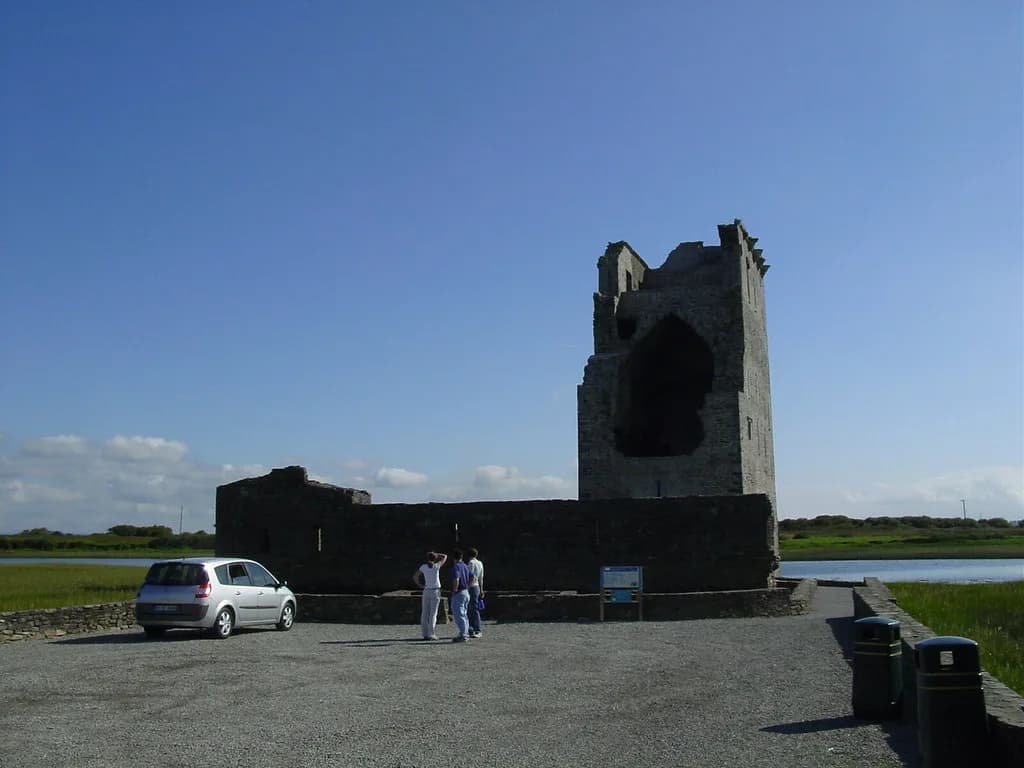
Carrigafoyle Castle is a late 15th-century tower house standing on a small rocky outcrop at the mouth of the Shannon Estuary, a short distance from Ballylongford in County Kerry. The Office of Public Works holds it as a National Monument in state guardianship, and Heritage Ireland lists it among its unguided sites. Its Irish name, Carrig an Phoill, means the rock of the hole, a description that fits the tidal setting below the walls.
English records called it the Guardian of the Shannon because it overlooked the shipping lanes serving Limerick City, which made it valuable to its builders and dangerous to their rivals. The structure that survives is a five-storey tower just over 24 metres tall, with a winding staircase of 104 steps. What follows separates the state account of the castle from secondary histories and local tourism guidance, so you can see which details rest on official ground.
What Carrigafoyle Castle Is
Carrigafoyle is a tower house rather than a broad castle complex, and its compact footprint reflects that form. Heritage Ireland attributes its construction to Connor Liath O'Connor in the 1490s and describes a five-storeyed building rising just over 24 metres, reached by a winding stair of 104 steps. A small rocky outcrop at the water's edge gave the builders a natural platform.
The state listing calls the site unguided, which matters for planning: there is no scripted tour to follow and the fabric itself carries the story. Visitors should treat the presentation as a monument in guardianship rather than a staffed interpretation centre, and rely on published Heritage Ireland material for what the site actually contains. For a wider survey of this building type, our guide to irish tower houses explains how these defended residences worked.
Origins in the 1490s and the Estuary Position
The O'Connor family built at Carrigafoyle at a point where the estuary narrowed toward the shipping route into Limerick City. Heritage Ireland notes that the position controlled the lanes to and from Limerick and that the site was known in English as the Guardian of the Shannon for exactly that reason. Defense and trade income were the same argument here, since whoever held the rock could reach passing boats.
An independent reference compilation describes the tower as five storeys of almost 90 feet and adds detail about the inner bawn, an enclosing wall, and a smaller tower within the defences. Those specifics come from a secondary site with its own citations, so they should be read as supplementary rather than official. The same source notes that O'Connor power in the region rested partly on alliances as well as on the castle's grip on Shannon commerce.
The Defences: Moat, Dock and Bawn
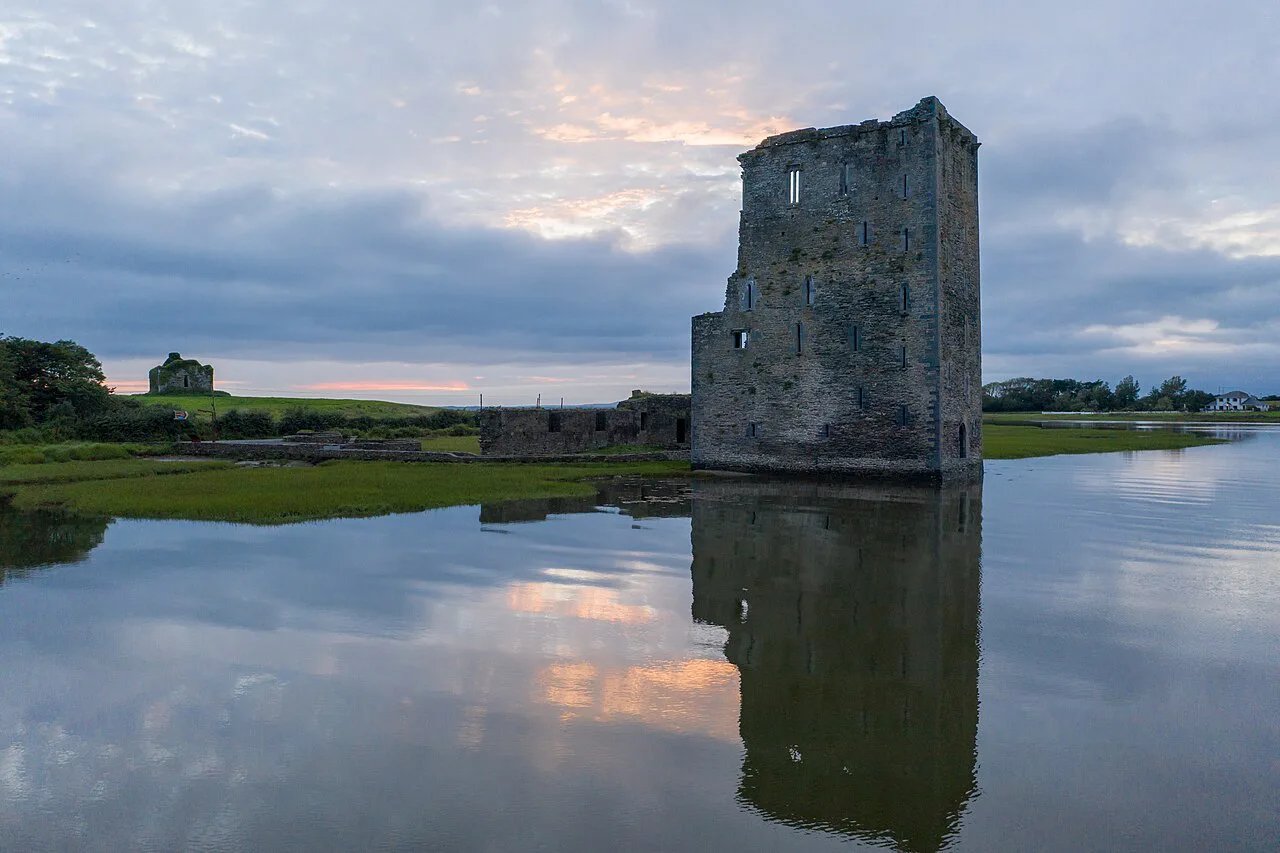
At high tide a moat surrounded the castle, and a small dock stood beside the fortress so boats could moor against it, according to Heritage Ireland. That detail explains why the site's economy and its defenses are difficult to separate: water access was both a commercial asset and part of the perimeter. The official text concentrates on the tower, moat and dock; a secondary reference adds an inner bawn enclosure and a smaller tower within the defences, and should not be given more authority than the state text.
For readers comparing tower houses, the combination of tidal moat, private dock and bawn is a useful reminder that these buildings were often adapted to their immediate ground. The estuary setting at Carrigafoyle is not scenery added to the story but the reason the site was chosen, fortified and fought over.
The 1580 Siege of Carrigafoyle
During the Second Desmond Rebellion of 1579 to 1583, the castle was garrisoned by fifty Irish rebels and sixteen Spanish allies under a Captain Julian, Heritage Ireland records. At Easter 1580 an English army under Sir William Pelham, the Lord Justice of Ireland, attacked. The official account says tradition links the siege to one of the first uses of artillery in Kerry, a claim best repeated as tradition rather than settled fact.
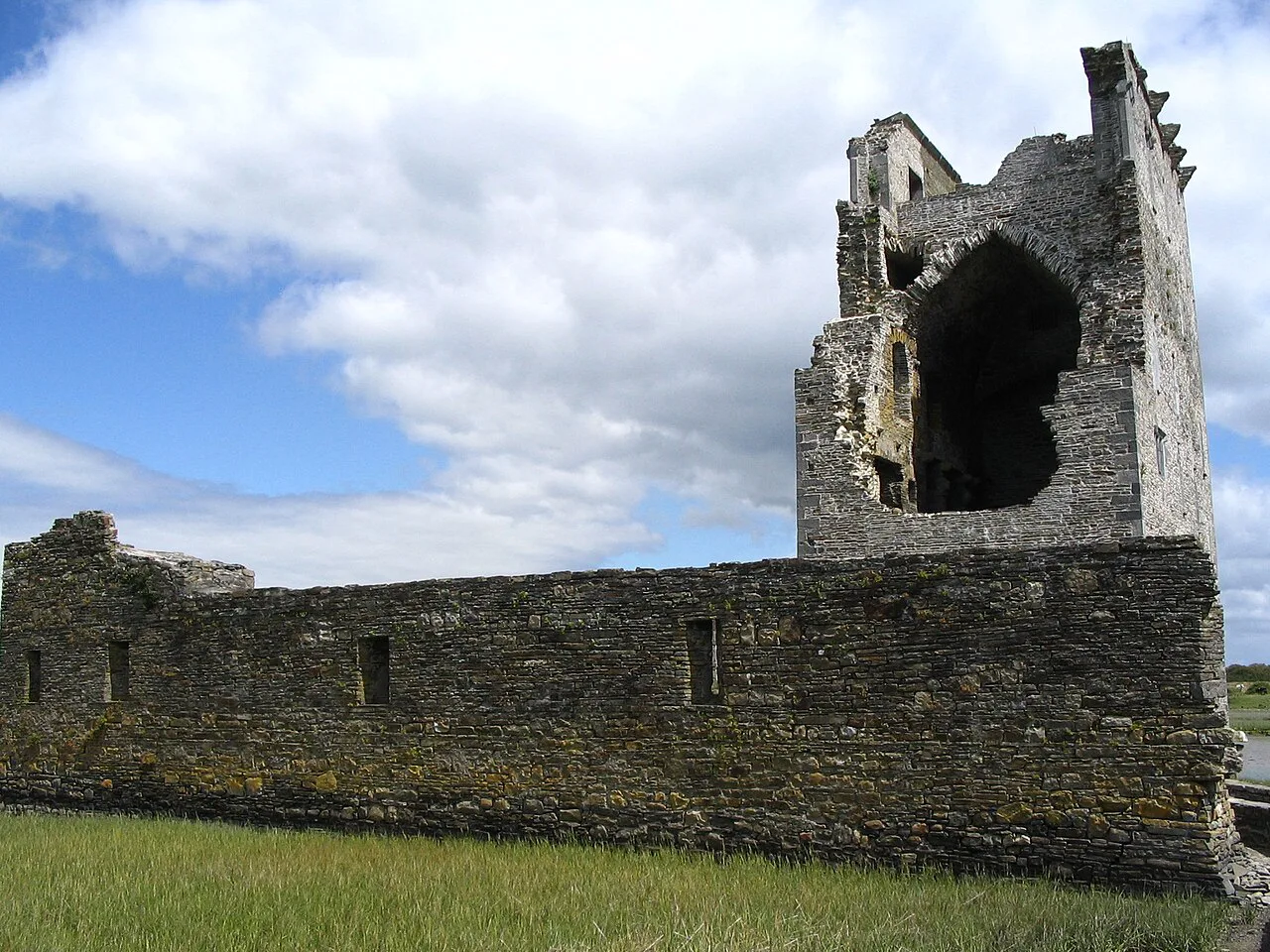
The official narrative describes defenders pinned down near the sea wall on the first day and the western wall collapsing under repeated cannon fire on the second, after English reinforcements arrived. Many defenders were killed by falling masonry, and survivors were put to death when the castle was stormed. A secondary account adds that the bombardment involved three cannons and lasted two days, and that civilians were among those killed; it also records a tradition that a servant showed the weakest window with a candle, which should be labeled as legend, not established history.
What Followed the Siege
News of the fall traveled quickly, and Heritage Ireland explains that other rebel fortresses were abandoned soon afterward, with Askeaton Castle and Desmond Castle Newcastlewest given up as the Desmond forces turned to guerrilla warfare. The rebellion ended when the Earl of Desmond was killed at Glenageenty in the Slieve Mish mountains near Tralee. The siege therefore matters beyond the local story: it helped change how the wider Munster war was fought, and readers following the Shannon's trading towns can continue with our Museums in Limerick: A Guide to the City's Core Collections.
The secondary compilation follows the O'Connor family through later retakings in 1601 and a further siege in 1649 during the Cromwellian invasion, after which the tower was destroyed and the outer walls taken down. These later events come from a source with its own citations rather than the official page, so treat the sequence as careful secondary history. Nearby Askeaton Castle, also named in the official account, has its own history worth comparing.
The Tower as It Survives
The surviving structure is a five-storey tower house just over 24 metres high, with a 104-step winding stair to the top, as Heritage Ireland describes it. Readers should understand these figures as the fabric of the monument, not a promise that every floor or the climb is currently open. A local tourism page run by a golf operator says all five floors are accessible and that visitors can climb the 104 steps in summer for views over Carrig Island, Scattery Island and across to County Clare; that is third-party guidance, not official access confirmation.
The state account also warns that unguided sites require care and caution throughout a visit, and that the Office of Public Works does not accept responsibility for damage, injury or loss. That is a general caution attached to its unguided monuments rather than a judgment about the staircase. Practical comparisons with similar buildings, such as the Desmond Castle at adare castle, help set expectations for narrow stairs and exposed stonework.
The Setting on Foot
The castle sits on its rocky outcrop at the water's edge, a setting that shapes any walk around the site. A local tourism page from a Ballybunion golf operator suggests parking at the castle and walking across to Carrig Island and out to the Battery, an artillery tower it associates with invasion preparations in the Napoleonic era. Present that as local guidance rather than an official visitor route.
The same page says Ballylongford Tidy Towns placed two seating areas at the end of the island and that visitors watch for dolphins and resident seals there. Treat wildlife as a possibility, never a scheduled sighting, and treat the seating as a community-installed detail reported by a third party. For walkers interested in how other coastal tower houses use their ground, Doe Castle in County Donegal on Sheephaven Bay is a useful comparison.
Access: Why You Must Check First
Heritage Ireland lists Carrigafoyle among its unguided sites, confirming it is a National Monument in state guardianship, but the caretaker notice published there covers only 9 May to 28 October 2025, with internal access from 9am to 6pm. That season has passed, and no current notice on the official page states whether a caretaker is opening the castle now. Do not read the old dates as confirmation that the tower is open or closed; check the Heritage Ireland page directly before travelling.
The independent castlesofeireann compilation describes a mid-May to mid-September visiting window with off-season access by appointment, but that account is not the operator's notice and sits alongside the official page's dated caretaker schedule, so it should not be relied on for current access. Parking at the castle and the Battery walk are also described only by the golf operator's local page, which is not the site's operator. Plan around what the Heritage Ireland page confirms at the time of your trip, not around historical narrative or commercial travel copy.
Nearby Sites for Context
Heritage Ireland's page for Carrigafoyle names several other Office of Public Works sites worth knowing when planning a Kerry and Shannon itinerary, including Scattery Island Monastic Site and Visitor Centre, Listowel Castle, Desmond Castle Newcastlewest, Ardfert Cathedral, Askeaton Castle and Ennis Friary. The listing gives names only; consult each site's own Heritage Ireland page for what it contains and when it can be visited. Staying with primary sources keeps the comparison honest.
Carrigafoyle works best as one stop in a wider reading of the Shannon region rather than a standalone destination with facilities. Pairing it with one or two of those named sites lets you see how tower houses, friaries and later defenses shared a landscape. If you are comparing coastal tower houses, our guide to irish tower houses explains another version of the same defended-residence form.
Plan Your Visit
Carrigafoyle Castle is best understood as a surviving tower house whose value lies in its estuary position and its role in the 1580 siege. The five-storey fabric and the 104-step stair are described by the state source, while the views, the Battery walk and the seating areas come from third-party local guidance. That distinction should shape your expectations as much as your route.
Before setting out, confirm current internal access on the Heritage Ireland page, since the only dated caretaker notice there has expired and no newer schedule is published. Do not assume the climb is available or that the tower is closed; verify. The estuary setting itself, on a National Monument in state guardianship, is the reason to make the detour near Ballylongford.
Explore more Ireland guides
Frequently Asked Questions
What is Carrigafoyle Castle known for?
It is a late 15th-century tower house on a rocky outcrop near Ballylongford, County Kerry, held by the Office of Public Works as a National Monument in state guardianship. It is known for its estuary position, which English records recognized by calling it the Guardian of the Shannon, and for the 1580 siege during the Second Desmond Rebellion.
Why was Carrigafoyle called the Guardian of the Shannon?
Heritage Ireland says the name reflected the castle's position overlooking the shipping lanes to and from Limerick City. Whoever held the rock could influence traffic on the estuary, so the site served both as a defense and as a source of commercial leverage for its O'Connor builders.
What happened at the Siege of Carrigafoyle in 1580?
According to Heritage Ireland, the castle was garrisoned by fifty Irish rebels and sixteen Spanish allies under Captain Julian when an English army under Sir William Pelham attacked at Easter. The official account describes the western wall collapsing under cannon fire on the second day and the survivors being put to death when the castle was stormed. Later Desmond strongholds, including Askeaton, were abandoned soon afterward.
Can you climb the 104 steps at Carrigafoyle Castle?
The official source describes a winding staircase of 104 steps in the five-storey tower, but it does not guarantee current access to the stairs. A local tourism page from a golf operator says visitors have climbed them in summer for estuary views. Confirm internal access with Heritage Ireland before relying on the climb.
Is Carrigafoyle Castle open to visitors now?
The Heritage Ireland page carries a caretaker access notice for 9 May to 28 October 2025 only, and that season has passed. It does not state whether the castle is open or closed today. Check the official Heritage Ireland page before travelling rather than assuming either way.
How do you get to Carrigafoyle Castle near Ballylongford?
The castle stands on a rocky outcrop at the mouth of the Shannon Estuary near Ballylongford, County Kerry, per Heritage Ireland. A local golf operator's tourism page suggests parking at the castle and walking to Carrig Island and the Battery, but that is third-party guidance, not official visitor information. Route details should be checked against a current map before setting out.
Sources
You might also like



Continue reading
More guides you'll find useful




