
Ballymote Castle: A Visitor Guide to the Sligo Ruin
Ballymote Castle is an unguided OPW National Monument in County Sligo. Read its Anglo-Norman plan, documented history and the Book of Ballymote link.
On this page
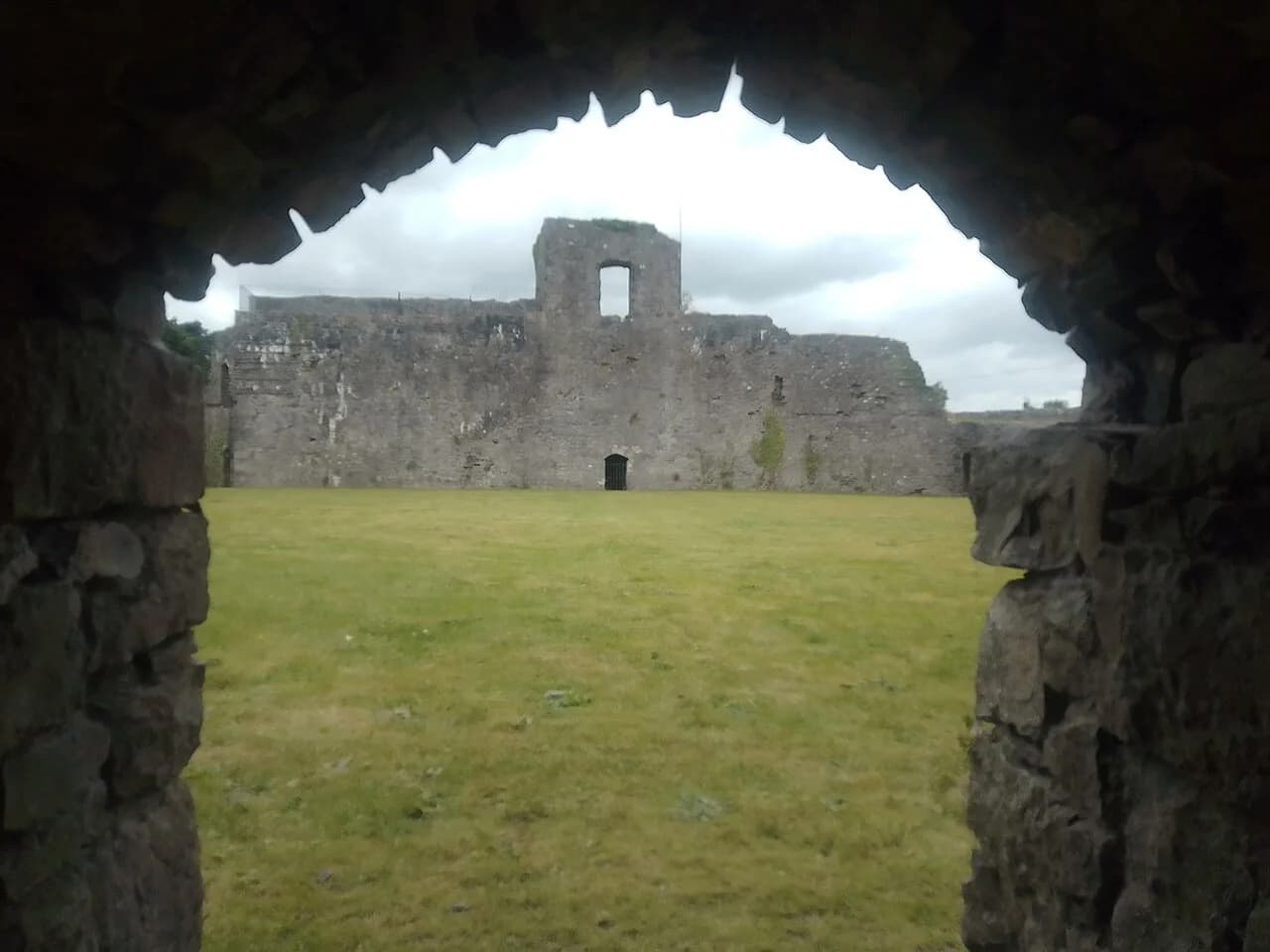
Ballymote Castle is a state-owned National Monument in County Sligo, held in the care of the Office of Public Works and presented as an unguided site. It stands at the west end of Ballymote town, close to the railway station, so it works as a compact stop built around the standing ruin rather than a staffed attraction.
Expect a visit that is about looking, walking and reading: a regular Anglo-Norman plan, thick curtain walls and a gatehouse whose defensive fittings still show. Nothing published by the OPW indicates tours, tickets, interior access or visitor facilities, so plan the stop around the exterior fabric and the story it carries.
Where the Castle Stands and How the Visit Works
The castle lies west of Ballymote town, and a field description places it at the west end beside the railway station, with Discovery Map 25 and a latitude and longitude for navigators. That position makes the monument easy to fold into a short halt in town rather than a dedicated excursion.
Heritage Ireland's entry is explicit that this National Monument is unguided and warns that care and caution should be maintained during any visit. Treat the page as the authority on status before travelling, since it does not publish opening hours, admission arrangements, tours, parking or facilities. A 2016 visitor account described locked gates with the grounds walkable and interpretive plaques on site, but that is a dated observation and not a guarantee of today's arrangements.
If you are comparing ruins of different periods, it helps to know that Ballymote is a compact Anglo-Norman fortress shell rather than a tower house, a distinction worth carrying into any reading of irish tower houses elsewhere in the country, and it is the same contrast that makes a guide to ancient sites in Ireland a useful companion when you move back before the Normans.
Reading the Plan: A Square Fortress in Stone
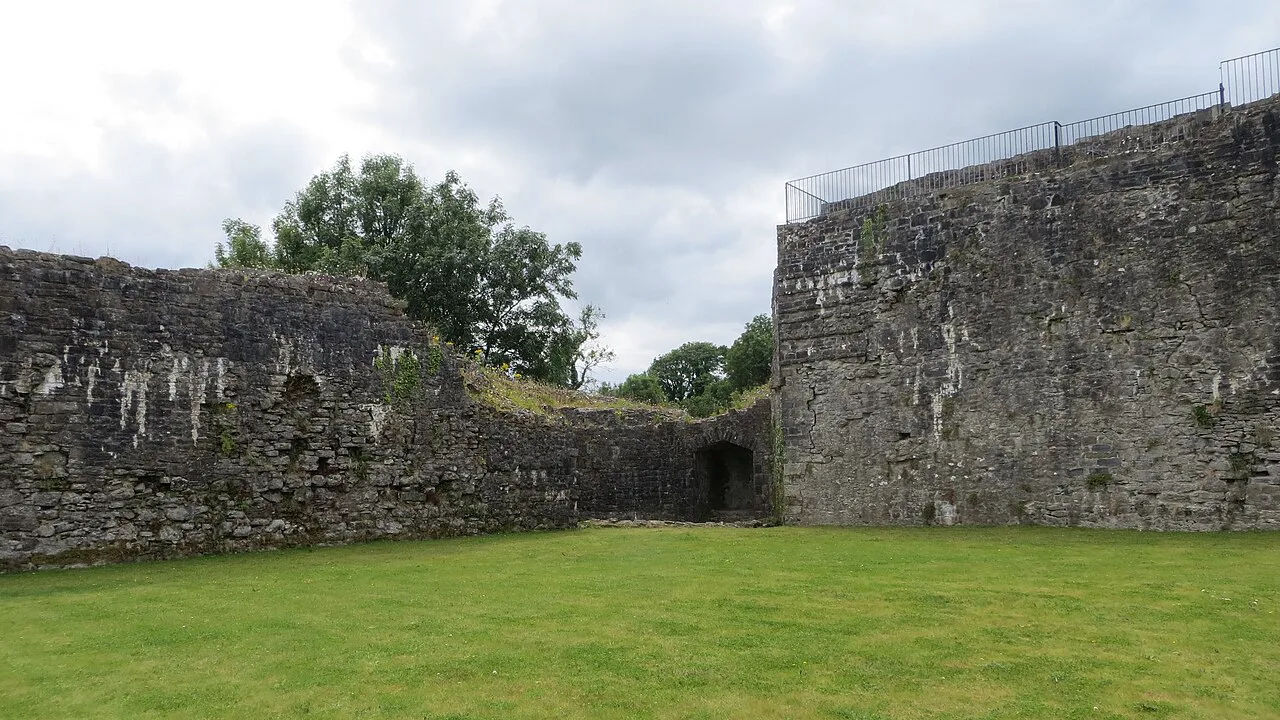
Almost square in plan, the castle centres on an entrance in the middle of the north wall, flanked by twin towers of three storeys. A tower stands at each corner of the curtain wall, with D-shaped towers midway along the east and west walls, and the curtain walls themselves are three metres thick.
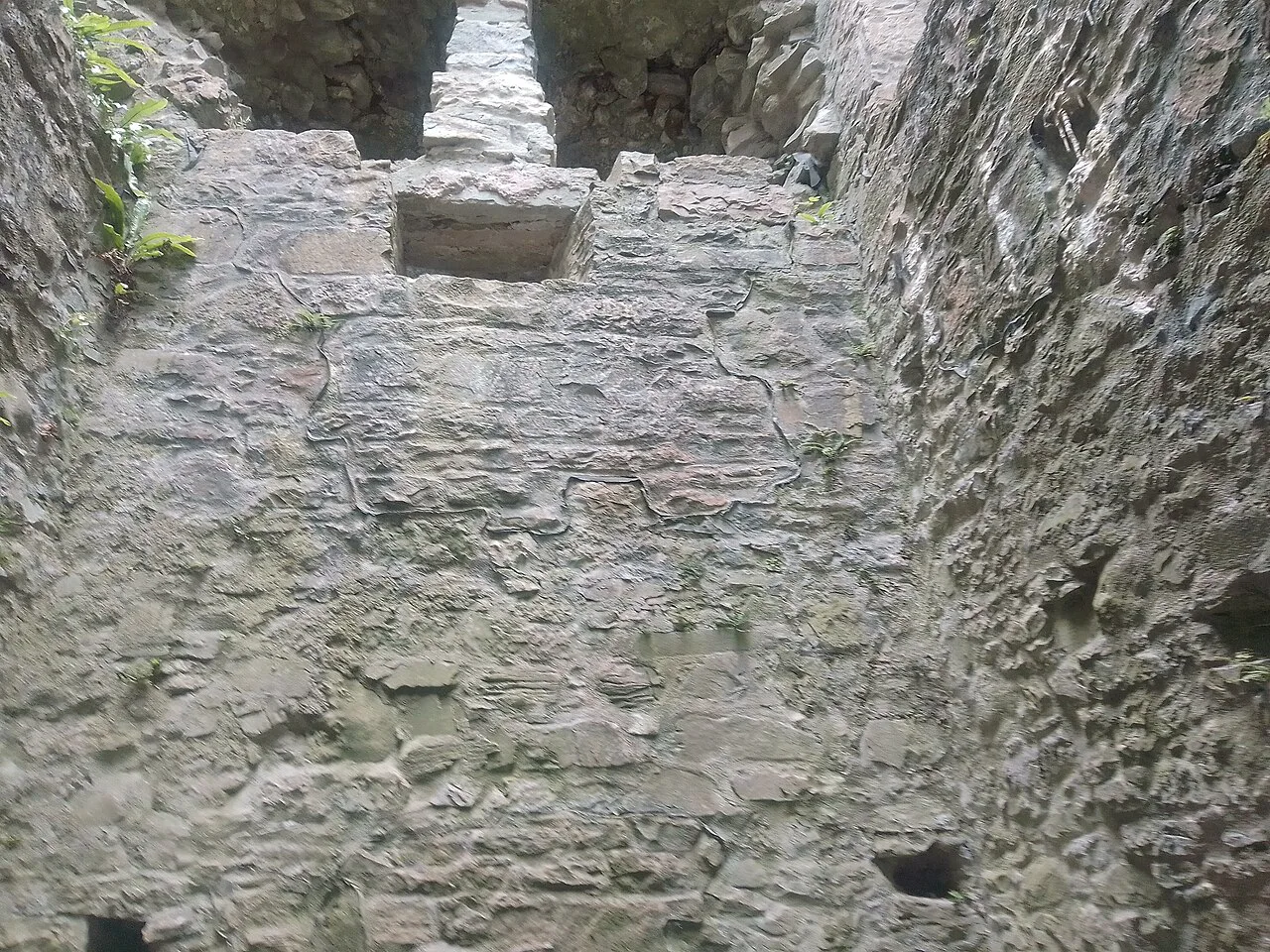
The gatehouse retains the remains of a portcullis slot, and fireplaces survive at ground level in all six towers; on the south-facing gatehouse, water spouts once carried run-off into the enclosed keep. These details reward slow looking rather than a quick circuit, because they show how a showpiece fortress handled entry control, heating and drainage.
An independent field description adds that the towers rise above the curtain wall and that a small rectangular tower projects from the southern wall, possibly a sallyport. Such observations are useful prompts on the ground, but they are interpretations rather than official findings.
The 1300 Foundation and the Red Earl
The Annals of the Four Masters attribute the castle's construction to Richard de Burgo, the Red Earl of Ulster, in 1300, and that attribution is repeated in the state record. The Irish Aesthete sets the earl in the wider de Burgh story, tracing the family to William de Burgh, who arrived in Ireland in 1185 and took the title Lord of Connacht.
For a visitor, the foundation date matters less as a plaque fact than as a starting point for the transfer history that follows, which is unusually well punctuated by dated changes of hand. The same source notes that an 1802 county survey already described the structure in detail, evidence that the ruin has long been an object of scrutiny.
A Castle That Kept Changing Hands
By 1317 the O'Connors had captured the castle, according to the official account, a takeover that followed the upheaval of Edward Bruce's invasion of Ulster in 1315, when de Burgo lost his recently built stronghold. The MacDiarmada are recorded as owners in 1347 and the McDonough in 1381, after which possession returned to the O'Connors.
Later Tudor and Gaelic conflict tightened the cycle. One account dates an English capture to 1577, while the state record notes that Richard Bingham, as Governor of Connacht, took the castle in 1584 and that it was sacked in 1588. Reading these dates together shows a fortress repeatedly taken, lost and damaged rather than steadily held.
Red Hugh O'Donnell, Kinsale and the Price in Cattle
The castle's best-known episode is its reported sale to Red Hugh O'Donnell, described in the official entry as reputedly made for four hundred pounds and three hundred cows before he marched toward the Battle of Kinsale. That sale is dated 1598 in the state record and in The Irish Aesthete, while one independent description gives 1498; the 1598 dating is the better documented, and the earlier figure should be treated as a variant rather than fact.
After the defeat at Kinsale the castle passed into English hands, and in 1610 the crown granted it to Sir William Taaffe, whose son John was created Baron of Ballymote in 1628. The sequence of grant and title explains why the Taaffe name recurs in local history around the site.
The Confederate Wars brought further attack, and in 1652 the castle was taken by General Ireton before being surrendered to Viscount Granard in 1690. Those two dates close the military story and open the quieter one of abandonment.
From Fortress to Open Shell
After 1690 the castle was abandoned, its moat was filled in, and the fortifications were left to decay, which is why visitors now encounter a roofless shell rather than a working stronghold. The very survival of the plan, tower positions and gatehouse fittings is a result of that ending, not despite it.
Set against other castles that were later remodelled for comfort, Ballymote's interest lies in reading a single defensive scheme across the ruin. That makes it a natural companion piece to a place such as Adare Castle, where a Desmond Castle overlooking the River Maigue offers another view of how Irish castles were planned and contested. If you want to extend that comparison into the west, the castles in county galway offer several more examples of changing access and survival.
The Book of Ballymote: A Manuscript Thread
The Book of Ballymote was partly compiled at the castle around 1391, and the official entry notes that it includes material such as Lebor Gabála, Lebor na gCeart, Ogham writing, Dinshenchas and the Destruction of Troy. It is now held in the Royal Irish Academy, so the manuscript is a separate thread from the stone and is not an object to look for on site.
Another description puts the manuscript at about five hundred pages covering the invasions of Ireland, the creation of the world and Ogham writing. Because the full contents are not settled by a single description, it is better to treat these summaries as entry points into the manuscript's range than as a complete inventory.
Nearby Context and Regional Extensions
A short walk from the castle brings you to Ballymote Abbey, which makes a natural addition to the same outing without requiring a second journey. Beyond the town, the official Heritage Ireland entry lists other sites in the region, including Carrowmore Megalithic Cemetery, Boyle Cistercian Abbey, Sligo Abbey, Parke's Castle, Rathcroghan Visitor Centre and Seán Mac Diarmada Cottage.
Those names are orientation rather than a plan, since their own access arrangements are separate from Ballymote's and should be checked individually. For travellers assembling a wider itinerary of prehistoric and early monuments, a guide to ancient sites in Ireland helps place a medieval castle within a much longer landscape of stone.
What to Confirm Before You Go
The one firm practical point in the published record is that Ballymote Castle is a National Monument in OPW care and is unguided, with a warning to take care. That wording is a caution about the fabric and footing, not a description of facilities, and it should shape how you approach the walls and any uneven ground.
Because no source documents tours, tickets, interior access, parking or facilities, do not build a day around assumptions about any of them; check the official page again before setting out. Keeping the visit modest in expectation lets the plan and the gatehouse do the work.
Plan Your Visit
Ballymote Castle rewards a short, deliberate stop: walk the exterior, find the north gatehouse, count the corner and mid-wall towers, and read the transfer history as a sequence rather than a jumble. Its value lies in a documented plan and a dated story, not in amenities.
Pair it with Ballymote Abbey on foot, and if you are tracing castle architecture across the country, compare the result with a very different site such as Doe Castle, County Donegal, where the setting above Sheephaven Bay changes the experience of the stone.
Explore more Ireland guides
Frequently Asked Questions
Is Ballymote Castle open to visitors?
Heritage Ireland describes Ballymote Castle as a state-owned National Monument in the care of the Office of Public Works and lists it as an unguided site with a caution to take care. It does not publish opening hours, tickets or tour arrangements, so check the official page before travelling rather than assuming a staffed attraction.
What can you actually see at Ballymote Castle?
You see the standing shell of an almost-square Anglo-Norman fortress: a north-wall entrance flanked by three-storeyed twin towers, corner towers, D-shaped towers midway along the east and west walls, and curtain walls three metres thick. The gatehouse retains a portcullis slot, fireplaces survive at ground level in all six towers, and water spouts once drained the south-facing gatehouse. Interior access is not documented.
When was Ballymote Castle built and by whom?
The Annals of the Four Masters, as cited by Heritage Ireland, attribute the castle to Richard de Burgo, the Red Earl of Ulster, in 1300. The Irish Aesthete sets him within the wider de Burgh family and its Connacht role, which helps explain why the fortress mattered so much to his rivals.
Why is Ballymote Castle linked to the Book of Ballymote?
The Book of Ballymote was partly compiled at the castle around 1391. Heritage Ireland notes that it is now held in the Royal Irish Academy, so the manuscript belongs to the castle's history rather than to anything you should expect to view on site.
How long does a visit to Ballymote Castle take?
No source sets a duration, but the scale of the plan suggests a short stop focused on the exterior walls, towers and gatehouse. Because the site is unguided and lacks documented facilities, the length of your visit depends on how closely you want to read the masonry rather than on any programme.
What else is worth seeing near Ballymote Castle?
Ballymote Abbey is a short walk from the castle according to one field description, making it an easy addition on foot. Heritage Ireland also lists Carrowmore Megalithic Cemetery, Boyle Cistercian Abbey, Sligo Abbey, Parke's Castle, Rathcroghan Visitor Centre and Seán Mac Diarmada Cottage as nearby sites, each with its own arrangements to check.
Was Ballymote Castle sold to Red Hugh O'Donnell?
Heritage Ireland describes a reputed sale to Red Hugh O'Donnell, dated 1598, before he marched toward the Battle of Kinsale. One independent description gives 1498 instead, so treat the 1598 dating as the better documented and the earlier figure as a variant.
Is Ballymote Castle the same as Parke's Castle?
No. Ballymote Castle is a separate National Monument in County Sligo, while Parke's Castle is listed by Heritage Ireland as a different nearby site in the region. They should be planned as distinct stops rather than one destination.
Sources
You might also like



Continue reading
More guides you'll find useful





