
Irish Tower Houses: What They Are and Where to See Them
Irish tower houses are fortified homes built roughly 1400 to 1650. Learn how to read one, then compare access at Carrigafoyle, Doe and Adare.
On this page
A tower house is a tall, generally single-tower fortified residence, appearing later than the Anglo-Norman castle and built in numbers from roughly 1400 to 1650. The label "castle" on maps and signposts blurs that distinction, so knowing the form first makes any ruin easier to read. Three named survivals show how access differs as much as architecture: a Shannon Estuary tower, a Donegal stronghold and a closed Limerick castle seen from outside.
What a tower house is, and why the castle label misleads
Earlier Anglo-Norman castles were substantial defensive structures, typically a fortified keep on raised ground inside a walled enclosure. Tower houses came afterwards and were usually a less complex building, essentially one tall tower, sometimes set within a protective bawn wall. The Irish Aesthete, drawing on archaeologist Colm Donnelly, describes tower houses as a species within the castle genus rather than a separate family entirely.
That framing matters on the ground. When a signboard calls a site a castle, check whether you are looking at a multi-part enclosure with a keep or at a single vertical block of four or five storeys. The three case studies below are not interchangeable: Adare is presented by its operator as a fortified castle with a square keep in a moated ward, while Doe and Carrigafoyle are tall single towers.
Why tower houses multiplied
The Irish Aesthete traces the type's origins to 1429, when a statute of Henry VI offered a subsidy to liege men in the counties of the Pale who built a sufficiently embattled tower of set dimensions within a decade. The measure aimed at protecting that area from incursion, and the financial incentive is often credited with encouraging the form's popularity there. Construction continued for about two hundred years, from roughly 1400 to 1650, and the same source notes an estimate of some 3,000 built, a figure attributed to scholarship rather than any official count.
Popularity spread beyond the original statute's purpose and geography. The source notes that tower houses soon appeared elsewhere in the country and were built by both descendants of Anglo-Norman families and members of the Gaelic nobility, before fortified houses superseded them in the first half of the 17th century. That mixing of patronage helps explain why tower houses cluster across so many counties rather than sitting only in the east.
How to read the fabric on site
The typical plan is square or rectangular with four or five storeys and a single arched doorcase at ground level as the only entrance. Just inside, a murder hole was positioned above the entry, and the lower walls carry only narrow slits that admit light without exposing occupants. Larger windows and substantial chimneypieces belong to the upper floors, which were the main living quarters, reached by a stone spiral stair climbing inside the wall. Machicolations punctuate the roofline.
Ballynahow in County Tipperary is the described exception: a free-standing, cylindrical tower house rather than the usual rectangular block. The Irish Aesthete reports it as believed to date from the early 16th century, erected by a branch of the Purcells allied to the Butlers, with lower floors apparently still in residential use as late as the 1840s, which may explain its good condition. Treat these as the source's cautious attributions and plan no visitor trip on them, since this source supplies no access, hours or facilities guidance for the site.
Case study one: Carrigafoyle, County Kerry
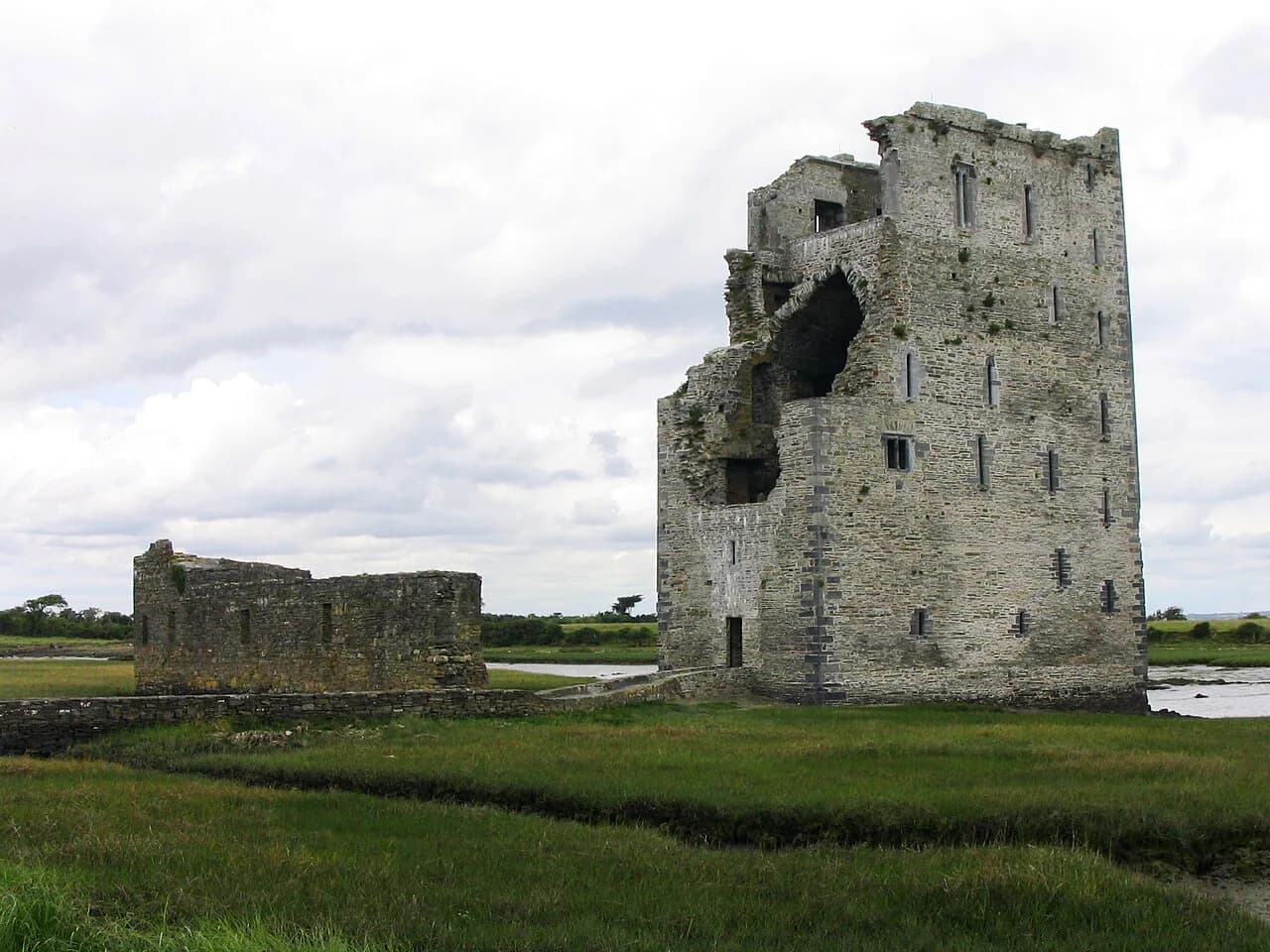
Carrigafoyle Castle is a late 15th-century tower house, probably built in the 1490s by Connor Liath O'Connor on a rocky outcrop at the mouth of the Shannon near Ballylongford. Its Irish name, Carrig an Phoill, means the rock of the hole, and English sources called it the Guardian of the Shannon because it controlled shipping to and from Limerick. A tidal moat surrounded it at high water, and a small dock let boats moor beside the fortress.
The tower is five storeys and just over 24 metres tall, with a winding stair of 104 steps to the top, so the climb is the practical test of any visit. During the Second Desmond Rebellion the castle was garrisoned by fifty Irish rebels and sixteen Spanish allies under a Captain Julian. At Easter 1580 an English army under Sir William Pelham attacked, and cannon fire collapsed the western wall; the operator page records that survivors were put to death after the storming.
The shock travelled quickly: Askeaton Castle and Desmond Castle Newcastle West were abandoned shortly afterwards as the rebels turned to guerrilla warfare until the Earl of Desmond was killed near Tralee. Carrigafoyle is a National Monument in state guardianship and is listed as an unguided site, where the operator asks visitors to take care. A caretaker has opened the castle for internal access during a stated seasonal period, but the notice on the page is dated to the 2025 season, so the 2026 arrangement is unconfirmed — check before travelling rather than assuming the tower is open.
Case study two: Doe Castle, County Donegal
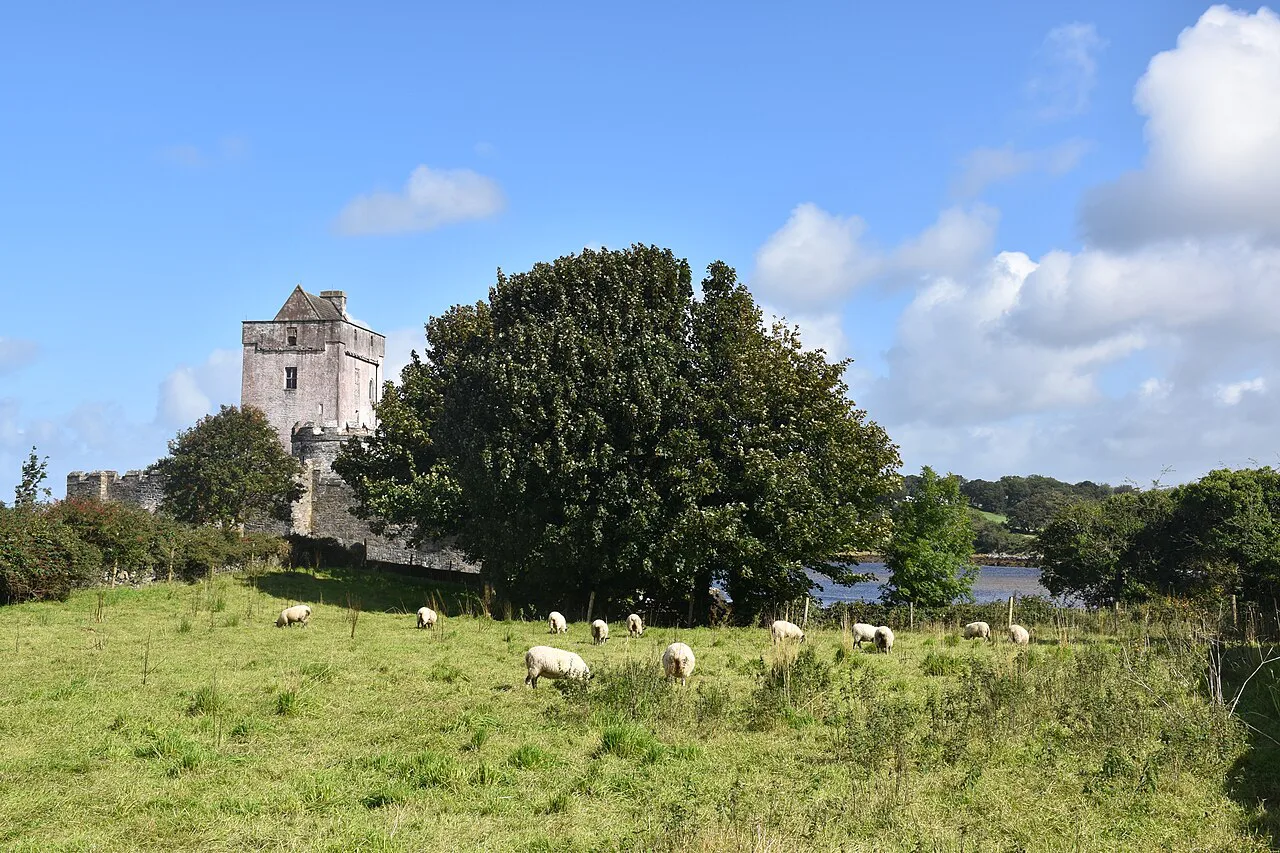
Doe Castle, County Donegal, stands on the waterline of Sheephaven Bay, reached off the R245 between Carrigart and Creeslough. It was built in the 1420s as the MacSweeney stronghold and served for almost two hundred years as home, refuge and bastion for at least thirteen chiefs. One of them, Eoghan Og II, sheltered survivors of the 1588 Spanish Armada fleet, and the last chief marched out with Red Hugh O'Donnell to the Battle of Kinsale in 1601. For the practical details, see the doe castle.
Inside the tower house, a carved and ornamented Mac Sweeney grave-slab dated 1544 is on display, alongside panels chronicling the castle's history. Those two elements give the interior a purpose beyond the shell: the slab is a documented object, and the panels supply the family narrative the walls cannot. Because the interior is reached only on an appointment-based tour of the keep, read the panels and seek the slab during that booked visit rather than expecting open access.
Visiting splits into two distinct permissions. The grounds are open daily all year and admission to them is free, but there is no OPW visitor centre at the site, so do not expect indoor facilities. Guided tours of the keep may be accommodated strictly by appointment through the published email address, doecastlecreeslough@outlook.com; without a confirmed booking, plan on the grounds only.
Case study three: Adare, County Limerick
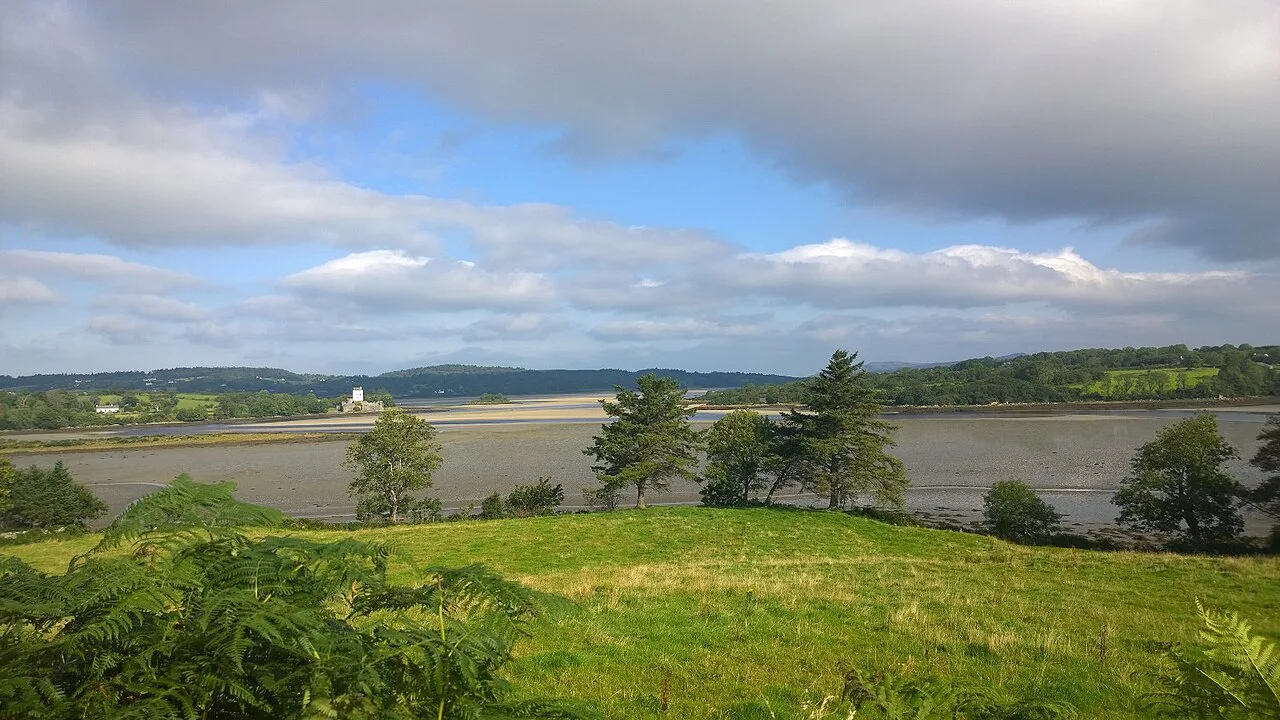
Adare Castle is the instructive counterexample: a fortified castle rather than a classic free-standing tower house, with a formidable square keep at its core standing inside a walled ward surrounded by a moat. It sits on the banks of the River Maigue near the main road bridge on the N21 approach to Adare, a position from which its lords could control traffic to and from the Shannon Estuary.
The castle changed hands several times before becoming a key bastion of the earls of Desmond in the sixteenth century. It fell to the English after a siege during the Second Desmond Rebellion, and Cromwellian forces laid waste to the building in 1657, a different conflict and a different century from Carrigafoyle's 1580 siege. Keeping those two episodes apart is a useful check on any quick summary you read elsewhere.
The site is currently listed as closed, with external view only, so do not plan on walking the ward or climbing the keep. Any visitor access runs through Adare Heritage Centre in Adare village rather than the roadside location, and that is where to ask what can currently be seen. If your trip takes you into the city itself, the Museums in Limerick: A Guide to the City's Core Collections covers the indoor options worth pairing with this exterior-only stop.
Comparing three access models
The three sites illustrate genuinely different arrangements. Doe offers free year-round grounds with an appointment-only interior; Carrigafoyle is an unguided state monument whose internal access has been tied to a caretaker's seasonal opening, most recently noticed for the 2025 season; Adare is closed to entry altogether but still readable as a landscape feature from outside. None should be treated as a guaranteed indoor stop.
That comparison is the practical core of planning around Irish tower houses. Match your expectations to the access model before you set out: a tower seen from a field is still worth the detour if you know the single door, the slit windows and the roofline to look for, but it cannot substitute for an interior with a carved slab or display panels. If you want another comparison of preserved tower interiors, the guide to castles in county galway is a sensible next read.
Planning Around Tower Houses
Check the operator's page for each site close to your travel date, and treat any dated seasonal notice as provisional rather than a promise for the coming year. Where a designated access point is specified, such as a heritage centre in the village, use it rather than the roadside ruin. Arrange appointment-only interiors by email before you build a day around them.
The reward of understanding the building type is that even a closed or exterior-only site repays a short stop. Once you can distinguish a single-tower residence from an earlier keep-and-ward castle, a roadside ruin becomes legible fabric rather than a shapeless wall. For a closer look at one of these towers, read about Carrigafoyle Castle. For the closed Limerick example, read about Adare Castle.
Explore more Ireland guides
Frequently Asked Questions
What is the difference between an Irish tower house and a castle?
A tower house is usually a single tall tower of four or five storeys with one arched ground-floor entrance, built later than the castles introduced by the Anglo-Normans. Those earlier castles were more substantial fortified structures, typically a keep on raised ground within a walled enclosure. Archaeologist Colm Donnelly's framing, cited by The Irish Aesthete, treats tower houses as a species within the castle genus. Not every site labelled a castle fits the tower-house pattern; Adare, for example, is a fortified castle with a square keep in a moated ward.
Why were so many tower houses built in Ireland?
A 1429 statute of Henry VI offered a subsidy to men in the counties of the Pale who built a sufficiently fortified tower of set dimensions within ten years, a measure aimed at protecting that area. The incentive is often credited with encouraging the form, and construction continued for about two centuries, roughly 1400 to 1650. Both Anglo-Norman descendants and Gaelic nobility adopted it, and an estimate of about 3,000 built is attributed to scholarship rather than an official count.
Can you go inside Carrigafoyle Castle?
Carrigafoyle is a National Monument in state guardianship, listed as an unguided site where visitors are asked to take care. Internal access has been provided by a caretaker during a stated seasonal opening, but the notice published on the operator page is dated to the 2025 season, so it cannot be assumed for later years. Check the current page before travelling. The tower is five storeys with 104 steps to the top, so the climb is a real consideration.
How do you visit Doe Castle's keep?
The grounds at Doe Castle are open daily all year and admission to the grounds is free. The keep is different: guided tours may be accommodated strictly by appointment, requested by email at the address published on the operator page. There is no OPW visitor centre on site, so do not expect indoor facilities. Inside the tower house are a carved grave-slab dated 1544 and display panels recounting the MacSweeney history, seen during a booked tour of the keep.
Is Adare Castle open to visitors?
Adare Castle is currently listed as closed, with external view only, so internal access and tours should not be expected. Any visitor access runs through Adare Heritage Centre in Adare village rather than the site's roadside location near the N21 bridge over the River Maigue. Ask there what can currently be seen. The castle is a substantial keep within a walled ward, distinct in form from the single-tower houses described elsewhere.
What features should you look for at a tower house?
Look first for the single arched doorway at ground level and the murder hole above it, then the narrow slit windows lower down, which gave light without exposing occupants. Higher floors carry larger windows and chimneypieces because they were the main living quarters, reached by a stone spiral stair within the wall. Machicolations often punctuate the roofline. Some towers vary: Ballynahow in County Tipperary is described as circular rather than rectangular.
Should you rely on a dated seasonal notice for opening?
No. A notice tied to a particular season records that season's arrangement, not a standing commitment, so verify before you travel to a site whose interior access depends on it. Confirm on the operator's page and, where a contact address or designated access point is published, use it directly. Treat exterior-only or closed status as part of the visit rather than a reason to skip the site, and plan interiors around confirmed appointments.
Sources
You might also like



Continue reading
More guides you'll find useful





