
Askeaton Castle: A Closed Desmond Fortress Explained
Askeaton Castle is closed to visitors, with exterior viewing only. Learn its Desmond history, its medieval fabric and how to see it in context.
On this page
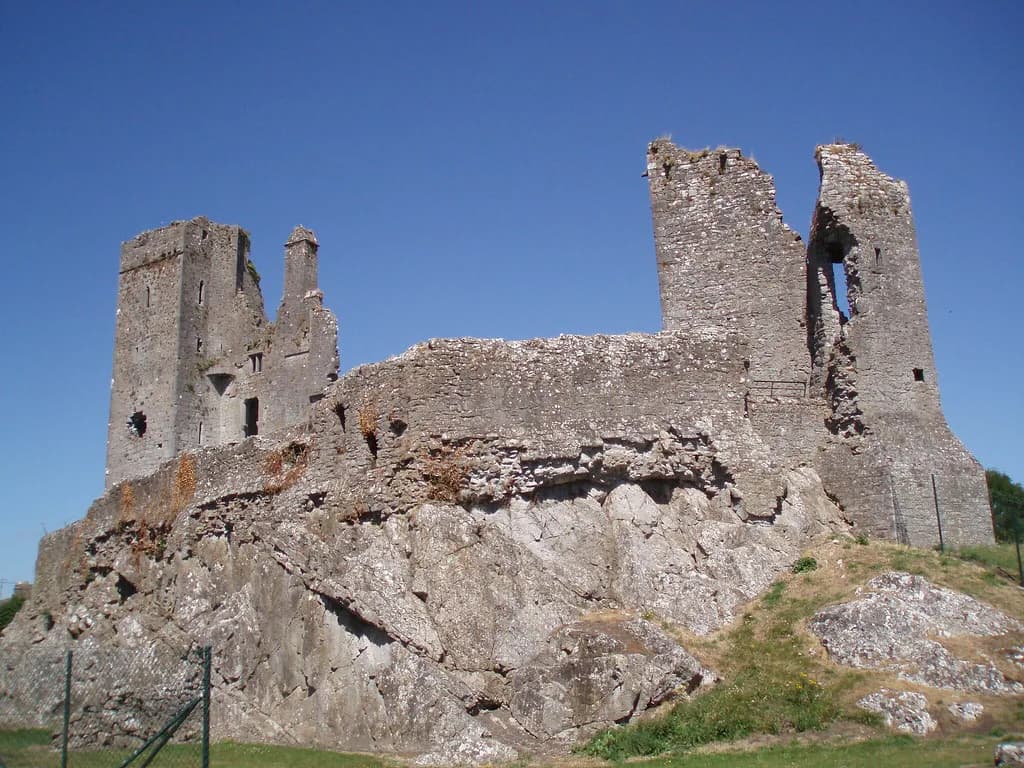
Askeaton Castle is a closed site. The Office of Public Works lists it as closed until further notice with external viewing only, and no reopening date, tour schedule or admission arrangement is published, so plan on seeing the ruin from outside the walls rather than walking through it. The castle stands in the centre of Askeaton town in County Limerick, on a rocky island in the River Deel, a position that explains much of its long story.
That does not make the detour pointless. The surviving Great Hall, the bawn wall with its battlements and gun loops, and the tower remains carry enough architectural detail to be read from a distance, and the castle's role as a Desmond power base gives the town its historical spine. Read the exterior as evidence, note what you cannot get close to, and weigh the Franciscan friary at Askeaton as a companion stop, checking its access separately before relying on it.
What the Current Closure Means for Visitors
The practical position is simple: the castle itself is not open. Heritage Ireland's site page carries the operative notice, external view only, and it should be checked again before travelling in case the status changes. Local authority notices from earlier years are not a reliable guide to today's access, and a page showing past guided-tour slots does not mean guides are on site now.
Limerick City and County Council's heritage page still records a former season with daily opening from 11 April to 2 November 2023, free admission and four guided tours a day. Treat that as a dated notice rather than current information: it is useful for understanding that tours once ran, but it tells you nothing about whether you can enter the castle this week.
Origins on the River Deel
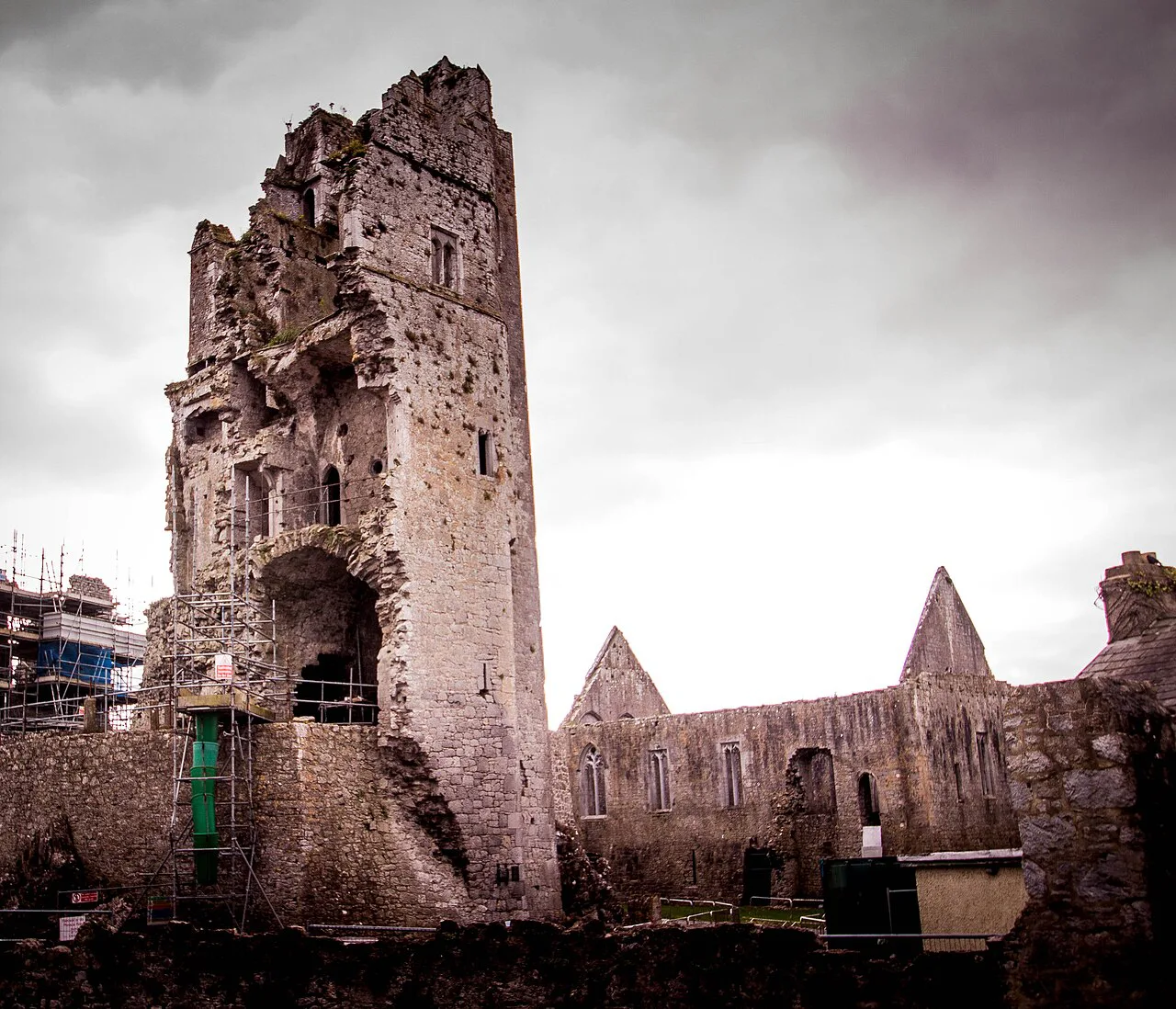
The castle is traditionally attributed to William de Burgo and dated to around 1199, when it was built on a rock in the River Deel. Limerick's heritage page also describes the site as founded on an island and hedges the attribution, which is the honest way to state it: probable founder, approximate date, and a natural defensive position that shaped everything built afterwards.
If you are comparing Irish fortresses generally, the island-and-rock logic here belongs to a wider family of defended sites, and irish tower houses is a useful starting point for understanding how siting, water and stone worked together before artillery changed the rules.
From Stronghold to Desmond Power Base
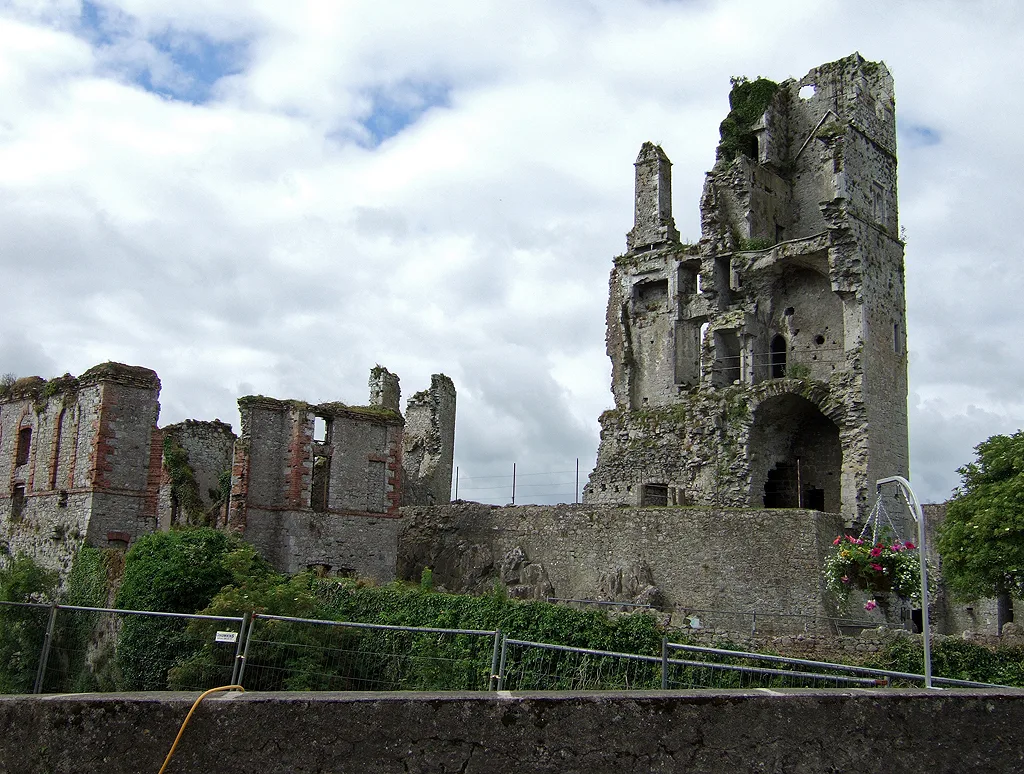
After 1348 the castle became the power base of the earls of Desmond, and it remained central to Munster politics for two centuries. In 1579 it held out against the English general Sir Nicholas Malby, an episode that helped ignite the second Desmond Rebellion. That stand is the reason the ruin reads as more than a picturesque shell: it marks the moment a regional lordship was drawn into a war it would not survive.
Reading the Exterior: Hall, Walls and Gun Loops
The Great Hall is described as one of the finest medieval secular buildings in Ireland, and the OPW's interpretive description records tracery windows that grow more elaborate toward the dais end and triple-arched blind arcading on the wall behind the earl's seating. Because the castle is closed, the hall is not something you can enter or inspect closely; treat these as recorded features of the surviving fabric rather than details you can pick out from the street. The OPW also notes stonemasonry repairs, a reminder that some of the standing stonework is conservation work as well as medieval material.
The bawn wall is described in the OPW highlights as a strong circuit built into the limestone platform, with defensive embrasures near ground level and a battlemented wall-walk above. Its arrow loops, the description continues, were later enlarged with circular openings to take firearms, a detail that records a real shift in warfare. With the site closed you are reading a description of these defences from outside the walls, not walking the wall-walk yourself.
The Medieval Garden as an Interpretive Layer
On the far side of the bawn lies a medieval garden, laid out in square beds. The interpretive tradition behind it is worth knowing: Normans encountered walled gardens in Moorish palaces during the Crusades and built similar enclosures at home, calling them paradises, from a Persian word for a walled garden. Read this as an explanation of the layout's intent rather than as a reconstructed planting scheme you can walk through today.
The Inner Ward and Desmond Tower
The Inner Ward sits on higher limestone and was the citadel, where the OPW describes entry as once restricted to the most trusted. Here stand the remains of Desmond Tower, the Constable's Tower and a third tower and gatehouse. This is where the castle's story turns violent: Desmond Tower was destroyed by Cromwell's army in 1652, and a dramatic hole in the west wall remains where cannon breached it. Because the castle itself is closed, these features are read from outside and from the OPW's account rather than on a walk-through.
The OPW records a fireplace clinging to the chimneystack that bears the arms of the earls of Desmond and the Butlers of Dunboyne, the family of Eleanor, countess of Desmond. Heraldry of this kind ties a building to particular marriages and alliances, and it is worth understanding even though the closed tower keeps it at a distance. The tower is also where Eleanor offered hospitality to Bishop Patrick O'Hely and Father Conn O'Rourke before betraying them to the authorities at Limerick; the two clerics became known as the Kilmallock Martyrs.
The Hellfire Club Building: A Later Layer
An early eighteenth-century building near the castle was used as a Hellfire Club, one of the few established in Ireland. These clubs drew wealthy and well-connected members and were notorious for hard drinking and mock ritual; tales of sinister occult practice, including a reputed diabolical appearance, are tradition rather than documented fact and should be labelled as such. No source describes the building as enterable, so treat it as an association attached to the site rather than a room you can step into.
The Franciscan Friary Downstream
Follow the River Deel downstream from the castle towards the old Franciscan friary, where the cloister survives and a carving of St Francis in the north-west corner is traditionally credited with healing properties. The tracery windows are the architectural highlight, and the cloister arcade carries an image of St Francis to remind the friars of their patron. Our guide to the Askeaton Franciscan Friary covers the surviving remains in more detail.
The founding is unresolved. It was founded either in 1389 by Gerald FitzGerald, third earl of Desmond, or in 1420 by James FitzGerald, seventh earl, and the sources present both without choosing. Limerick's heritage page places the friary on the River Deel near the castle, with the cloister arcade still carrying an image of St Francis. No current opening, guiding or admission arrangement for the friary is published on the pages consulted, so check locally before counting on entry and do not assume you can walk the cloister.
Building a West Limerick Heritage Day
Askeaton works best as one element in a wider Desmond landscape, but the other sites have their own constraints. Desmond Castle Newcastle West, whose restored oak gallery and fifteenth-century banqueting hall belong to the same tradition, is closed for the 2026 season, with reopening anticipated in 2027. Plan around that notice rather than arriving hopeful, and use the same principle as at Askeaton: confirm status first. For city collections that fill in the wider story, see our guide to museums in Limerick.
Adare Castle is another Desmond-associated stronghold, built for strength with a square keep inside a walled ward and moat, and it too shows a closed, external-view-only notice, despite older text on the same page about tours. The operator states that visitor access to the castle runs only through Adare Heritage Centre in the village, so that centre is the place to ask about any current arrangements before setting out. Our guide to adare castle sets out the River Maigue setting and the FitzGerald connections in more detail.
For contrast on what an open medieval ecclesiastical site looks like, Ennis Friary in County Clare is a separate excursion rather than a local add-on: its 2026 season runs from 13 March to 4 November, 10:00 to 18:00 with last admission at 17:15, and it offers guided tours alongside uneven walkways and limited access. Its carved fifteenth- and sixteenth-century limestone sculpture, including St Francis displaying the stigmata, is among the richest in the region.
What a Closed-Site Visit Can Deliver
Come to Askeaton expecting a riverside townscape and a fortress read from outside, not an interior tour. The bawn wall, the hall's tracery and blind arcading, the Inner Ward approach and the tower breach give a coherent account of a Desmond stronghold if you know what you are looking at. Allow time for the friary downstream and accept that its access is unconfirmed.
Check the official site page once before you travel and once again on the day, since closure notices can change and no reopening has been announced. With expectations set that way, Askeaton remains a worthwhile stop in a broader west Limerick heritage circuit built around castles you can see and centres you can question.
For more on the castles and heritage of the region, read our guides to Dungarvan Castle, Carrigafoyle Castle and Glenquin Castle.
Explore more Ireland guides
Frequently Asked Questions
Can you go inside Askeaton Castle?
No. The Office of Public Works lists the castle as closed until further notice with external viewing only, and no reopening date or tour arrangement is published. You can see the ruins from outside in the town, but you should not plan on entering the hall, towers or any other structure.
Why is Askeaton Castle closed?
The operator has not published a reason beyond the closure notice itself. Conservation needs are common at medieval masonry sites and the castle has had OPW stonemasonry repairs, but that is general context rather than a stated cause. Check the Heritage Ireland page for the current notice before travelling.
What can you see of Askeaton Castle from outside?
From the town you can see the standing ruin on its rocky island in the River Deel. The OPW's interpretive account of the site covers the Great Hall with its tracery windows and blind arcading, the bawn wall with battlements, wall-walk and gun loops, the medieval garden layout, and the Inner Ward with Desmond Tower and the Constable's Tower. These are recorded features; the interior is closed, so you will not be able to inspect them closely.
Who built Askeaton Castle and when?
It is traditionally attributed to William de Burgo and dated to around 1199, built on a rock in the River Deel. Local heritage material hedges the attribution as probable, so treat both founder and date as approximate rather than fixed.
What was Askeaton Castle's role for the earls of Desmond?
After 1348 it served as the Desmond power base and remained central to Munster politics. In 1579 it held out against Sir Nicholas Malby, an incident that helped spark the second Desmond Rebellion, and the tower was later wrecked in the warfare of the 1650s.
Is the Franciscan friary at Askeaton open to visitors?
The pages consulted publish no current opening, guiding or admission details for the friary. It is described as lying by the River Deel near the castle, with a cloister arcade that survives and a carving of St Francis, but you should check locally before counting on entry.
What else can you visit near Askeaton Castle?
Desmond Castle Newcastle West is closed for the 2026 season with reopening anticipated in 2027, and Adare Castle shows a closed, external-view-only notice, with access enquiries routed through Adare Heritage Centre. Plan around those constraints and confirm each site's status before setting out.
Sources
You might also like



Continue reading
More guides you'll find useful




