
Doe Castle, County Donegal: A MacSweeney Tower House Guide
Plan a visit to Doe Castle in County Donegal: free grounds open daily, MacSweeney history and a 1544 grave-slab, with keep tours by prior appointment only.
On this page
Doe Castle is a medieval MacSweeney stronghold standing on an inlet of Sheephaven Bay in County Donegal, reached off the R245 between Carrigart and Creeslough on the Wild Atlantic Way. The practical point for any visit is the split between outside and inside: the grounds are free and open every day of the year, while the keep is not a walk-up attraction and may only be seen if a guided tour can be arranged beforehand.
The site is managed by Heritage Ireland and the Office of Public Works, and there is no OPW visitor centre at the castle. That matters more than it might sound: this is an outdoor heritage stop rather than a staffed museum, so a visit turns on the weather, the walking surface and whether you have confirmed a tour by email before setting out. Plan the day around the grounds and treat the interior as something to secure separately.
What and Where Doe Castle Is
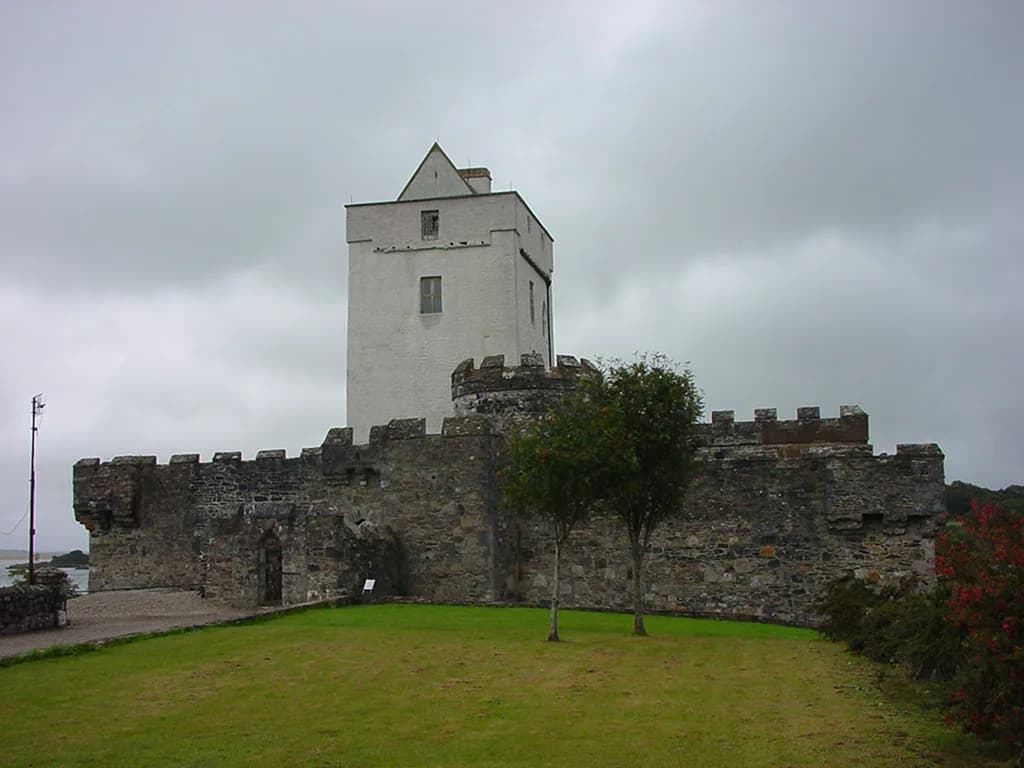
The name on official signage and listings is Doe Castle, also recorded as Caisleán na dTuath in reference works. It sits at the waterline of Sheephaven Bay on a small peninsula, with the sea wrapping the site on three sides and a cut moat protecting the landward approach. That geography explains why the castle reads less as a building and more as a defended point on a coastal inlet.
Within the outer walls lies a bawn, the enclosed courtyard typical of Irish and Scottish fortification, with a four-storey tower house at the core. A reference description notes architectural parallels between Doe and Scottish tower houses, which helps place it in a wider north-west seafaring world rather than in isolation. Visitors looking at the fabric are seeing a compact, coastally adapted version of a form explored across the island in this guide to irish tower houses, and it bears comparison too with the castles in county galway.
Getting there means following the R245 between Carrigart and Creeslough and watching for the signposted turn to the castle. The approach is coastal and exposed, so a calm-looking sky at the start of the drive does not guarantee calm conditions at the bay. Build slack into an itinerary that also includes the wider Donegal coast, because a short stop can easily stretch when the setting is this absorbing.
The MacSweeney Stronghold and Its History
Heritage Ireland dates the fortress to the 1420s and describes it as a stronghold of the MacSweeneys, who held it as home, refuge and bastion for the better part of two centuries. At least thirteen MacSweeney chiefs are associated with the castle over that span. Keep the 1420s date in mind, since some reference pages give a vaguer sixteenth-century origin that conflicts with the official account.
Two episodes anchor the castle in national history. Chief Eoghan Og II gave shelter at Doe to survivors of the Spanish Armada fleet wrecked in 1588, when ships of the ill-fated expedition came to grief on Ireland's Atlantic coast. The last chief, Maolmhuire an Bhata Bhui, marched out with Red Hugh O'Donnell, lord of Tyrconnell, to the Battle of Kinsale in 1601. Both stories show a Donegal stronghold tied into events far beyond its bay.
Later third-party reference pages add that Owen Roe O'Neill returned in 1642 to lead the Ulster Army of the Irish Confederate forces, and that Sir Charles Coote of Londonderry took possession in 1650 during the wars of that century, a period in which Doe changed hands amid the wider struggle for control of Ireland. These details come from that reference rather than the official page, so treat them as recorded tradition rather than site-verified interpretation.
Inside the Keep: The 1544 Grave-Slab and Display Panels
The interior's most significant object, as described by Heritage Ireland, is a carved and ornamented Mac Sweeney grave-slab dating from 1544, displayed inside the tower house alongside panels chronicling the castle's history. That dating places the slab within the castle's MacSweeney period, which is what makes it worth planning around. It is an interior feature, seen only when the keep is open for a guided tour, not something visible from the grounds.
Read the panels if you get inside, because they carry the sequence of occupation that the bare walls cannot convey. A grave-slab of this kind is also a useful point of comparison with funerary carving at other Irish sites, where you can start to recognise regional workshops and motifs. The slab is a reason to make the effort to arrange a tour rather than settle for the car park view.
Grounds Versus Keep: How Access Actually Works
According to Heritage Ireland, the grounds are open daily all year round and admission to the grounds is free. Guided tours of the keep may be accommodated strictly by prior appointment, arranged by email using the address published on the official page. There is no OPW visitor centre at the site, and there is no walk-up desk where an interior visit can be arranged on arrival.
One independent travel page describes the castle as closed to visitors, which sits awkwardly against the official notice that the grounds are open every day. Treat the difference as interior versus exterior access rather than a closure: the estate can be walked, while the keep requires a confirmed booking. If you arrive without one, expect to see the walls, bawn and bay from outside only. Ask the operator by email about tour availability before you travel rather than relying on any published schedule.
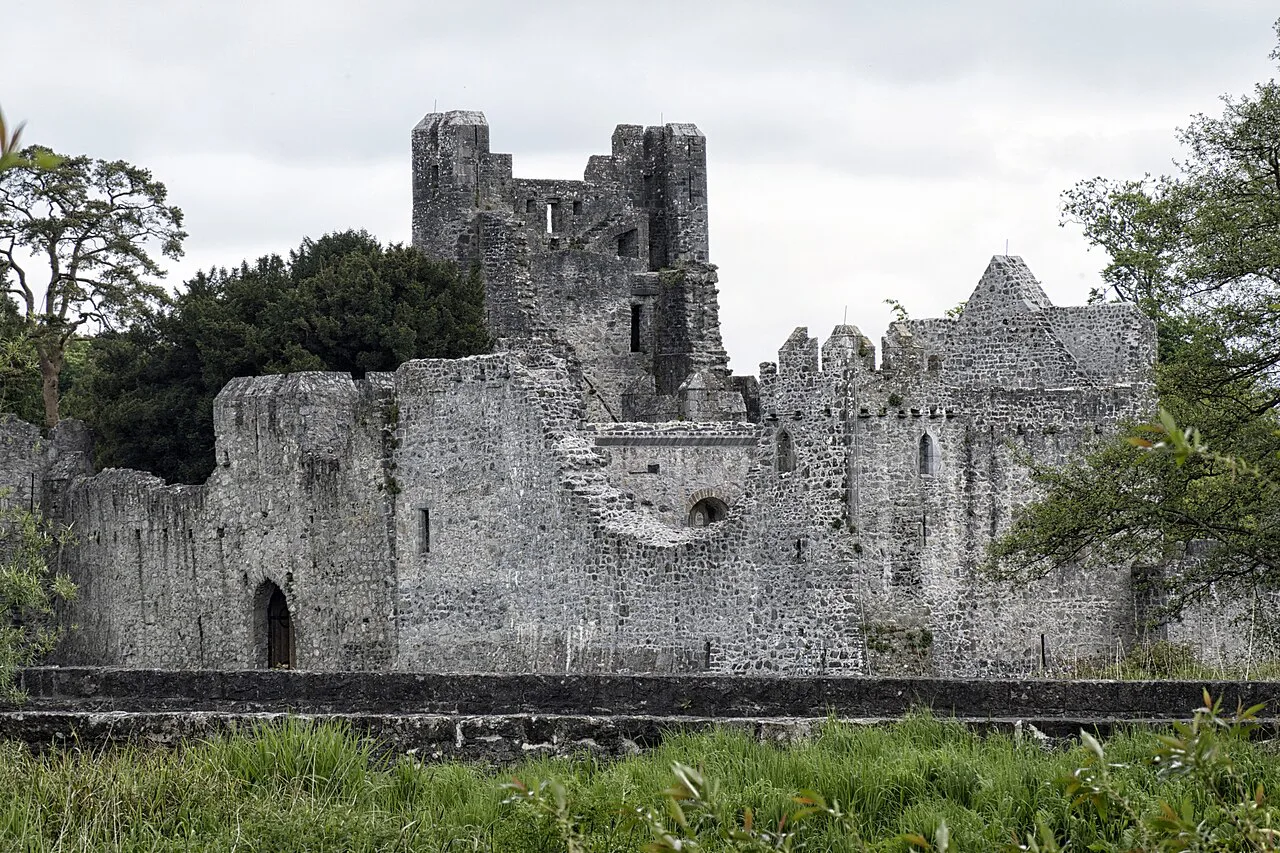
This pattern is common at Irish monuments where a small staff or local group manages openings, and it is not unique to Donegal. Comparable sites in the care of the state, from smaller tower houses to larger keeps, vary in whether interiors are open daily, seasonal or by arrangement. Planning an itinerary of tower houses therefore means checking each one's access separately; Adare Castle is a worthwhile contrast for anyone comparing how different ruins are presented today. The same question of confirmed opening hours applies to the castles in county galway, where access also differs from site to site, and it recurs at ancient sites ireland, where opening arrangements are rarely uniform either.
What to Expect on the Ground
An independent regional guide advises sturdy footwear because surfaces around the ruins are uneven, and suggests checking the coastal forecast before setting out. Both points fit an exposed site on a bay, where wind and rain can arrive quickly even on a bright day. Bring a layer you can add, and accept that photography of the stonework may have to wait for a break in the weather.
The same source advises against climbing on walls or structures, which is sensible at any ruin where mortar is old and edges unprotected. Expect an outdoor heritage stop rather than an indoor museum, with the bay and the castle silhouette as the chief rewards of a grounds-only visit. If you have arranged a tour, budget extra time for the interior and the panels on top of the walk around the exterior.
Consider weather and light when timing a stop: the exposed peninsula setting means conditions at the bay can differ sharply from those a short way inland. The coastline here is genuinely changeable rather than reliably flattering, so plan for a flexible window rather than a promised view. If the castle is one stop on a longer Donegal drive, give it enough time to walk the enclosure properly instead of photographing from the entrance and leaving.
Later Owners and What to Trust
Castle folklore in Ireland often attaches dramatic tales to real sites, and popular retellings of Doe are no exception. Treat such material as legend unless a named institution or scholarly publication substantiates it, and keep it separate from the documented MacSweeney history above. Legends are part of how a place is remembered, but they are not evidence of events.
The third-party reference also records that the castle was eventually bought by Sir George Vaughan Hart, whose family is said to have occupied it until 1843, and mentions a modern marriage proposal at the castle. These are interesting details rather than verified interpretation, so attribute them to the reference source in your own notes. For the site's own account, the Heritage Ireland page and the on-site panels are the more reliable starting points.
Nearby Heritage Ireland Sites to Pair With a Visit
Donegal Castle in Donegal town, Glebe Gallery and Garden at Derek Hill House, and Newmills Corn and Flax Mills are among the other Heritage Ireland places listed as nearby attractions. Each is a separate property with its own access arrangements, so do not assume a combined ticket or a single route linking them. Check each site's own page before committing a day to several stops.
Together they broaden the picture of the region beyond the castle itself, since a fortified town house, an artist's former home and an industrial mill make different arguments about Donegal's past. If your interest is specifically defensive architecture, other tower houses around the coast will round out the comparison. Grouping stops by area and type helps keep the driving logical without treating any single site as representative of the whole.
Plan Around What Is Open
Doe Castle rewards a visit planned around access rather than assumption. The grounds and setting are free and open daily all year, so a coastal stop can be made without notice, but the keep and its 1544 grave-slab depend on a guided tour arranged in advance by email. If no tour is confirmed, plan for the exterior, the bawn and the bay, and save the interior for a return.
Explore more Ireland guides
Frequently Asked Questions
Can you go inside Doe Castle?
Only if a guided tour of the keep can be arranged in advance. Heritage Ireland states that tours may be accommodated strictly by prior appointment, using the email address on its official page. Without a confirmed tour, plan on seeing the grounds, outer walls and bawn from outside.
Is there a charge to visit Doe Castle?
Admission to the grounds is free according to the official Heritage Ireland listing. Tour arrangements for the keep are handled separately by email, and any conditions should be confirmed directly with the operator before you travel.
How do you arrange a guided tour of the keep?
Email the address published on the official Heritage Ireland page for Doe Castle. The wording is that tours may be accommodated, not that they always run, so ask about availability for your dates early and do not rely on a walk-up tour.
Where exactly is Doe Castle in County Donegal?
It stands on an inlet of Sheephaven Bay off the R245, between Carrigart and Creeslough, on the Wild Atlantic Way. Look for the signed approach from the road, and allow for changeable coastal weather when timing your stop.
What can you see without a tour?
The outdoor setting is the visit: a small peninsula with water on three sides, a landward moat, outer walls enclosing a bawn, and a four-storey tower house. The interior grave-slab and display panels are only seen if a tour is arranged.
Why is the 1544 grave-slab significant?
Heritage Ireland describes it as a carved and ornamented Mac Sweeney grave-slab displayed inside the tower house, dated to 1544 within the castle's MacSweeney period. It is an interior feature, so seeing it depends on a confirmed guided tour.
Is there a visitor centre at Doe Castle?
No. Heritage Ireland states there is no OPW visitor centre at the site, so there is no staffed exhibition space or walk-up booking desk. Facilities and services should be checked in the nearest towns rather than assumed at the castle.
Sources
You might also like



Continue reading
More guides you'll find useful





