
Dungarvan Castle: History, Access and Visiting Status
Dungarvan Castle is closed for the 2026 season, with the operator hoping to reopen in 2027. Learn its c.1209 origins, rare shell keep and barracks history.
On this page
Dungarvan Castle is closed for the 2026 season, and the operator has not published a confirmed reopening date; Heritage Ireland states only that it looks forward to welcoming visitors again in 2027. That notice matters more than any schedule detail, because it means the interior exhibition and grounds should not be planned around this autumn or winter. What can be done now is understand the site, its chronology and what a normal season looks like, so a future visit is built on accurate expectations rather than hopeful guesswork.
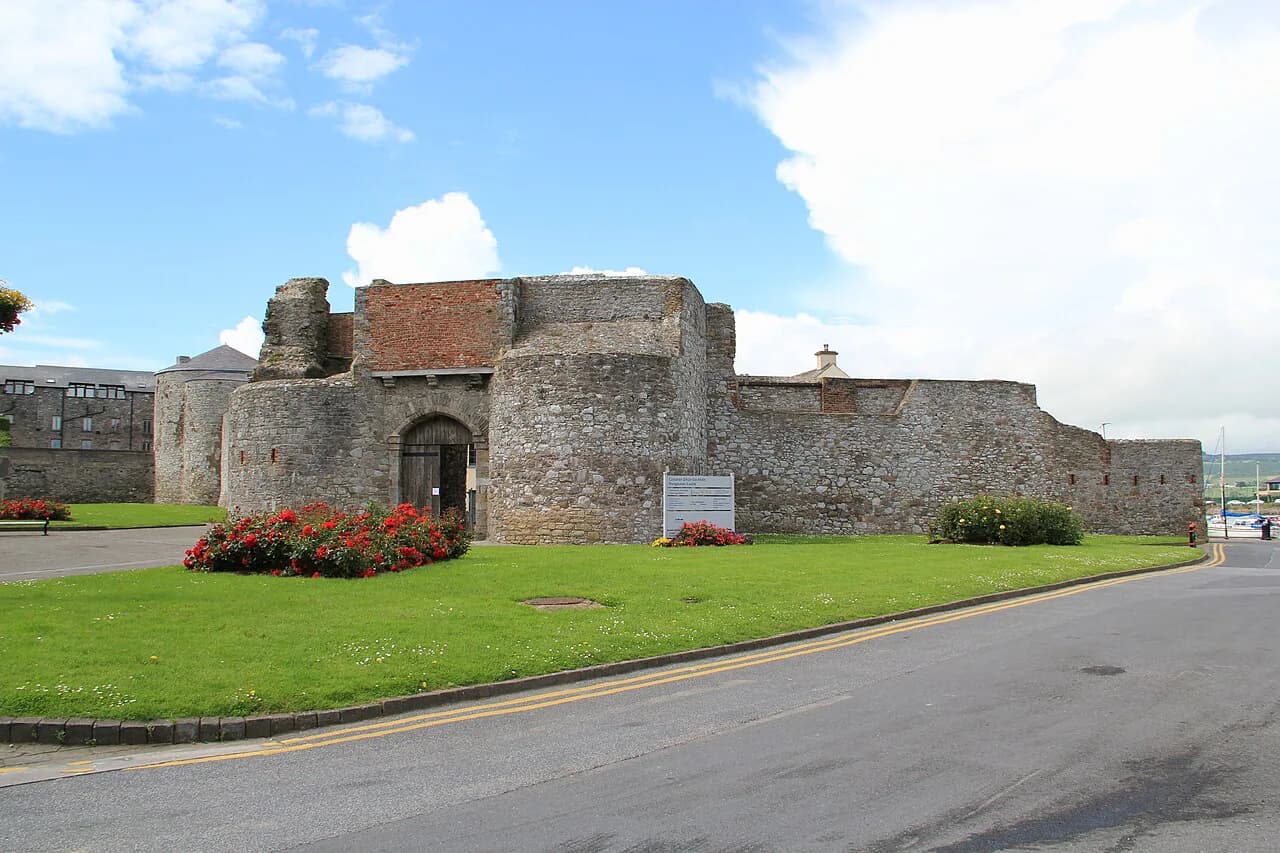
The castle stands in Dungarvan, County Waterford, at the point where the town meets its harbour. Heritage Ireland, which manages the site through the Office of Public Works, frames it as an early Anglo-Norman foundation built to guard the harbour entrance, and the surviving structures span medieval defences and an eighteenth-century barracks within the same walled enclosure. That combination of periods in one compact site is the reason it rewards reading before rather than during a stop.
Why Dungarvan Castle Matters
Dungarvan Castle belongs to the group of Irish coastal fortifications whose purpose was control of a landing place rather than display. Its position near the harbour entrance tied it to the commercial and military life of the town, and the site's later uses kept it occupied long after its medieval defences lost military value. For visitors interested in how Irish castles were repeatedly adapted rather than abandoned, it is a clear example of a single enclosure accumulating layers across centuries.
It also sits within the wider story of Irish tower houses and fortified residences, though the forms differ: Dungarvan's shell keep is a Norman defensive type, not a later tower house. Readers comparing fortified sites across the country can use the guide to irish tower houses to understand how building traditions changed, and where Dungarvan fits in that longer sequence.
A separate tourism listing markets the castle locally as King John's Castle, an alternate name you may encounter in local or promotional material. That label is not used by the operator, so rely on Heritage Ireland for the site's identity and chronology rather than on a secondary listing. The name is easily confused with the King John's Castle in Limerick, a different riverside fortress covered in that separate Limerick heritage guide.
Current Status: Closed for the 2026 Season
Heritage Ireland's site page carries an explicit notice that Dungarvan Castle is now closed for the 2026 season, with the operator stating it looks forward to welcoming visitors again in 2027. No reopening day, month or booking arrangement is published alongside that statement, so anyone planning a trip should treat 2027 as an intention rather than a confirmed date. Check the official page again before arranging travel, because the notice is the only authoritative word on access.
The closure also means the exhibition, guided tours, audio-visual show and lift that the operator lists as amenities should not be assumed available now, and there is no published confirmation that they will all return in 2027. The practical reading is simple: the published facilities describe a normal open season, not the current state of the site, so check the official page before relying on any of them.
Origins: A Harbour Fortress of c.1209
Heritage Ireland dates the castle to about 1209, in the early years of Anglo-Norman settlement in Ireland, and explains that it was built to safeguard the entrance to Dungarvan Harbour. That purpose explains the site's position and its defensive character: a fortress intended to control approach to a port, not a residence designed for comfort. Some secondary listings give an earlier date of 1185, but the official account's c.1209 is the figure to rely on.
The polygonal shell keep is the earliest structure on the site, and the operator describes this form as a rare building type in Ireland. Readers should not expect the tall, room-stacked tower associated with later Irish castle building; the interest here lies in the plan of the enclosure rather than in height.
The Defensive Layout: Curtain Wall, Corner Tower and Gate Tower
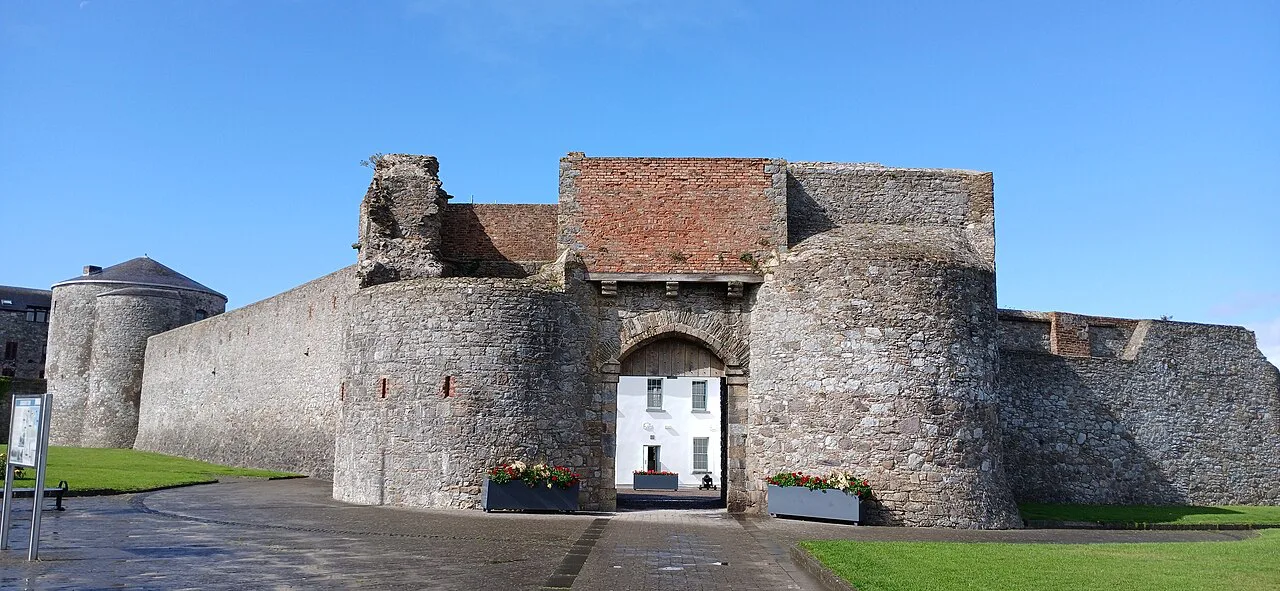
Around the keep, the castle has an enclosing curtain wall, a corner tower and a gate tower. These elements describe a coherent defensive circuit: the wall defines the protected area, the gate tower controls the single main approach, and the corner tower strengthens a vulnerable angle. Reading the plan before visiting helps make sense of what remains, since the surviving masonry is not a single building but a boundary with points of strength.
For comparison, Adare Castle in County Limerick is a separate medieval fortification with its own setting and access arrangements, and it is a useful counterpoint when thinking about how Irish castles developed in different places. Neither site is a substitute for the other, but seeing both on paper clarifies why Dungarvan's harbour-facing purpose gave it the plan it has.
The Eighteenth-Century Barracks and the Garrison Years
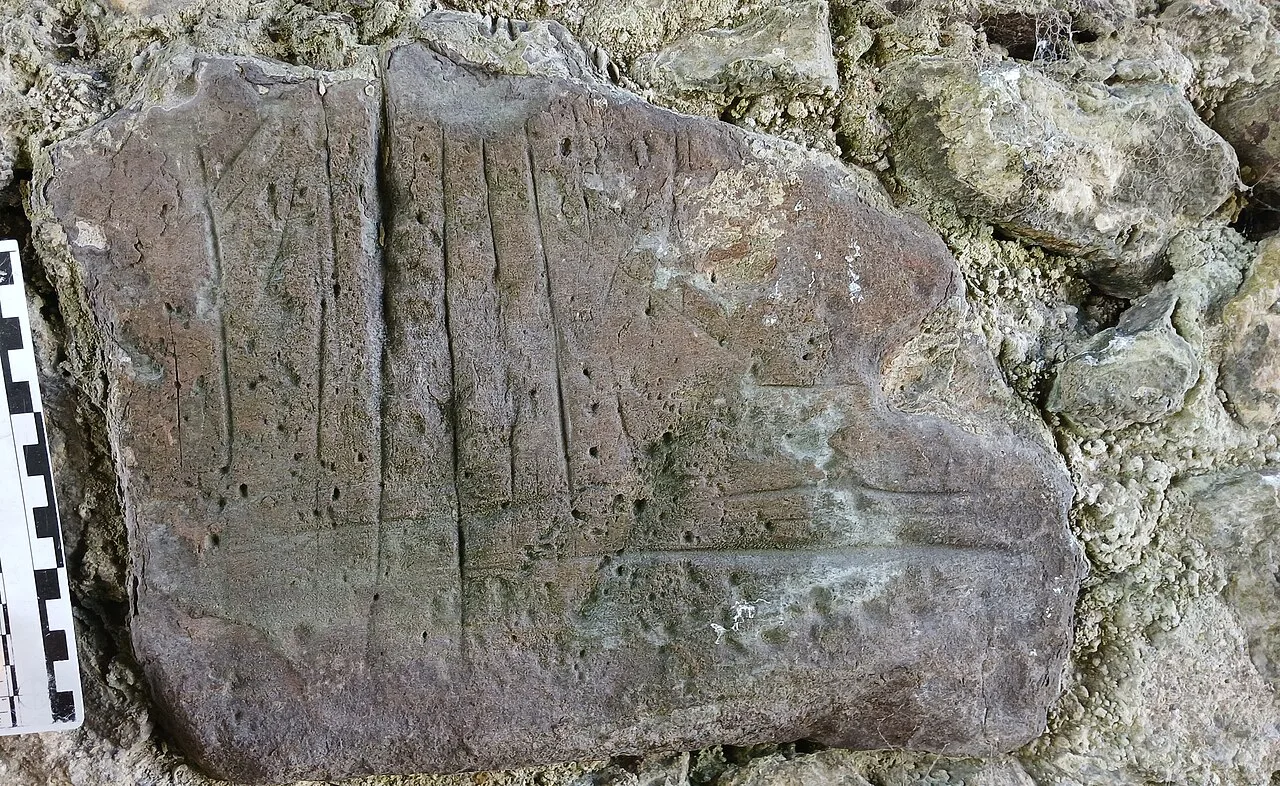
Inside the walls stands a two-storey military barracks dating from the first half of the eighteenth century, a building that shows the castle was still in active military use long after its medieval defences mattered less. A tourism listing records that it was garrisoned by British forces until the early twentieth century; the presence of a barracks within a medieval enclosure is the clearest physical sign of the site's long continuity of occupation.
That continuity is why the site reads as a palimpsest rather than a ruin: each period added or converted buildings instead of starting again. Visitors interested in the domestic and administrative side of Irish castle life will find the barracks more revealing than the curtain wall, because it records how a medieval fortress was reused by a modern state apparatus.
Civil War Destruction and the Garda Síochána Phase
During the Irish Civil War the castle was destroyed by the Anti-Treaty IRA, according to Heritage Ireland, and it was subsequently refurbished and served as headquarters of the local Garda Síochána. That sequence explains why the standing buildings look more orderly than a battlefield ruin: the destruction was followed by repair and a new institutional purpose. The twentieth-century phase is part of the site's story, not an interruption of it.
Understanding this later history sharpens the experience of the grounds, because the buildings a visitor sees are the product of both medieval construction and later repair and reuse. It also frames the exhibition's focus on the castle's long history rather than on a single period. Treat the barracks and the keep as two chapters of one continuous story.
What the Operator Publishes About a Normal Season
For context, Heritage Ireland's published season for 2026 ran from 22 April to 30 September, daily from 10:00 to 18:00, with last admission at 17:15. Admission is listed as free, and the facilities listed include an exhibition, guided tours, an audio-visual show, a lift, toilets and wheelchair access, along with a social guide designed to help first-time visitors and families prepare. These are normal-season details and should not be read as current offers while the site is closed.
The operator also lists restrictions, including that children must be accompanied by an adult at all times, that visitors should hold the hand rail, and that cycling is not permitted within the grounds. These describe how the site is managed during an open season rather than merely what it contains, and they are worth noting for a future visit.
Planning Ahead: Castle Street in Dungarvan
The castle's address is given as Castle Street in Dungarvan, County Waterford. That puts it within the town rather than in open countryside, so a future visit can be combined with time in Dungarvan itself rather than requiring a separate excursion. Confirm the current access position on the official page before setting out.
Expectations should stay modest while the closure notice stands: the interior exhibition and guided amenities are published features of an open season, not guaranteed elements of any visit. A realistic plan treats the castle as a site to read about now and to check again before a later trip, rather than a stop to build an itinerary around this season.
Nearby Heritage Named by the Operator
Heritage Ireland's page for the castle suggests The Main Guard, Ormond Castle and The Swiss Cottage among nearby sites to visit, which makes them sensible companion stops when the castle reopens. The operator's own nearby-sites suggestions are the most reliable starting point for identifying what else in the area is managed as heritage, rather than relying on general tourist maps.
Within the wider Irish castle landscape, Ballyhack Castle offers another example of a fortified site to compare with Dungarvan, and it is a reasonable next point for readers following the theme beyond County Waterford. Treat these as separate sites with their own access arrangements rather than interchangeable stops.
Plan Your Visit
Dungarvan Castle is a compact site with an unusually long story: an early thirteenth-century harbour fortress, a rare polygonal shell keep, an eighteenth-century barracks and a twentieth-century institutional afterlife. Its 2026 closure is the first fact any visitor needs, and the operator's stated intention to welcome visitors in 2027 is the only published guidance on the future.
The sound approach is to read the operator's page before travelling, treat the seasonal calendar and free admission as normal-season information, and avoid assuming that facilities or tours will return unchanged. With those limits understood, the castle repays the attention: it is a site where the layers, not the scale, are the point.
For another heritage guide, read about Listowel Castle.
Explore more Ireland guides
Frequently Asked Questions
Is Dungarvan Castle open to visitors now?
No. Heritage Ireland states that the site is closed for the 2026 season and that it looks forward to welcoming visitors again in 2027. No confirmed reopening date has been published, so check the official page before planning travel.
When was Dungarvan Castle built?
Heritage Ireland dates the castle to about 1209, in the early period of Anglo-Norman settlement in Ireland, and says it was built to safeguard the entrance to Dungarvan Harbour. Some secondary listings give an earlier date, but the operator's c.1209 is the figure to use.
What is a polygonal shell keep?
Heritage Ireland describes Dungarvan's polygonal shell keep as the earliest structure on the site and as a rare building type in Ireland, distinct from the tall towers of later castle building. A shell keep is a fortified enclosure rather than a solid tower filled with rooms.
What happened to the castle in the Civil War?
Heritage Ireland records that the castle was destroyed by the Anti-Treaty IRA during the Irish Civil War. It was later refurbished and served as headquarters of the local Garda Síochána, which helps explain the orderly state of the standing buildings.
Is Dungarvan Castle free to visit?
Heritage Ireland lists admission as free for the normal open season. That does not mean the site is accessible during the 2026 closure, and no price or booking information applies while it is shut.
Where is Dungarvan Castle located?
The operator gives the address as Castle Street in Dungarvan, County Waterford, within the town rather than in open countryside. Check the official page for the current access position before travelling.
Sources
You might also like



Continue reading
More guides you'll find useful





