
Adare Castle: Visiting the Desmond Castle on the River Maigue
Adare Castle is listed as closed, with external viewing only. See how access through Adare Heritage Centre works and what survives of this Desmond stronghold.
On this page
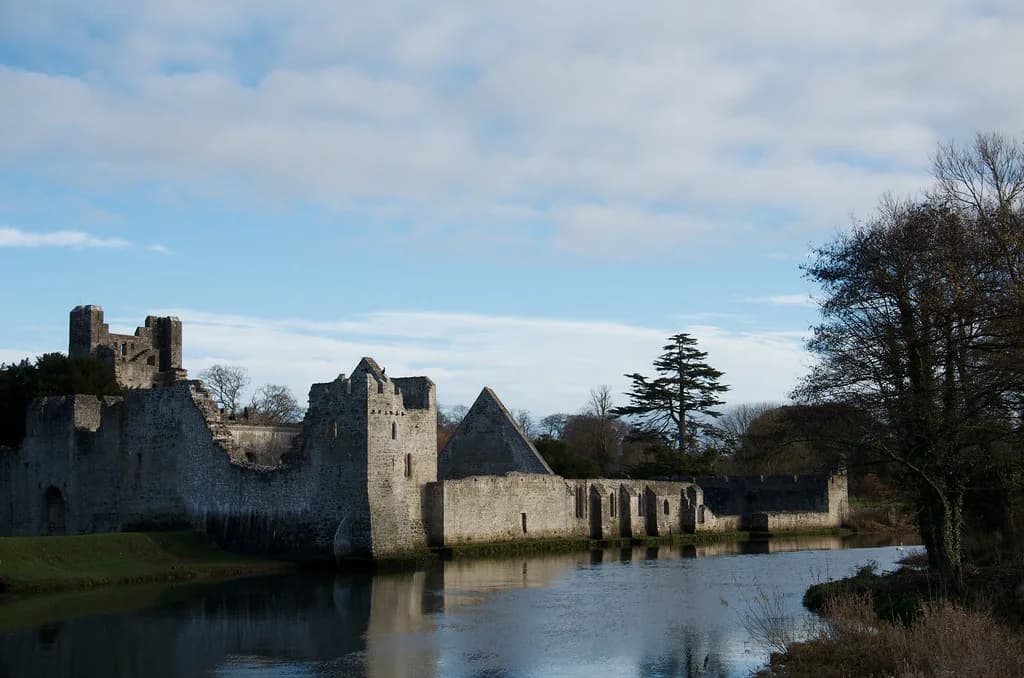
Adare Castle is a ruined medieval fortress on the north bank of the River Maigue, at the edge of Adare village in County Limerick, where it controlled traffic heading toward the Shannon Estuary. Its square keep, moat and riverside hall make it a rewarding subject even at a distance, and the site is also known as Desmond Castle after the earls who held it. The practical catch is that Heritage Ireland currently lists the site as closed and external view only, so plan around looking rather than entering.
What Adare Castle Is and Where It Stands
The castle sits close to the main road bridge over the Maigue on the N21 approach into Adare from Limerick, on a strategic stretch of river where its lords could watch movement toward the estuary. Limerick City and County Council describes a substantial earlier ringwork beneath the present structure, with the great hall, kitchen and bakery grouped near the water. In other words, the most interesting parts of the complex face the river rather than the road, which shapes where you should stand to read the ruin.
Two names circulate for the same monument: Adare Castle in State heritage listings and Desmond Castle in local and popular usage. That second name reflects the FitzGerald earls of Desmond, who made it a key stronghold in the sixteenth century. If you are searching for directions or notices, try both terms, since the official pages and the village's own tourism material do not always label it identically.
Current Access Status: Closed, External View Only
The operator's page carries a clear operational notice: the site is closed, with external viewing only. The same page still retains older wording describing guided tours as available, so treat the closure notice as the current position and expect the older sentence to be corrected eventually. No reopening date is published on the operator page, so do not plan around a firm date that the listing does not give.
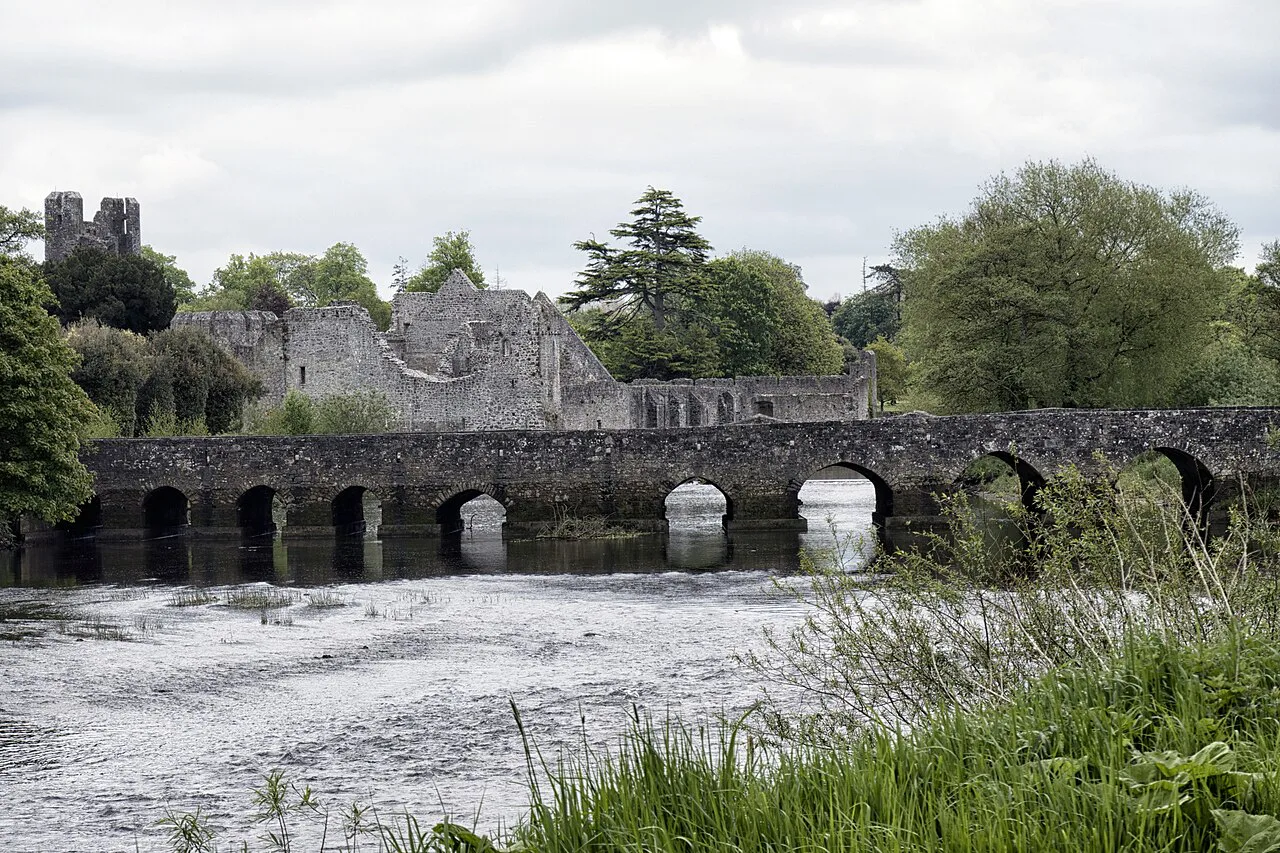
This matters because the ruin is not something you can wander into from the roadside. Access, when tours operate, is routed through the Adare Heritage Centre on Main Street in the village, and the castle is not entered directly from the N21. Even in closed periods, the castle can be appreciated from the bridge and approaches rather than from within the site, so a visit can still be built around the bridge, the approach road and the centre itself.
How Access Through the Heritage Centre Works
The council's listing explains that access is managed in partnership with the Adare Heritage Centre, with guided tours reaching the castle by shuttle bus to and from the village. The centre describes itself as a village hub offering food, tours and shopping, and books guided tours of both Adare village and the castle subject to availability. That caveat is the phrase to hold on to: availability, not a fixed daily timetable, decides whether a tour runs.
Before travelling, confirm the position directly with the Heritage Centre rather than relying on older trip reports. Ask specifically whether castle tours are running on your dates, since the village tour and the castle tour are separate offerings and one may operate while the other does not. If the answer is no, the centre still gives you a base in the middle of Adare and a starting point for the walk to the bridge.
Reading the Defences From Outside
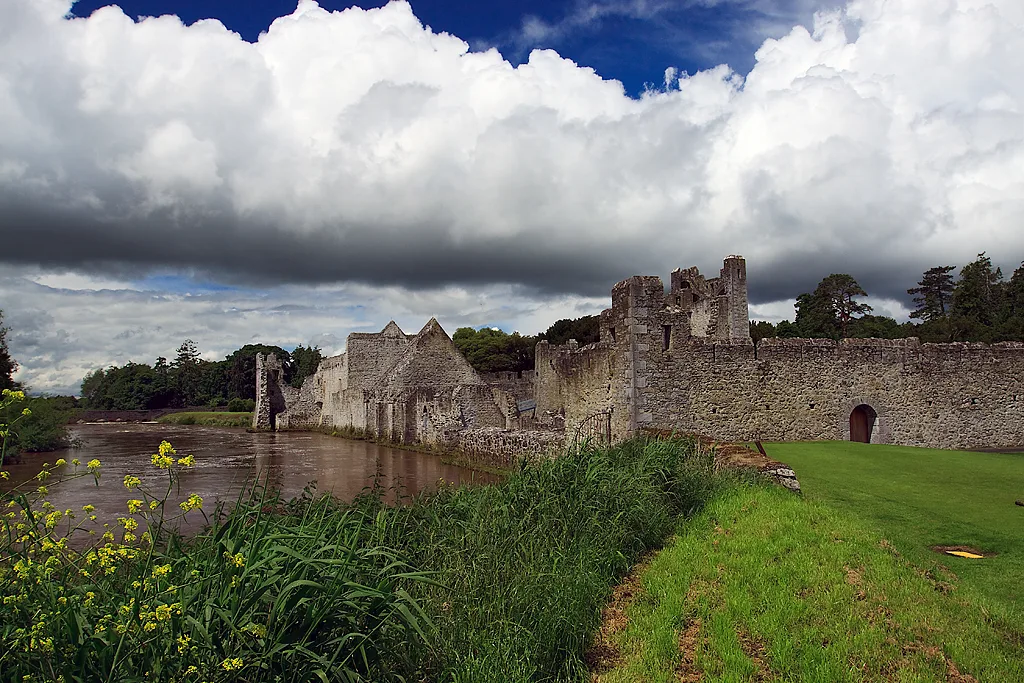
The defensive core is a formidable square keep standing inside a walled ward encircled by a moat, a layout built for strength and security rather than comfort. Around it runs a battlemented rampart with semicircular bastions, and the south gate is fitted with a drawbridge. From public ground you can trace that sequence of outer works toward the keep, which is the clearest way to understand how the castle was meant to be approached and defended.
Beside the river stand the remains of the great hall, whose early thirteenth-century windows looked out over the water, with a kitchen and bakery nearby. These are the traces of daily life rather than pure military engineering, and they reward slow looking: window openings, wall stubs and foundations tell you where the household ate, cooked and stored food. As a ruin, the complex is best approached through its masonry, earthworks and overall layout rather than expecting intact interior spaces.
Why the Riverside Siting Mattered
The Maigue position was a commercial and military choice as much as a scenic one, since the castle's lords could control traffic moving to and from the Shannon Estuary. That logic places Adare within a wider pattern of Irish fortification, and readers comparing riverside strongholds will find useful parallels in this guide to irish tower houses. The comparison is instructive: where tower houses often compress defence into a single vertical block, Adare spreads its defences across a moated ward.
The setting also explains the survival of so much river-facing architecture. A hall with water views, a kitchen and a bakery all imply regular passage of goods and people along the Maigue, not an isolated garrison. Standing on the bridge, you can see how tightly the castle once controlled that movement, and why its capture mattered to whoever held Limerick and the estuary beyond. For the city itself, this Limerick heritage guide covers the collections that extend that story.
The Desmond Centuries and the Castle's Destruction
Adare changed hands repeatedly before becoming a key bastion of the earls of Desmond in the sixteenth century. It fell to English forces during the Second Desmond Rebellion, and in 1657 Cromwellian troops laid waste to the building. Restoration work since then has helped recall its former scale, though the result is a conserved ruin rather than a reconstructed castle.
Independent accounts add colour to that outline but should be read as interpretation rather than official record. One long-running castle enthusiast site attributes the earliest stone phase to the early thirteenth century and to Geoffrey de Marisco, an Anglo-Norman justiciar, while noting that no record fixes the exact construction date. It also links the later Dunraven family to preservation of the ruins and credits State care with extensive conservation from the 1990s onward; treat those attributions as a useful narrative thread, not settled fact.
Conservation and Care Today
The council's heritage listing records that a major programme of conservation and restoration has been completed, and it describes the castle as one of a number of outstanding castles in County Limerick. Heritage Ireland frames the same work as helping to recall the building's former glory while keeping the site a protected monument. The practical consequence for visitors is that the remains you see are conserved, with the layout of wards, hall and keep still readable from outside.
The Best Exterior Viewpoints in the Village
The classic view is from the road bridge over the River Maigue as you come into Adare, where the castle reads as a composition of keep, walls and water. Approaching on the N21 from Limerick brings you past it, and the village side gives a second angle on the outer defences. Because access is by tour through the Heritage Centre when tours operate, the bridge is the reliable place to appreciate the site without depending on a booking.
Allow time for the rest of the village rather than treating Adare as a single stop. The Heritage Centre on Main Street is the natural orientation point, with the castle a short distance away near the bridge. A simple loop from the centre to the bridge and back gives you the exterior story of the castle alongside the village itself, which is how most visitors will experience the site while it remains closed.
Wider Desmond Context in County Limerick
The Desmond story stretches well beyond Adare, and two other State-care sites in the county help fill it in. At Newcastle West, the Desmond Banqueting Hall was begun in the thirteenth century and largely rebuilt in the fifteenth at the height of the earls' power, with a restored oak gallery from which musicians played. That site's published notice lists it as closed for the 2026 season, with visitors welcomed back in 2027.
Askeaton Castle, in the heart of its town on the River Deel, dates from 1199 and became the Desmond power base after 1348; it held out against the English general Sir Nicholas Malby in 1579, an episode tied to the second Desmond Rebellion. Its medieval banqueting hall is described as one of the finest secular buildings of its era in Ireland, with a notable fireplace surviving. The site is currently closed and unguided, with external viewing only, so plan it as a stop to look at rather than to enter.
Each of these three sites carries its own separate notice, and none of them can be inferred from another: Newcastle West's seasonal closure says nothing about Adare, and Askeaton's closure is a distinct entry on its own page. If you are tracing FitzGerald strongholds across the county, check each listing individually before setting out.
Practical Checks Before You Travel
Two checks cover most of the uncertainty. First, look at the Heritage Ireland page for the current status of the castle, since that is where closure and external-view notices are posted. Second, contact the Adare Heritage Centre to ask whether guided tours are running and whether booking is required on your dates, because the availability caveat applies to the castle tours.
Beyond that, make peace with the possibility of an exterior-only visit. Build your day around the bridge viewpoint, the village and the Heritage Centre, and treat a tour as a bonus rather than the centrepiece. Some visitors combine Adare with other castles on the Limerick and Kerry circuit, and this guide to doe castle in County Donegal offers a useful contrast in how a coastal stronghold is presented today.
Plan Around the Closure, Not Against It
Adare Castle remains one of County Limerick's most legible medieval fortresses, but the practical position is unambiguous: the site is listed as closed with external viewing only, and access runs through the Adare Heritage Centre when tours operate. Plan the bridge view and the village first, then confirm tour availability with the centre.
Seen that way, the trip still works: the moated keep, the riverside hall and the Desmond history are all readable from public ground, and nearby Newcastle West and Askeaton extend the story across the county. Check the official notices for each site before setting out, and you will avoid the most common disappointment of arriving at a locked gate. For another heritage guide, read about Carrigafoyle Castle.
Explore more Ireland guides
Frequently Asked Questions
Is Adare Castle open to visitors?
The official Heritage Ireland listing marks the site as closed, with external viewing only. The same page also carries older wording about guided tours, so treat the closure notice as current and confirm the position with the Adare Heritage Centre before travelling. No reopening date is published on the operator page.
How do you get into Adare Castle?
Access, when it is available, is routed through the Adare Heritage Centre on Main Street in Adare village, which manages visits in partnership with the council. The castle is not entered directly from the N21. The centre books castle tours subject to availability, so ask about your dates rather than assuming a daily departure.
Can you see Adare Castle without a tour?
Yes, from outside. The road bridge over the River Maigue and the approach into the village give clear views of the keep, walls and water setting. While the site is closed, the exterior is the realistic way to see it, and the bridge is the most reliable viewpoint.
What survives at Adare Castle today?
The standing remains include a square keep within a walled ward and moat, a battlemented rampart with semicircular bastions, a south gate with a drawbridge, and the great hall with early thirteenth-century windows plus a kitchen and bakery near the river. It is a conserved ruin, so expect masonry and foundations rather than roofed rooms.
Why is Adare Castle also called Desmond Castle?
The name comes from the FitzGerald earls of Desmond, who made the castle a key stronghold in the sixteenth century. Local heritage listings use Desmond Castle for the same monument that State heritage pages call Adare Castle, so search under both names when checking notices.
Is Newcastle West's Desmond Castle the same place?
No. Desmond Castle at Newcastle West is a separate site with its own banqueting hall and its own notices, including a seasonal closure for 2026 with visitors expected back in 2027. A closure at one of these sites does not tell you anything about the others, so check each listing individually.
Where is the best exterior view of Adare Castle?
The road bridge over the River Maigue, near the N21 approach into Adare from Limerick, is the standard viewpoint and shows the castle in its riverside setting. Walking back through the village gives additional angles on the outer defences.
Sources
You might also like



Continue reading
More guides you'll find useful




