
Foxford Woollen Mills: A Visitor Guide to the Mayo Mill
Foxford Woollen Mills has woven in County Mayo since 1892. Learn how the mill began, what it makes and what to check before visiting its store and café.
On this page
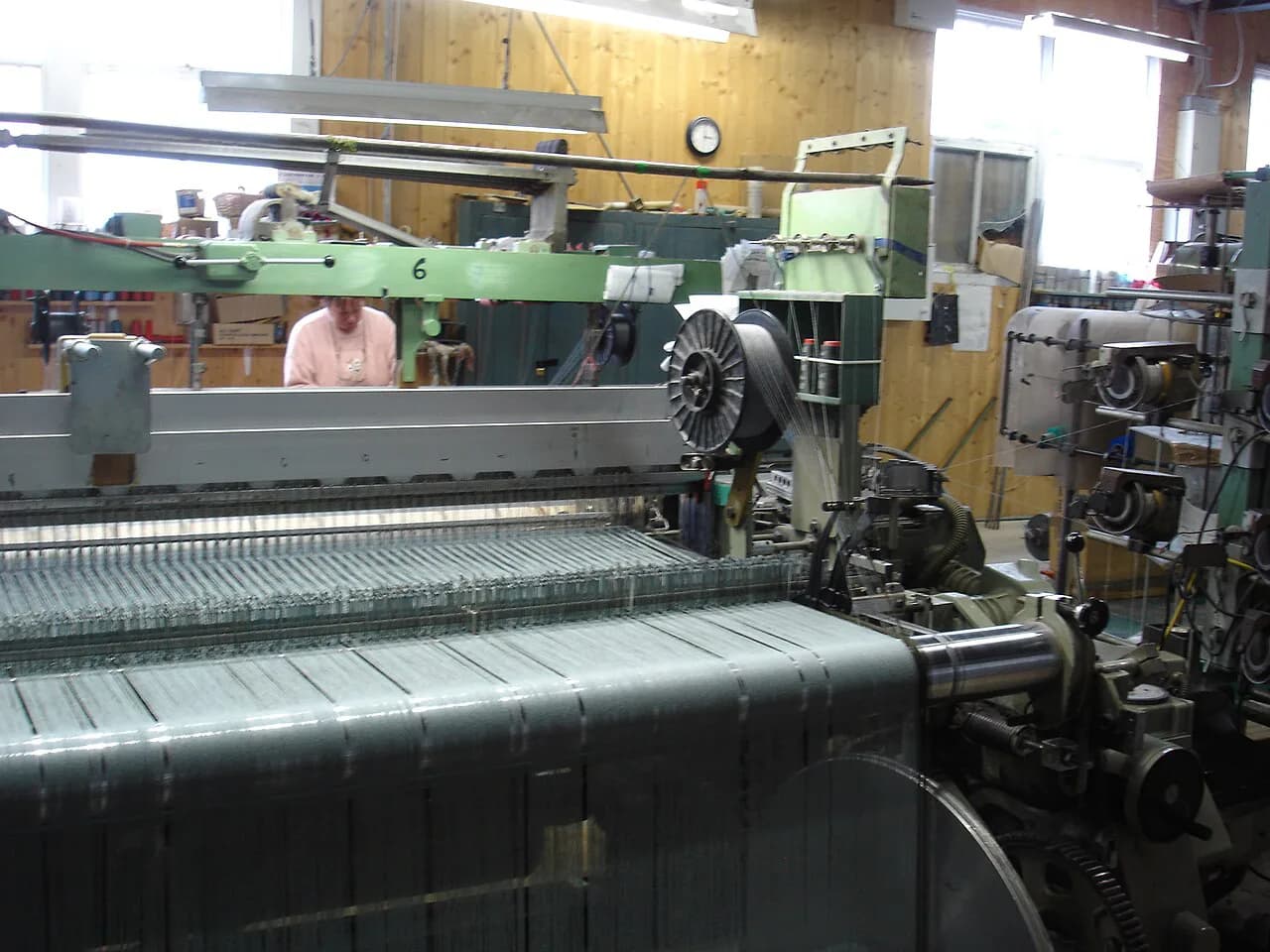
Foxford Woollen Mills answers the basic question quickly: it is a working woollen mill in the town of Foxford, County Mayo, in the west of Ireland, and the business dates its weaving there to 1892. For a visitor, the operator describes the site as combining a working mill with a flagship store and a café, so the trip works best if you go expecting a working site rather than a formal museum.
This guide separates what the mill says about itself from what an independent travel writer describes, because the two accounts differ in detail. Opening hours, admission and whether any behind-the-scenes access is running are not published in the material available here, so treat those as things to confirm directly rather than assume.
Where Foxford Woollen Mills Is
Foxford is a small town in County Mayo, and an independent travel account places the mill there beneath Nephin Mountain, giving the visit a clear geographical anchor in the Mayo landscape. That writer treats it as a place to call into if you are in the area, so it reads as a town stop rather than a remote rural detour.
The operator's own pages confirm the County Mayo base, describing throws woven in the mill in County Mayo and listing Foxford, County Mayo, as its location. If you are travelling through Mayo, that makes it easy to combine with a wider drive through the county.
For context on how a Mayo textile site fits into the broader story of making in Ireland, it helps to read it alongside other workshops covered in these irish traditional crafts, where weaving, pottery and glass are treated as living trades rather than museum pieces.
The 1892 Founding and Its Relief Purpose
The mill's founding year, 1892, is consistent across the operator's own material, which describes the business as having been created and developed by visionaries and entrepreneurs since that date. What the operator states plainly is that the mill was founded by an Irish Sister of Charity and survived a series of difficulties to keep weaving.
The independent travel writer gives a fuller account, naming the founder as Mother Agnes Morrogh-Bernard of the Sisters of Charity and describing the venture as a response to poverty in the aftermath of the Famine. That name and motive come from that writer rather than from the mill's own pages, so read them as one account of the origins rather than an official record.
The practical point for a visitor is that Foxford is not a craft brand that borrowed a heritage story late; it is a nineteenth-century relief enterprise that turned into a manufacturer. That framing explains why the blankets carry a social history as well as a design history, and it is the reason the mill's own material leans so heavily on continuity.

The Early Clerys Order: An Attributed Account
One of the most quoted episodes in the mill's story is a first order for 500 blankets from Clerys, the Dublin department store, in 1892. This detail comes from the independent travel page, which traces the commission to the mill's earliest trading, and it is best repeated as that writer's account rather than as a verified archival fact.
What the operator itself confirms is the wider pattern: Foxford pieces have been sold through retailers in Ireland, Europe and the United States, and the brand treats its blankets as objects passed down through families. That retail tradition, rather than a single documented order, is the safer basis for understanding how the mill reached a national market.
A Working Mill, Not a Reconstruction
The mill describes itself as one of the last working mills in Ireland, a phrase that appears in its own corporate and social channels and should be read as self-description rather than an external verdict. Visitors should understand the distinction: the site is presented as a functioning manufacturer that also welcomes the public, not a heritage park with dormant machinery.
The operator's company profile is more specific, calling Foxford a thriving working mill, visitor centre and café that employs more than 40 people. That combination of production, retail and hospitality in one place is the practical reality behind a visit, and it is also why the experience can vary from one day to the next.
Weaving is a staged process rather than a single action, and the mill's own social posts explain one step, warping, as the setting up and securing of the vertical threads on a loom before the actual weaving begins. Knowing that much helps a visitor read labels and displays with a little more understanding of what the finished throw represents in labour.
Blankets, Throws and Tweeds: What the Mill Makes
The core output is woollen home textiles: blankets, throws, scarves and bed linen, with throws in particular described by the operator as woven in its County Mayo mill. The same pages frame the product philosophy as buying better and buying less, with an emphasis on timeless pieces rather than seasonal volume.
The independent writer describes the mill's textiles in more traditional terms, listing hand-woven rugs, blankets and tweeds in plaid, herringbone and houndstooth patterns. Those pattern names are useful vocabulary if you are trying to match a style you have seen elsewhere in Irish weaving, and they point to a design language that predates the current homeware ranges.
A Foxford blanket was traditionally given as a wedding present and handed down within families, an inheritance custom described by the independent travel writer and echoed by the operator in its own profile. If you are buying for a household rather than a souvenir, that inheritance tradition is worth knowing before you choose between a decorative throw and a heavier blanket.
Contemporary Design and Collaboration
The mill is not frozen in its nineteenth-century output. Its profile notes a long-running collaboration with Irish designer Helen McAlinden, who has worked with Foxford on bed linen collections that draw on Irish landmarks and floral prints alongside plain and patterned fabrics.
Recent ranges also include partnerships, such as a limited-edition accessories line made with Tinnakeenly Leathers using off-cuts of woven fabric, with each piece slightly different depending on the cut used. These collaborations are worth checking on the operator's site before a visit if a specific collection is your reason for going, since ranges change.
For readers comparing Irish textile traditions, the same design conversation shows up at other mills; cushendale woollen mills is a useful comparison for anyone tracing how Irish woollen production has been renewed for contemporary interiors. Those tracing the wider urban side of Irish making can also follow it through this Dublin heritage guide, which sets the city's historic sites in chronological order.
Visiting the Site: Store, Visitor Centre and Café
According to the operator, the Foxford site combines a working mill, a flagship store, a visitor centre and a café. That is an important framing: the shop and café are described as part of the business rather than as separate attractions, so a visit can be as short as a browse or as long as a meal.
The independent travel account describes showrooms, a well-stocked shop and a café on the second floor, presenting the mill as a place to browse woollens and pause over coffee. Those descriptions are the writer's own and not independently verified for current operation, so treat the café and showroom layout as likely rather than guaranteed.
No page in the available material states opening hours, admission charges or whether guided access to the mill floor is offered, so the sensible step is to contact the mill or check its official site before setting out. If you are planning a long drive to Mayo specifically for the mill, confirm what is open on your intended day first.
Setting and a Sensible Mayo Detour
The mill sits in a county known for mountain and bog landscape, and the independent account describes the approach through mountain valleys, heather and loughs with sheep grazing on roadside patches. That is travel-writer colour rather than a route instruction, but it explains why a mill visit fits naturally into a scenic drive through Mayo.
Treat Foxford as a modest town stop rather than a full-day destination, and pair it with other making traditions in the region if craft is the theme of your trip. A parallel interest in Irish studio production connects naturally with irish pottery, where kilns and small workshops offer a comparable look at Irish craft.
For a wider view of how weaving and textile work fit among Irish hand crafts and folk traditions, irish weaving is a useful companion read before you travel, and irish folk art places domestic objects like blankets in a broader cultural setting.
Plan Your Visit
Foxford Woollen Mills rewards a visitor who arrives knowing the operator presents it as a working business with a flagship store, a visitor centre and a café, rather than a fixed exhibition. The strongest reasons to go are the continuity of weaving since 1892 and the chance to engage with blankets and throws as products of an actual Mayo mill.
Before travelling, confirm current opening arrangements and whether the café and store are operating as described, since neither the mill's own pages nor the independent account gives hours or admission details. Allow a modest stop rather than a whole day, and build the rest of your Mayo drive around the landscape rather than around promised facilities.
Explore more Ireland guides
Frequently Asked Questions
Where is Foxford Woollen Mills?
It is in the town of Foxford in County Mayo, in the west of Ireland. An independent travel account places it beneath Nephin Mountain, and the mill's own pages confirm its County Mayo base. It is a town location, so it fits easily into a drive through the county.
When was Foxford Woollen Mills founded?
The mill dates its weaving to 1892, a year repeated across its own material and in independent accounts. No more precise date is given in the sources available, so avoid assuming a month or day for the founding.
Who founded Foxford Woollen Mills?
The mill itself says it was founded by an Irish Sister of Charity. An independent travel writer names her as Mother Agnes Morrogh-Bernard of the Sisters of Charity and links the venture to poverty relief after the Famine; that name comes from the writer's account rather than the mill's own pages.
Is Foxford Woollen Mills still a working mill?
The mill describes itself as one of the last working mills in Ireland and as a working mill, visitor centre and café employing more than 40 people. That is the operator's self-description, so read it as the company's account of its own operations.
Can you visit Foxford Woollen Mills?
The operator describes a flagship store, visitor centre and café on site, and an independent writer describes showrooms, a shop and a second-floor café. Neither source gives opening hours or confirms behind-the-scenes access, so check directly with the mill before you travel.
What does Foxford Woollen Mills make?
Its ranges include blankets, throws, scarves and bed linen, with throws woven in its County Mayo mill. An independent account also describes rugs and tweeds in plaid, herringbone and houndstooth patterns, reflecting a longer weaving tradition behind the current homeware collections.
How long should a visit take?
Plan a modest stop rather than a full day. A browse of the store, a look at what the visitor offering includes and a pause in the café, if it is open, can be fitted into a couple of hours, leaving time to continue through the Mayo landscape around Foxford.
Sources
You might also like



Continue reading
More guides you'll find useful



