
Hill of Tara, Ireland: A Guide to the Ancient Royal Site
The Hill of Tara is an open archaeological landscape in County Meath. Learn what its earthworks mean and how to plan a visit on foot.
On this page
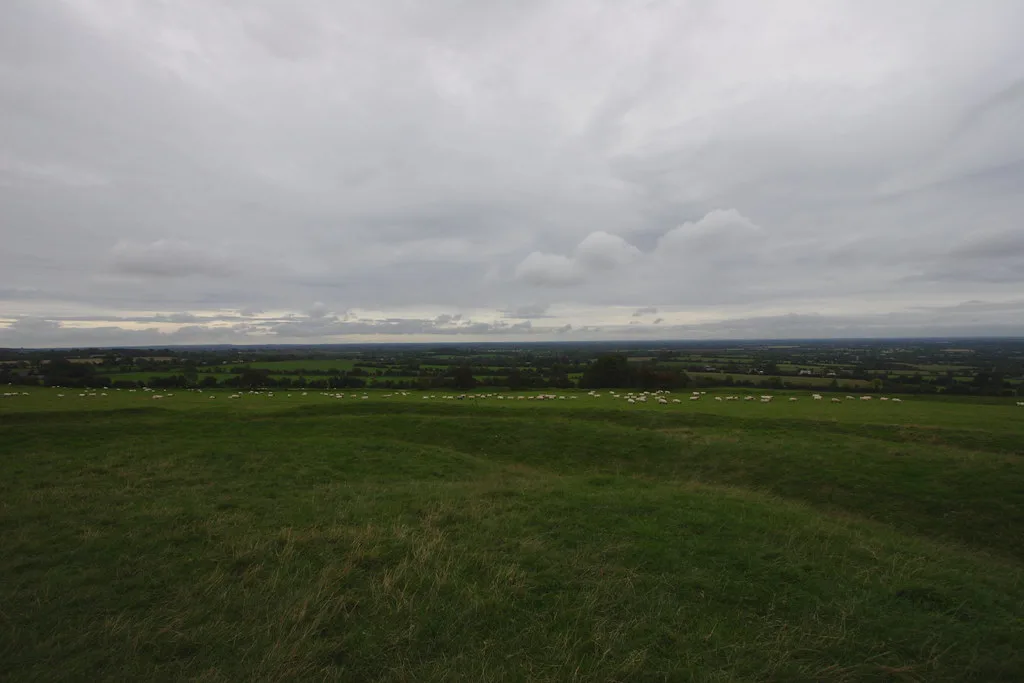
The Hill of Tara is an open archaeological landscape in County Meath, not a ruined palace you walk through. What visitors see is a low ridge of roughly 155 metres carrying more than thirty visible features, from a Neolithic passage tomb to ringforts and barrow mounds, spread along about two kilometres between Dunshaughlin and Navan.
This guide reads the main monuments in the order you are likely to meet them on foot, explains which stories come from medieval literature rather than excavation, and sets out the practical terms the official operator publishes for clothing, dogs and tours. It deliberately leaves tour times, tour prices and daily opening hours open, because those are the details most likely to change and should be confirmed directly with Heritage Ireland before travelling.
Why Tara Looks Like Grass, Not Ruins
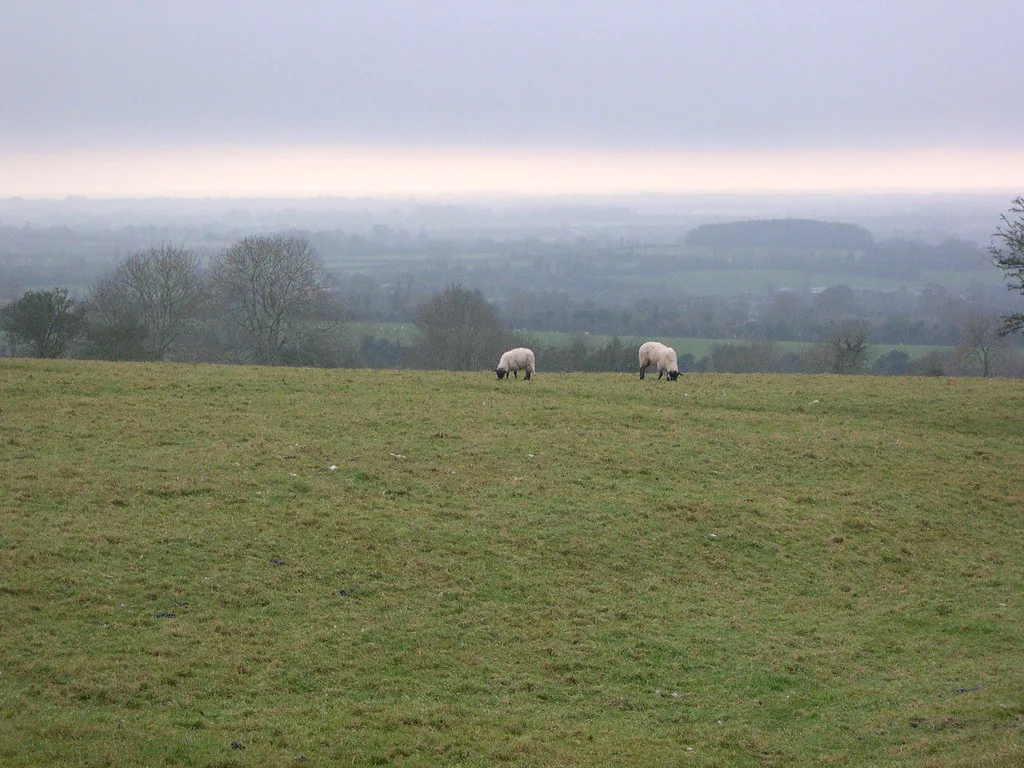
Tara's halls and palaces have disappeared, and only earthworks remain, as the official Heritage Ireland page states plainly. That is the single most useful fact to carry up the hill: you are reading changes in the ground, not the footprint of buildings.
The site's importance runs from the late Stone Age, when a passage tomb was built, through the Iron Age and into the early Christian period, when it rose to prominence as the seat of the high kings of Ireland. The monuments are therefore cumulative: each generation added banks, mounds and enclosures to a hill already treated as special.
Set expectations accordingly. There is no interpretive reconstruction to walk through and no single dramatic facade; the reward is in picking out individual monuments and understanding how they relate to one another across the ridge. A little background reading before you climb makes the difference between seeing grassy bumps and seeing a ceremonial landscape.
The Mound of the Hostages: Tara's Neolithic Core
The oldest visible monument is the Mound of the Hostages, also called Duma na nGiall. World History Encyclopedia dates its construction to about 3000 BCE, which places the beginning of Tara's story in the Neolithic; treat that figure as a scholarly estimate rather than an exact date, since published chronologies differ.
The monument is recorded as a passage grave in County Meath, and field notes describe a small chamber built from large upright stones with capstones above, its entrance protected by a grille. The practical consequence is simple: this is a monument to look at from outside, not a tomb you enter.
Its position matters as much as its age. The mound sits within the larger enclosure complex, so later builders placed their own ceremonial works in dialogue with a tomb already thousands of years old when the Iron Age earthworks were raised. For comparison with other chamber and portal tombs elsewhere in the country, the wider Ancient Sites in Ireland guide is a useful next step.
Ráith na Ríg, the Forradh and the Lia Fáil
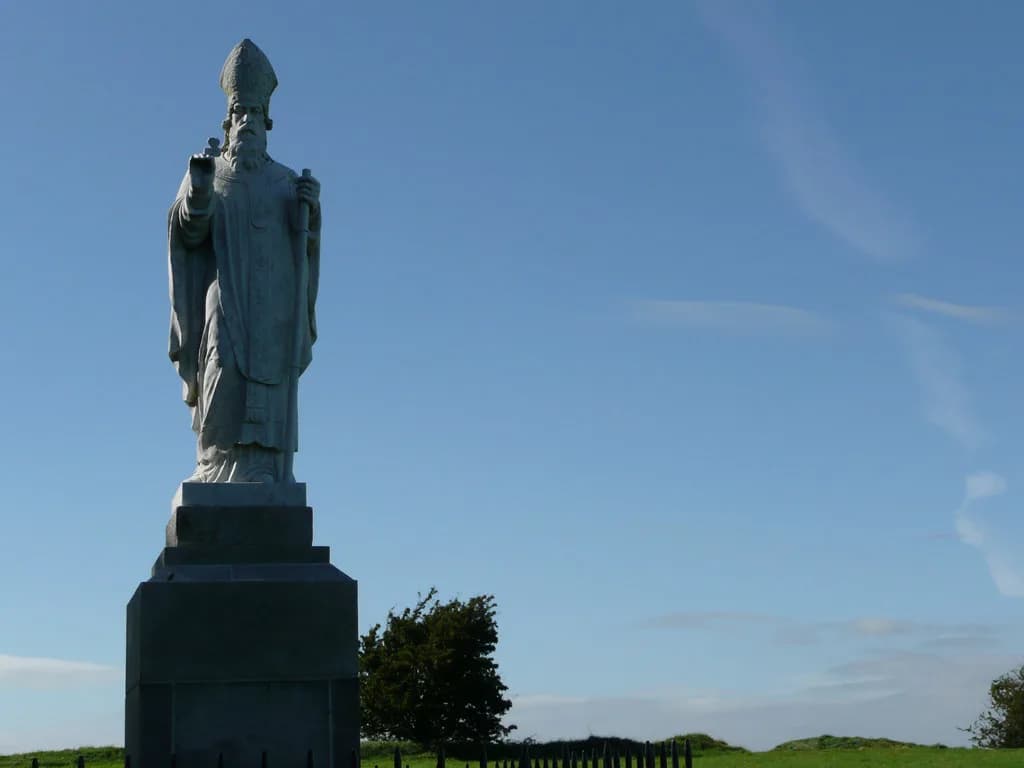
Ráith na Ríg is the great ringfort enclosure at the heart of the hill, and within and around it sit the Forradh and the Lia Fáil. Heritage Ireland identifies the Lia Fáil as the coronation stone, one of the four legendary treasures of the Tuatha Dé Danann, standing on the monument known as An Forradh. The legendary framing is the source's language, not an archaeological finding.
The stone has a contested modern history as well as a mythic one. Voices from the Dawn records that the Lia Fáil pillar was attacked with paint and a hammer, and that it was moved from a position near the Mound of the Hostages. It is worth pausing here to notice how a national symbol can accumulate damage and relocation as part of its story.
A standing stone like this rewards a slower look than a photograph. Approach it on foot from the surrounding enclosure so you can see how it sits relative to the banks and the Mound of the Hostages; that relationship, more than the stone itself, is what archaeology now emphasises.
Tech Midchúarta: The So-Called Banquet Hall
The long earthwork known as the Banquet Hall, or Tech Midchúarta, is one of Tara's most misinterpreted monuments. Nineteenth-century antiquarians identified it with Cormac's feasting hall, a reading drawn from medieval texts that describe seating by rank and portioning of meat to poets, musicians and physicians.
Current interpretation treats it as a cursus-type monument: two long parallel banks flanking a sunken avenue, understood as a processional route rather than a building. The older identification is not silly, but it shows how literary material once steered interpretation of ground features that excavation and survey now read differently.
Walk its length rather than viewing it from one end. The avenue's alignment toward other monuments on the hill is the point, and standing midway along it helps you see how the banks frame sightlines across the ridge.
Other Earthworks Worth Picking Out
Beyond the headline monuments, several features reward attention. The Sloping Trenches sit directly on the steep western edge of the hill, with the larger northern barrow measuring about eighty metres across, while Ráth Gráinne is a well-preserved barrow of about seventy metres that retains traces of earlier mounds built into its banks.
The Rath of the Synods and Ráith Laoghaire are among the named earthworks listed for the hill. Rather than trying to see everything, choose three or four features and look at their relationship to the ridge; that is more rewarding than ticking off names.
For travellers building a broader prehistoric itinerary, the scale here contrasts with single monuments elsewhere, where the experience is focused on one structure rather than a dispersed landscape. The wider guide to ancient sites in Ireland sets out comparable places to add to the same day.
Royal Tradition Versus Archaeological Evidence
Tara is famous as the seat of the high kings, associated with coronations, assemblies, lawgiving and religious festivals. World History Encyclopedia frames that role across the Iron Age and early Christian period, and it is the tradition that gives the hill its enduring hold on the imagination.
Archaeology urges caution about the medieval picture. The florid descriptions of a royal Tara in ancient texts are now understood as the work of early medieval writers dressing contemporary concerns in ancient forms, rather than as a reliable window on the Iron Age. As many as 142 rulers may have been credited with the kingship of Tara in the chronicles, a figure that belongs to literary tradition.
The useful stance for a visitor is neither dismissal nor literal belief. Recognise that the hill was genuinely a place of assembly and ceremony over millennia, and that the detailed king-lists and courtly descriptions were shaped by later writers with their own purposes.
St Patrick and the Christian Turn
Heritage Ireland notes that Patrick went to Tara in the fifth century, and that as Christianity achieved dominance, the hill's importance became largely symbolic. Tradition adds a dramatic scene in which Patrick lights a Paschal fire at the Hill of Slane, visible from Tara, defying the king's authority. For the wider story of that period, see the guide to early Christian Ireland.
That fire story is told as tradition rather than documented event, and dating it precisely is not possible from the sources. What is well supported is the shift: the great royal associations faded while the hill remained a symbol, and its halls and palaces vanished, leaving the earthworks you see today.
The traditional narrative places the Hill of Slane about ten miles across the valley from Tara, which makes the story geographically legible in a way that a text alone does not.
Modern Tara: Battles, Gatherings and a Motorway
Tara's symbolic weight carried into modern Irish history. Voices from the Dawn records the 1798 Battle of Tara Hill, where United Irishmen made a last stand, and the 1843 gathering when perhaps a million people came to the hill after Daniel O'Connell called for a meeting against the Union with Great Britain.
More recent controversy concerns the M3 motorway, completed in 2010 with an interchange less than two kilometres north of the hill. Opponents included archaeologists and preservationists, while supporters argued the road was needed to relieve congestion; the sources report the dispute rather than settling it.
Archaeology at Tara has also advanced through survey. A multidisciplinary programme led by Conor Newman from 1992, published in 1997, used GIS and LiDAR to reveal features invisible on the ground, including a previously unknown ceremonial enclosure known as the Ditched Pit Circle. That work is part of why current interpretations differ from older accounts.
Planning a Visit on Open, Uneven Ground
The Hill of Tara is an open site accessible throughout the year, and much of any tour takes place outdoors. Heritage Ireland advises weather-protective clothing and shoes suitable for walking over uneven terrain, which is the key practical point for anyone planning a visit. Comparable open-ground sites feature in the guide to ancient sites in Ireland.
That advice matters because the monuments are dispersed across a ridge rather than concentrated in one walled area, so expect to walk between features on grass and uneven ground. Sturdy footwear and a waterproof layer are more useful than any other preparation, and the hill is exposed when the weather turns.
Tours and the visitor centre are listed by Heritage Ireland, but the page does not publish schedules, durations or booking methods, so check directly with the operator before relying on a tour. For families and first-time visitors, a downloadable social guide is offered to help people prepare for the visit, including those with developmental and learning disabilities.
Dogs are not allowed on tours or in the visitor centre, with the exception of guide and assistance dogs where documentation is permitted. Visitors with assistance dogs should carry the relevant paperwork rather than assume entry on sight.
Using Tara as One Stop in a Wider Day
Tara sits within a landscape rich in prehistoric monuments. Because the hill itself is mostly earthworks without furnished interiors, pairing it with a site that has more visible megalithic structure gives a fuller picture of Neolithic and Bronze Age Ireland. The wider guide to ancient sites in Ireland sets out comparable places to add to the same day.
Comparisons help: a cliff-top fort such as Dún Aonghasa on the Aran Islands shows how dramatically setting shaped prehistoric monuments, while a recumbent stone circle in County Cork offers a different ceremonial form entirely. Neither is a substitute for Tara, but together they show the range of monument types across the island, and the Cork heritage guide points to further collections in that county.
If your interest is in alignment and stone settings, the guide to stone circles in Ireland and the wider collection of standing stones is useful background before or after a Tara visit. Plan no more than two such stops in a day, since each involves walking and the weather can shorten any visit.
Plan Your Visit
The Hill of Tara rewards preparation more than most Irish monuments. Know that you are visiting an open landscape of earthworks, read a little about the Mound of the Hostages, Ráith na Ríg and the Lia Fáil beforehand, and arrive dressed for uneven ground and changeable weather.
Keep the practical details flexible: confirm tour availability, visitor centre arrangements and any current notices with Heritage Ireland before you travel, and treat medieval king-lists and Patrick stories as tradition rather than record. The hill's power lies precisely in that combination of real archaeology and layered story. To plan a wider route, use the Ancient Ireland Map, or continue to Drombeg Stone Circle.
Explore more Ireland guides
Frequently Asked Questions
Is the Hill of Tara an open site?
Yes. Heritage Ireland describes the Hill of Tara as an open site accessible throughout the year, with much of any guided tour taking place outdoors. Because the page does not publish daily hours or tour schedules, check current arrangements with Heritage Ireland before travelling.
Can you go inside the Mound of the Hostages?
No. The Mound of the Hostages is a passage grave whose entrance is protected by a grille, so it is viewed from outside as a monument in the landscape rather than entered as a chamber.
Why are there no palace buildings at Tara?
Heritage Ireland states that the halls and palaces have disappeared and only earthworks remain. The medieval descriptions of a royal court come from later literary sources, while archaeology reads the banks, ditches and mounds as ceremonial and defensive features.
Was St Patrick really at Tara?
Heritage Ireland notes that Patrick went to Tara in the fifth century, and tradition places his challenge to the king there, including the Paschal fire associated with the Hill of Slane. Treat the dramatic narrative as tradition rather than documented event.
Are dogs allowed at the Hill of Tara?
Dogs are not allowed on tours or in the visitor centre, with the exception of guide dogs and assistance dogs where documentation is permitted. Bring the relevant paperwork if you rely on an assistance dog.
Is the Hill of Tara suitable for buggies or wheelchairs?
Heritage Ireland advises shoes suitable for walking over uneven terrain because much of the visit is outdoors. No accessibility guarantees for the monuments are published, so contact the operator in advance about specific needs.
How long should I allow for a visit?
The monuments are dispersed along roughly two kilometres of ridge, so allow time to walk between features rather than expecting a single compact circuit. Weather and your interest in individual monuments will determine how long you stay.
What is the best way to understand the monuments?
Reading about the main features before you go helps, and a guided tour is offered according to Heritage Ireland, though schedules and booking details are not published on that page. A downloadable social guide is available to help first-time visitors prepare.
Sources
You might also like



Continue reading
More guides you'll find useful


