
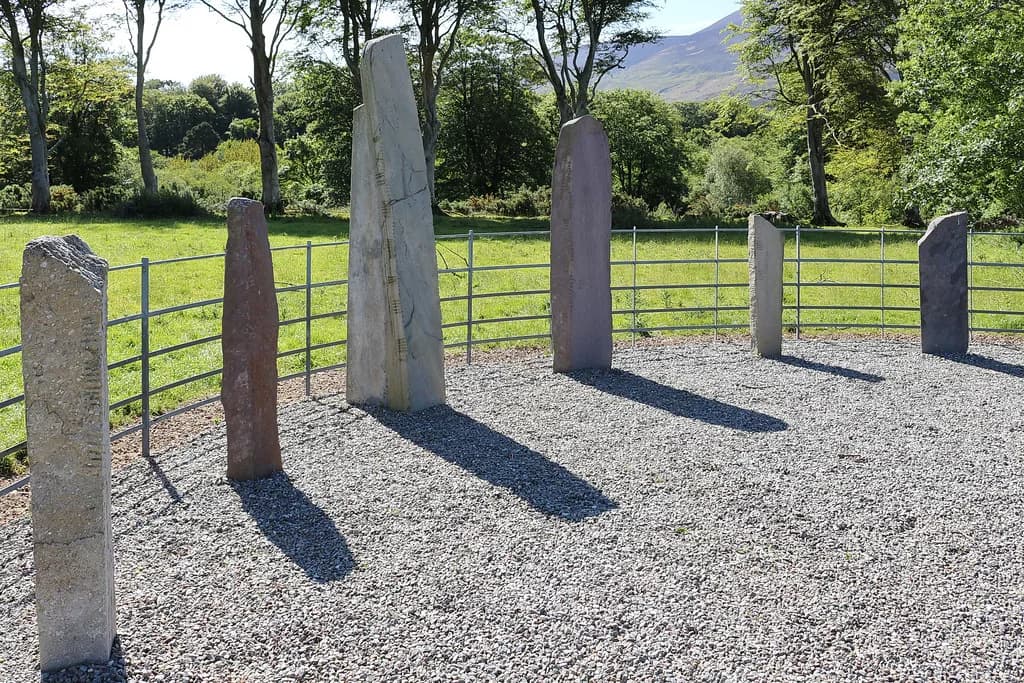
Ogham Stones in Ireland: How to Read Them and Where to Start
Learn what ogham stones in Ireland record, how their inscriptions are read, and what to expect at Ardmore's three documented stones in County Waterford.
On this page
Ogham is an early alphabet carved into stone as groups of notches and lines, used to write the Primitive Irish language rather than a language of its own. Roughly 400 monumental inscriptions survive in Ireland, with most of them concentrated in the south, in Counties Kerry, Cork and Waterford. For a visitor, the practical skill is simpler than the scholarship: learn which way the stone is read, then look for the short personal-name formulae that make up the vast majority of inscriptions.
What Ogham Actually Is
It helps to separate the script from the language. Ogham is a written alphabet of one-to-five strokes arranged around a stem line, and the language those strokes record in the older inscriptions is Primitive Irish. The distinction matters on site, because a stone does not carry a coded message in a mysterious tongue; it carries a short text you could, in principle, sound out. The ogham tradition belongs alongside the wider range of ancient sites in Ireland, though these marks were cut for words rather than for architecture or burial chambers.
The letter shapes are made from one to five horizontal strokes or notches placed relative to a vertical stem line, called the droim. Groups of strokes on one side, the other side, or across the line stand for different letters, so counting and positioning matter more than recognising a familiar shape. Later manuscripts added a set of supplementary letters, but in the older orthodox inscriptions only one of these appears with any frequency.
How to Read a Stone
The single most useful thing to know before looking at a stone is the reading direction. Orthodox ogham is read from the base upward, conventionally described as reading as a tree is climbed, and on stones with long texts the reading continues across the top and down the right-hand edge. If you start at the top and work down, the name formula will look like nonsense.
Where the marks sit on the stone also tells you something about age and style. The older orthodox inscriptions are usually carved along the edges of the stone, along the line where two faces meet, which makes them harder to photograph but easier to read in raking light. Later scholastic inscriptions are more often cut into a stem line on the flat face itself. Knowing this stops a visitor mistaking a badly lit edge for a blank stone.
Bring a torch or use the light on your phone, and angle it along the edge rather than straight at the face so the incised lines throw a shadow. Do not touch the carvings to trace them, and do not chalk or wet the surface; the marks are shallow and the stone is the primary record. A short pause to find the stem line and the base will tell you more than a wide photograph taken from standing height, and the same patient approach pays off at other standing stones in Ireland. Before travelling to a stone held indoors or in a managed setting, check current access arrangements and opening hours, since these vary by site.
What the Inscriptions Record
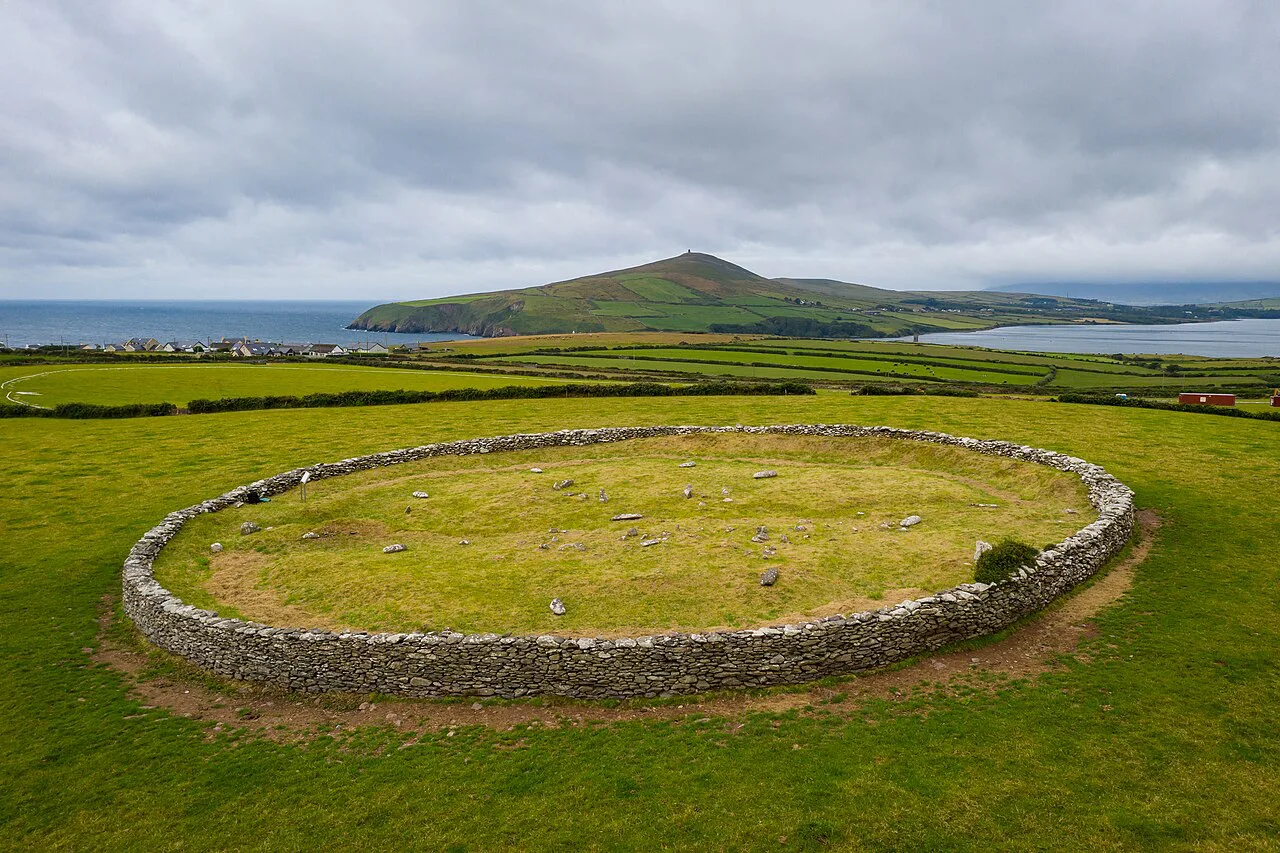
Most inscriptions are personal names, often with parentage and sometimes a tribal link attached, which is why they read more like a land record than a story. The same stones appear to have served as memorials or boundary markers, and later legal texts even state that a land claim was not valid without an ogham stone asserting the right. That legal and territorial function is the strongest-supported explanation for why the stones were raised where they were. At Ardmore, the council simply records that two of the three stones have been relocated within the cathedral; the page does not explain when, why or by whom, so treat any fuller account of the move as unverified.
What the stones do not settle is how much they played a part in burial, ritual or magical practice. The inscriptions can look sepulchral, but the sources are explicit that the spiritual and ritual role is genuinely unknown rather than merely unproven. Treat any confident account of ogham as a magical system with caution, and enjoy the surviving names for what they are: a short, formal statement about a person and their line.
Where the Stones Cluster
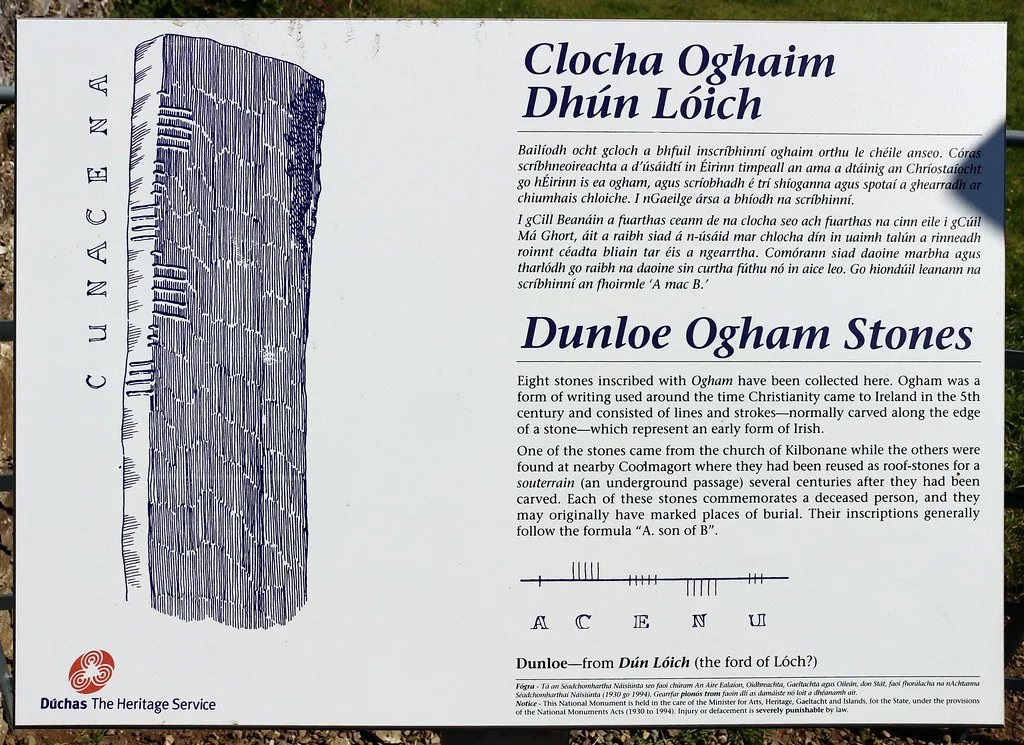
The broad picture is south-western. Roughly 400 inscriptions survive in Ireland, with the bulk in Counties Kerry, Cork and Waterford, and the known total rises to around 500 when examples in Wales, England, the Isle of Man and Scotland are counted. These are approximations from the published surveys rather than a complete census, so expect the figure to shift as recording continues. If your travels take you to the second of those counties, the museums in Cork are a useful place to see how such carved stones are displayed and interpreted indoors.
The densest single group is in the barony of Corca Dhuibhne on the Dingle peninsula in County Kerry, where about 60 stones are known to have originated. Many of those appear to have been territorial markers, which fits the wider pattern of name-and-lineage texts staking a claim to land. The concentration is a reminder that these are regional monuments first and national treasures second; they belong to particular landscapes.
Dating and Origins
The inscriptions themselves are dated from the 4th century to the late 7th century, a span based on the language of the texts and their archaeological context rather than on any direct dating of the stone. Because stone cannot be carbon dated, the chronology rests on linguistic and contextual evidence, and the possibility remains that the tradition began earlier than the surviving examples show. Treat any single firm date for the invention of the script as a best estimate.
The origin story most often repeated is a legend, and should be labelled as one. Medieval tradition credits the god Ogma mac Elathan with creating the script, a tale recorded in manuscript sources such as Auraicept na n-Éces, the Scholars' Primer, and In Lebor Ogaim, the Ogam Tract. These are medieval writings about ogham, not contemporary records of its invention, and they tell us more about how later scholars understood the script than about how it began. Some modern researchers have suggested the script was devised by early Christian missionaries familiar with the Latin alphabet, but this is a theory rather than settled fact.
Ardmore, County Waterford: A Documented Place to Start
Ardmore is the best-documented single place in the available sources for seeing ogham stones, and it repays a specific kind of attention. Waterford City & County Council records three ogham stones found in Ardmore, and states that two have been relocated within the cathedral while the third is kept in the National Museum of Ireland. That means a visit to Ardmore will not show you all three; plan on two, and treat the museum stone as a separate enquiry. For the wider early medieval setting these stones belong to, see the early Christian Ireland guide.
The council's account, which cites McManus (1991) for the readings, gives the first stone as 1.27 m high, carrying a formula that names Luguid and traces his descent through Nad-Segamon. The second is 1.3 m high, bears a small incised cross on the sloping top opposite the inscription, and reads AMADU, translated as beloved. The third stone, now in the National Museum of Ireland, carries a fragment naming Anac, son of an unnamed father. That juxtaposition of formal lineage formulae and a single affectionate word is the most human detail in the record.
Because the stones now sit in a cathedral setting rather than their original positions, the landscape context that helps explain a boundary marker has been lost. Look at the carving technique instead: the edge-cut strokes, the relative heights of the two stones, and the way the cross on the smaller one faces away from the text. These details are what the council's record actually documents, and they are worth more than a quick photograph.
Myths to Set Aside
The idea that each ogham letter corresponds to a tree, and that the script encodes tree lore, is a later interpretation rather than the original meaning of the letter names. Modern scholarship, associated with Damien McManus and others, substantially revised the older literal reading of the letter names as tree names. The popular tree-based system owes much to Robert Graves, whose work is academically discredited and who fictionalised a great deal of the material.
None of that makes the stones less interesting; it simply changes what you are looking at. A carved name with a lineage is a legal and social document, and the pleasure of reading it lies in recovering a specific person rather than a symbolic system. When you meet a confident mystical reading on a tour or a signboard, ask whether it comes from the medieval manuscripts, from modern reinterpretation, or from neither.
Plan Your Visit
Approach ogham as a reading exercise rather than a checklist of sites. Learn the base-to-top direction, find the stem line and the edge, and expect a short name formula rather than a narrative. Ardmore gives you two documented stones in a cathedral setting, while the third is recorded as held by the National Museum of Ireland; the council page does not publish opening hours, admission arrangements or interior access conditions, so check with the cathedral and the museum directly before travelling.
If your interests run to other early stone monuments, it is worth pairing a visit with a wider survey of the period, since ogham sits within a much broader tradition of carved and erected stone. The Hill of Tara, Ireland is a useful comparison point for how later generations read and reused earlier monuments, and the ancient sites in Ireland overview covers the wider landscape. Allow time to look slowly and to read the inscription notes before you arrive, because the marks themselves are small and the best interpretation is done in advance.
Explore more Ireland guides
Frequently Asked Questions
What is an ogham stone?
An ogham stone is a stone monument carved with ogham, an early alphabet of notches and lines arranged around a stem line and used to write Primitive Irish. Most surviving inscriptions carry personal names with parentage or tribal links, and the stones appear to have served as memorials or boundary markers.
How do you read ogham writing on a stone?
Start at the base and read upward, following the edge or stem line as you would climb a tree; longer texts continue across the top and down the right-hand edge. Count the strokes in each group and note whether they sit on one side, the other, or across the line, since that position identifies the letter.
How many ogham stones are there in Ireland?
Published surveys put the figure at roughly 400 surviving inscriptions in Ireland, rising to around 500 when examples in Britain, the Isle of Man and Scotland are included. These are approximations rather than a complete census, and the count changes as recording work continues.
Where are ogham stones most commonly found?
Published surveys record the bulk of surviving inscriptions in the south, particularly Counties Kerry, Cork and Waterford. The densest known group is in the barony of Corca Dhuibhne on the Dingle peninsula in County Kerry, where about 60 stones are known to have originated.
What do ogham inscriptions actually say?
Mostly personal names, often with a father's name and sometimes a tribal connection, which is why they read as land or lineage records rather than stories. Their functions as memorials, boundary markers and evidence in land claims are reasonably supported; their role in burial or ritual practice is not established.
Can you see ogham stones at Ardmore in County Waterford?
Waterford City & County Council records three ogham stones found at Ardmore. Two have been relocated within the cathedral and the third is kept in the National Museum of Ireland, so you will not see all three together at Ardmore; check access arrangements with the cathedral and museum before travelling.
Are ogham letter names really tree names?
Tree associations are a later interpretation rather than the original meaning of the letter names, and modern scholarship has substantially revised the older literal reading. The widely circulated tree-based system owes much to Robert Graves, whose work is academically discredited.
When were ogham stones carved?
The inscriptions are dated from the 4th century to the late 7th century, a span based on the language of the texts and their archaeological context rather than direct dating of the stone. The tradition may have begun earlier than the surviving examples show, and the Ogma origin story is medieval legend rather than record.
Sources
You might also like



Continue reading
More guides you'll find useful



