
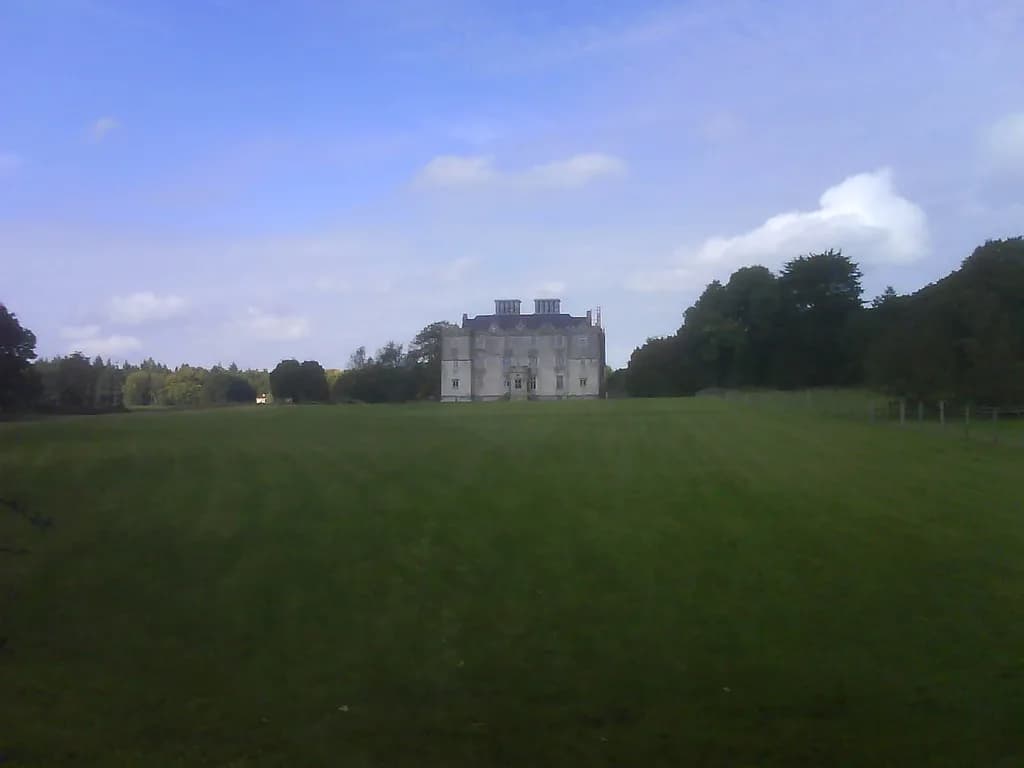
Portumna Castle and Gardens: A Visitor Guide to the Jacobean House
Plan a visit to Portumna Castle and Gardens, an OPW-run Jacobean house on Lough Derg, with its de Burgo story, 1826 fire and garden walks explained.
On this page
Portumna Castle and Gardens is a Jacobean semi-fortified house at the north end of Lough Derg, near where the River Shannon widens into the lake. It is managed by the Office of Public Works and presented through Heritage Ireland, and it is worth a stop precisely because it is not a furnished stately home: you get a shell re-roofed after ruin, a ground-floor exhibition, and a set of formal gardens rather than room after room of interiors. The short answer for anyone deciding whether to detour is yes, if you like reading a building's fabric and its garden setting; no, if you expect a fully restored country house.
Where Portumna Castle Stands
The castle occupies a dramatic position on the edge of Portumna town, looking out over Lough Derg with the River Shannon close by. The operator notes the castle sits beside Portumna Forest Park, which makes the setting easy to combine with a walk even though the forest park is a separate place rather than part of the castle grounds. Approach it as a waterside site first and a house second, and the layout makes sense: the gardens lead you toward the building, and the lake stays in view around the demesne.
Because the site sits on the Shannon–Lough Derg junction, the light and weather change quickly, and the walk from the gardens to the house can feel exposed on a wet day. Treat the ground floor as your shelter stop and the gardens as the part you pace around the showers. It is also a useful base for understanding the wider county: the castles in county galway include very different buildings, from tower houses to later manor houses, and seeing Portumna helps you place the others.
What Kind of Building It Is
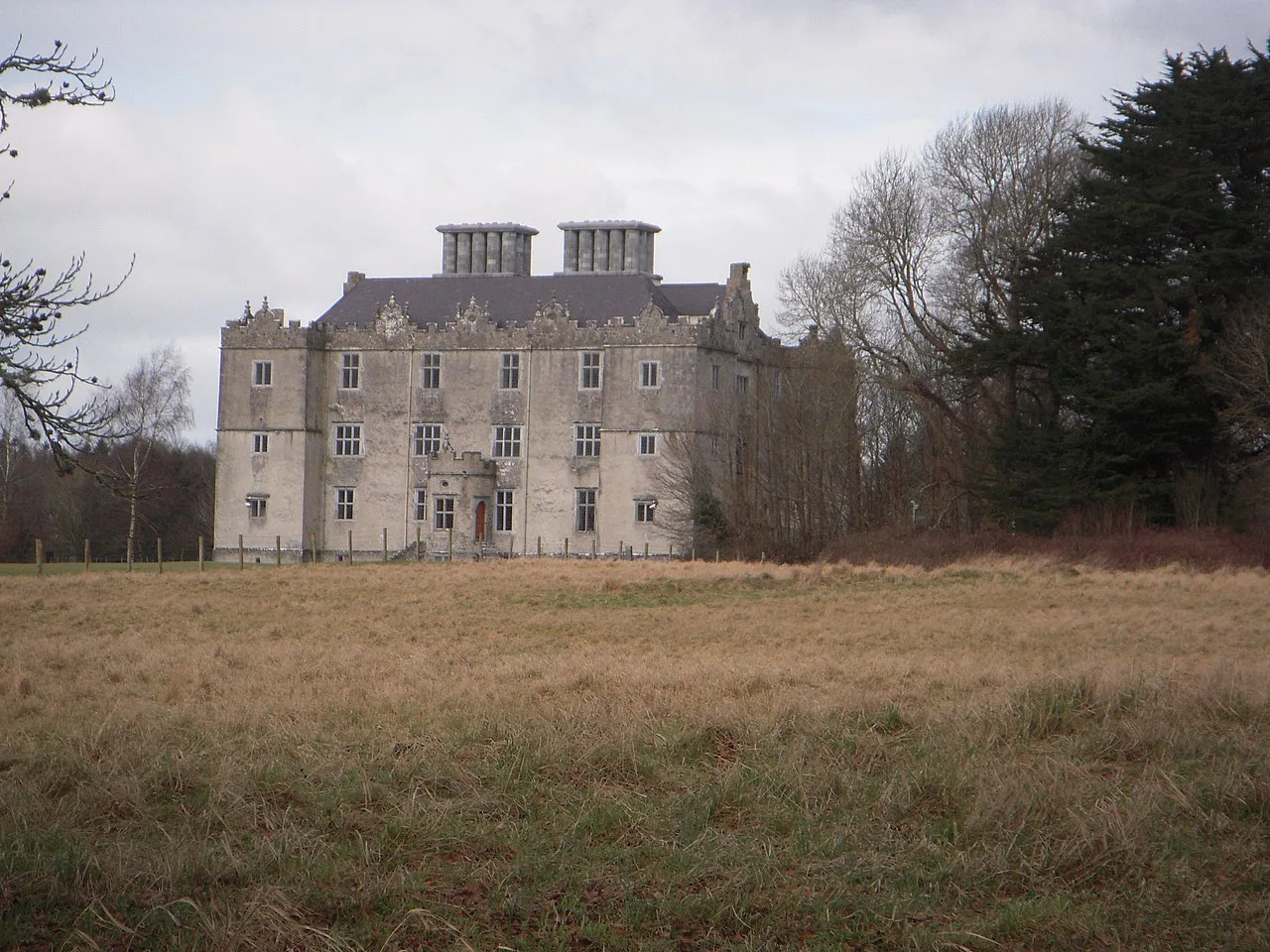
Portumna is usually described as a Jacobean house with defensive features, and that hybrid character is the main reason to look closely at its walls. The Heritage in Schools profile explains that the building marks the transition from the medieval tower house to the Renaissance-style manor house, with influences from both periods visible in the design. In practice that means you are reading a moment of change in Irish domestic architecture rather than a single, pure style.
That transition matters to visitors because the defensive elements are not theatrical additions. Corner towers and a semi-fortified plan sit alongside a symmetrical front, so the house looks both cautious and confident at once. If you have already seen a bare tower house such as Aughnanure castle, Portumna reads as the next step in the story: more windows, more symmetry, still a statement of family power.
The de Burgo and Clanricarde Story
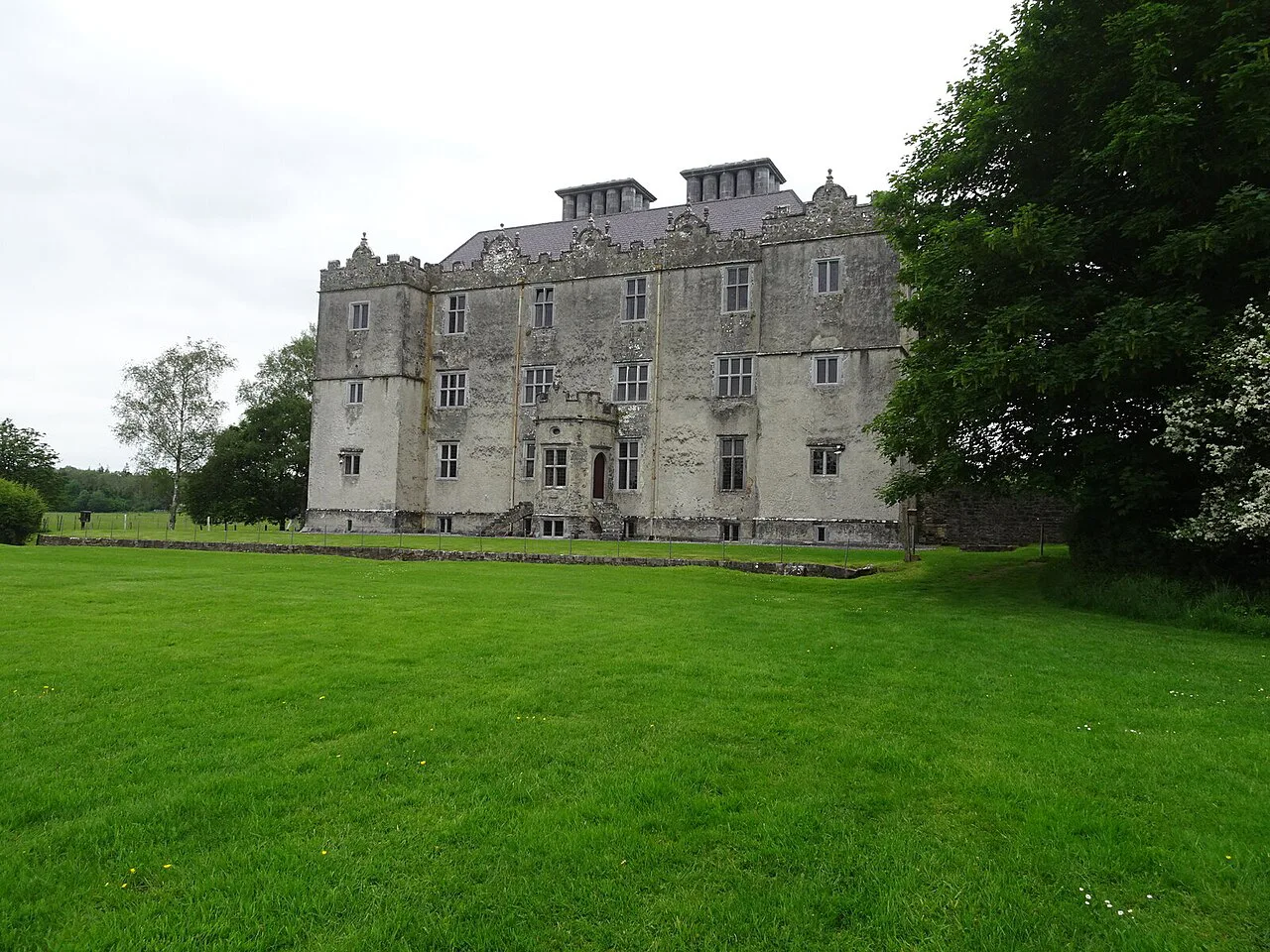
The house was commissioned by Richard de Burgo, fourth earl of Clanricarde, and was built before 1618, becoming the main seat of the de Burgo family for more than two centuries. The operator describes it as the family's power base for centuries, which is the right frame for a visit: this was an administrative and political centre as much as a residence. Construction dates are useful context rather than a single completion date, so avoid pinning the house to one year.
An architectural-history account adds that the commission is associated with Richard Burke and his wife Frances Walsingham, and that the design shares features with the family's mansion at Somerhill in Kent. That connection is worth knowing because it explains why Portumna feels more continental than you might expect in rural Galway. Treat the family detail as context for the building, not as a pageant to follow room by room.
Reading the Architecture
Look for the symmetrical facade, the corner towers and the Tuscan gateway that frames the approach to the inner court. These are architectural details to look for as you walk the approach rather than a fixed checklist, and they are described across sources rather than spelled out in the operator's own summary. The gateway in particular repays a pause: it announces that you are entering a designed setting, not simply a defended enclosure.
The same independent descriptions note that the house has few surviving original interior features, which is why the building is best read from the outside in. Compare that with a site such as athenry castle ireland, where the surviving fabric tells a different story of medieval building, and you start to see how much of Irish castle visiting is about walls, plans and settings rather than furniture.
Fire and Restoration
A major fire in 1826 left the castle a roofless shell, and the state began bringing it back from ruin in the 1960s. The Heritage in Schools profile dates the re-roofing and research-based conservation work to 1968 and notes that the work continues, which is the key to managing expectations. You are visiting a building in long-term care, not a finished period interior.
The fire also changed the family's fortunes on the estate, and an independent account records that a later family residence was destroyed in 1922, with its stone reused for a church in the nearby town. That sequence explains why the old castle stood exposed for so long before the state stepped in. It also explains the sparse interior: over a century and a half of weather does more damage than any single event.
Inside Today: The Ground-Floor Exhibition
Only the ground floor is open to the public, and it houses an exhibition that tells the story of the castle and the de Burgo family. Plan your indoor time around that single level rather than expecting to climb through the building. The exhibition is the place to pick up the chronology before you walk the gardens, because the outdoor setting is easier to read once you know who built it and why.
Keep the interior in proportion: with so few original features surviving, the exhibition does most of the interpretive work. If you want a comparable lesson in reading a building's plan, a tower house such as those in the castles in county galway collection shows how much structure alone can tell you. At Portumna the structure is broader and later, and the exhibition supplies the narrative the stone cannot. For an urban version of the same exercise, the Museums in Galway City: Two Places Worth Your Time guide shows how city collections carry a story that the fabric alone no longer holds.
The Gardens and Demesne
The formal gardens are the part many visitors remember, and the approach to the house runs through them, creating a sense of the original seventeenth-century setting. The operator highlights the formal gardens and the walled kitchen garden in particular. Independent descriptions add a Lady's Garden with historic roses and box hedging, and a willow maze, but treat those planting and feature details as descriptions rather than guarantees of what is in leaf or bloom on your date.
Allow more time outdoors than indoors. The walled garden and the walk up to the house carry the visit, and the lakeside setting gives you somewhere to linger afterwards. If you are building a wider garden-and-ruin itinerary, the ancient sites in Ireland include church and monastic remains that pair well with a house like this, because both ask you to imagine a designed landscape that has largely gone.
Admission and Seasonal Hours
Adult admission is €5.00, and the site keeps daily seasonal hours with a last-admission cut-off before closing. The operator's published times change across the season, and from 29 October the closing time and last admission move earlier, so check the Heritage Ireland page for your date instead of relying on a general figure. Arriving close to the cut-off leaves you little time for both the exhibition and the gardens.
One dated notice matters for anyone planning a late-autumn visit: the tearooms will be closed from 9 November 2026. That is a closure of the tearooms only, not of the castle or gardens, and no reopening date is published. Bring your own provisions or plan to eat in Portumna town rather than assuming you can buy something on site.
Nearby Context: Forest Park and Friary
Portumna Forest Park lies directly next to the castle, and the operator points to it as a neighbouring place rather than part of the grounds. Independent descriptions also mention the ruins of Portumna Friary, a separate site you visit on its own terms rather than as part of the castle. Neither should be presented as managed by the castle, so give each its own slot in the day.
How Long to Allow and How to Sequence the Visit
Start with the ground-floor exhibition, then walk the gardens and the walled kitchen garden, then finish by the water. Two to three hours is a comfortable allowance if you are reading the exhibition and covering the gardens without rushing. If you arrive late in the day, reverse the order so the gardens get your best light and the exhibition becomes the shorter stop.
For a broader county context, Dunguaire castle offers a contrasting later tower house on the coast, and the comparison sharpens what is distinctive about Portumna's symmetrical front and garden setting. Elsewhere in the midlands, the castles in county offaly include sites that show yet another strand of Irish building history, useful if you are planning a route across the country rather than a single day out.
Access within the site is uneven, and one secondary description mentions partial wheelchair access with some historic areas inaccessible for preservation reasons. That claim is not confirmed on the operator page supplied, so ask about step-free routes and current restrictions when you check before travelling, particularly for the gardens, which are largely outdoor and uneven underfoot.
Plan Your Visit
Portumna Castle and Gardens rewards a slower visit than its ruined appearance might suggest: the ground-floor exhibition supplies the story, the formal gardens supply the atmosphere, and the lake setting supplies the reason to stay outside. Go for the architecture and the walk rather than for furnished rooms, and the site makes sense.
Before you travel, confirm two things on Heritage Ireland: the current opening times and last admission for your date, including the earlier autumn closing, and the status of the tearooms after 9 November 2026. Everything else about the visit is a matter of pacing and weather. The best plan is the simplest one: house first, gardens second, lake last.
Frequently Asked Questions
Is Portumna Castle worth visiting?
It is worth the stop if you enjoy architectural history and gardens rather than furnished rooms, because only the ground floor of the house is open and the surviving original interior features are limited. The formal gardens, the walled kitchen garden and the Lough Derg setting carry much of the visit. If you want a fully restored country-house interior, this is not that experience.
How much of Portumna Castle can you go inside?
The ground floor is the only part open to the public, and it holds an exhibition on the castle and the de Burgo family. The building was left a roofless shell after an 1826 fire, and restoration and conservation have been under way since the 1960s, which is why access stays limited. The gardens and demesne are outdoors.
How long does a visit take, and how should it be sequenced?
Allow roughly two to three hours to read the exhibition, walk the formal gardens and continue by the water without rushing. Start indoors for the chronology, then move outside while the light holds. If you arrive close to the last-admission cut-off, take the gardens first and shorten the exhibition.
Are the gardens at Portumna Castle included in admission?
The operator presents the formal gardens and walled kitchen garden as part of the visit alongside the ground-floor exhibition, but it does not publish a separate garden-only ticket. Check the current admission terms on the Heritage Ireland page for your date, since seasonal arrangements can change.
What happened to Portumna Castle in 1826?
A major fire gutted the house and left it a roofless shell, and it stood exposed to the weather for generations afterwards. The state began bringing it back from ruin in the 1960s, with re-roofing and research-led conservation continuing since. That history explains the sparse interior you see today.
When do the tearooms at Portumna Castle close?
The operator publishes a notice that the tearooms will be closed from 9 November 2026. That affects the tearooms only, not the castle or gardens, and no reopening date is given. Plan to bring provisions or eat in Portumna town, and confirm the current status on Heritage Ireland before setting out.
Sources
You might also like



Continue reading
More guides you'll find useful




