
Athenry Castle: A Visitor Guide to the Medieval Hall-Keep
Plan a visit to Athenry Castle, the mid-thirteenth-century hall-keep by the Clareen River ford. See what survives inside and how to read the medieval town.
On this page
Athenry Castle is the surviving mid-thirteenth-century hall-keep of an Anglo-Norman town in County Galway, set beside a strategic ford on the Clareen River. Its three storeys are solidly defensive from the outside, but the interior is a short, clearly ordered sequence: a substantial basement, the Great Hall above, and an attic whose modern third-floor addition houses an audio-visual room. Heritage Ireland, which manages the site for the Office of Public Works, treats the building as the centrepiece of one of the best-preserved medieval towns in Ireland; browsing the wider selection of castles in county galway helps place it alongside nearby sites.
What Actually Survives at Athenry Castle
The castle's main structure is a hall-keep, the combined fortified residence and administrative hall that ambitious lords built in this period. What you walk through is a compact vertical sequence rather than a sprawling ruin, so the visit rewards attention to detail more than distance covered. Because the interior is short, it pairs naturally with the town outside, where the medieval layout supplies the context the building alone cannot.
The basement is the deepest and starkest level, the storage and service zone of a working medieval household. Above it, the Great Hall was the ceremonial heart of the castle, and the stonework at its entrance is the single best reason to linger rather than pass through. Plan your time around those two levels first, then treat the attic as the interpretive finish.
Approaching the Exterior: What the Keep Signals
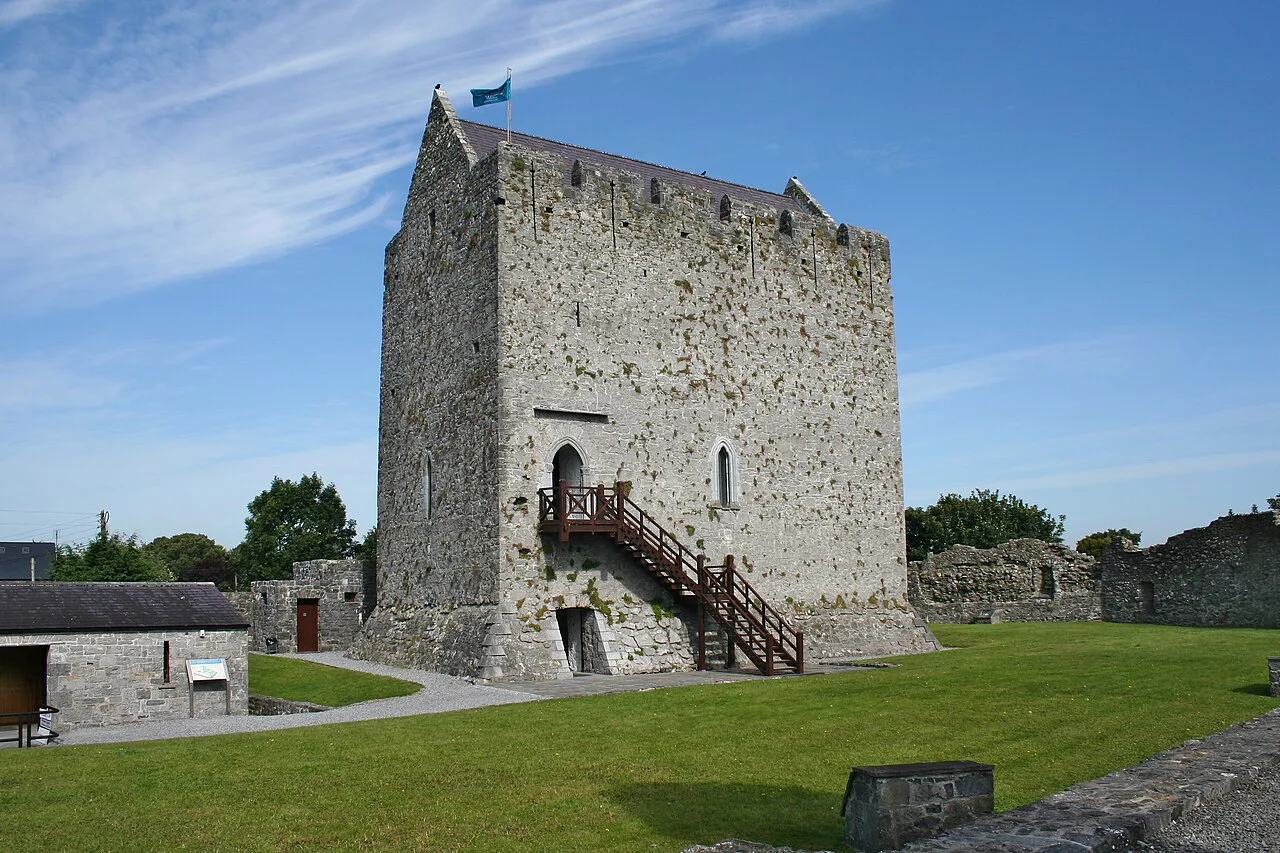
From outside, the keep reads as mass and defence, exactly the impression a hall-keep was designed to give. The battlements are surviving original thirteenth-century work, and the deep cruciform arrow loops, shaped like a cross to widen the defenders' firing angles, are visible details worth locating before you go in. Looking for them first gives the interior a purpose: you are inspecting a working defensive building, not just a shell.
The exterior also tells you what the castle is not. Athenry Castle is essentially the attraction itself: the official Heritage Ireland page publicises no shop, café, visitor centre or guided tour here, so the building is the draw. If you want an introduction to medieval life with hands-on activities attached, that is a separate stop in the town rather than something built into the castle visit.
Reading the Stonework: The School of the West
The doorway and two window openings at the entrance to the Great Hall carry floral carving in the local School of the West style. Heritage Ireland describes this decoration as unique among Irish castles, which makes it the site's most distinctive single feature and the thing to examine closely in good light. Trace the motif around the openings rather than glancing at the doorway on your way through.
The arrow loops and battlements belong to the same thirteenth-century defensive scheme, so the decorative and the military sit close together in one small building. That contrast is the real lesson of the visit: a lord's prestige and his need for protection were expressed in the same stone.
The Audio-Visual Room and the 20-Minute Film
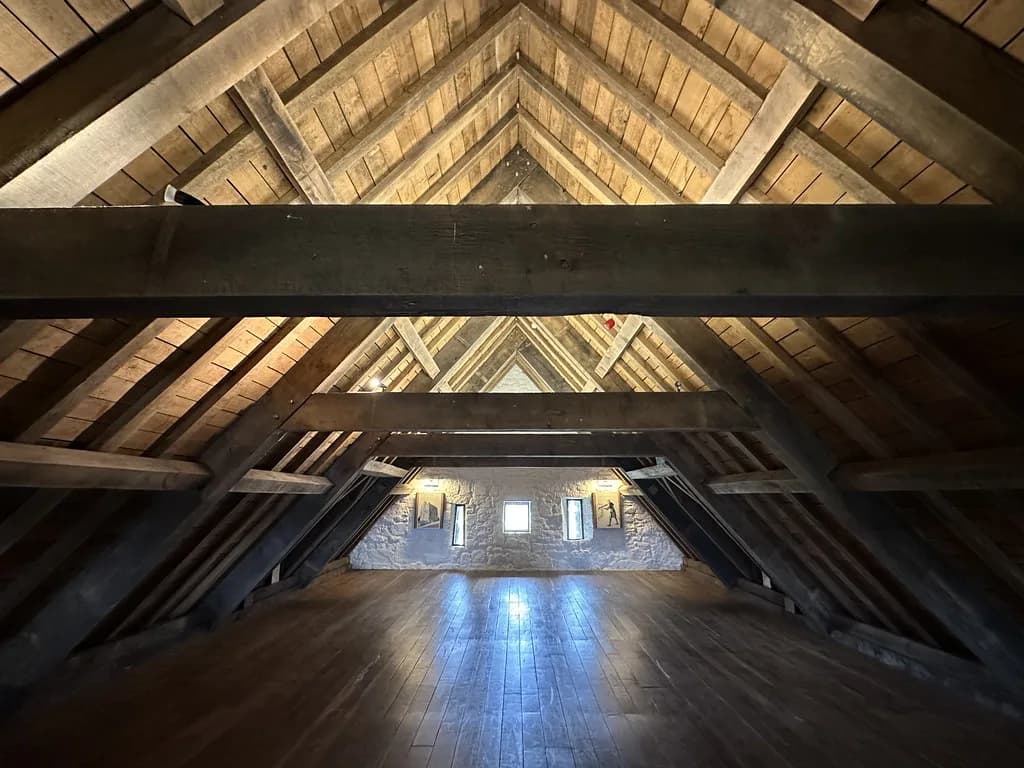
The attic holds a modern third-floor addition that serves as an audio-visual room, where a 20-minute film sets out the castle's long history. Treat this as a modern insertion into old fabric, not medieval work, and it becomes easier to read the rest of the building accurately. Because the film accounts for a fair share of a short visit, decide in advance whether you want orientation first or context after you have seen the rooms for yourself.
Watching it at the end of your walk through the basement and Great Hall often works better, since the carvings and loops will still be fresh in mind and the film consolidates them. Either way, allow for the 20 minutes it takes rather than treating the room as a quick pass-through.
The Town as Part of the Visit
Athenry Castle's setting is part of its case for a stop: Heritage Ireland places it at the centre of one of Ireland's best-preserved medieval towns. The castle guarded a ford on the Clareen River, a crossing that gave the settlement its strategic value. Walking the surrounding streets after the castle turns an isolated monument into a piece of urban history, so budget time for the town rather than driving straight out.
If your trip is built around fortified sites, Athenry works well as one entry in a wider circuit; browsing the roundup of castles in county galway shows how it sits alongside other properties.
Companion Stop: The Athenry Arts & Heritage Centre
The Athenry Arts & Heritage Centre is an independent local institution, not the operator of the castle, and it fills the gap the castle leaves. It runs guided tours and a Medieval Experience with interactive exhibits, including the town's original fourteenth-century Mace and Seal, and it offers Have-a-Go Archery and a medieval maze for younger visitors.
Practical support is strong here: self-guiding booklets in eight languages and audio wands are available, and the centre states that its tours are accessible for all ages and abilities. Advance booking is recommended, though drop-in visitors can pay by cash or card. Opening and tour availability vary by day, so confirm the schedule and book ahead before you travel.
The centre also highlights the Dominican Priory in the town, which it describes as superbly preserved with the best collection of occupational gravestones in Ireland. If your interests run beyond castles, pairing a castle day with the broader selection of ancient sites ireland offers gives a fuller picture of the region's past.
Planning Access Around the Seasonal Notices
The castle operates on dated seasonal opening windows with separate last-admission cut-offs rather than one fixed year-round timetable. Heritage Ireland's notices list a window running to 5 November with 9:30–18:00 days and last admission at 17:15, followed by a 9:30–17:00 window with last admission at 16:15. Plan around the last-admission time, not the closing time, since arriving near the cut-off leaves too little time for the rooms and the film, and confirm the active window on the day.
The official page offers a downloadable social guide aimed at first-time visitors, families and people with developmental and learning disabilities, useful for preparing anyone who finds new places difficult. It is a preparation aid rather than a guarantee of step-free movement, and the official page does not describe lift access, so check directly with Heritage Ireland about specific access needs before relying on a route through all three levels.
Athenry Castle's own page does not list admission prices, so check the current charges on Heritage Ireland or confirm on arrival rather than budgeting from third-party listings.
Optional Wider Loop: Portumna and Aughnanure
Portumna Castle and Gardens in County Galway is a different property built by the fourth earl of Clanricarde as the de Burgo family power base, an early-1600s design mixing medieval and Renaissance elements. A major fire in 1826 left it a roofless shell, and state restoration from the 1960s continues. The ground floor is open with an exhibition, and formal and walled kitchen gardens lead to a view over Lough Derg; adult admission is listed at €5.00, with the tearooms closed from 9 November 2026.
Aughnanure Castle, close to the western shores of Lough Corrib, is Connemara's best-preserved late-medieval tower house, built in the late fifteenth century as the O'Flaherty stronghold. It was gifted to the State in 1952 and opened to the public in 1974. Its facilities include a river walk, but walkways are uneven and parts have limited access, and overnight camping in the car park is forbidden; see more on aughnanure castle before adding it to the route.
For a contrast in romantic restoration, dunguaire castle offers a different kind of County Galway visit.
Plan Your Visit
Athenry Castle suits travelers who prefer reading a building's fabric to walking through a staged exhibition. Give the basement, the Great Hall carvings and the arrow loops your closest attention, then use the film to pull the history together. Build in time for the town streets, which are the reason the castle's setting matters as much as its walls. If you want to round out a day in the city afterwards, this selection of museums in Galway City is a good place to start.
Confirm the active seasonal hours and last-admission time on Heritage Ireland before setting out, check admission on the official page, and book ahead at the Athenry Arts & Heritage Centre if you want its guided tours or Medieval Experience. Those three checks remove most of the uncertainty from a short, rewarding stop in County Galway.
Explore more Ireland guides
Frequently Asked Questions
What can you actually see inside Athenry Castle?
The visit follows a vertical sequence: a substantial basement, the Great Hall above it, and an attic level. The entrance to the Great Hall carries floral carving in the School of the West style, which Heritage Ireland describes as unique among Irish castles, and the battlements outside are original thirteenth-century work. The third-floor audio-visual room is a modern addition showing a 20-minute film, so treat it as interpretation rather than medieval fabric.
How long should a visit to Athenry Castle take?
It is a compact keep rather than a sprawling ruin, so the rooms themselves do not fill a day. The 20-minute film is the largest single block of time inside, and watching it after walking the basement and Great Hall lets you connect what you have just seen. Add separate time for the town streets around the castle, which Heritage Ireland describes as one of Ireland's best-preserved medieval towns.
Is Athenry Castle suitable for families and visitors with accessibility needs?
Heritage Ireland publishes a downloadable social guide aimed at first-time visitors, families and people with developmental and learning disabilities, which is useful preparation. It is not a step-free guarantee: the official page does not describe lift access, and the basement, Great Hall and attic are reached as separate levels. Ask Heritage Ireland directly about specific needs before you travel, and note that the Athenry Arts & Heritage Centre describes its own tours as accessible for all ages and abilities.
Should you combine Athenry Castle with the Athenry Arts & Heritage Centre?
They are different operations, so treat them as two stops rather than one ticket. The castle is the state heritage site; the centre is an independent local institution with guided tours, a Medieval Experience, the town's fourteenth-century Mace and Seal, archery and a medieval maze. The centre offers booklets in eight languages, audio wands and recommends advance booking, and its day-to-day availability varies, so confirm the schedule before setting out.
What should you check before travelling to Athenry Castle?
Confirm three things: the active seasonal opening window with its separate last-admission cut-off, the admission charge on the official Heritage Ireland page, and, if you plan to visit the heritage centre, its opening and tour availability. Plan around last admission rather than closing time, since the rooms plus the film need more than a few minutes. Times and charges change, so verify on the day rather than relying on older listings.
Is Athenry Castle worth visiting alongside Portumna or Aughnanure Castle?
Only as a separate trip: Portumna and Aughnanure are distinct Heritage Ireland properties with their own dates, character and restrictions. Portumna is an early-1600s castle with formal gardens and a ground-floor exhibition; Aughnanure is a late-medieval O'Flaherty tower house with uneven walkways and limited access in places. Each has its own admission and seasonal arrangements, so check each page rather than assuming Athenry's conditions apply.
Sources
You might also like



Continue reading
More guides you'll find useful




