
Huntington Castle, Clonegal: A Visitor Guide to House and Gardens
Huntington Castle in Clonegal, County Carlow, is a family-held house with layered architecture, a 1970s basement temple and 1680s water gardens.
On this page
Huntington Castle is a privately owned country house in the village of Clonegal, County Carlow, and it is still held by descendants of the family that built it. That continuity is the key to visiting: you walk through a house that expanded over centuries, which the family opens for tours. The Ireland.com listing places it in the small riverside village and describes private ownership by the original family's descendants.
Plan around one practical reality rather than a brochure list. Tours are described as running year-round, but they are suspended when a wedding takes place in the castle, so check the date directly with the operator before you travel. Because the house is a working family home with a tour operation attached, confirm the day you intend to visit rather than assuming routine daily opening.
Where Huntington Castle Stands
The castle sits in Clonegal, a small riverside village in County Carlow, and it forms part of the village rather than a detached estate destination, so arriving on foot through the village is the natural approach. Rather than treating Huntington as a standalone stop, you can see it as one family-held house within the wider landscape of Irish castles and their varied fates; for a survey of older monuments rather than houses, see these ancient sites ireland. For a closer regional comparison of how such properties are opened to visitors, the castles in county galway offer several contrasting sites.
The essential distinction for planning is ownership. Huntington is privately owned by descendants of the original family and run with tours, a tearoom and a gift shop on site, not as a state-run heritage property. That shapes what you can expect: a lived-in interior on a guided route, gardens you can wander, and hospitality functions that occasionally take precedence over visitor tours.
A House Built on Older Ground
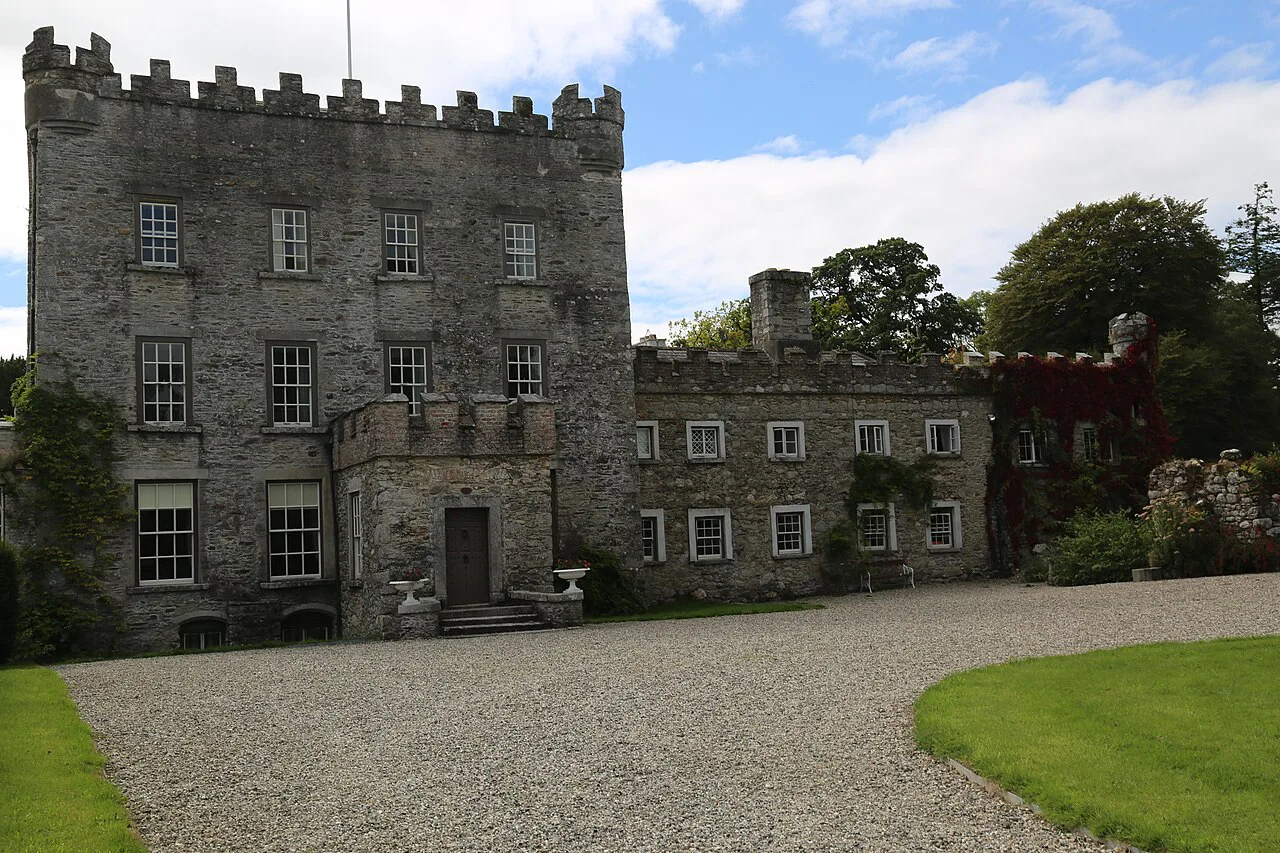
The site's history reaches back further than the visible building. Writing on the architecture, The Irish Aesthete records that Huntington stands on the site of a thirteenth-century Franciscan priory, and that after the Dissolution of the Monasteries in the 1540s the land passed to Laurence Esmonde, a convert to Anglicanism who served in the armies of Elizabeth I and James I and was raised to the peerage in 1622.
The fortified core of the present house followed a few years after Esmonde's peerage, according to the same account, and remains buried within later additions as a three-storey fortified dwelling. Ireland.com gives 1625 as the castle's build date as a garrison. Keep the two descriptions distinct: the 1625 date is the commonly cited construction point, not a documentary certainty about every part of the structure.
Later generations kept building. The Irish Aesthete traces alterations around 1680 by a grandson of the first Laurence Esmonde, a further wing about forty years later, and a rear extension around 1860 after the property passed by marriage to the Durdin family, later the Durdin-Robertsons. The house never left the first Laurence Esmonde's descendants, which best explains its cumulative character.
Why the Architecture Is the Story
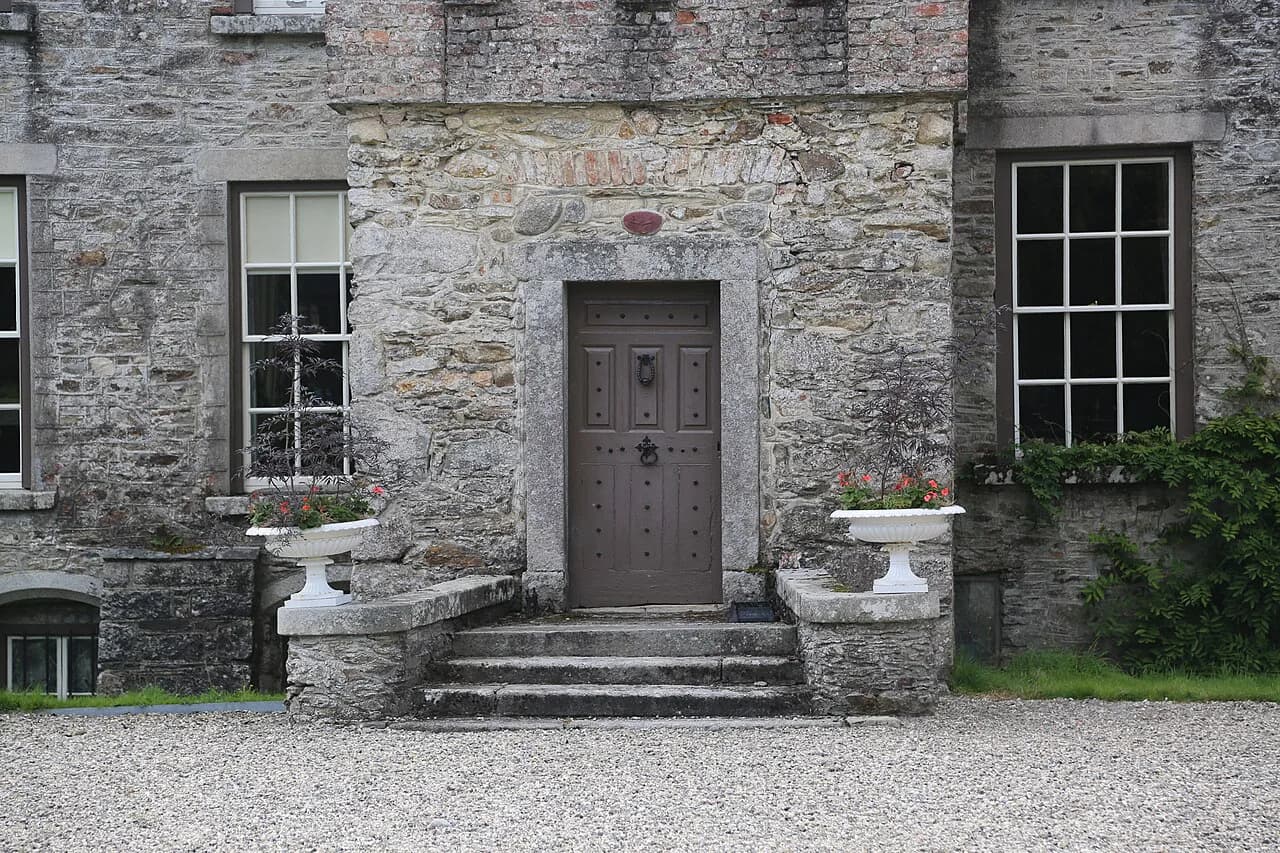
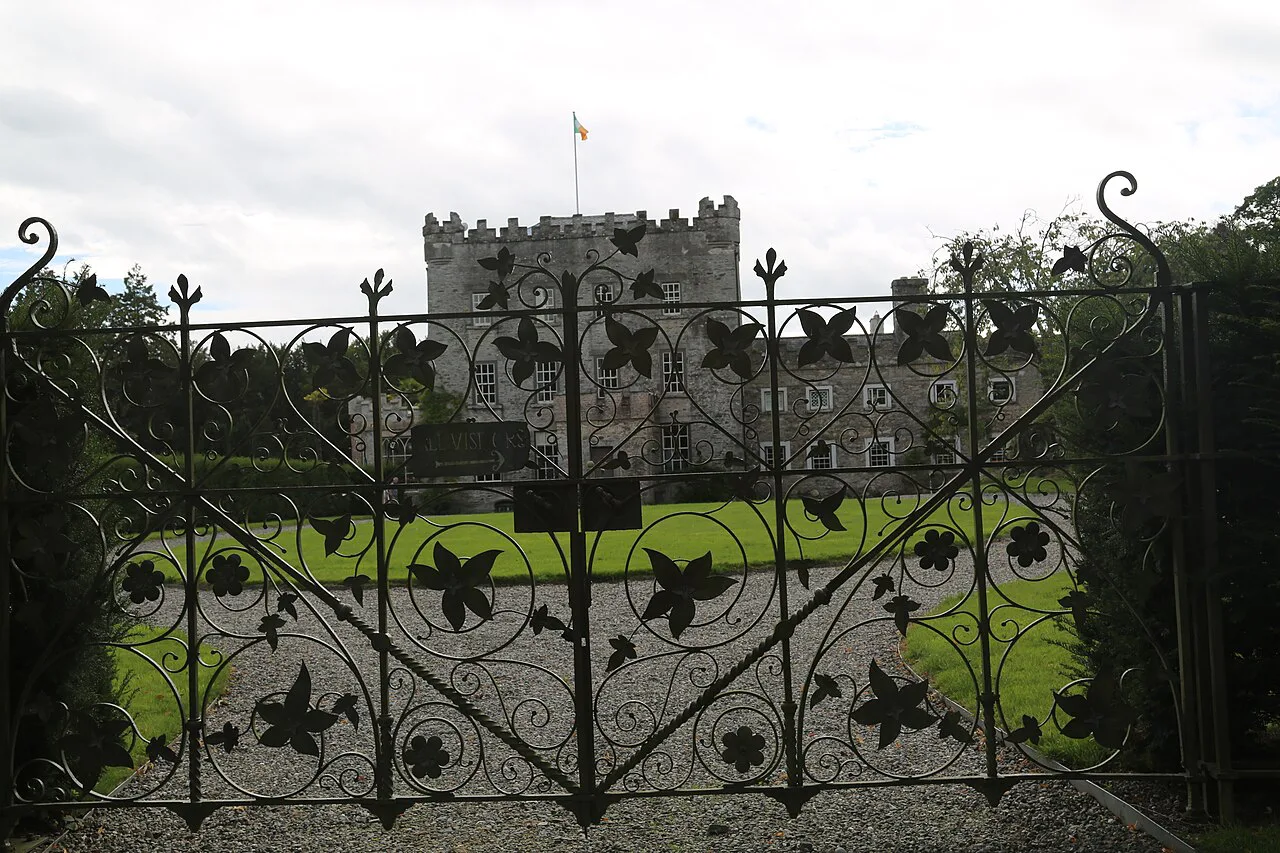
Most Irish country houses present orderly rooms off straight corridors, but Huntington revels in its heterogeneity, with short flights of stairs and narrow corridors leading into one another without an overall plan. That is not a flaw to overlook; it is the main thing to look for on a tour, because each change of level or ceiling marks a different generation's work. The same layered quality appears in the interior finishes, where an eighteenth-century classical plaster-panelled drawing room sits beneath a nineteenth-century Perpendicular-Gothic ceiling.
Details repay close attention. Some ground-floor passages keep their original oak panelling, several bedrooms above are panelled in painted pine, and the dining room holds an immense granite chimneypiece bearing the date 1625. Keep that chimneypiece date separate from the castle's build date: the inscription is a feature of the dining room, not proof that the room itself was finished in that year.
Because these architectural observations come from a single independent history source rather than an archive, read them as a well-informed reading of the building rather than a definitive record. The castle's own presentation and the national tourism listing give the visitor-facing account. For a contrast in how Irish castles are opened to the public, Glenveagh Castle in County Donegal offers a different model, set within a national park landscape rather than a village. If you want to weigh older monuments against houses like this one, the guide to ancient sites ireland covers tombs, forts and trackways.
Inside the Castle Tour
The interior visit covers several distinct spaces. Ireland.com describes a tapestry room, an elegant conservatory draped with grape vines, and a Temple of the Goddess Isis in the basement, a feature dating from the 1970s. That last room is the most unexpected stop in a seventeenth-century house, and it is worth deciding in advance whether it or the older rooms interest you more, since a single visit covers both.
The temple is presented simply as a 1970s basement temple; its background and use are the family's own story, and visitors should take it as a described feature of the house rather than assume a wider religious or ceremonial function. The operator's site lists castle tours among the things to do at Huntington, alongside the gardens and tearoom, which confirms that guided access to the interior is the normal arrangement.
Expect a route through a lived-in house, not a complete run of state rooms. No source confirms that every interior room is on view, and the tour's shape follows the building's awkward, accretive plan. If your interest leans toward atmosphere and legend rather than architecture, compare how other properties handle such stories in this survey of haunted castles, while treating any folklore you hear as legend rather than documented history.
The Gardens and Water Gardens
Outside, the grounds hold an Italian parterre and a yew walk, and the water gardens laid out in the 1680s are among the estate's most attractive parts, with a pond and a lake. Allow separate time for the gardens rather than folding them into the tour, because they reward a slower pace than a guided interior route.
The formal garden elements are the easiest part of a visit to appreciate without guidance, since a parterre and a clipped yew walk read as designed shapes even to someone new to garden history. The water gardens are the counterpoint: a seventeenth-century layout that asks you to stop and look rather than pass through. Build some flexibility into the day so the grounds get unhurried time rather than a rushed pass.
Practical Visiting and Checking Ahead
The most important planning step is confirming that a tour is running on your chosen day. Ireland.com states that castle tours are available year-round but that no tours take place when a wedding is being held in the castle, and it advises checking ahead to avoid disappointment. This is a real risk rather than a formality, because weddings are part of the castle's business and can displace visitors at short notice.
Admission prices, opening hours and specific tour times are not published in the material available here, so check them directly with the castle before setting out rather than relying on a guessed figure or schedule. On site, a tearoom and gift shop give you somewhere to pause before or after the tour, and they are described as part of the everyday visit rather than as a separate attraction.
Clonegal is a small riverside village, which makes Huntington an easy village stop rather than a destination requiring a full day of its own. To see how differently Irish castles are presented, this guide to castle ruins covers structures that never became family homes, while Glenveagh Castle in County Donegal shows a very different model, set within a national park landscape rather than a working family house. If your route continues west, the castles in county galway offer several more sites to compare on access and opening arrangements.
Staying Overnight in the Castle
Huntington also offers bed and breakfast accommodation in castle rooms, with four-poster beds, original fireplaces and garden views, according to Ireland.com. Staying changes the visit from an afternoon stop into an evening and morning on the estate, which suits travellers more interested in the house's atmosphere than in ticking off sights. Availability is not published in the material here, so enquire directly if this is the reason for your trip.
The operator's own site covers staying with us alongside tours, the garden and the tearoom, confirming that accommodation is part of what the castle offers. It does not publish room rates or a booking calendar in the pages summarised here, so treat any figure you see elsewhere as unverified. Book with the castle itself to confirm both the room and whether tours are running during your stay.
What to Expect and What Not To
Be clear about the category of place you are visiting. Huntington is a private family home with guided tours, gardens, a tearoom and guest rooms, not a state-run heritage property or public museum, and no source claims it is open every day or fully accessible. Nor is every room shown. If you need step-free access or a guaranteed schedule, ask the castle before booking anything else around it.
Legends attached to old Irish houses are best enjoyed as legends, and nothing in the available sources documents hauntings at Huntington beyond its unusual basement temple. For comparison, this selection of haunted castles examines the stories attached to other properties. If your travels run west, the castles in Sligo give a sense of how varied Ireland's surviving castle stock is, and Tullynally Castle offers another example of a country house opened to visitors.
Plan Your Visit
Huntington Castle rewards travellers who come for a specific reason: to read a house that grew in stages, to see a nineteenth-century ceiling over eighteenth-century panelling, and to walk a seventeenth-century water garden. Clonegal's small scale makes the village and castle one experience rather than two, so set aside unhurried time on both sides of the tour.
Confirm tour availability and any admission details directly with the castle before travelling, and keep in mind that a wedding can cancel tours despite the year-round description. Approach Huntington as a family home that receives visitors, and it will make more sense than if you arrive expecting a museum.
Frequently Asked Questions
Where is Huntington Castle?
Huntington Castle stands in Clonegal, a small riverside village in County Carlow. It is a privately owned house in the village rather than a detached estate, so it is normally reached through Clonegal itself.
Who owns Huntington Castle?
Ireland.com describes the castle as privately owned by descendants of the original family. The Irish Aesthete, a single secondary history source, traces the line from the first Laurence Esmonde through the Durdin family and later the Durdin-Robertsons, and notes the property has never left those descendants.
Can you tour inside Huntington Castle?
Yes, guided castle tours cover the interior, including a tapestry room, a conservatory draped with grape vines and a 1970s basement temple. Not every room is confirmed as being on view, so ask about the route and any access needs when you contact the castle.
What can you see in the gardens at Huntington Castle?
The grounds include an Italian parterre, a yew walk and water gardens laid out in the 1680s with a pond and a lake. Allow separate time for the gardens, since they reward a slower pace than the guided interior tour.
What is the Temple of the Goddess Isis at Huntington Castle?
It is described as a basement temple dating from the 1970s, an unusual feature within a much older house. It is presented as one stop on the interior tour rather than as a separate attraction with its own opening arrangements.
Can you stay overnight at Huntington Castle?
Yes, bed and breakfast accommodation is offered in castle rooms with four-poster beds, original fireplaces and garden views. Room availability and rates are not published in the sources here, so enquire with the castle directly.
Are tours always available at Huntington Castle?
Tours are described as running year-round, but they are suspended when a wedding takes place in the castle. Check with the operator before travelling, especially for a long journey or a special occasion.
Do I need to book ahead for Huntington Castle?
Booking mechanics and admission details are not published in the available sources, so confirm them directly with the castle. At minimum, verify that a tour will run on your date, since weddings can interrupt the normal schedule.
Sources
You might also like



Continue reading
More guides you'll find useful





