
Glenveagh Castle: Visiting the Victorian Mansion in Donegal
Plan a visit to Glenveagh Castle in County Donegal, from the lakeside walk and self-guided tours to the gardens and the estate history behind them.
On this page
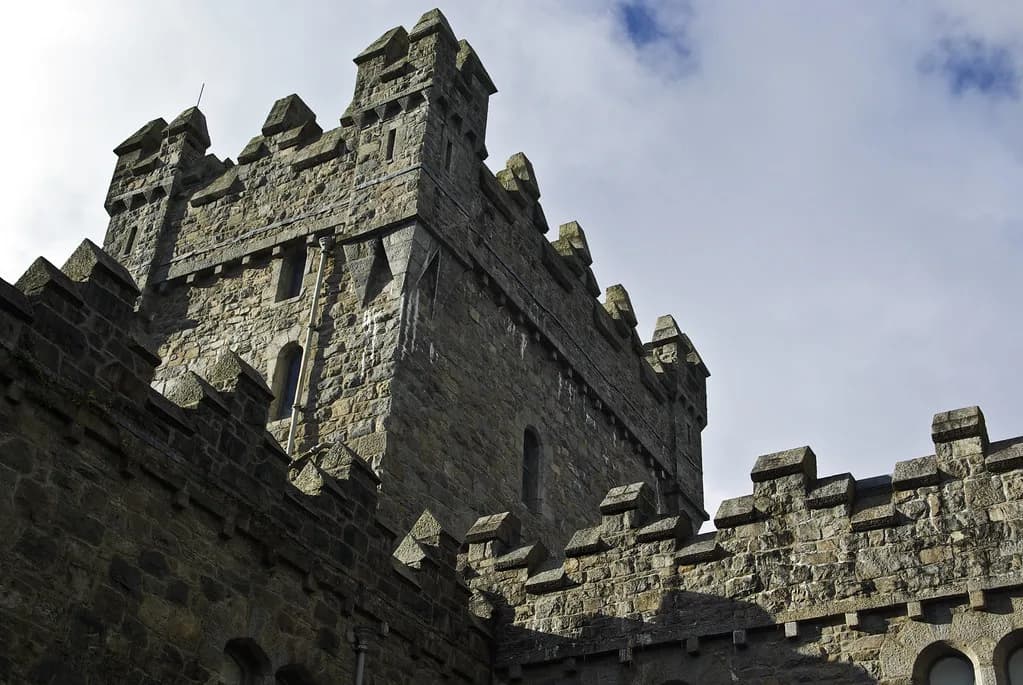
Glenveagh Castle is a Victorian castellated mansion on the shore of Lough Veagh in Glenveagh National Park, County Donegal, among the Derryveagh Mountains. It is the centrepiece of a park whose trails, gardens and wildlife draw visitors from across the county and beyond.
The practical question is not whether the castle is worth the detour but which day you can get in. The park authority states that the castle is closed on Mondays and Fridays except bank holiday Mondays, with self-guided visits on Tuesday, Wednesday, Thursday, Saturday and Sunday during the 2026 season, and that visits cannot be booked ahead.
Treat the castle as the anchor of a half day rather than a quick stop. The walk from the visitor centre, the gardens and the exhibitions there all sit around the same small valley, and pairing them turns a single building visit into an understanding of the estate.
What Glenveagh Castle Is and Where It Sits
The castle stands within Glenveagh National Park, in the heart of County Donegal, and looks across Lough Veagh toward the Derryveagh Mountains. The park authority describes the setting as a glaciated valley of rivers, waterfalls and native woodland, with the castle and gardens beside the lake.
Tourism Ireland describes the building as a castellated Victorian mansion, and the garden-history account places its completion in 1873, with a design intended to echo Balmoral in Scottish baronial style. It is a nineteenth-century country house, not a medieval fortress, and its interest lies in the way an engineered landscape was laid over a wild one.
That distinction matters for expectations. You are visiting a designed estate with pleasure grounds, a walled garden and terraces, set inside a national park managed primarily for conservation rather than for spectacle.
Closed Days and Access in 2026
The park authority's seasonal notice is the detail that should shape your itinerary. The park is open seven days a week, but the castle is closed on Mondays and Fridays, except bank holiday Mondays. Self-guided visits run on Tuesday, Wednesday, Thursday, Saturday and Sunday, and the park warns that additional short-notice closures of the castle can occur.
You cannot reserve a castle visit in advance. The park authority states that self-guided tour times cannot be booked ahead, so arrival order matters more than a timed ticket. It also advises watching its social media updates or ringing its published phone line to confirm openings on the day you plan to visit.
Operational notices are published on the same page and carry their own dates. In October 2026, for instance, the park flagged that planned industrial action would affect services on Wednesday 14 October. Such entries are dated alerts rather than standing closures, so read the notice's date before you change plans around it.
Getting There and the Lakeside Approach
By car, the park authority directs visitors along the N56 through Kilmacrenan and then the R255 toward Gweedore. Drivers should expect the castle to be reached from the visitor centre side of the valley rather than from a roadside gate at the building itself.
Public transport is possible: Local Link route 271, running between Burtonport and Letterkenny, passes through the park daily and can be picked up at the flagpole in the car park. That makes a car-free visit feasible, but it also ties your day to the bus timetable, so check the current schedule before committing.
On foot, the gradual approach is the track from the visitor centre along the lake, roughly 4 km to the castle. The garden-history account notes this as the best way to feel the isolation of the site, with bare mountains on either side of the water and the castle appearing only as you near the far shore.
For comparison, Tourism Ireland lists six walking routes in the park, from a short 1 km garden trail to a strenuous 8 km glen walk. The lakeside track is therefore a moderate commitment of time, not a two-minute stroll, and you should budget accordingly at both ends of the visit.
Costs, Cards and What to Expect to Pay
The park authority's visitor page lists a walk-up self-guided castle visit at one rate per person and a standard adult self-guided price, and both figures apply to the self-guided visit only. They should not be read across to guided group arrangements or future seasons, and organisers should take the current price from the operator when booking.
Heritage Card holders get free bus tickets and castle tours, plus discounts at other attractions, and cards can be bought in the visitor centre. If you are touring more than one staffed heritage site, that benefit may change the arithmetic; if Glenveagh is your only stop, it probably will not.
The park authority also states that Glenveagh will not take part in the OPW voucher scheme in 2026, and that all tour payments go directly to the park. Group rates for 2027 are described as available on request rather than published, so organisers should not plan around a figure in advance.
Inside the Castle: What a Self-Guided Visit Means
A self-guided visit means you move through the Victorian interiors at your own pace rather than joining a scheduled tour. The operator does not publish a room-by-room list on its main page, so arrive without a fixed checklist and let the house set the order.
The interiors make more sense once you know the sequence of owners behind them. A house enlarged and redecorated by a later American collector reads differently from one built for a nineteenth-century land speculator, and that layering is the real subject of the rooms.
If you want an on-site briefing first, allow time at the visitor centre before heading up the track. Doing history in that order avoids arriving at the castle with the estate's difficult origins still unexplained.
The Gardens: Walled Ground, Terraces and Exotics
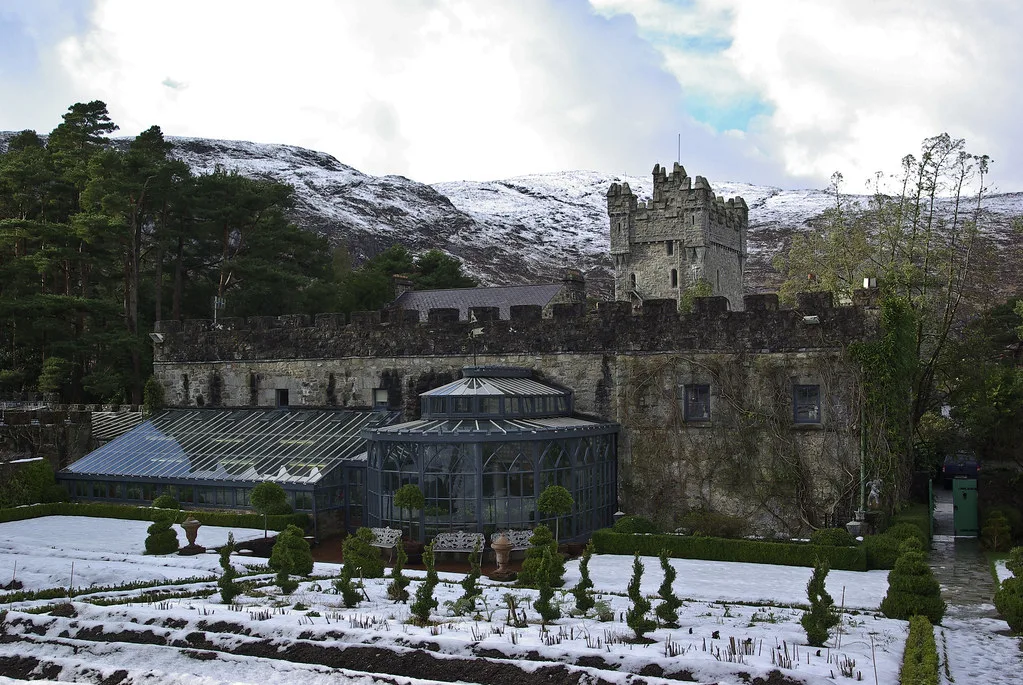
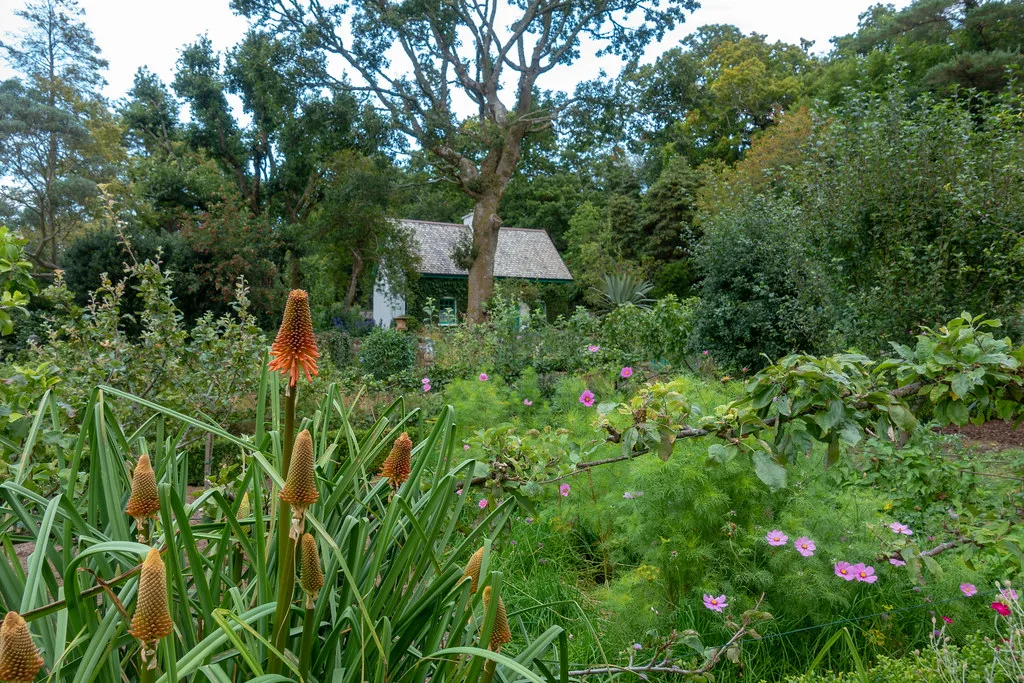
The gardens are the counterweight to the wild valley. The garden-history account describes some 11 hectares of grounds including a walled garden, a rose garden, an Italian terrace, a Tuscan garden, a Himalayan garden, a Belgian Walk and summerhouses, all planted on acid soil in a mild microclimate.
The Belgian Walk dates from 1915, when it was built by Belgian refugees housed at Glenveagh during the First World War. That detail gives the pleasure grounds a European dimension that the mountain setting does not prepare you for.
Tourism Ireland notes rare and exotic plant species in the gardens and says summer brings flowering rhododendrons and the white-flowered Eucryphia. Shift your expectations with the season: the display is horticultural rather than a fixed set piece.
Access is not uniform across the grounds. The park authority notes that some areas of the gardens are inaccessible to wheelchair users because of steps and steep, uneven ground, and that Blue Badge parking at the castle is very limited and granted only in special circumstances. Plan the garden circuit around the paths you can actually use, and if you are weighing up other historic properties with similar access caveats, the castles in county galway guide sets out four sites with their current access arrangements.
The Estate History That Shapes the Visit
Glenveagh Estate was established in 1859 by John George Adair, who assembled a large holding in Donegal after the Famine. His ambition was a castle and hunting estate in the Scottish baronial manner, and the house was completed by 1873.
In 1861 Adair evicted 244 tenants, an event remembered as the Derryveagh Evictions and still attached to the estate's name. The visitor centre hosts free, daily exhibitions covering that history alongside Ireland's national parks and the golden eagle reintroduction project, which gives the castle's origins a public context.
After Adair's death in 1885, his wife Cornelia took over and is credited with shaping the pleasure grounds, importing soil, starting a kitchen garden and planting shelter belts of Scots pine and rhododendron. Later owners included the art historian Arthur Kingsley Porter and, from 1937, the collector Henry McIlhenny, who redecorated the castle and developed the gardens further.
McIlhenny transferred the land to the State in 1975 to create the national park and gave the castle, its contents and gardens to the State in 1983. That transfer is why a private house now functions as a public building inside a conservation area. More estate houses with layered histories sit in the wider Irish tradition of the country house, such as Huntington Castle, Clonegal.
Visitor Centre, Facilities and Weather Sense
The visitor centre is the practical hub, with exhibitions on Ireland's national parks, the golden eagle reintroduction project and the Derryveagh Evictions, along with staffed guides who can answer questions about the trails. Starting or finishing there frames the castle visit with the conservation work the park exists for.
Food is available in the park, with Nellie's Restaurant in the visitor centre listed by the park authority as open from April to October, and a tea room operated by Synge & Byrne open at the castle. In the colder months treat refreshments as a bonus to confirm locally rather than a certainty.
Weather is the other variable. The park authority advises checking the forecast, carrying a map and taking essentials before heading into the hills, and notes trails for a range of ages and abilities. On a wet day the castle and gardens still work; the high ground is the part to drop.
Wildlife rewards the early start. The park authority lists golden eagles, peregrine falcons, red-throated divers, jays, wood warblers, crossbills and long-tailed tits, with May mornings known for the dawn chorus. If birds are your reason for coming, build the day around first light rather than the castle's opening.
Ordering the Day Around the Castle's Schedule
Sequence the day around the fixed constraints rather than around the castle as a first stop. Because visits cannot be pre-booked and short-notice closures happen, check the operator's updates on the morning of travel, then head up the lakeside track early enough to leave the gardens unhurried.
If the castle is shut, the day still holds together: the gardens, the visitor centre exhibitions and the park trails do not depend on the door being open. On a Monday or Friday outside bank holidays that is the sensible fallback rather than a wasted journey.
Walkers wanting a full valley day can combine the lakeside track with one of the park's longer routes. Tourism Ireland names the 8 km glen walk as the strenuous option, and pairing it with a castle visit makes for a long but coherent outing in good conditions.
Plan Your Visit
Glenveagh Castle rewards planning more than improvisation. Choose a Tuesday, Wednesday, Thursday, Saturday or Sunday, allow for the walk or bus journey from the visitor centre, and check the park authority's page on the day in case of short-notice closure.
Once inside, give equal time to the gardens and to the estate history that produced them. The landscapes and the difficult story behind the house belong together, and Ireland's wider landscape of castles includes both restored houses and ruins, from Huntington Castle to castle ruins across the country and a broader guide to Castles in Ireland. If your trip continues west, the castles in county galway guide covers four more sites with their current access arrangements. For a different kind of day out altogether, ancient sites ireland covers tombs, forts and trackways with the same attention to access details.
Explore more Ireland guides
Frequently Asked Questions
What days is Glenveagh Castle closed?
The park authority states that the castle is closed on Mondays and Fridays, except bank holiday Mondays, during the 2026 season. Self-guided visits run Tuesday, Wednesday, Thursday, Saturday and Sunday. Additional short-notice closures can occur, so check the park's updates or phone line on the day you travel.
Can you book Glenveagh Castle tours in advance?
No. Self-guided castle tour times cannot be reserved ahead of your visit, so you arrive and take your place on the day. Because of that, there is no ticket slot to build your itinerary around and the order of your day should be flexible.
How far is the walk from the visitor centre to Glenveagh Castle?
The lakeside track from the visitor centre to the castle is roughly 4 km. It is the gradual way to arrive and gives you a sense of the valley's scale, so allow time for the return leg rather than treating it as a quick transfer.
Can you get to Glenveagh Castle by bus?
Local Link route 271, between Burtonport and Letterkenny, passes through the park daily and stops at the flagpole in the car park. From there you continue to the castle on foot or by the park's own transport arrangements. Check the current timetable before relying on it.
Are the castle gardens accessible for wheelchair users?
Some garden areas are inaccessible because of steps and steep, uneven ground, according to the park authority. Blue Badge parking at the castle is very limited and granted only in special circumstances, so plan which paths you can use before setting out.
What is the history behind Glenveagh Castle?
The estate was established in 1859 by John George Adair and the castle was completed by 1873. The 1861 Derryveagh Evictions remain central to its story. Later owners shaped the gardens, and Henry McIlhenny gave the land to the State in 1975 and the castle and gardens in 1983.
What days are self-guided visits available in 2026?
The park authority's seasonal notice states that self-guided castle visits run Tuesday, Wednesday, Thursday, Saturday and Sunday. The castle is closed Mondays and Fridays except bank holiday Mondays, and visits cannot be booked in advance.
Sources
You might also like



Continue reading
More guides you'll find useful


