
Black Castle, Wicklow Town: A Headland Ruin Visitor Guide
Plan a visit to Black Castle in Wicklow Town, a headland ruin at the mouth of the Vartry River. See what survives, approach via Castle Street and mind the cliffs.
On this page
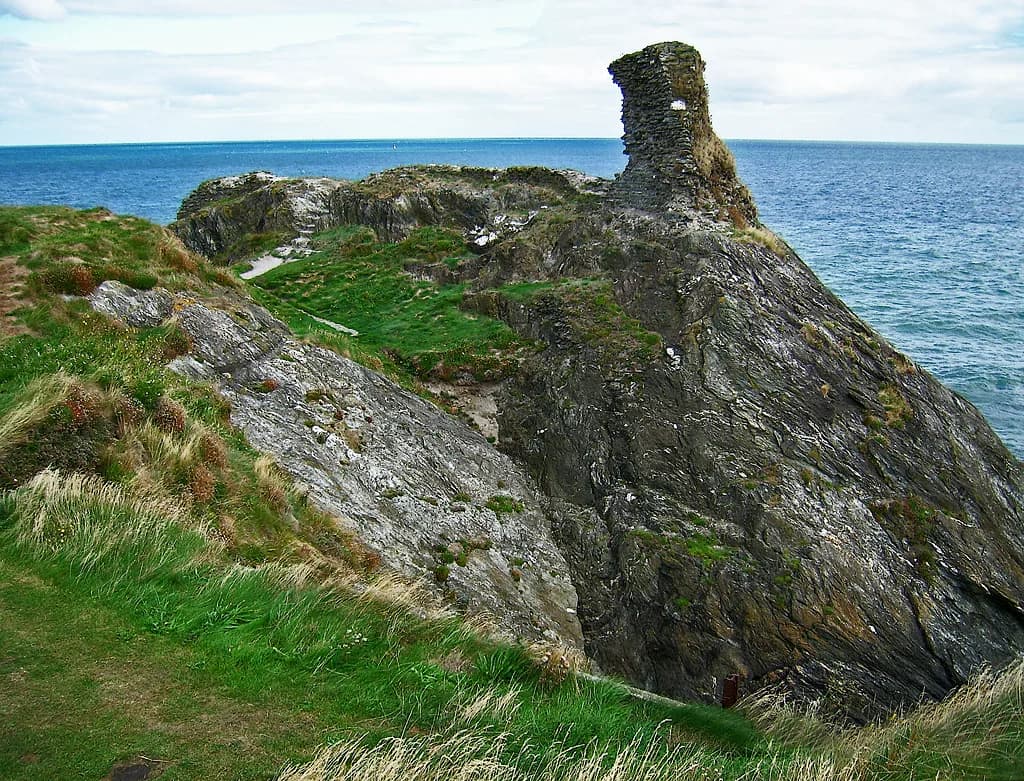
Black Castle is a ruined castle on a rocky headland above the sea at the mouth of the Vartry River in Wicklow Town, County Wicklow. It is one named place rather than a survey of every castle in the county, and the visit is short: you come for exposed masonry, a cliff-top position and long views, not for furnished rooms or exhibitions.
That framing matters for planning. No visitor facilities, opening hours or ticket arrangements are documented for the site, and there is no interior to tour, so the quality of the trip depends on weather, footing and how much of the site's layered history you carry with you. The practical essentials are the approach from Main Street and the uneven ground at the ruin itself.
Setting: A Promontory Above the Vartry River Mouth
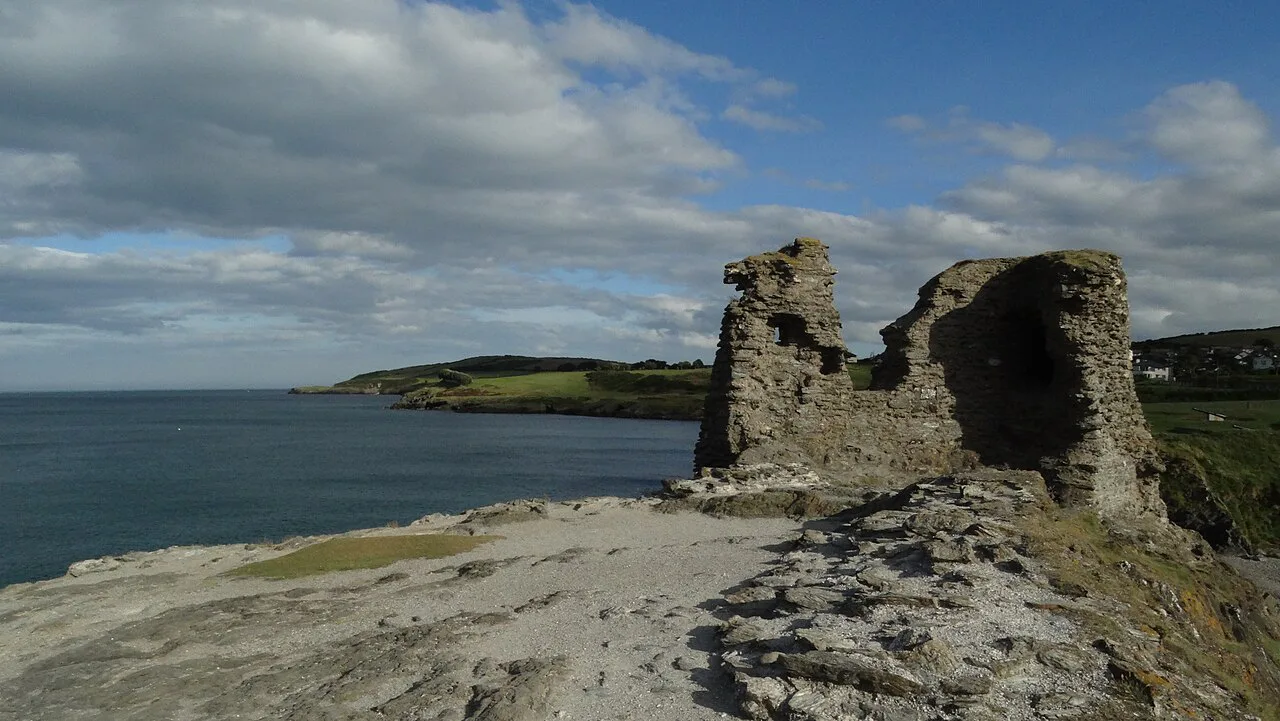
The ruin occupies a rocky promontory at the mouth of the Vartry River, with the sea immediately below and the town behind. Because the headland pushes out beyond the town towards the water, it gives what the national tourism authority describes as a fine vantage point over the town and the coast of North Wicklow.
Read the setting as part of the monument. A castle placed here controls the river approach and watches the seaward side, which is why the position mattered long before any stone was laid. Arriving on foot from the town centre makes that relationship legible in a way that driving straight to the gate does not.
Before the Castle: Viking Wicklow
Viking activity in the Wicklow Town area reaches back to raids recorded from around 795, and in 834 a monastery at Glendalough was plundered. The tourism authority's account of the area's early history also records that in that same year a strategic rocky promontory at the mouth of the Vartry was fortified.
Keep that background separate from the fabric you see. The surviving walls belong to a later castle, not to a Viking stronghold, and the sources do not present the standing masonry as Norse work. Treat the early fortification as context for why the headland was chosen, not as a description of the ruin itself.
Into the Record: Normans and Contested Hands
Written history picks the site up only after the Norman invasion, with no mention of the castle in surviving records until 1174, according to the tourism authority. An independent heritage record fills in the landholding context: after 1169, Henry II granted east-coast lands to Richard de Clare, and in 1176 de Clare granted the Wicklow land to Baron Maurice FitzGerald on condition that castles be built along the coast. That broader context connects to the wider story of the castles in ireland. FitzGerald's coastal-building condition echoes the same wave of fortification behind the castles in county galway. For a survey of monuments that predate the Norman arrival, see this guide to ancient sites ireland.
FitzGerald died later that same year, so the same record suggests his family may have finished the work, and notes a claim that the castle was later taken from his sons by the chief governor of the day. Those details come from a personal heritage record rather than an official survey, so hold them loosely. What is not in doubt is the pattern: the castle changed hands repeatedly and faced constant pressure from local Gaelic-Irish chiefs, principally the O'Tooles and the O'Byrnes.
Attacks of the Early 14th Century
The tourism authority states that the castle was attacked and burnt twice by the local O'Byrne clan between 1295 and 1315. The independent heritage record lists separate burnings by the O'Byrnes in 1295, 1301 and 1315, when the tenant family was the Lawlesses.
The two accounts agree on the thrust of the story and differ mainly in granularity, so avoid treating any single list of dates as a fixed sequence. For a visitor, the useful takeaway is that this was a frontier stronghold under recurring assault, which explains why so little of it stands today. Reading a handful of castle ruins across the country, as collected in this guide to castles in ireland, makes that frontier pattern easier to recognise, and the castles in county galway show the same pattern of contested ownership at Athenry Castle and Aughnanure Castle.
What Survives to See
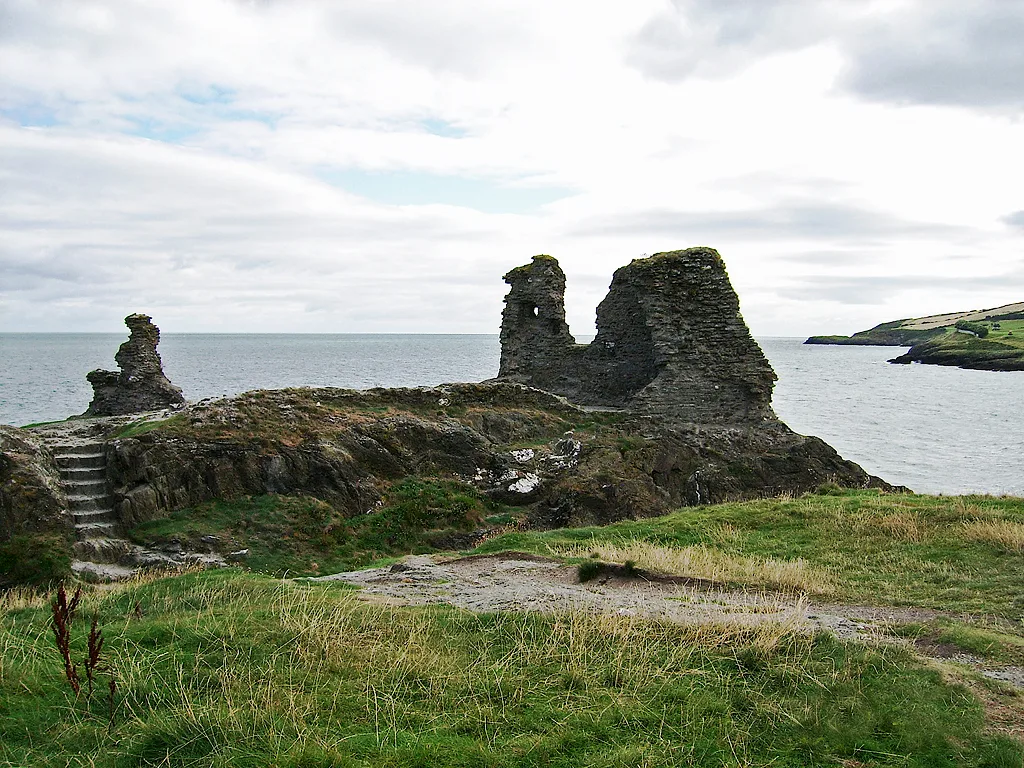
What remains is visible fabric rather than rooms. The heritage record describes the remains of a triangular keep, with the remnant of a corner tower at its south-west side, reached by crossing a deep fosse and climbing steps cut into the rock.
Plan your time around those features rather than around an itinerary of interiors. The triangular plan, the cut of the fosse and the steps carved through stone are the interpretive detail here, and they reward a slow circuit more than a quick photograph. The same independent record notes later destruction, including attacks in the 1640s and demolition in 1646, after which the site was only partly reoccupied before the garrison moved on.
Below the Stone: An Earlier Fort?
There is evidence suggesting the castle was built over an earlier promontory fort, according to the heritage record. That is an archaeological inference drawn from the site rather than a proven sequence, so describe it to yourself as a possibility, not a fact.
The idea is nonetheless useful when you stand on the headland: it implies repeated reuse of one defensive position across very different eras. If that layering interests you, the same theme runs through other ancient sites ireland preserves, where occupation shifts across centuries on a single spot.
Approaching on Foot
From Main Street in Wicklow Town, turn east down Castle Street and the headland approach follows from there. The heritage record reports ample parking near the site, though that is one visitor's note rather than an official guarantee, so on a busy day expect to walk a little further.
The tourism authority publishes the site as a place to visit but gives no opening hours, admission arrangements or guided tours, and neither source establishes whether entry is ticketed. Check locally before making it the anchor of a day out, and treat the walk down from the town as part of the visit rather than dead time.
Uneven Ground and the Cliff Edge
The main trade-off is footing. Reaching the keep area means crossing a deep fosse and using rock-cut steps, which is uneven ground rather than a formal path, and the heritage record explicitly warns of steep cliffs, particularly with children.
Wear shoes with grip, keep children close on the seaward side and skip the steps in wet or windy conditions. The site is an exposed ruin with no documented facilities or staffed arrangements, so plan your footing and the weather before you commit to the promontory.
Where Black Castle Fits in a Wider Castle Trip
Black Castle is the stripped-back end of the Irish castle spectrum: a defensive position, a fragmentary keep and a story told by its setting. Set against a maintained country house it reads very differently, and pairing the two sharpens both. Huntington Castle, Clonegal is a useful contrasting stop for travellers continuing inland; the family seat lies at Clonegal in County Carlow.
If ruins are what draw you, this is a strong introduction to how little survives at exposed coastal sites, a theme explored further in this collection of castle ruins ireland. Those heading towards the midlands can compare notes with the castles in carlow, while travellers to other counties will find more of the same layered history in the castles in ireland.
Plan Your Visit
Treat Black Castle as a short headland walk with a serious historical payload. Go down Castle Street from Main Street, allow time to read the triangular keep and the fosse, and keep back from the cliff edge, especially with children.
Build the rest of the day around the town rather than the ruin, since the site offers no facilities and no stated opening hours. One check of local sources before you set out covers the details the published accounts leave open.
Explore more Ireland guides
Frequently Asked Questions
What is Black Castle in Wicklow Town?
It is a ruined castle on a rocky headland at the mouth of the Vartry River in Wicklow Town, County Wicklow. Only fragmentary masonry survives, and the tourism authority promotes it mainly for its position and views over the town and the North Wicklow coast rather than for standing structures.
Can you go inside Black Castle?
There is no intact interior to enter. What you can reach is the ruin itself, including the remains of the triangular keep, via a crossing of a deep fosse and rock-cut steps. No rooms, exhibitions or visitor facilities are documented at the site.
How do you get to Black Castle in Wicklow Town?
From Main Street in Wicklow Town, turn east down Castle Street towards the headland. An independent heritage record reports ample parking near the site, but that is a visitor note rather than an official guarantee, so be prepared to walk a little on busy days.
What can you see at the Black Castle ruin?
The visible remains include a triangular keep, the remnant of a corner tower at its south-west side, a deep fosse and steps cut into the rock. The interest lies in the defensive layout and the cliff-top setting rather than in furnished or roofed spaces.
Was Black Castle built by Vikings?
No. Viking activity in the Wicklow Town area is background: the area was fortified from the ninth century, but the surviving castle belongs to the post-Norman period, with the site entering written records in the twelfth century. The standing masonry is not presented as Norse work.
Is Black Castle suitable for children?
With close supervision. The headland has steep cliffs, and the independent heritage record explicitly warns of the danger, especially with children. The route to the keep involves a fosse crossing and rock-cut steps, which count as uneven ground rather than a formal path.
When does Black Castle first appear in recorded history?
The tourism authority notes there is no mention of the castle in recorded history until 1174, after the Norman invasion. Landholding context from an independent heritage record points to a grant around 1176 with a condition that castles be built along the coast.
Is there an older fort beneath Black Castle?
Evidence suggests the castle may have been built on the site of an earlier promontory fort, according to an independent heritage record. That is an archaeological suggestion rather than a proven sequence, so treat it as a possibility when reading the site.
Sources
You might also like



Continue reading
More guides you'll find useful





